How to Break the Loop: A Grounded Guide to Thought Stopping and Mental Clarity
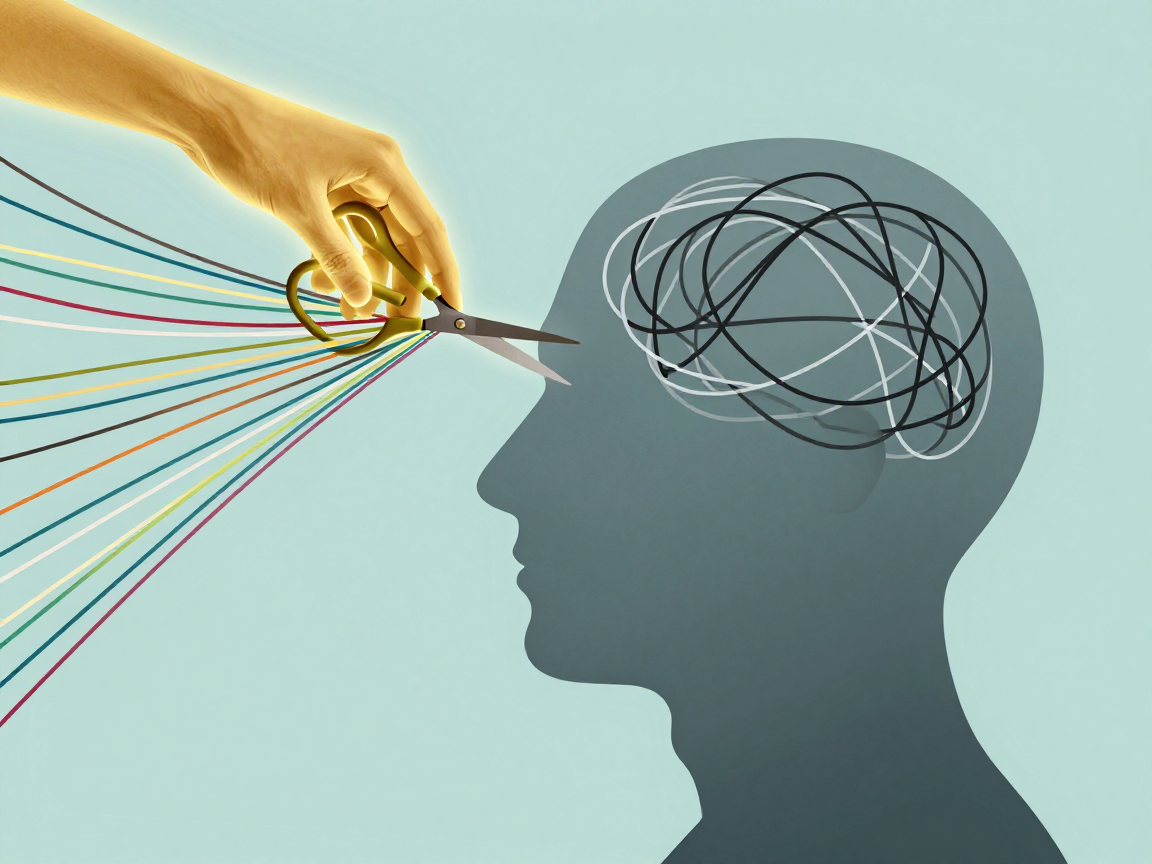
Most of us have experienced the sensation of a mind that simply will not sit still. It starts as a small worry—a concern about a deadline, a brief moment of social awkwardness, or a lingering "what if"—and quickly spirals into a full-blown hurricane of rumination. In these moments, it feels as though our thoughts are no longer our own. We become passengers in a vehicle driven by anxiety, heading toward a destination we never chose. This is where the concept of thought stopping enters the conversation, offering a potential emergency brake for the runaway mind.
At its core, thought stopping is a cognitive intervention intended to interrupt and displace recurring, intrusive, or distressing thoughts. While the name sounds like a blunt instrument, the practice is more nuanced than simply shouting at oneself to be quiet. It is about recognizing the patterns of the mind and consciously choosing to step out of the stream of negativity before it gains enough momentum to pull us under. However, using this tool effectively requires more than just willpower; it requires an understanding of how our brains process information and why some thoughts seem to stick more stubbornly than others. When applied correctly, thought stopping isn't about denial; it is about reclaiming the steering wheel of your internal narrative.
The Anatomy of an Intrusive Thought
To understand why we need thought stopping, we first have to understand the nature of the intrusive loop. Our brains are biologically wired to prioritize threats. Thousands of years ago, a persistent thought about a rustle in the tall grass was a survival mechanism. Today, that same survival instinct interprets a vague email from a boss or a delayed text from a partner as a predator. The brain begins to loop the thought to ensure we do not forget the perceived danger. This is part of the "Default Mode Network" (DMN)—the part of the brain that becomes active when we aren't focused on the outside world, often leading to self-referential thinking and worrying about the future or past.
This looping is known as rumination. Unlike productive problem-solving, which moves toward a solution, rumination is circular. It offers no resolution, only a deepening sense of dread. It creates a neural groove that becomes easier to fall into the more we travel down it. Thought stopping acts as a pattern interrupt. It seeks to break the physiological and psychological feedback loop that keeps the "threat" alive in our working memory. By introducing a sudden, conscious barrier, we can momentarily quiet the alarm bells of the amygdala, the brain's fear center, and allow the prefrontal cortex—the logical part of the brain—to come back online.
The Traditional Roots of Thought Stopping
Thought stopping became a popular staple of Cognitive Behavioral Therapy (CBT) in the mid-20th century. The early iterations were quite literal. If a patient found themselves trapped in a negative thought pattern, they were instructed to physically interrupt it. This often involved methods that might seem a bit intense by modern standards, such as snapping a rubber band against the wrist or shouting "Stop!" out loud when alone.
The goal of these physical cues was to pair the intrusive thought with a mild unpleasantness or a jarring sensory experience. Over time, the theory suggested, the brain would learn that the negative thought leads to a disruption, eventually discouraging the thought from appearing altogether. While the rubber-band-snapping method has largely fallen out of favor for more compassionate approaches, the underlying principle remains: you cannot think two things at once with equal intensity. By forcing a new, loud signal into the brain, you temporarily displace the old, quiet, nagging one. Modern iterations focus less on punishment and more on the "interrupt and redirect" philosophy, acknowledging that the brain needs a new destination once the old path is blocked.
The Controversy: The White Bear Effect
It is important to address the primary criticism of thought stopping, which is often referred to as Ironic Process Theory. In a famous psychological study, participants were told specifically not to think about a "white bear." Almost universally, they found they could think of nothing else. By trying to suppress a thought, you essentially give the brain a mission to monitor for that thought, which keeps it active in your consciousness. This is the paradox of suppression: the more we fight a thought, the more energy we give it.
Because of this, modern psychologists often view thought stopping not as a way to "delete" thoughts, but as a way to "re-route" them. If you use thought stopping merely to bury an emotion or ignore a trauma, it will likely resurface with more intensity later—a phenomenon known as rebound. However, if you use it as a tool to gain enough distance to engage in a more helpful activity, it becomes a bridge to mental health rather than a shovel for suppression. The key is in the transition. Stopping the thought is only the first half of the equation; the second half is choosing what to think instead.
A 5-Step Framework for Effective Thought Redirection
Rather than just trying to slam a door on your mind, follow this structured approach to turn thought stopping into a productive redirection. This framework moves from awareness to action, ensuring the thought is interrupted rather than just ignored.
- Label the Loop: As soon as you realize you are ruminating, give it a name. Say to yourself, "I am having a ruminative thought about work" or "This is my 'imposter syndrome' loop." By labeling it, you move from being inside the thought to being an observer of it. This creates a psychological distance that makes the following steps possible.
- The Conscious Interrupt: Use a firm mental command. You do not have to shout, but you should use a clear, internal voice to say "Stop!" Some people find it helpful to visualize a large, red octagonal stop sign or a literal wall falling into place between them and the thought. The goal is to create a momentary void in the internal chatter.
- The Deep Breath Reset: After the interrupt, take one slow, diaphragmatic breath. This signals to your nervous system that you are safe. It breaks the physical tension that usually accompanies intrusive thoughts. Inhale for four seconds, hold for four, and exhale for six. This activates the parasympathetic nervous system, cooling down the brain's "fight or flight" response.
- The Pivot Sentence: Replace the void left by the "stopped" thought with a neutral, grounded statement of fact. For example, "I am sitting in my chair, the sun is out, and I am currently safe." This prevents the "white bear" effect by giving the brain something else to hold onto. It provides a landing pad for your attention.
- Active Engagement: Immediately transition into a task that requires focus. This could be counting backward from one hundred by sevens, describing the objects in the room in high detail, or starting a work task that requires analytical thinking. The key is to engage the prefrontal cortex. Once the brain is busy solving a problem or observing the environment, it has less capacity to restart the rumination loop.
When to Use Thought Stopping vs. When to Use Mindfulness
One of the most common mistakes is trying to use thought stopping for everything. It is a specialized tool, not a universal fix. Understanding when to use it is just as important as knowing how to do it. Think of thought stopping as a fire extinguisher: it’s great for putting out a sudden blaze, but it’s not the tool you use to redesign the kitchen.
Use Thought Stopping When:
- You are stuck in a "broken record" loop of a past event you cannot change (e.g., cringing over something you said three years ago).
- You are experiencing "catastrophizing" thoughts that have no basis in current reality.
- You need to focus on a critical task (like driving, a presentation, or an exam) and cannot afford a distraction.
- The thoughts are purely repetitive and offer no new information, solutions, or insights.
Use Mindfulness and Acceptance When:
- The thoughts are tied to a deep, underlying emotion that needs to be processed or felt.
- You are grieving or dealing with a significant life change that requires emotional integration.
- The "thought" is actually a valid intuition or a practical problem that requires a planned solution.
- You have the time and space to sit with your feelings without being overwhelmed, allowing the thoughts to pass like clouds in the sky rather than trying to block them.
The Neurobiology of the "Stop" Signal
When we practice thought stopping and redirection, we are essentially engaging in a form of self-directed neuroplasticity. The brain is not a static object; it is a dynamic system that rewires itself based on repeated experience. Every time you successfully interrupt a rumination loop and redirect to a neutral or positive focus, you are weakening the synaptic connections that fuel the anxiety loop and strengthening the connections in the prefrontal cortex that manage executive control.
Over time, this makes the "stop" signal more effective. Initially, it might feel like you are trying to stop a freight train with a piece of string. But with repetition, the train slows down, and the string becomes a steel cable. Research into "inhibitory control" shows that the brain has specific pathways dedicated to stopping an ongoing action or thought process. By training these pathways, we improve our overall emotional regulation and resilience. This is why consistency matters more than perfection. Even if you have to "stop" the same thought fifty times in an hour, each instance is a repetition that builds mental muscle.
Common Pitfalls and How to Avoid Them
If you find that thought stopping isn't working for you, check to see if you are falling into one of these common traps. First, ensure you are not using it to avoid necessary life decisions. If you are thinking "I hate my job" every day, stopping that thought won't fix the job; it will only delay the inevitable. In that case, use the technique to stop the anxiety about the job so you can clearly plan your exit strategy without being clouded by panic.
Second, avoid being frustrated with yourself when the thought returns. It is the nature of the mind to produce thoughts, just as it is the nature of the heart to beat. If the "white bear" pops back up, do not view it as a failure. Simply label it again and repeat the process. The goal is not a perfectly empty mind, but a mind where you are the one in charge of the remote control.
Another pitfall is the "shouting match" approach. If you find yourself internally yelling at your thoughts with anger, you are adding more emotional fuel to the fire. The "stop" command should be firm but dispassionate, like a librarian asking for quiet rather than a drill sergeant losing their temper. The less emotion you attach to the act of stopping, the less power the original thought has to cling to your attention.
Building a Sustainable Practice
To make thought stopping a permanent part of your mental toolbox, you can practice it during "low stakes" moments. When you find yourself slightly annoyed by a minor inconvenience—like a red light or a slow internet connection—practice the "Stop!" and "Pivot" technique. Building the neural pathways when you are relatively calm makes them much more accessible when you are in the middle of a high-anxiety spiral.
Ultimately, the power of thought stopping lies in the realization that you are not your thoughts. You are the consciousness that perceives them. You are the sky, and the thoughts are just weather. By learning to say "Stop!", you reclaim your role as the architect of your own inner experience, one moment of clarity at a time. This practice doesn't just change what you think; it changes your relationship with your mind, providing a sense of agency that is often the first casualty of chronic anxiety. With patience and practice, the mental loop loses its grip, and the silence that follows becomes a space where real healing and intentional living can begin.