Beyond Willpower: A Practical Guide to Rewiring Your Mind with Self Hypnosis
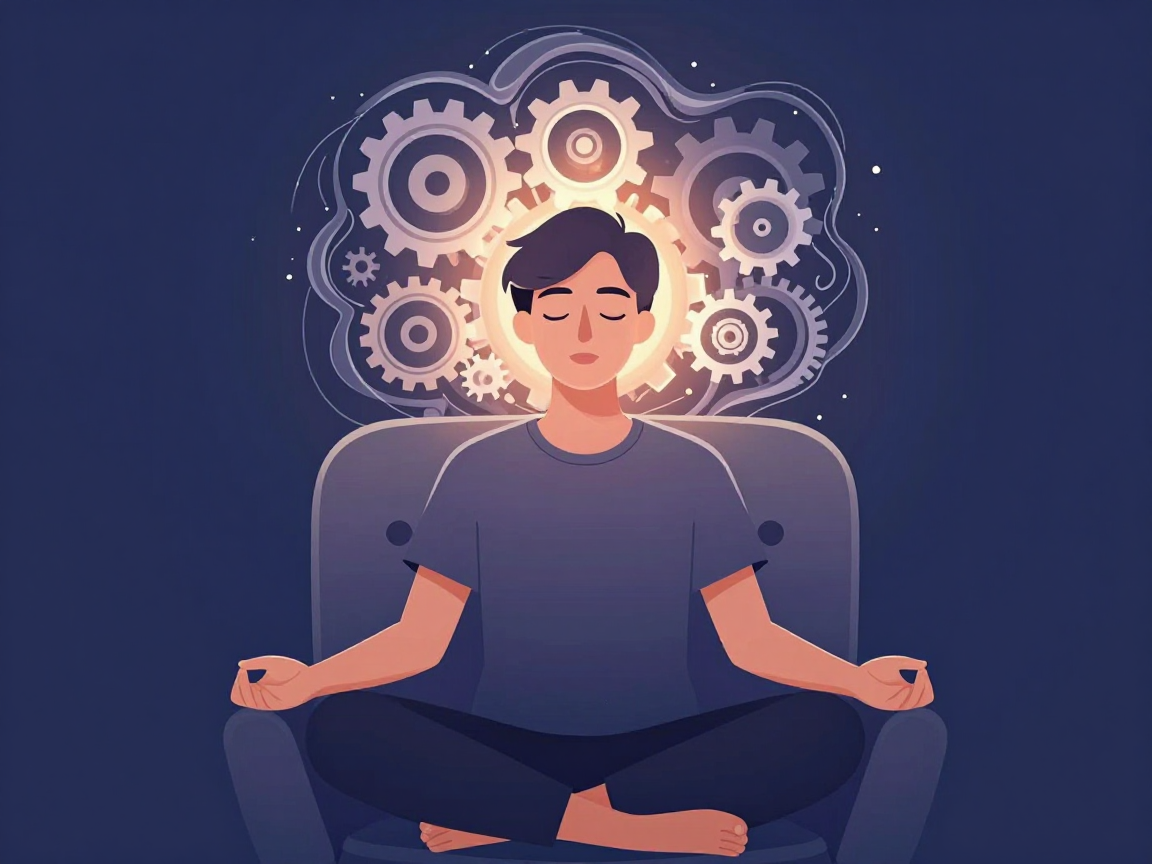
Most of us spend our lives trying to force change through sheer willpower. We resolve to be less anxious, to stop procrastinating, or to finally kick a stubborn habit, only to find ourselves back in the same old patterns within a week. This cycle of effort and failure happens because we are attempting to change deep-seated subconscious programs using only the thin layer of our conscious mind. To make a change that actually sticks, you have to go deeper. This is where self hypnosis becomes an essential tool for personal transformation.
Contrary to what stage magic or Hollywood movies might suggest, self hypnosis is not about losing control or falling into a deep sleep. It is actually a state of heightened focus and increased suggestibility. In this state, the critical, analytical part of your brain—the part that says "this will never work" or "I am just not that kind of person"—steps aside. This allows you to speak directly to the subconscious mind, which is the seat of your habits, emotions, and automatic responses. By learning to navigate this internal landscape, you can rewrite the scripts that have been holding you back for years.
The Science of the Trance State
To understand self hypnosis, you first have to understand that your brain operates at different frequencies depending on your level of alertness. During a typical day, you are likely in a Beta state, characterized by active thinking, logic, and analytical processing. While Beta is great for solving math problems or navigating traffic, it is highly resistant to new suggestions because the "critical faculty"—a theoretical filter between the conscious and subconscious—is fully engaged.
When you practice self hypnosis, you are intentionally guiding your brain into Alpha and Theta states. Alpha is a state of light relaxation, often associated with daydreaming or the moments just before you fall asleep. Theta is deeper, a state of profound relaxation and high creativity where the boundary between the conscious and subconscious is most permeable. Research using EEG technology has shown that during these states, the prefrontal cortex—the brain's command center for logic—slows down, while areas associated with imagery and emotional processing become more active.
This shift is significant because the subconscious mind does not communicate in the language of logic. It communicates through imagery, emotion, and repetition. When you enter a state of self hypnosis, you are essentially opening a doorway that allows you to plant new seeds of thought in a way that the subconscious can actually receive and act upon. This isn't just "positive thinking"; it is neuroplasticity in action, using focused attention to strengthen new neural pathways while allowing old ones to wither.
Why Willpower Is a Finite Resource
We often treat willpower like a muscle, believing that if we just try harder, we can overcome any obstacle. However, psychological research suggests that willpower is a finite resource that gets depleted throughout the day—a phenomenon known as ego depletion. More importantly, willpower is a function of the conscious mind. If your conscious goal is to "be confident" but your subconscious belief is "I am inadequate," the subconscious will win every time. It is responsible for approximately 95 percent of your daily thoughts, feelings, and actions.
Self hypnosis bypasses the struggle of willpower by aligning your subconscious beliefs with your conscious desires. Instead of fighting against yourself, you are updating the internal software. When your subconscious truly accepts a new suggestion, the change feels natural and automatic. You no longer have to "try" to be different; you simply become different because your baseline settings have been adjusted. It is the difference between trying to hold a beach ball underwater (willpower) and simply letting the ball float on the surface (alignment).
A 5-Step Framework for Effective Self Hypnosis
If you are new to the practice, it helps to have a structured approach. You do not need a therapist or a specialized recording to begin; you only need a quiet space and a clear intention. Follow this framework to guide yourself into a productive state of self hypnosis.
1. Preparation and Goal Setting
Before you close your eyes, decide exactly what you want to achieve. The subconscious responds best to specific, positive instructions. Instead of saying "I want to stop being afraid of public speaking," try "I am calm and articulate when I speak to groups." Write your suggestion down in a single, present-tense sentence. This is your "mantra" for the session. Ensure it is framed in the positive; focus on what you want to create, not what you want to avoid.
2. The Induction (Physical Relaxation)
Find a comfortable position where you will not be disturbed. Close your eyes and take several slow, deep breaths. Begin a progressive muscle relaxation process. Start at your toes and consciously release the tension, moving slowly up to your calves, thighs, stomach, chest, hands, and finally your face and jaw. Imagine a wave of relaxation washing over you, making your body feel heavy and still. This physical relaxation signals to the brain that it is safe to downshift from Beta to Alpha.
3. The Deepener (Mental Quiet)
Once your body is relaxed, you need to quiet your mind. A classic deepening technique is the "staircase visualization." Imagine you are standing at the top of a flight of ten stairs. With each step you take down, you feel yourself becoming twice as relaxed as you were on the step before. Count down from ten to one as you visualize your descent. By the time you reach one, tell yourself that you are in a deep, receptive state of mind. You might visualize a "safe place" at the bottom—a beach, a forest, or a cozy room—where you feel completely secure.
4. The Suggestion Phase
This is the core of self hypnosis. Repeat the positive suggestion you prepared earlier. Do not just say the words; try to feel the emotion associated with the change. If your goal is confidence, visualize yourself standing tall and feeling a sense of inner peace. Engage all your senses. What do you see? What do you hear? How does the air feel on your skin? The subconscious cannot distinguish between a vividly imagined event and a real one. The more emotional weight you give the visualization, the more impact it has on the subconscious architecture.
5. Emergence
When you are ready to finish, do not just jump up. Give yourself a moment to integrate the experience. Count from one to five, telling yourself that with every number, you are becoming more alert and refreshed. On the count of five, open your eyes, stretch, and carry the feeling of your new suggestion into your day. Take a moment to acknowledge that you have just performed a meaningful piece of internal work.
Common Barriers and How to Overcome Them
Many people try self hypnosis once or twice and give up because they do not feel a "magic" shift immediately. Like any skill, it requires consistency. Here are the most common hurdles beginners face:
- The Analytical Observer: You might find yourself thinking, "Is this working? Am I hypnotized yet?" This is normal. When these thoughts arise, simply acknowledge them and return your focus to your breathing or your visualization. You do not need to feel "zapped" for the practice to be effective; even light relaxation is a gateway to the subconscious.
- Falling Asleep: If you find yourself nodding off, try sitting in a chair rather than lying in bed. Keep your spine straight but relaxed. The goal is to be in the "twilight zone" between wakefulness and sleep, not to lose consciousness entirely. If you do fall asleep, don't worry—it's just a sign your body needed the rest.
- Negative Framing: If you use words like "don't" or "won't" in your suggestions, the subconscious often ignores the negation. For example, "I won't eat junk food" might lead the subconscious to focus on the image of "junk food." Always frame your goals as something you are or have.
- Impatience: We live in a world of instant gratification, but neural rewiring takes time. Some people see results in a day, while others require weeks of daily practice. Treat it as a journey of discovery rather than a chore to be completed.
The Rules of Subconscious Language
To get the most out of your self hypnosis sessions, you must speak the language your subconscious understands. If you treat it like a logical adult, you will likely fail. Instead, treat it like a creative, literal child. Use these three principles to refine your suggestions:
- The Principle of Presence: Always use the present tense. If you say "I will be wealthy," your subconscious views wealth as something in the future—a destination you never quite reach. Use "I am" or "I feel." The subconscious only operates in the Now.
- The Principle of Emotion: Logic does not move the needle, but feeling does. If you can generate the feeling of pride, relief, or joy during your session, the suggestion will take root much faster. Emotion is the "ink" that writes the new program.
- The Principle of Persistence: The subconscious learns through repetition. This is why advertising works so well. You are essentially running an internal ad campaign for your better self. Aim for at least one session a day for 21 to 30 days to see a fundamental shift in your internal narrative.
Applications for Daily Life
While self hypnosis is often used for major habit changes like quitting smoking or weight loss, its daily applications are much broader. You can use it to prepare for a difficult conversation, to lower your blood pressure during a stressful week, or to enhance your creative output.
One particularly effective use is for "anchoring." During a deep state of self hypnosis, you can associate a specific physical gesture—like pressing your thumb and forefinger together—with a feeling of absolute calm. After repeating this association enough times, you can use that gesture in the middle of a high-stress meeting to instantly trigger a physiological relaxation response. You are essentially installing a "shortcut" on your mental desktop, allowing you to access peak states of performance regardless of external circumstances.
Creating a Sustainable Practice
Self hypnosis is not a one-time event; it is a mental hygiene practice. Just as you brush your teeth to maintain physical health, you can use these techniques to maintain mental and emotional clarity. The more you visit the state of deep relaxation and focused intent, the easier it becomes to access. Over time, the boundary between your conscious intentions and your subconscious actions begins to dissolve.
Eventually, you may find that you can drop into a state of "flow" almost at will, allowing you to navigate life's challenges with a sense of groundedness that willpower alone could never provide. In a world that is constantly vying for your attention and trying to program you with external narratives, taking fifteen minutes a day to reclaim your internal focus is a radical act of self-care. By mastering the art of self hypnosis, you stop being a passenger to your automatic reactions and start becoming the architect of your own mind.