Why Your Brain Craves What It Can’t Have: The Deep Psychology of Scarcity Bias and How to Reclaim Your Logic
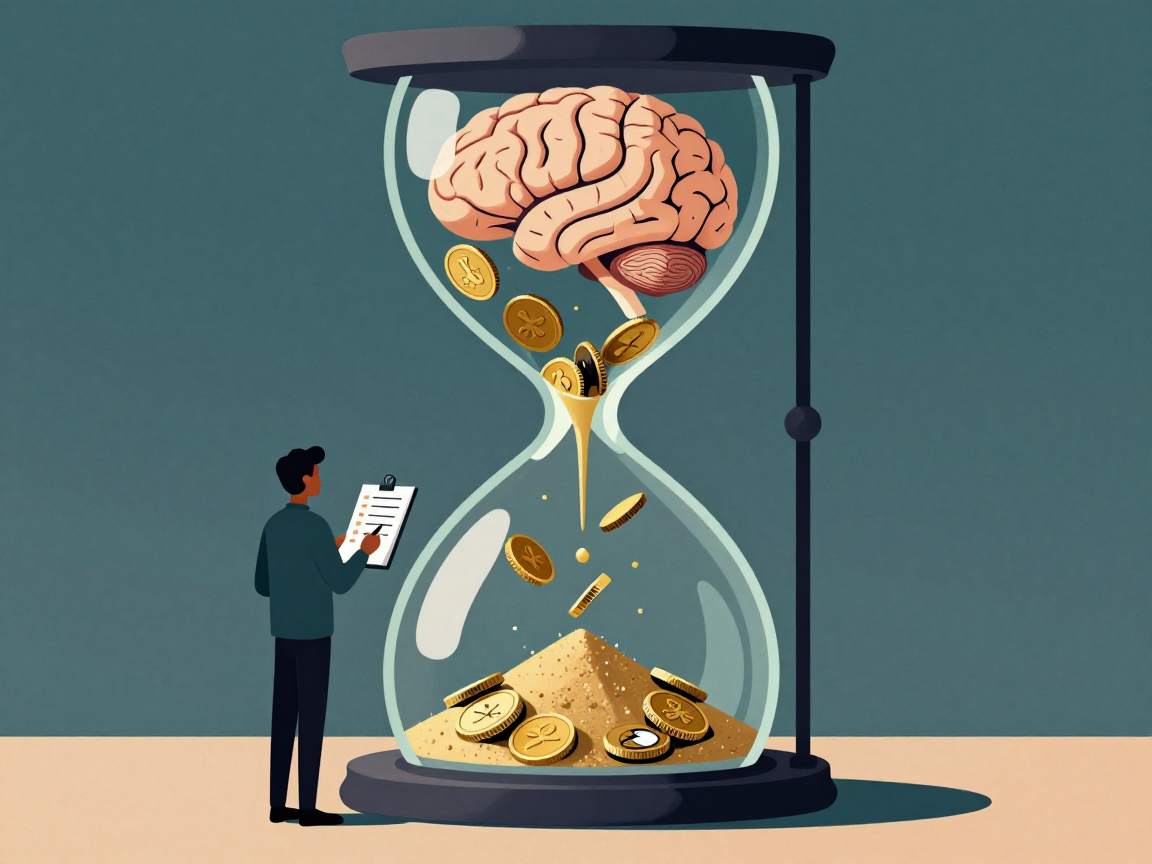
Imagine you are browsing an online store for a pair of shoes you have been considering for weeks. You are undecided until you notice a small, red box of text flashing near the price: "Only 2 left in stock!" Suddenly, your heartbeat quickens. The logical side of your brain, which was debating the price and the necessity of the purchase, is silenced by a surge of urgency. You find yourself reaching for your credit card, driven by an overwhelming fear that if you do not act now, the opportunity will be gone forever.
This is not a coincidence or a lack of willpower—it is the result of a deeply ingrained psychological phenomenon known as scarcity bias. In our modern world, we are bombarded with "limited time offers," "exclusive drops," and countdown timers designed to exploit this specific mental loophole. While it feels like a personal failing of self-control, scarcity bias is actually a hardwired survival mechanism that has simply outlived its original utility. To navigate a consumerist culture without losing our sense of agency, we must understand the biological and psychological machinery that makes the rare feel so irresistible.
The Evolutionary Survival Mechanism: Why the Brain Hates Losing Out
To understand why scarcity bias is so effective, we have to look back at the environment in which the human brain evolved. For the vast majority of human history, resources were legitimately scarce. Food, clean water, and reliable shelter were not guaranteed. In a hunter-gatherer society, if you came across a bush full of ripe berries or a fresh water source, you could not afford to "think it over" for a few days. You had to act immediately because someone else—or another animal—would likely consume that resource if you hesitated.
Our brains are hardwired to prioritize the immediate over the long-term when we perceive a shortage. This survival instinct is governed by the amygdala, the part of the brain responsible for our fight-or-flight response. When we encounter a situation involving scarcity, the amygdala signals a potential loss, which our brains process as a threat. This physiological reaction effectively bypasses the prefrontal cortex—the area of the brain responsible for executive function, logic, and long-term planning.
When we see a "Sold Out" sign or a dwindling inventory count, our brain doesn't see a pair of shoes; it sees a disappearing resource. The resulting anxiety isn't about the product itself, but about the perceived threat to our future options. This is why, when faced with a "one-of-a-kind opportunity," even the most rational person can feel a frantic need to comply. We aren't shopping; we are surviving, at least according to our primitive gray matter.
The Three Pillars of Scarcity Psychology
There are several underlying psychological theories that explain why scarcity bias has such a grip on our behavior. Understanding these three pillars can help us deconstruct the "magic" of marketing.
1. Commodity Theory and Value Perception
Proposed by psychologist Timothy Brock, Commodity Theory suggests that any "commodity" will be valued more to the extent that it is unavailable. This applies not just to physical goods, but also to information and social experiences. When information is restricted, we perceive it as more "true" or more valuable than information that is publicly accessible. This is the engine behind "exclusive leaks" and "insider secrets."
2. Psychological Reactance
When our freedom to choose is threatened by the prospect of something becoming unavailable, we experience an uncomfortable state of tension called reactance. We hate losing options. By making a product or experience scarce, a brand effectively threatens our freedom to buy it whenever we want. To resolve this tension and reassert our freedom, we buy the item immediately. The purchase isn't an act of desire; it’s an act of rebellion against the loss of choice.
3. Social Proof and Competition
Scarcity bias is heavily bolstered by social proof. We often use the behavior of others as a shortcut to determine value. If something is scarce because everyone else is buying it, our brain assumes that it must be high quality. This creates a feedback loop: the more people want something, the scarcer it becomes, and the more valuable it seems to the next person in line. This is why auctions and "limited edition" sneaker drops create such intense emotional frenzies—the scarcity is compounded by the visible competition of others.
Artificial Scarcity: Decoding the Modern Marketing Machine
In the modern landscape, scarcity is rarely a reflection of genuine shortages. Instead, it is a carefully manufactured psychological tool used by marketers to bypass your logic and drive conversions. Recognizing these patterns can help you spot when scarcity bias is being used against you.
- Quantity Scarcity: This involves displaying low stock levels, such as "Only 3 left at this price!" It creates a sense of competition with other shoppers. Even if there are thousands more in a warehouse nearby, the displayed number triggers the bias.
- Time Scarcity: Countdown timers, "Deal of the day," and seasonal offers (like the famous Pumpkin Spice Latte) leverage the fear that a window of opportunity is closing. If you don't act by midnight, the "value" disappears.
- Exclusive Scarcity: Invitation-only access or "platinum" memberships make us feel that the value lies in being part of a group that others cannot join. The product is secondary to the status of having what others cannot.
- Contextual Scarcity: Limiting the availability of a product to specific locations or events to create a "now or never" atmosphere, often seen at concerts or travel destinations.
While these tactics are effective at driving sales, they often lead to "consumer’s remorse." When the urgency fades and the physiological surge of the amygdala subsides, we are left with a product we might not have actually needed, purchased at a price we might not have wanted to pay.
The Cognitive Tunnel: How Scarcity Limits Your Intelligence
When we are under the influence of scarcity bias, we experience what researchers Sendhil Mullainathan and Eldar Shafir call "cognitive tunneling." This occurs when our focus becomes so narrow that we lose the ability to see the bigger picture. We focus entirely on the thing that is scarce, neglecting other priorities and long-term consequences. This state of mind is mentally taxing and reduces our overall "bandwidth" for making good decisions.
Research has shown that people in a scarcity mindset—whether they are experiencing a shortage of money, time, or social connection—actually perform worse on cognitive tests. The brain is so preoccupied with managing the perceived deficiency that it has less energy for everything else. In a shopping or business context, this means you are more likely to miss the fine print, ignore better alternatives, and overspend because your brain is stuck in "survival mode" regarding that specific item. You aren't just paying with your money; you are paying with your intelligence.
Framework: The Pause and Pivot Method to Outsmart Scarcity
Overcoming scarcity bias requires moving from a reactive state to a proactive one. Since you cannot shut off your biological instincts, you must build a system to manage them. The following "Pause and Pivot" framework is designed to help you interrupt the urgency loop and regain your rational perspective.
- Identify the Physical Surge: The moment you see a "limited stock" warning or a countdown timer, check in with your body. Are you feeling a tightness in your chest? Is your pulse accelerating? Recognize this as a physiological response to a perceived threat of loss, not necessarily a sign that the product is a good deal.
- Classify the Scarcity: Ask yourself, "Is this scarcity real or artificial?" If it is a sale that happens every year, or a mass-produced item that will likely be restocked, the scarcity is artificial. Identifying the manipulation often breaks the spell.
- The 24-Hour Buffer Rule: For any purchase triggered by a scarcity cue, commit to a mandatory 24-hour waiting period. If the item is truly "gone" by then, accept that it was not meant to be. In 90% of cases, you will find that after a night of sleep, the intense desire to purchase has evaporated.
- The Abundance Audit: Ask yourself, "Would I want this if there were ten thousand of them available at this exact price?" This question forces you to evaluate the utility of the item based on its own merits rather than its rarity. If the answer is "no," you are being influenced by scarcity bias.
- Define Your Needs Before You Shop: Scarcity bias thrives on ambiguity. If you know exactly what you need and how much you are willing to pay before you enter a store or website, you are much less likely to be swayed by flashy "limited time" offers that fall outside of your plan.
Scarcity in Relationships and Social Circles
It is important to note that scarcity bias does not just affect our wallets; it affects our hearts and social lives as well. In the world of dating, the concept of "playing hard to get" is a direct application of this principle. When someone makes themselves less available, they often appear more desirable because their time is perceived as a scarce resource.
However, building relationships based on manufactured scarcity is rarely sustainable. It creates an imbalance of power and a foundation of anxiety rather than genuine connection. Just as we must be wary of artificial scarcity in the marketplace, we should be mindful of how we use or respond to scarcity in our personal lives. Value should be based on character, compatibility, and mutual respect, not on how difficult someone is to reach. True connection thrives in abundance and safety, not in the frantic fear of losing access.
Toward a Mindset of Sufficiency
The antidote to scarcity bias is a conscious move toward a mindset of sufficiency. This does not mean rejecting all limited offers or ignoring the reality of genuine shortages. Rather, it means recognizing that the "urgent" feeling we experience is often a relic of our past that does not serve our current interests.
By understanding how scarcity bias works, we can start to see the strings being pulled by advertisers and our own biological programming. We can choose to step back, breathe, and ask ourselves what we truly need. In a world that is constantly screaming that time is running out and resources are low, the most powerful thing you can do is realize that, in most cases, you already have enough. When you stop chasing what is rare, you finally have the clarity to appreciate what is meaningful. Real value isn't found in how few people have something, but in how much it truly enriches your life.