Why You Only See What You Already Believe: A Guide to Reticular Activating System Psychology
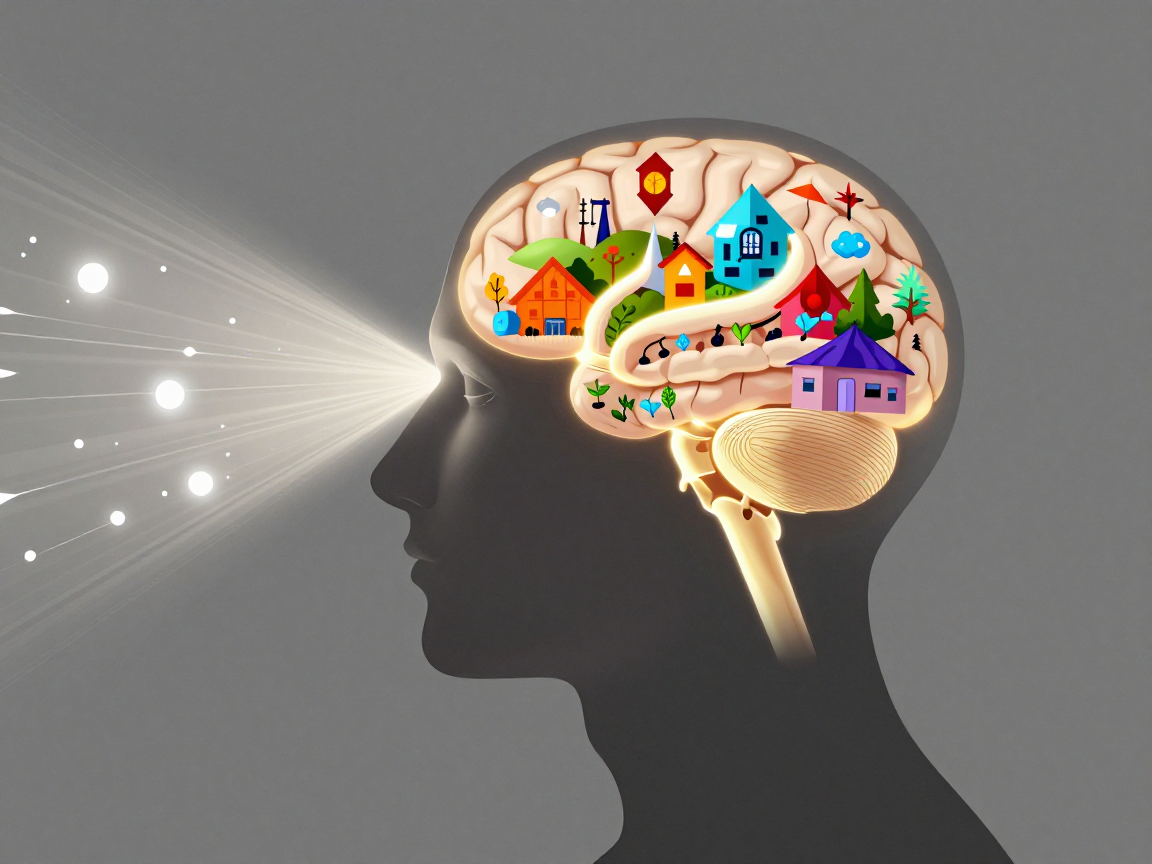
Have you ever decided to buy a specific make and model of car, only to suddenly see that exact vehicle on every street corner and in every parking lot? It feels as though the world has been flooded with your chosen car overnight, yet the reality is far more interesting. Those cars were always there—you simply lacked the neurological software to notice them until now. This phenomenon is a prime example of reticular activating system psychology in action.
The human brain is bombarded with roughly two million bits of sensory information every single second. If our conscious minds attempted to process all of this data simultaneously, we would experience an immediate and total system crash. To prevent this, the brain employs a sophisticated filtering mechanism that decides what is worth your attention and what can be safely ignored. Understanding how this filter works is the key to shifting from a state of passive reaction to one of intentional creation. By learning to work with your biology rather than against it, you can effectively change what you perceive, and by extension, the life you lead.
The Biological Gatekeeper: Understanding the RAS
To understand reticular activating system psychology, we must first look at the hardware. The Reticular Activating System (RAS) is a bundle of nerves located in the brainstem, specifically stretching through the medulla, pons, and midbrain. It acts as a gatekeeper between your sensory organs and your conscious mind. Think of it as a highly trained executive assistant who sits in the outer office of your brain, sorting through thousands of emails and phone calls, only allowing the most urgent or relevant ones to reach the CEO—your conscious awareness.
This system is responsible for several critical functions, including the regulation of sleep-wake transitions and the mediation of attention. However, its most profound impact on our daily experience is its role in selective attention. The RAS ensures that you hear your name called in a crowded, noisy terminal, even if you were previously engrossed in a book. It prioritizes information that it deems essential for survival or relevant to your current goals and beliefs.
Physiologically, the RAS sends projections to the thalamus, which then relays information to the cerebral cortex. When the RAS is activated, it "wakes up" the cortex, making it more receptive to incoming data. When the RAS is suppressed, we fall into sleep or a state of reduced awareness. In the context of reticular activating system psychology, we are interested in how this physical structure dictates what we perceive as reality. It is not an exaggerating to say that the RAS is the lens through which we view the world; if the lens is tinted blue, the world looks blue, regardless of its true color.
The Psychology of Belief: How Your Filter Confirms Your Worldview
One of the most fascinating aspects of reticular activating system psychology is that the filter is not objective. It does not simply look for "important" things; it looks for "familiar" things and "confirmed" things. This is the biological basis for confirmation bias—the tendency to search for, interpret, and recall information in a way that confirms one's prior beliefs or values.
If you believe that the world is a dangerous place where people are generally untrustworthy, your RAS will prioritize evidence of aggression, deceit, and danger. You will notice the scowl on a stranger's face but miss the five people who smiled at you. Conversely, if you believe that opportunities for growth are everywhere, your RAS will flag "clues" that lead to new connections, business ideas, or solutions to problems that previously seemed insurmountable.
This creates a feedback loop. Your beliefs instruct your RAS on what to look for; the RAS finds evidence to support those beliefs, which then strengthens the original conviction. This is why two people can walk through the same city street and have entirely different experiences. One sees a decaying urban environment full of obstacles; the other sees a vibrant neighborhood full of potential. They are both right, but their reticular activating system psychology has curated two different versions of the truth. To break a cycle of negativity, one must realize that the evidence they see for their misery is being filtered into their view by their own internal gatekeeper.
Why Most People Live in Survival Mode
For many, the RAS is stuck in a primitive "survival mode" setting. Because the primary function of the brain is to keep you alive, the RAS naturally prioritizes threats. In the modern world, these threats are rarely saber-toothed tigers; instead, they are social rejection, financial instability, or perceived failures. When the RAS is hyper-vigilant for these modern threats, it keeps the nervous system in a state of chronic stress.
In this state, the brain is effectively blind to opportunities. If you are constantly scanning for what might go wrong, your RAS will screen out the subtle signals of what might go right. This is why high-stress environments often lead to a lack of creativity; the RAS has restricted the flow of information to the cortex to focus solely on immediate survival cues. Understanding reticular activating system psychology allows us to recognize when we are in this defensive crouch and provides the tools to manually override the settings.
A 5-Step Framework to Reprogram Your RAS for Focus and Flow
Reprogramming your reticular activating system psychology requires consistency and intent. Because the RAS responds to vividness, repetition, and emotional intensity, the following framework is designed to provide the system with a new set of instructions.
- Define the Specific Target: The RAS cannot work with vague requests like "I want to be successful." It needs specific data points. Define exactly what you are looking for. If you want a new career, specify the industry, the role, and the feeling of the office environment. The more specific the "search term," the more effectively the RAS can scan the environment for it.
- Utilize Multisensory Visualization: Spend five minutes each morning visualizing your goal as if it has already occurred. Do not just see a picture; engage your senses. What does the air smell like? What is the texture of the paperwork in your hand? By involving multiple senses, you signal to the RAS that this information is of high survival value and should be prioritized over the mundane static of daily life.
- Implement Conscious Priming: Priming is the act of exposing yourself to stimuli that influence your subsequent response. If you want to notice more kindness in the world, start your day by reading a story about an act of altruism. This "primes" the RAS to look for similar patterns throughout the rest of your day, effectively lowering the threshold for that specific type of information to enter your conscious mind.
- Audit Your Internal Dialogue: Your RAS listens to your self-talk to determine what is important. If you constantly say "I am so tired" or "Nothing ever works out for me," you are ordering the RAS to find evidence of fatigue and failure. Replace these with "I am looking for energy" or "I am curious to see how this works out." This isn't just about being positive; it's about changing the search parameters of your biological search engine.
- The Evening Evidence Log: Before bed, write down three small things that happened during the day that align with your goals. This reinforces the "find" and tells your RAS that these specific types of data points are valuable. Over time, the system will get better at spotting them earlier in the day because it knows it needs to report back to you at night.
The Role of Emotional Intensity in RAS Filtering
Why do we remember our most embarrassing moments or our greatest triumphs more vividly than what we had for lunch last Tuesday? The answer lies in the relationship between the RAS and the limbic system, particularly the amygdala. Information that is tagged with a strong emotional charge is given "VIP status" by the filter.
In reticular activating system psychology, this means that if you want to prioritize a new goal, you must attach a strong emotion to it. Logic alone is rarely enough to rewire a long-standing filter. This is why fear-based programming is so effective at keeping us stuck; fear is a powerful emotional tag. To counter this, you must consciously generate feelings of excitement, gratitude, or relief when thinking about your intentions. This "greases the wheels" of the neurological pathway, making it easier for the RAS to prioritize the new information over old, habitual patterns.
Checklist: Are You Misprogramming Your RAS?
If you feel like you are working hard but not getting results, check if you are making these common mistakes in reticular activating system psychology:
- The "Don't" Trap: Are you focusing on what you want to avoid? The RAS is a "non-negative" processor. If you say "Don't think about a pink elephant," you must first conceive of it. Focus on the destination, not the obstacle.
- Information Overload: Are you scrolling through stressful news or social media first thing in the morning? This tells your RAS that chaos and comparison are the day's primary themes.
- Vague Language: Are your goals too broad? Remember, the RAS needs a clear image to match against reality. Use specific numbers, dates, and names.
- Dismissing the Small Wins: When you see a small sign of progress, do you ignore it? Every time you acknowledge a small win, you tell the RAS to find more of them.
Conclusion: Taking the Wheel of Your Perception
The study of reticular activating system psychology reminds us that we are not passive observers of a fixed reality. Instead, we are active participants in a sensory dance, constantly filtering and shaping the world we perceive. The "luck" that some people seem to have is often just a highly tuned RAS that is exceptionally good at spotting silver linings and hidden doors that others walk right past.
By taking conscious control of this biological gatekeeper, you reclaim your most valuable asset: your attention. You begin to see that the resources, people, and opportunities you need are often already in your environment, waiting for your filter to finally give them permission to enter your awareness. You don't always need to change your circumstances; sometimes, you just need to change the instructions you've given to the part of your brain that decides what you are allowed to see.