The Filter of Your Reality: How to Reprogram Reticular Activating System Bias to Work for You
Have you ever decided to buy a specific model of car, perhaps a silver sedan, and suddenly started seeing that exact vehicle on every street corner? It feels as though the world has been flooded with silver sedans overnight. In reality, the number of those cars remained the same. What changed was your internal filtering system. This phenomenon is a primary example of reticular activating system bias in action.
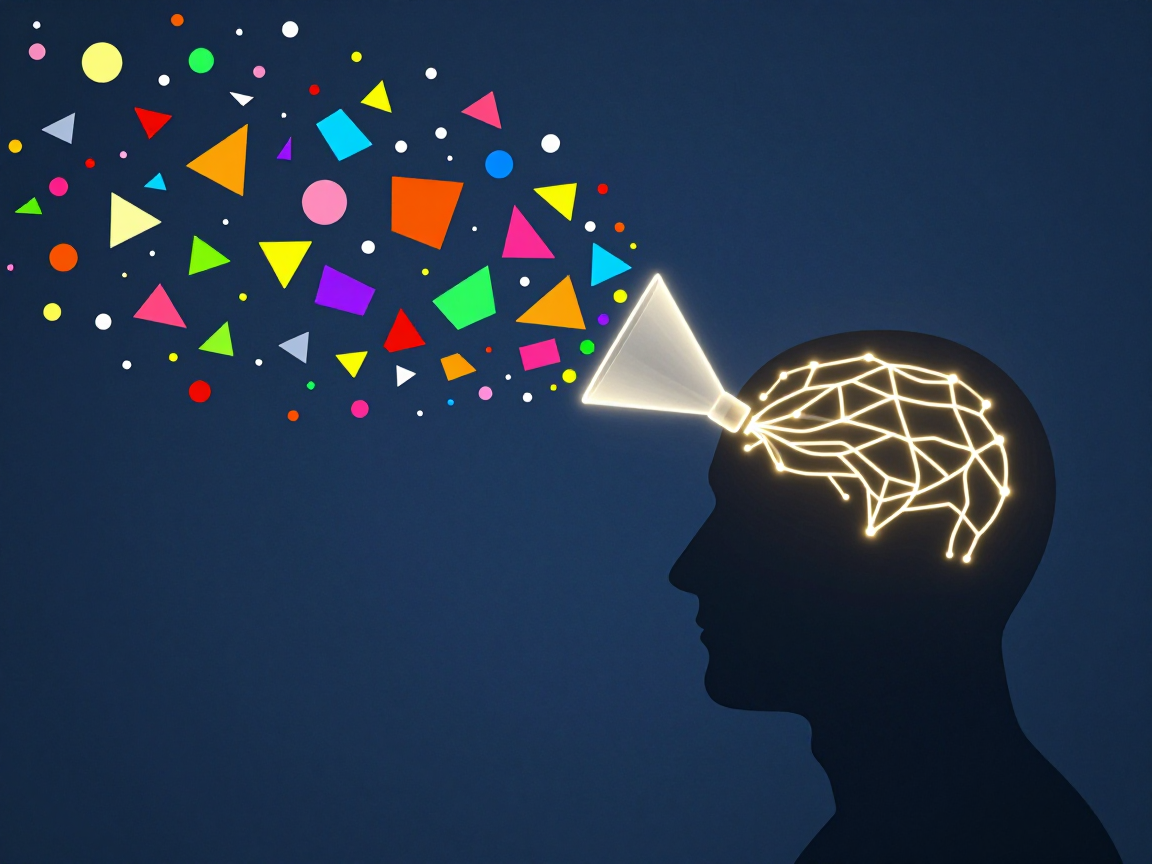
Your brain is constantly bombarded with millions of bits of sensory data every single second. If you were consciously aware of all of it - the hum of the refrigerator, the sensation of your socks against your skin, the flickering of a distant light, and every conversation in a crowded room - your mind would quickly short-circuit. To prevent this overwhelm, your brain employs a sophisticated gatekeeper known as the Reticular Activating System (RAS). This bundle of nerves at our brainstem acts as a filter, deciding what information is important enough to reach your conscious mind and what can be safely ignored.
The Gatekeeper of Your Experience: What Is the RAS?
Before we can understand the implications of reticular activating system bias, we must understand the hardware. The RAS is a network of neurons located in the brainstem that mediates overall level of consciousness. It plays a central role in wakefulness, sleep-wake transitions, and, most importantly for our daily lives, selective attention.
Think of the RAS as the executive assistant to your conscious mind. Its job is to sort through the massive pile of incoming mail and only put the most urgent or relevant items on your desk. For example, if you are in a noisy airport, the RAS filters out the background chatter. However, the moment someone announces your name over the loudspeaker, you snap to attention. Your RAS has been programmed to recognize your name as a high-priority piece of data.
This system was historically vital for survival. An ancestor walking through a forest needed to filter out the sound of rustling leaves but instantly notice the snap of a twig that might indicate a predator. Today, while we rarely hunt for food or hide from tigers, the system still operates on the same principles of prioritization. It looks for what we have taught it to value. This is where reticular activating system bias begins to shape our lives, for better or for worse.
How Reticular Activating System Bias Shapes Your Perception
The concept of reticular activating system bias refers to the tendency of this neural filter to prioritize information that aligns with our existing beliefs, fears, and goals. Because the RAS cannot let everything in, it uses your past experiences and current focuses as a template for what is allowed through the gates.
If you believe that the economy is failing and that no one is hiring, your reticular activating system bias will cause you to notice every news headline about layoffs while your brain literally ignores the small sign in a shop window advertising a new opening. You are not being lazy; your brain is simply performing the task you have implicitly assigned it: "Look for evidence that the economy is failing" .
This bias creates a feedback loop. What you focus on, you see more of. What you see more of, you believe more deeply. What you believe more deeply, you focus on more intensely. This loop can lead to a sense of being stuck in a reality that feels objective and unchangeable, when in fact, it is a curated version of reality filtered through your own biological programming.
The Cycle of Self-Fulfilling Prophecies
When reticular activating system bias is left unchecked, it often leans toward the negative. This is due to an evolutionary trait known as the negativity bias, where the brain prioritizes potential threats over potential rewards. If you are convinced that people are generally unkind, your RAS will highlight every scowl on a stranger's face and every brusque tone in an email. Meanwhile, the dozens of neutral or pleasant interactions you have throughout the day are discarded as irrelevant noise.
This creates a self-fulfilling prophecy. Because you only notice the negativity, you respond with defensiveness or coldness, which in turn causes others to react poorly to you. This reinforces your original belief, making the filter even stronger.
However, the inverse is also true. By consciously choosing what we value and what we want to achieve, we can begin to leverage reticular activating system bias to our advantage. We can train the gatekeeper to look for solutions rather than problems, for opportunities rather than obstacles, and for kindness rather than hostility.
A 5-Step Framework to Reprogram Your Mental Filter
Reprogramming your brain is not an overnight process, but it is a biological possibility. By using specific techniques, you can change the instructions you give to your RAS. Here is a practical framework to start shifting your reticular activating system bias.
- Define Your Target with Specificity
The RAS needs clear instructions. Vague goals like "I want to be successful" are too broad for the filter to recognize. Instead, define what success looks like in concrete terms. If you want a new career path, describe the specific industry, the type of tasks you want to do, and the feelings you want to experience. The more vivid the detail, the better the RAS can recognize matching data in the real world.
- Utilize Intentional Visualization
Your brain has difficulty distinguishing between a vividly imagined event and a real one. When you visualize yourself achieving a goal, you are essentially giving your RAS a "wanted" poster. You are telling it, "This is what is important to me" . Spend five minutes every morning imagining your day going exactly as you wish, focusing on the sensory details of that success.
- Use Affirmations That Trigger Emotion
Affirmations often fail because they are repeated robotically without any emotional weight. To influence reticular activating system bias, your affirmations should be stated in the present tense and accompanied by a genuine feeling of conviction. When you say, "I am capable of finding creative solutions" , try to recall a time you actually felt that way. This emotional charge signals to the RAS that this information is high-priority.
- Audit Your Information Diet
Your RAS is constantly learning from what you feed it. If you spend three hours a day scrolling through sensationalized news or toxic social media threads, you are training your brain to look for chaos and outrage. Consciously choose to consume content that aligns with the reality you want to build. Read books about people who have succeeded in your field or listen to podcasts that foster a growth mindset.
Before you go to sleep, write down three to five pieces of evidence from your day that support your new focus. If your goal is to notice more opportunity, write down every small lead or interesting conversation you had. This practice forces the RAS to search its recent memory for positive data, reinforcing the filter right before you enter the restorative stages of sleep.
Signs Your RAS Is Working Against You
It is helpful to identify when your current filtering system is hindering your progress. Recognizing these patterns is the first step toward intervention.
- The "Always" and "Never" Narrative: If you find yourself saying things like "I never get a break" or "People always let me down" , your reticular activating system bias is likely filtering out all exceptions to these rules.
- Missing Obvious Information: You find out later about an opportunity or a resource that was right in front of you, but you honestly did not see it.
- Hyper-fixation on Criticism: You receive ten compliments and one piece of constructive feedback, but you can only think about the criticism for the rest of the week.
- Feeling Overwhelmed by Choice: Because your filter lacks a clear priority, everything feels equally important or equally stressful, leading to decision paralysis.
Moving Beyond Limitations: The Power of Intentional Focus
Understanding reticular activating system bias moves us away from the idea that we are passive observers of a fixed reality. Instead, it suggests that we are active participants in the construction of our personal experience. We cannot control every external event, but we can significantly influence which events we notice and how much weight we give them.
When you begin to actively manage your RAS, the world does not physically change, but your experience of it does. You start noticing the right people, the right books, and the right timings. People often call this luck or synchronicity. In biological terms, it is simply a well-calibrated Reticular Activating System doing exactly what it was designed to do - find what you have told it is important.
This is not about ignoring the challenges of life or pretending that problems do not exist. It is about ensuring that your brain is not so focused on the problems that it becomes blind to the tools you have to solve them. By consciously directing your attention, you reclaim your agency. You move from a state of being overwhelmed by the noise of the world to a state of being guided by the signals that matter most to your growth and well-being.
As you move forward, remember that your attention is your most valuable currency. Where you spend it determines what you see, and what you see determines the life you lead. By acknowledging and adjusting your reticular activating system bias, you take the first step toward a clearer, more intentional, and ultimately more fulfilling reality.