The Space Between: Why Mastery of Responding vs Reacting Is the Secret to Emotional Freedom
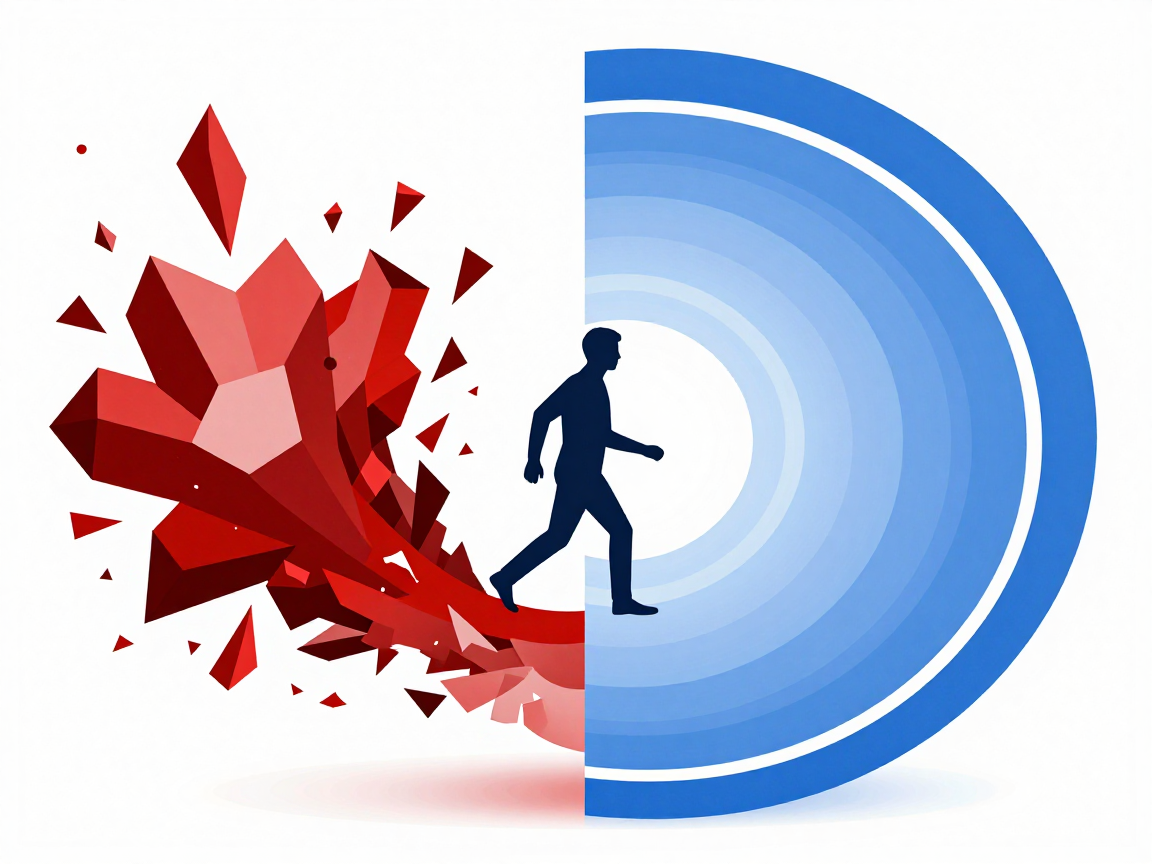
Most of us live our lives on a hair-trigger. We wake up to an aggressive email, and our stomach knots. We sit in gridlock traffic, and a reckless driver sends our blood pressure soaring. A partner makes a passing comment, and before we have even processed the words, a defensive retort has already left our lips. These moments are characterized by a sense of urgency, heat, and a total lack of control. This is the realm of the reaction—an automatic, survival-based impulse that often leaves us feeling regretful, depleted, or exhausted once the adrenaline fades.
However, there is another way to navigate the complexities of human interaction and internal stress. It lies in the conscious choice to pause. When we examine the concept of responding vs reacting, we are looking at the fundamental difference between being a slave to our biological impulses and being the architect of our own behavior. Understanding this distinction is not just about keeping your cool in an argument; it is about reclaiming your agency and living a life aligned with your deepest values rather than your temporary emotions. In the space between a stimulus and our response, as Viktor Frankl famously suggested, lies our growth and our freedom.
The Neurobiology of the "Snap": Why We React
To understand why it is so difficult to stay calm under pressure, we have to look at how the human brain is wired. At the center of our emotional processing lies the amygdala, an ancient, almond-shaped structure responsible for our survival instincts. When we perceive a threat—whether that threat is a physical predator or a perceived social slight—the amygdala triggers the sympathetic nervous system. This is the fight-or-flight response. This process happens in milliseconds, long before the thinking part of our brain, the prefrontal cortex, has a chance to weigh in.
When we are reacting, the amygdala is in the driver’s seat. It floods the body with cortisol and adrenaline, preparing us to defend ourselves or flee. In this state, our field of vision narrows, our heartbeat increases, and our ability to access complex logic or empathy is temporarily offline. A reaction is fast, intense, and often defensive. It is a closed loop of stimulus and behavior that bypasses our wisdom. While this was incredibly useful for our ancestors escaping physical danger, it is far less helpful when we are trying to resolve a conflict with a spouse or a manager.
Responding, on the other hand, requires the involvement of the prefrontal cortex. This is the part of the brain responsible for executive function, impulse control, and personality expression. When we choose a response, we are effectively slowing down the nervous system to allow the logical brain to catch up with the emotional one. In the context of responding vs reacting, the response is a mindful choice made with an awareness of the long-term consequences of our actions. It is the difference between a reflex and a reflection.
The Survival Bias: Why We Default to Reaction
It is important to acknowledge that reacting is our default setting for a reason. It is energy-efficient, fast, and designed to keep us alive. However, in the modern world, our brains often mistake "discomfort" for "danger." A critical comment from a boss triggers the same biological cascade as a predator in the wild. When our "internal cup" is already full of micro-stressors—lack of sleep, poor nutrition, or digital overwhelm—even a small drop of additional tension can cause an overflow in the form of a snap reaction.
Common reasons why we find ourselves trapped in a cycle of reacting include:
- Chronic Sleep Deprivation: A tired brain lacks the glucose and energy required for the prefrontal cortex to exert top-down control over the amygdala.
- The Illusion of Urgency: Modern digital life, with its instant notifications and "always-on" culture, creates a false sense that every prompt requires an immediate, unthinking answer.
- Unresolved Trauma: Past experiences can "prime" the nervous system to see threats where there are none, leading to hyper-reactive behavior as a form of self-protection.
- Cognitive Load: When we are juggling too many tasks, we lose the mental bandwidth required to process emotions slowly and thoughtfully.
The R.A.U.S.E. Framework for Emotional Mastery
Moving from a reactive state to a responsive one is a skill that must be practiced, much like a muscle. You cannot expect to be perfectly responsive in a crisis if you haven't practiced in the small, mundane moments of life. The following framework, the R.A.U.S.E. method, provides a concrete pathway to navigate the gap between stimulus and action.
1. Recognize the Physiological Shift
Before you can change your behavior, you must notice the "biological signature" of a reaction. Does your throat tighten? Does your heart rate accelerate? Does your jaw clench? By recognizing these physical cues early, you gain a few precious seconds of awareness before the reaction takes over. This is your early warning system.
2. Acknowledge the Emotion Without Judgment
Instead of fighting the feeling or feeling ashamed of it, name it silently to yourself. "I am feeling defensive" or "I am feeling ignored." Research shows that labeling an emotion—a process called affect labeling—actually reduces the activity in the amygdala and increases activity in the regulatory parts of the brain. You are no longer "in" the emotion; you are observing it.
3. Understand the "Why"
Ask yourself what the true trigger is. Is it really the dishes left in the sink, or is it the underlying feeling that your time isn't being respected? Understanding the root cause helps you address the real issue rather than reacting to the surface-level symptom. This moves the focus from the other person's behavior to your own internal landscape.
4. Space Creation (The Sacred Pause)
This is the most critical part of responding vs reacting. You must create physical or temporal space. Take three deep breaths, count to ten, or excuse yourself from the room for a moment. This "gap" allows the chemical surge of adrenaline to begin dissipating. If you can wait ninety seconds, the peak of the emotional wave will usually pass.
5. Execute a Values-Aligned Action
Finally, choose how you want to show up. Ask yourself: "What kind of person do I want to be in this moment?" or "What outcome do I actually want to achieve?" Your action should be a reflection of your character, not a reflection of the provocation you just received.
The Language of Response: Shifting Your Communication
The way we speak often reveals whether we are in a state of reaction or response. Reactionary language is often characterized by "you" statements, absolutes like "always" or "never," and a high volume or sharp tone. Responsive language tends to be calmer, uses "I" statements, and leaves room for curiosity and collaboration. This shift is essential for maintaining healthy relationships.
Consider these shifts in communication:
- Reaction: "You always ignore me when I'm talking!"
- Response: "I feel unheard when I see you looking at your phone while I'm sharing something important to me. Can we put the phones away for a few minutes?"
- Reaction: "This is a stupid idea and it will never work."
- Response: "I have some concerns about the feasibility of this plan based on our current budget. Can we look at the data together?"
- Reaction: "I'm done with this!"
- Response: "I'm feeling very overwhelmed right now and I don't think I can have a productive conversation. I need thirty minutes to cool down, and then I'd like to try again."
The Window of Tolerance: Expanding Your Capacity
Psychiatrist Dan Siegel introduced the concept of the "Window of Tolerance" to describe the zone of arousal in which we can function effectively. When we are within our window, we can handle the ups and downs of life with resilience. We are capable of responding vs reacting. However, when we are pushed out of our window—either into hyper-arousal (fight/flight) or hypo-arousal (freeze/numbness)—we lose the ability to respond thoughtfully.
To expand your window, you must engage in activities that regulate your nervous system on a daily basis. This is "pre-hab" for your emotions. When your window is wider, you can handle more stress before the amygdala takes over. This is why some people can remain calm in a crisis while others spiral over a minor inconvenience; their window of tolerance is simply larger.
Daily Habits to Strengthen the "Pause" Muscle
True mastery of responding vs reacting is built during the times when you are not under pressure. You must cultivate a regulated nervous system through consistent habits that lower your baseline stress level.
- Mindfulness Meditation: Regular meditation trains the brain to observe thoughts and feelings without immediately acting on them. Over time, it literally thickens the gray matter in the prefrontal cortex, making it easier to access logic during stress.
- Vagus Nerve Stimulation: Techniques like box breathing (inhale for 4, hold for 4, exhale for 4, hold for 4) can manually override the fight-or-flight response by stimulating the vagus nerve, which signals to the brain that you are safe.
- The "WAIT" Rule: Ask yourself: "Why Am I Talking?" This simple acronym can help you catch a reaction before it becomes verbal. If the motivation is to hurt, defend, or "win," it’s usually a reaction.
- Journaling and Reflection: Writing about past reactions can help you identify patterns. If you know that being rushed is a primary trigger for you, you can plan ahead to give yourself more buffer time in your schedule.
The Long-Term Benefits of Emotional Maturity
When we consistently prioritize responding vs reacting, the entire trajectory of our lives changes. Our relationships become more stable because they are no longer subject to the whims of our moods. We build trust with others because they know we are reliable and grounded, even when things get difficult. People feel safer around us, which fosters deeper intimacy and better collaboration.
In a professional setting, the ability to respond thoughtfully is a hallmark of high emotional intelligence (EQ). Leaders who respond rather than react are able to de-escalate conflict, foster psychological safety, and make better strategic decisions because they aren't being clouded by temporary emotional spikes. They are seen as "the calm in the storm."
Perhaps most importantly, mastering this skill leads to a profound sense of self-respect. There is a deep, quiet confidence that comes from knowing you are in control of yourself. You no longer have to spend your evenings apologizing for things you said in a fit of pique, nor do you have to live with the shame of having let someone else "get to you."
Conclusion: Practice Over Perfection
It is vital to remember that nobody is perfectly responsive 100% of the time. We are biological creatures with ancient brains designed for survival. There will be days when you are tired, hungry, or pushed past your limits, and a reaction will slip through. The goal of understanding responding vs reacting is not to become a robot devoid of emotion, but to become a person who is aware of their emotions.
When you do react, treat it as data rather than a failure. What was the trigger? What was the physical sensation? How can you handle it differently next time? Every time you choose to take a breath instead of snapping back, you are rewiring your brain for a more peaceful and intentional existence. The gap between stimulus and response is where your power lies—it is up to you to step into it and claim your freedom.