Are Your Own Thoughts Holding You Back? A Practical Guide to Questioning Beliefs
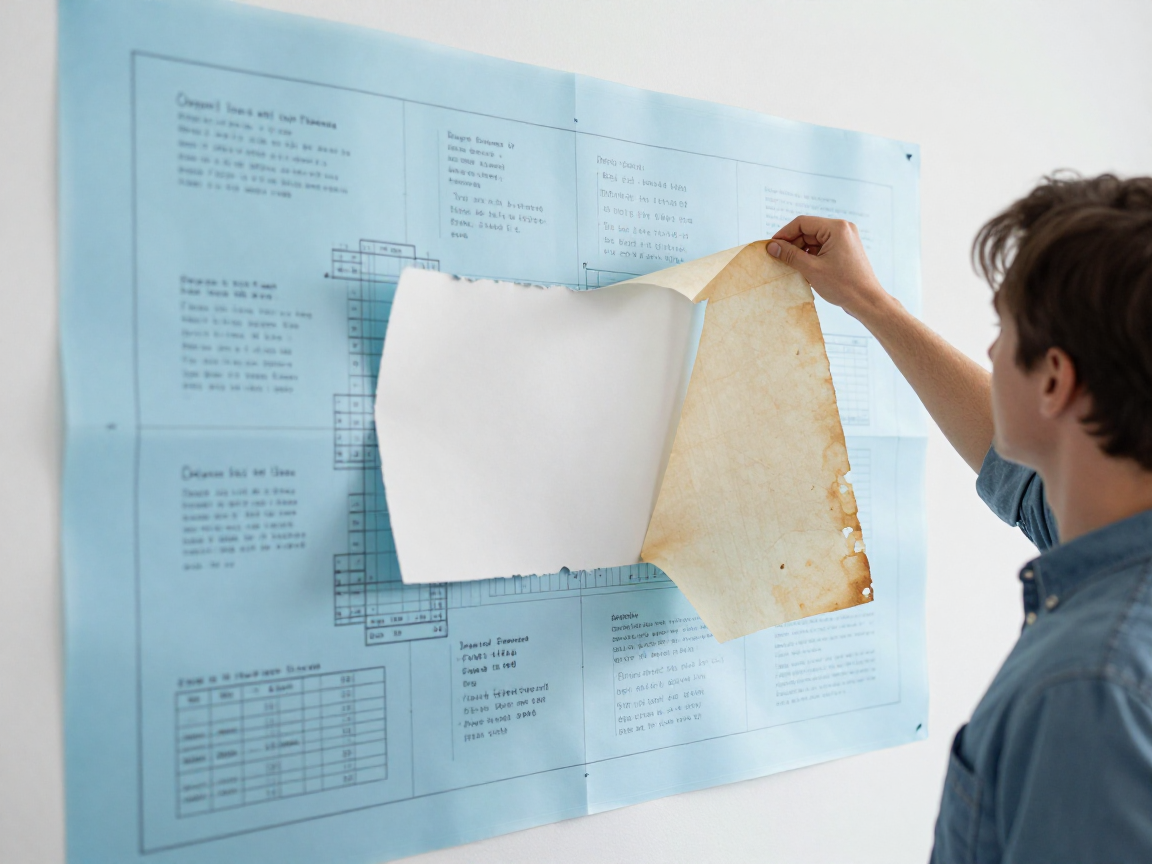
We move through the world guided by an invisible map. This map is composed of our beliefs—the deep-seated assumptions we hold about how the world works, who we are, and what we are capable of achieving. For many of us, this map was drawn in childhood, sketched out by parents, teachers, and early experiences. We rarely stop to look at the map itself; we simply follow its directions, assuming they are objective truths. However, what happens when the map is outdated or, worse, fundamentally wrong? If you find yourself hitting the same emotional walls or feeling stuck in cycles of self-doubt, the problem may not be your effort, but the underlying blueprints you are following.
Questioning beliefs is not an act of self-destruction, but an act of self-liberation. It is the process of examining the "truths" we take for granted to see if they still serve us in our current reality. When we engage in the practice of questioning beliefs, we stop being passive recipients of our past programming and start becoming active architects of our future. This journey requires courage and intellectual humility, but the reward is a life lived with greater clarity, purpose, and authentic choice. It is about moving from a state of reactive existence to one of intentional creation.
The Invisible Map: Why We Struggle with Questioning Beliefs
To understand why questioning beliefs feels so threatening, we must first understand what a belief actually is from a neurological perspective. The brain is an energy-saving machine. It loves patterns and shortcuts. Once a belief is established—such as "I am not good with money" or "People cannot be trusted"—the brain treats it as a settled fact. This saves the brain from having to process every new situation from scratch. Instead, it filters new information through the lens of that existing belief, a phenomenon known as confirmation bias. We don't see the world as it is; we see it as we are.
We also struggle with questioning beliefs because our identity is often intertwined with them. If you have spent twenty years believing that you are a "struggling artist," letting go of that belief feels like losing a piece of yourself. This is why we often defend our limitations more fiercely than our potential. We would rather be "right" about our flaws than "uncertain" about our possibilities. Uncertainty is perceived by the amygdala as a threat, triggering a subtle "fight or flight" response when our core worldview is challenged. This biological resistance is why cognitive shifts often feel like a physical struggle.
Furthermore, many of our beliefs are inherited from our social environment. We adopt the political, religious, and cultural views of our tribe to ensure belonging. In our evolutionary past, being cast out of the tribe meant death. Today, questioning beliefs can still feel like a social risk. We fear that if we change our minds, we will lose our community or be seen as inconsistent. Recognizing these biological and social pressures is the first step in creating the psychological safety needed to audit your own mind. It allows you to realize that your resistance isn't a sign of weakness, but a sign of a brain doing its job to protect you.
Identifying the Cognitive Anchors That Weigh You Down
How do you know which beliefs need to be examined? Not every thought is a "cognitive anchor" that holds you back. Some beliefs, like "kindness is valuable," serve us well. The beliefs that require scrutiny are those that create unnecessary suffering, stagnation, or internal conflict. These are often the "absolute" statements we make about ourselves or the world that prevent us from taking risks or seeking joy.
Common signs that you are overdue for a session of questioning beliefs include:
- Chronic Self-Sabotage: You set ambitious goals but consistently find ways to undermine your progress just as you get close to success.
- Emotional Overreactions: You feel disproportionately angry, defensive, or wounded when a specific topic or feedback is brought up.
- The "Always/Never" Vocabulary: You frequently use phrases like "I always mess up," "I’ll never be successful," or "Things never work out for me."
- Persistent Comparison: You judge your worth based on the curated highlights of others, fueled by the belief that there is a single "correct" timeline for human achievement.
- Feeling "Stuck": You feel like you are repeating the same year over and over again, despite a deep desire for change and growth.
These symptoms are signals from your psyche that your internal map no longer matches the terrain of your life. When you notice these patterns, it is an invitation to pause and look under the hood of your consciousness. The goal isn't to judge yourself for having these thoughts, but to observe them with the curiosity of a scientist.
A Five-Step Framework for Questioning Beliefs with Compassion
Simply telling yourself to "think differently" rarely works because it ignores the emotional roots of your convictions. To truly shift your perspective, you need a structured approach that bypasses the ego's defenses. Here is a five-step framework designed to help you deconstruct and rebuild your mental models.
Step 1: Naming the Absolute
Identify a specific area where you feel stuck—money, relationships, health, or career. Write down the primary belief you hold about this situation. Look for "absolute" language. For example, instead of saying "Work is hard," you might identify the belief: "I must suffer and overwork to be worthy of success." Naming the belief makes it an object you can observe rather than a lens you are looking through. It externalizes the thought.
Step 2: Investigating the Origin Story
Ask yourself: "Where did this belief come from?" Did you hear it from a parent during a stressful moment? Did it stem from a specific failure in your early twenties? Most of our limiting beliefs were survival strategies that once made sense in a specific context. Perhaps overworking was how you gained approval as a child in a high-pressure household. By tracing the origin, you can thank the belief for its service and acknowledge that its "expiration date" has passed. You are no longer that child, and those old rules no longer apply.
Step 3: Searching for the Exception
Beliefs maintain their power by pretending to be universal truths. To break this power, you must find "the exception." If you believe you are "bad at public speaking," find one time—even a small one—where you communicated effectively to a friend or a small group. If you believe "people are selfish," look for one act of pure altruism you have witnessed. Finding even one counter-example proves the belief is a generalization, not a law of physics. This creates the first crack in the foundation of the limiting thought.
Step 4: Assessing the Cost
This step is about creating the emotional leverage needed for change. Ask yourself: "What has this belief cost me over the last five years?" Think about the relationships avoided, the creative projects left unfinished, and the daily stress endured. When the cost of holding the belief becomes higher than the discomfort of questioning beliefs, your brain becomes much more willing to let go. You realize that the "safety" the belief provides is actually a prison.
Step 5: Crafting the Functional Alternative
You cannot leave a vacuum in the mind. You must replace the old belief with something more functional. Note that the replacement does not have to be "toxic positivity." It just needs to be more accurate and helpful. Instead of "I am a failure," try "I am a person who is currently learning through trial and error." The new belief should feel grounded and believable to you. It should provide a path forward rather than a dead end.
The Socratic Method for Modern Life: Questions to Ask Yourself
Socrates, the ancient Greek philosopher, believed that wisdom began with the admission of ignorance. He used a series of probing questions to uncover the contradictions in people's thinking. You can apply this same rigor to your own self-inquiry. When you feel a limiting thought arising, run it through this checklist of questions to initiate the process of questioning beliefs.
- Is this 100% true? Can I prove this in a court of law with undeniable evidence?
- How do I react, physically and emotionally, when I believe this thought? Notice the tension in your shoulders or the sinking feeling in your stomach.
- Who would I be without this thought? Imagine your life tomorrow if you were physically unable to think this specific belief. What would you do differently?
- What is the "opposite" of this belief, and is that equally true or truer? If the belief is "I am unlovable," the opposite is "I am worthy of love." Can you find evidence for the latter?
- Am I holding this belief because it is true, or because it is familiar? We often cling to familiar pain because it feels safer than unfamiliar joy.
- Is this belief helping me grow or keeping me small? A belief that keeps you small is not a protection; it is an anchor.
By regularly practicing this level of questioning beliefs, you develop "metacognition"—the ability to think about your thinking. This creates a buffer between your thoughts and your identity. You begin to realize that you are not your thoughts; you are the one observing them. This realization is the cornerstone of psychological freedom.
Navigating the Discomfort of Uncertainty
It is important to acknowledge that questioning beliefs is inherently uncomfortable. When you start pulling at the threads of your worldview, the whole tapestry can feel like it is unraveling. This state is known as "cognitive dissonance." It is the mental stress experienced by a person who holds two or more contradictory beliefs at the same time. Many people retreat at this stage, returning to their old certainties just to stop the discomfort.
To navigate this stage successfully, you must cultivate a high tolerance for "not knowing." We live in a culture that prizes certainty and quick answers. However, growth happens in the gray area. When you let go of an old belief, you might not have a replacement ready immediately. That is okay. Living in the "void" for a while allows you to observe reality without the distortion of your old filters. This is where true insight is born.
Treat this process like an experiment. You are a scientist of your own mind. If a new belief works better—meaning it leads to more constructive behavior, better health, and less internal friction—keep it. If it doesn't, keep questioning. The goal of questioning beliefs isn't to find a final, stagnant "truth," but to find a set of working assumptions that allow you to show up as your best self in an ever-changing world.
Reclaiming Your Narrative through Intentional Inquiry
Ultimately, questioning beliefs is about reclaiming the power to tell your own story. Most of us are living out scripts written by people who don't even know us—ancestors, marketers, and peers. We carry the weight of their fears, their biases, and their limitations. When we commit to the practice of questioning beliefs, we are essentially saying: "I will decide what is true for me based on my experience and my values."
This is not a one-time event but a lifelong habit. As you grow and your life circumstances change, the beliefs that served you at twenty may become baggage at fifty. Stay curious. Stay humble. Every time you challenge a limiting thought, you expand the boundaries of what is possible for your life. You transition from a person who is lived by their past to a person who is living in the present. The map is in your hands now—make sure it is one worth following, and never be afraid to redraw the lines when they no longer lead you home.