Talking to the Divine or Listening to the Self? A Deep Dive into Prayer vs Meditation
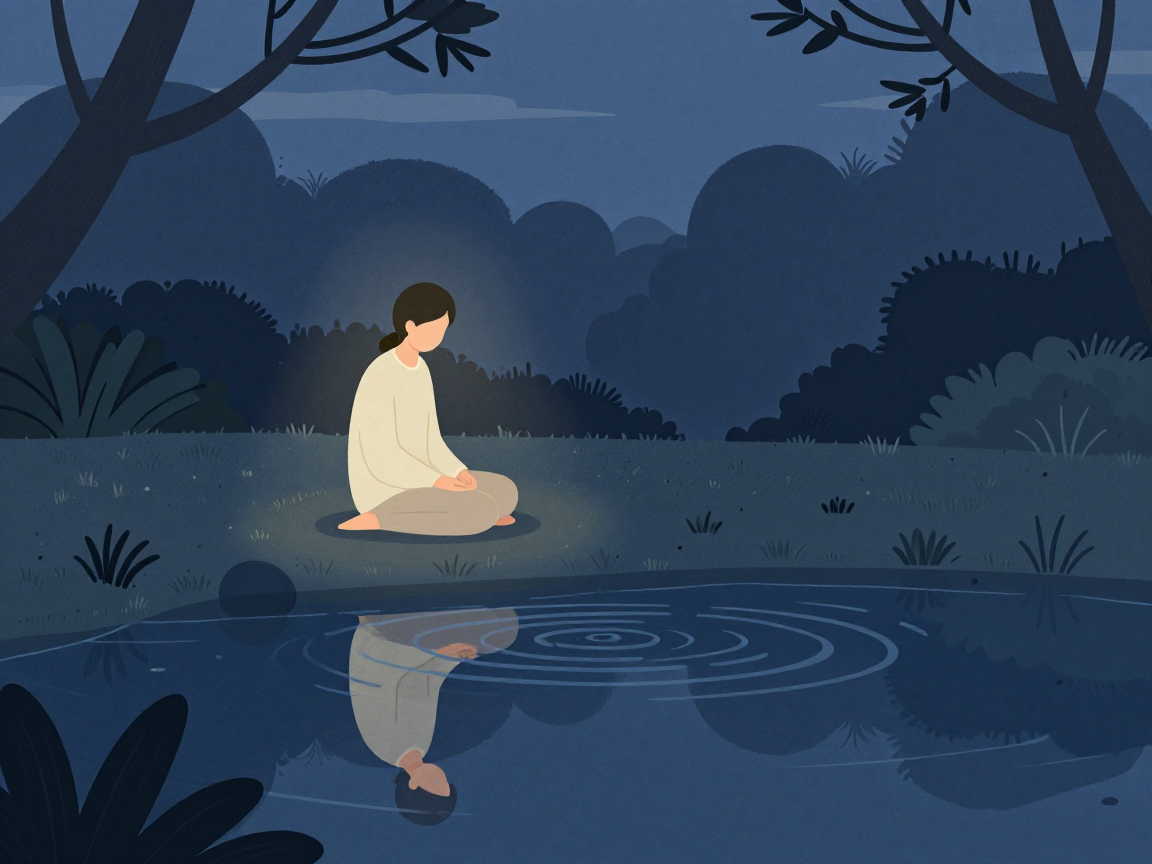
In an era of constant digital noise and internal restlessness, the search for a quiet center has never been more urgent. We often find ourselves caught between two ancient traditions that promise a way out of the chaos: one involves reaching outward to a higher power, while the other involves sinking inward into the depths of consciousness. For many, the choice between prayer vs meditation feels like a crossroads between religious tradition and secular mindfulness, yet the lines are frequently more blurred than they first appear.
Whether you are seeking clarity during a difficult life transition or simply trying to lower your cortisol levels after a long workday, understanding the unique mechanics of these two practices is essential. While they both share the goal of fostering peace, they operate through different psychological and spiritual channels. By examining the nuances of prayer vs meditation, we can begin to see how each serves a specific purpose in the human experience and how they might even complement one another in a holistic daily routine.
Defining the Intent: The Direction of the Mind
At the most fundamental level, the debate of prayer vs meditation comes down to the direction of your focus. Prayer is traditionally understood as a dialogue. It is an act of communication directed toward a deity, the universe, or a higher intelligence. This relationship is often vertical - a person reaching toward something greater than themselves. In prayer, there is an exchange of words, intentions, or feelings, often involving gratitude, petition, or intercession. It assumes a relational universe where you are heard and held by something beyond your own ego.
Meditation, conversely, is often described as an act of listening or simply being. While there are many forms of meditation, most secular and Eastern traditions focus on the internal landscape of the mind. Instead of reaching out to a personified God, the practitioner looks inward to observe thoughts, sensations, and the nature of awareness itself. If prayer is a conversation, meditation is the silence between the words. It is less about seeking a response from the outside and more about cultivating a state of presence where the external world no longer dictates your internal state.
However, these definitions are not rigid. Many contemplative religious traditions practice a form of "centering prayer" that looks remarkably like meditation, and many meditators find that their practice eventually opens them up to a sense of the divine. The distinction lies primarily in the initial intent: are you seeking to connect with a Presence, or are you seeking to witness your own consciousness?
The Science of Silence: How Your Brain Responds
Modern neuroscience has taken a keen interest in prayer vs meditation, revealing that while they overlap, they activate different neural pathways. Studies using fMRI scans show that both practices can significantly reduce activity in the amygdala - the part of the brain responsible for the fight-or-flight response. This is why both practices are so effective at reducing stress and anxiety.
In meditative practices, particularly mindfulness, there is a noted decrease in the activity of the Default Mode Network (DMN). This is the part of the brain that wanders, ruminates on the past, and worries about the future. By quieting the DMN, meditation allows the practitioner to experience the present moment without the filter of their personal narrative. This leads to increased gray matter in the prefrontal cortex, which is associated with executive function, focus, and emotional regulation.
Prayer, especially when it involves a sense of a loving and personal God, often activates the frontal lobes and the limbic system differently. It can stimulate the release of oxytocin - the "bonding hormone" - because the brain perceives prayer as a social interaction. This creates a sense of safety and belonging that is distinct from the detached observation found in meditation. When we pray for others, the brain centers associated with empathy and compassion light up, suggesting that prayer can be a powerful tool for social and emotional connectivity.
Prayer vs Meditation: A Side-by-Side Comparison
To better understand which practice might serve you best in a given moment, it helps to look at their specific characteristics and outcomes. While they are not mutually exclusive, they offer different "flavors" of peace.
- Focus of Attention: Prayer focuses on the Other (God, Universe, Higher Power), whereas meditation focuses on the Self or the Object (breath, mantra, sensation).
- Language and Thought: Prayer often utilizes language, structured requests, or spontaneous conversation. Meditation often seeks to move beyond language, observing thoughts without becoming attached to them.
- Emotional Goal: Prayer frequently seeks comfort, guidance, or the resolution of a problem. Meditation seeks equanimity, detachment, and a non-judgmental awareness of what is.
- The Concept of Ego: In prayer, the ego is often humbled before a creator. In meditation, the ego is observed as a construct that the practitioner can eventually transcend.
- Community vs. Solitude: While both can be done alone, prayer is deeply rooted in communal ritual and liturgy. Meditation, even in a group, remains a deeply solitary internal journey.
The Integration Framework: A 4-Step Process
If you find yourself torn between these two paths, you don't actually have to choose. Many people find that a hybrid approach provides the most comprehensive spiritual and mental support. Here is a framework for integrating both prayer and meditation into your life based on your current needs.
- Assess the Internal Noise: Start by checking your mental state. If your mind is racing with specific anxieties and problems, start with meditation to settle the "muddy water". Five minutes of focused breathwork can create the mental space necessary for a more meaningful experience.
- State Your Intention (The Transition): Once the mind is calm, move into a state of prayer. Use this space to voice your concerns or express gratitude. Now that the static of the ego has been lowered through meditation, your prayer may feel more grounded and less like a list of demands.
- Practice Receptive Silence: After you have finished praying, do not immediately jump back into your day. Enter a second phase of meditation where you simply listen. This is the "meditative prayer" phase where you are open to receiving insights or simply resting in the presence of what you just addressed.
- Carry the Awareness Forward: The goal of both practices is to change how you show up in the world. Ask yourself: "How does this moment of peace change how I will treat the next person I meet?". This bridges the gap between the cushion or the pew and real-world action.
Common Misconceptions That Cloud the Discussion
One of the biggest hurdles in the prayer vs meditation discussion is the baggage associated with both. For some, prayer feels too "religious" or dogmatic, burdened by childhood experiences or institutional rules. For others, meditation feels too "secular" or sterile, lacking the warmth and personal connection of a spiritual relationship.
It is important to remember that these are tools, not just identities. You can pray without being part of an organized religion, and you can meditate without being a Buddhist monk. Prayer can be as simple as a whispered "thank you" to the morning sun, and meditation can be as simple as noticing the weight of your feet on the floor while you wash the dishes. When we strip away the labels, we find that both practices are essentially different ways of practicing "attention". As the philosopher Simone Weil famously noted, "Attention, taken to its highest degree, is the same thing as prayer".
Which One Should You Choose Today?
Deciding whether to lean into prayer vs meditation often depends on what your soul is hungry for in the present moment.
Choose Prayer when:
- You feel lonely or isolated and need to feel connected to something larger.
- You are carrying a burden that feels too heavy to hold by yourself.
- You want to express deep gratitude for the blessings in your life.
- You are seeking specific guidance or a sense of being "led".
Choose Meditation when:
- You feel overwhelmed by your own thoughts and need to create distance from them.
- You are seeking to improve your concentration and mental clarity.
- You want to lower your physical stress levels and regulate your nervous system.
- You want to explore the nature of your own mind without the interference of beliefs.
The Path to a Centered Life
Ultimately, the tension of prayer vs meditation is a productive one. It forces us to ask deep questions about who we are and what we believe about the universe. Are we alone in our heads, or is there a listener? Can we find peace simply by changing our perspective, or do we need help from beyond?
Most practitioners find that as they grow, the two practices begin to merge. The quiet mind of meditation becomes the perfect vessel for prayer, and the devotion of prayer provides the heart-centered motivation to keep returning to the meditative cushion. Instead of viewing them as opposites, we can view them as the inhale and exhale of a healthy spiritual life. One brings us back to ourselves, and the other connects us to the infinite. Together, they provide a stable foundation for navigating the complexities of the modern world with grace, resilience, and a quiet, unshakeable joy.