Beyond the To-Do List: What the Neuroscience of Focus Reveals About Reclaiming Your Deep Work
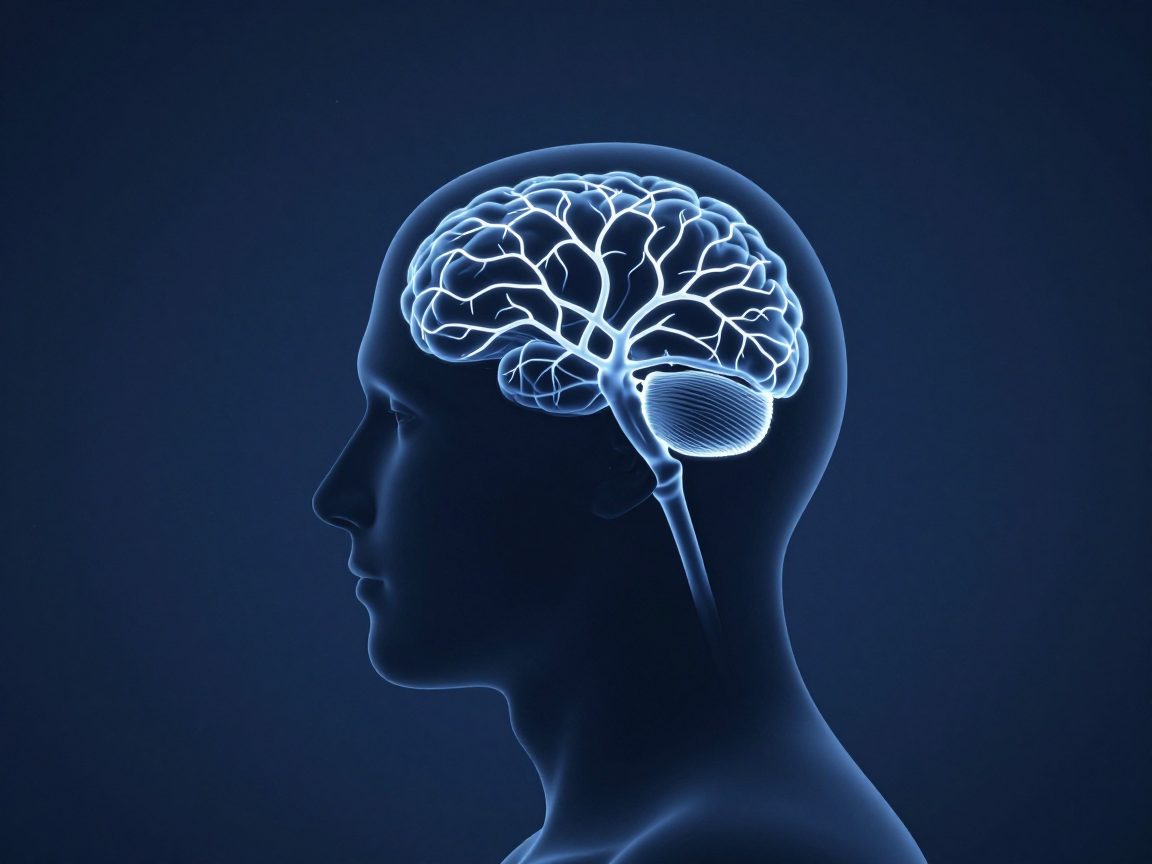
Most people treat concentration like a character trait—something you are either born with or you lack. We look at those who can sit for hours in deep, undisturbed labor and assume they simply have more willpower than the rest of us. However, modern research into the neuroscience of focus suggests that attention is less like a moral virtue and more like a biological system. It is a complex interplay of neural circuits, chemical messengers, and evolutionary safeguards that were never designed for the age of the smartphone.
When we struggle to stay on task, we are not necessarily failing ourselves; we are often just losing a battle against our own neurobiology. To reclaim our ability to think deeply, we must understand how the brain decides what is important and how it filters out the noise of a chaotic world. By looking at the neuroscience of focus, we can move away from the frustration of "trying harder" and toward a strategy of working with our brain's natural architecture. Our current environment is an "attention economy," where every app and notification is engineered to hijack our primitive circuitry. To fight back, we need more than just productivity hacks; we need a fundamental understanding of our cognitive hardware.
The Executive Command Center: Your Prefrontal Cortex
At the heart of the neuroscience of focus lies the prefrontal cortex (PFC). Located right behind your forehead, this region is the CEO of your brain. It is responsible for executive functions, which include planning, decision-making, and, most importantly, the ability to direct your attention toward a specific goal while ignoring distractions.
The PFC works through a process called "top-down" regulation. This is the conscious effort you make when you decide to write a report or study a new language. Your PFC sends signals to other parts of the brain to "gate" information. It tells your sensory cortex to ignore the sound of the air conditioner or the conversation in the next room so you can focus on the text in front of you. This gating mechanism is what allows us to engage in complex, long-term goals that don't offer immediate biological rewards.
However, the PFC is metabolically expensive. It requires a significant amount of glucose and oxygen to function at a high level. This is why you feel physically exhausted after a day of intense mental work. When the PFC becomes fatigued, its ability to gate distractions weakens. This is the biological reality of "decision fatigue"—the more choices you make and the longer you focus, the harder it becomes for your brain to maintain that top-down control. When this CEO gets tired, the more primitive, impulsive parts of the brain start taking over the boardroom.
The Battle Between Top-Down and Bottom-Up Attention
To understand why we get distracted, we have to look at the evolutionary counterweight to the PFC: bottom-up attention. This system is driven by the sensory parts of our brain and the amygdala, which is responsible for detecting threats and rewards in our environment. This is an older system, designed for survival rather than productivity.
Evolutionarily, bottom-up attention kept us alive. If a predator jumped out of the bushes, you didn't want to be so focused on picking berries that you failed to notice the danger. Your brain is hardwired to prioritize sudden movements, loud noises, and novel stimuli. This served us well on the savannah, but in a modern office, it means your brain is constantly scanning for the "ping" of a notification or the flash of a new tab. These digital interruptions trigger the same orienting response that a rustle in the grass once did.
The neuroscience of focus describes the relationship between these two systems as a constant tug-of-war. Deep work occurs when the PFC successfully suppresses the bottom-up signals. Distraction occurs when a bottom-up signal is strong enough—or the PFC is weak enough—to break through the filter. Every time you check your phone while working, you are essentially allowing your primitive brain to hijack your executive command center. Over time, chronic distraction can actually weaken the PFC’s connection to other brain regions, making it harder to sustain focus in the future.
The Chemical Cocktail of Concentration
Focus is not just about anatomy; it is about chemistry. Three primary neurotransmitters play a vital role in the neuroscience of focus: dopamine, norepinephrine, and acetylcholine. Understanding these chemicals helps us see focus as a "state" we can cultivate rather than a switch we turn on.
- Dopamine: Often misunderstood as the "pleasure" chemical, dopamine is actually the "anticipation and drive" chemical. In the context of focus, dopamine acts as a signal of salience. It tells your brain, "This is important, pay attention." When dopamine levels are optimal in the PFC, you feel motivated and sharp. When they are too low, you feel bored and seek out "cheap" dopamine hits like social media scrolling. The goal is to maintain a steady baseline rather than seeking spikes.
- Norepinephrine: This is the brain's version of adrenaline. It regulates your level of arousal and alertness. Too little norepinephrine and you are sleepy or sluggish; too much and you are anxious and hyper-vigilant. The neuroscience of focus shows that there is a "Goldilocks Zone" of norepinephrine where you are alert but calm—a state of relaxed alertness often associated with peak performance.
- Acetylcholine: This neurotransmitter acts like a spotlight. It is released when you are paying close attention to something, helping to increase the "signal-to-noise" ratio in your neural circuits. Acetylcholine makes neurons more likely to fire in response to the specific task you are doing, effectively "tuning" your brain to the frequency of your work. It is the literal chemical of neuroplasticity; it marks the neural pathways that are active for reinforcement.
Why Multitasking is a Neurological Illusion
One of the most important takeaways from the neuroscience of focus is that the human brain cannot actually multitask. When we think we are doing two things at once, such as answering emails while on a conference call, our brain is actually "context switching." It is rapidly toggling back and forth between two different neural networks.
This switching comes with a heavy "switch cost." Every time you move your attention, your brain has to load the "metadata" for the new task. This consumes energy and leaves behind what researchers call "attention residue." A portion of your neural resources remains stuck on the previous task for several minutes after you have switched. Research by Sophie Leroy has shown that this residue significantly reduces cognitive capacity. Over the course of a day, constant context switching can reduce your effective IQ and lead to a state of chronic mental fragmentation. We are not becoming better at handling more; we are becoming more efficient at being shallow.
The Physiology of Flow and Neural Rhythms
Beyond just the chemistry, the neuroscience of focus looks at the electrical rhythms of the brain. When we are in a state of deep concentration, our brain waves shift. We move away from the high-frequency Beta waves associated with active thinking and stress, and toward Alpha waves (associated with calm, creative focus) and eventually Theta waves (associated with deep flow states).
Flow is a state where the PFC actually dials back its "self-monitoring" function—this is why you lose your sense of time and self-consciousness when you are deeply immersed in a task. This temporary deactivation of the medial prefrontal cortex allows for faster processing and more fluid thought. However, you cannot reach this state if you are constantly interrupted. It takes roughly 20 minutes of uninterrupted work for the brain to begin synchronizing its neural oscillations into a flow state. Every notification resets the clock.
A Science-Backed Framework for Mastering Focus
Understanding the biology allows us to build better habits. Instead of relying on willpower, we can use the neuroscience of focus to create an environment and a routine that supports our neural architecture. Use the following four-step framework to optimize your brain's attentional capacity:
1. Protect the Prefrontal Cortex (The Physiological Foundation)
Since the PFC is so energy-hungry, the first step to focus is biological maintenance.
- Prioritize Sleep: Sleep is when the brain’s glymphatic system clears out metabolic waste like adenosine. Without it, your PFC operates in a fog, unable to gate distractions.
- Stable Energy Levels: Avoid blood sugar spikes and crashes. The brain consumes 20% of your body's energy; stable glucose levels prevent the "brain fog" that leads to distraction.
- Physical Movement: Exercise increases Brain-Derived Neurotrophic Factor (BDNF), which supports the health and connectivity of neurons in your executive centers.
2. Reduce Sensory Competition (Environmental Engineering)
To help your PFC win the battle against bottom-up attention, you must reduce the number of signals it has to filter.
- Digital Minimalism: Turn off all non-essential notifications. Every "ping" is a bottom-up signal that requires energy for the PFC to ignore, even if you don't look at the phone.
- Visual Clarity: A cluttered desk provides more "visual anchors" for your eyes to wander toward. By clearing your physical space, you reduce the workload on your visual cortex.
- Auditory Masking: Use "pink noise" or "brown noise" to mask unpredictable environmental sounds. Unlike music with lyrics, which the language centers of your brain try to process, steady noise creates a predictable environment the brain can eventually "habituate" to and ignore.
3. Leverage the Power of "Monk Mode" Intervals
Work with your brain's natural cycles rather than against them.
- The 90-Minute Rule: Human alertness runs in "ultradian rhythms." Attempting to focus for four hours straight is counter-productive because the brain's focus chemistry begins to deplete after about 90 minutes.
- The "Warm-Up" Period: Accept that the first 15 minutes of any deep work session will feel restless. This is the time it takes for acetylcholine to begin "tuning" the neural circuits. Don't quit during the friction phase.
- Strategic Boredom: In a world of constant stimulation, our brains have lost the ability to tolerate the absence of input. Training yourself to sit through five minutes of boredom strengthens the PFC's inhibitory control.
4. Neural Priming and Rituals
Use "top-down" cues to tell your brain it is time to work.
- The Anchor Ritual: Do the exact same thing before every deep work session—such as making a specific cup of tea or putting on specific headphones. Over time, this creates a conditioned response where the ritual triggers the release of focus-related neurotransmitters.
- The Shutdown Procedure: At the end of the day, write down the tasks for tomorrow. This "closes the loops" in your brain (the Zeigarnik Effect), preventing the Default Mode Network from ruminating on unfinished work while you try to rest.
The Default Mode Network: The Enemy of the Present
When we are not focused on a specific task, our brain flips into the Default Mode Network (DMN). This is the "wandering mind" state. It is where we daydream, ruminate on the past, and worry about the future. While the DMN is vital for creativity and processing emotions, it is the direct antagonist of the Task Positive Network (TPN), which is active during focus.
The neuroscience of focus reveals that these two networks are like a see-saw; when one is up, the other is down. Chronic stress keeps the DMN overactive, making it incredibly difficult to tip the see-saw back toward the TPN. This is why mindfulness is so effective for concentration. It is essentially weightlifting for the PFC, teaching you how to recognize when the DMN has taken over and gently pulling your attention back to the present. You are training the neural "muscle" that suppresses the wandering mind.
Rewiring Your Brain for the Long Term
The most encouraging discovery in the neuroscience of focus is neuroplasticity. Your brain is not a static organ; it is constantly reshaping itself based on how you use it. Every time you resist the urge to check your phone and stay with a difficult task, you are strengthening the white matter tracts and neural pathways of concentration. You are literally thickening the gray matter in your prefrontal cortex.
Conversely, every time you give in to a distraction, you are "training" your brain to be distracted. We are currently in a global experiment where we are rewiring our brains for "continuous partial attention." However, this process is reversible. By understanding the chemical and structural needs of our brain, we can move away from the frantic pace of the modern world and return to a state of deep, meaningful engagement. Focus is not a gift; it is a skill that is built, one intentional moment at a time. As you begin to work with your biology rather than against it, you'll find that the ability to concentrate isn't just about getting more done—it’s about reclaiming the quality of your conscious experience.