Beyond the Chemical Imbalance: How to Use Neuroplasticity to Rewire the Depressed Brain
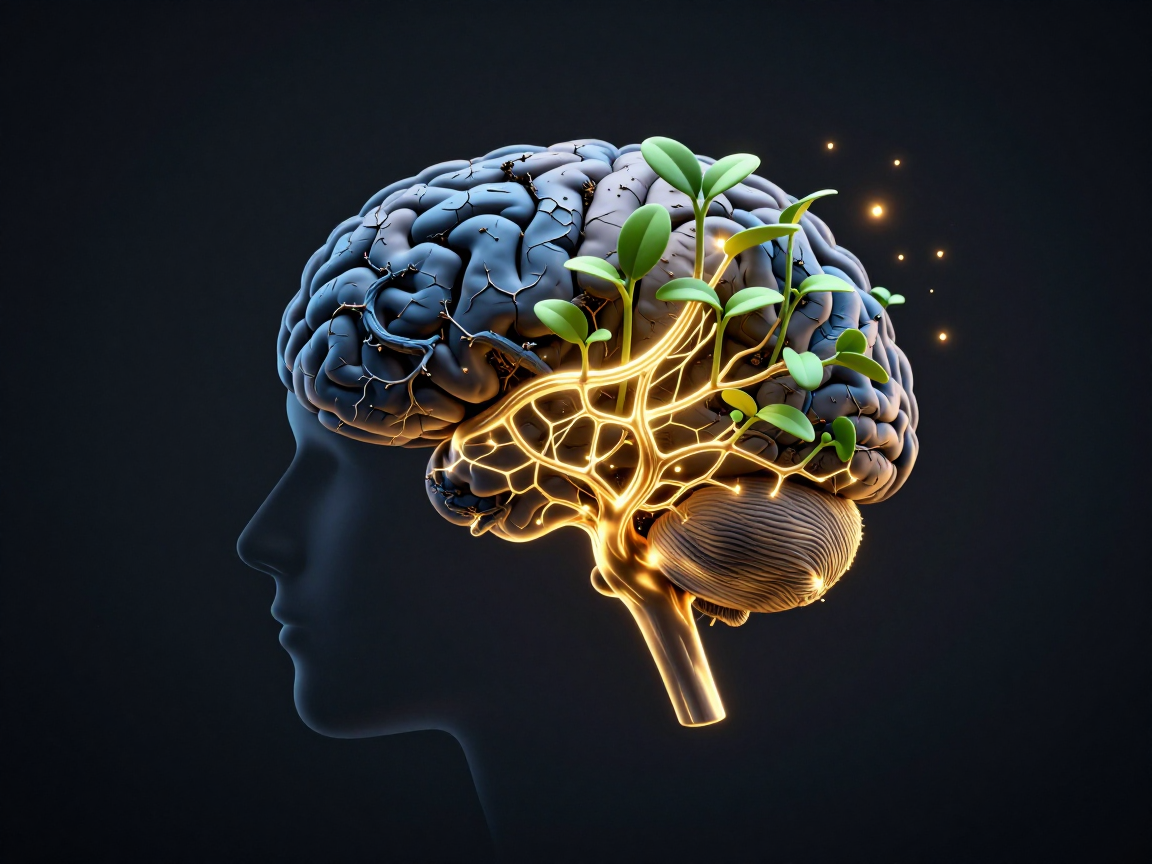
For a long time, the prevailing narrative surrounding mental health was focused almost exclusively on the chemical imbalance theory. We were told that a lack of serotonin or dopamine was the primary culprit behind low mood, and that the solution was simply to top up those levels. While neurotransmitters certainly play a role, this perspective often left people feeling like their brains were static, broken machines—biological hardware that was permanently flawed. However, the emerging field of neuroscience has shifted the conversation toward a much more dynamic and hopeful concept. By understanding the deep relationship between neuroplasticity and depression, we can begin to see the brain not as a fixed circuit, but as a living, breathing organ capable of profound structural and functional change.
Neuroplasticity is the brain's inherent ability to reorganize itself by forming new neural connections throughout life. This process allows the neurons in the brain to compensate for injury and disease and to adjust their activities in response to new situations or changes in their environment. When we look at neuroplasticity and depression together, we see that depression is often characterized by a loss of plasticity. The brain becomes rigid, stuck in negative feedback loops and ruminative patterns that feel impossible to escape. The good news—the revolution in our understanding—is that just as the brain can descend into these states, it can also be trained to climb out of them by intentionally fostering new, healthier pathways. You are not stuck with the brain you have today; you have the biological agency to reshape it.
The Biology of the "Stuck" Brain: Why It Feels Like Fog
To understand how to heal, we must first look at what happens to the physical structure of the brain during chronic depressive episodes. Research has shown that prolonged depression is not merely a "state of mind" but a physiological condition that can lead to a reduction in the volume of certain brain regions, most notably the hippocampus. The hippocampus is responsible for learning, memory, and emotional regulation. When stress hormones like cortisol remain high for too long—a common occurrence in clinical depression—they can have a toxic effect on the neurons in this area, causing them to shrink or even die off. This is why many people struggling with depression report feeling like their memory is failing or that they are living in a permanent cognitive fog.
This structural change explains the "stuckness" of the condition. It is not just a lack of will or a bad mood; it is a physical state where the brain has lost some of its ability to process information and regulate emotions effectively. The prefrontal cortex, which governs decision-making and complex thought, also shows signs of reduced activity and connectivity. Essentially, the depressed brain becomes "pruned back," making it harder to access the pathways associated with joy, resilience, and perspective. The amygdala, meanwhile, often becomes hyper-reactive, keeping the individual in a state of constant, low-grade alarm.
However, the concept of neuroplasticity and depression suggests that these changes are not permanent. The brain is not a porcelain vase that, once cracked, remains broken forever. Instead, it is more like a muscle that has atrophied from disuse or chronic stress. With the right "exercise" and environmental signals, the brain can begin to grow again, a process known as neurogenesis. This realization is the cornerstone of modern mental health recovery, providing a biological basis for why we can eventually feel like ourselves again.
BDNF: The "Miracle-Gro" of the Brain
At the center of the link between neuroplasticity and depression is a protein called Brain-Derived Neurotrophic Factor, or BDNF. Scientists often refer to BDNF as "Miracle-Gro" for the brain because it supports the survival of existing neurons and encourages the growth and differentiation of new neurons and synapses. BDNF is essential for long-term memory, learning, and higher-order thinking. It is the fuel that allows neuroplasticity to happen.
In individuals struggling with depression, levels of BDNF are typically lower than average. This deficiency prevents the brain from repairing itself and making the new connections necessary to break out of depressive cycles. When BDNF levels are low, the brain's "wiring" becomes brittle. Think of it like a garden in a drought; the plants (neurons) are wilting, and the soil (the neural environment) is too hard for new seeds to take root. When we engage in activities that increase BDNF, we essentially provide the brain with the raw materials it needs to remodel its architecture. Increasing this protein is one of the most effective ways to leverage neuroplasticity to combat depression.
The 5-Pillar Framework for Stimulating Neuroplasticity
If we want to use neuroplasticity and depression recovery as a roadmap, we need a concrete plan to stimulate neural growth. This is not about a single "quick fix" but rather a lifestyle approach that creates a brain-healthy environment. The following five pillars are proven to increase BDNF and promote the formation of new, resilient neural pathways.
1. High-Intensity and Aerobic Exercise
Physical activity is arguably the most potent non-pharmacological way to boost BDNF. Aerobic exercise, such as running, swimming, or cycling, has been shown to significantly increase the production of growth factors in the hippocampus. Even twenty minutes of movement can trigger a biological response that makes the brain more "plastic" and ready for change. For those in the depths of depression, "high-intensity" might feel impossible, but even a brisk walk starts the process. The goal is to get the heart rate up, which signals the brain to start the repair process.
2. Radical Novelty and Learning
The brain thrives on newness. When we learn a new skill, language, or instrument, we force the brain to build new circuits from scratch. In the context of neuroplasticity and depression, novelty acts as a disruptor to the "stuck" patterns of the mind. This doesn't have to be a major life change; it can be as simple as taking a different route to work, trying a new recipe, or reading a challenging book. Novelty signals to the brain that the current environment is changing, and it must adapt by creating new connections.
3. Mindfulness and the Default Mode Network
Chronic stress is the enemy of neuroplasticity. Meditation and mindfulness practices help lower cortisol levels, which in turn protects the hippocampus from damage. More importantly, consistent meditation has been shown to decrease activity in the "Default Mode Network" (DMN)—the part of the brain responsible for the "inner critic" and repetitive rumination. By practicing mindfulness, you are literally strengthening the prefrontal cortex, the part of the brain that allows you to observe your thoughts without being consumed by them.
4. Optimized Sleep Architecture
Sleep is when the brain does its "housekeeping." During deep sleep, the brain's glymphatic system flushes out metabolic waste, and neural connections made during the day are consolidated and strengthened. Without adequate sleep, the brain cannot maintain its plasticity. For anyone looking to heal the relationship between neuroplasticity and depression, prioritizing a consistent sleep-wake cycle is non-negotiable. Sleep is the time when the physical "wiring" of the new pathways actually takes place.
5. Social Connection and Vulnerability
Humans are neurobiologically wired for connection. Isolation is a significant stressor that inhibits neuroplasticity and lowers BDNF. Meaningful social interaction releases oxytocin, which has neuroprotective effects and encourages the brain to remain flexible. Engaging in deep, vulnerable conversations or even just feeling part of a community provides the emotional safety necessary for the brain to move out of "survival mode" and into "growth mode."
Breaking the Feedback Loop: Mental Habits as Brain Training
While physical pillars are essential, we must also address the "software" running on the "hardware." One of the most challenging aspects of neuroplasticity and depression is the "fire together, wire together" rule. This neuroscience maxim means that the more we repeat a thought or behavior, the stronger that neural pathway becomes. If we spend years practicing self-criticism, rumination, and hopelessness, those pathways become like deep ruts in a muddy road. They become the path of least resistance for our thoughts.
Rewiring the brain requires a conscious, often grueling effort to interrupt these automatic thoughts. This is where Cognitive Behavioral Therapy (CBT) becomes a literal tool for neuroplasticity. By identifying "cognitive distortions" and intentionally replacing them with more balanced thoughts, you are performing a form of mental landscaping. At first, the new pathway feels faint and difficult to walk. However, with repetition, the old "depressed" pathway begins to weaken through a process called long-term depression (LTD)—a neurological term where unused synapses are eventually pruned away.
To effectively train the brain, consider these small daily shifts:
- The 5-Minute Pattern Interrupt: When you notice a ruminative loop starting, commit to five minutes of a different, sensory-rich activity (like washing dishes with cold water or a quick puzzle) to break the electrical circuit of the thought.
- Active Gratitude Scavenging: Force the brain to look for three small "wins" throughout the day. This isn't about toxic positivity; it's about training the ventral striatum, a part of the brain's reward system that often becomes dormant during depression.
- Micro-Goals and the Dopamine Loop: Set goals so small they are impossible to fail (e.g., "stand outside for 60 seconds"). Achieving even a tiny goal releases a small amount of dopamine, which acts as a signal to the brain that the effort was worth the reward, encouraging further plasticity.
The Role of Modern Interventions as Plasticity Primers
It is important to acknowledge that sometimes the brain is so deeply stuck in a depressive state that lifestyle changes alone feel impossible to initiate. In these cases, medical interventions can serve as a "jumpstart" for neuroplasticity. Standard antidepressants (SSRIs) are now understood to work not just by increasing serotonin, but by eventually increasing BDNF levels and promoting neurogenesis over several weeks. This explains why they often take a month to work—it takes time for the physical brain to grow.
Furthermore, newer treatments like Ketamine therapy and Transcranial Magnetic Stimulation (TMS) are specifically designed to target neuroplasticity and depression. Ketamine, for instance, has been shown to rapidly increase the formation of new synaptic connections in the prefrontal cortex, often providing relief within hours. These tools are essentially "plasticity primers" that open a window of opportunity where therapy and lifestyle changes can take root more effectively. They don't do the work for you, but they make the "soil" of the brain fertile enough for you to begin your own gardening.
A New Way to Look at Recovery
Viewing your mental health through the lens of neuroplasticity changes the fundamental goal of recovery. It is no longer about just "feeling better" or "fixing a chemical leak." It is about building a more resilient, flexible, and expansive brain. This perspective removes much of the shame and stigma associated with the condition. If your brain has changed in response to trauma, stress, or genetics, it is also capable of changing back—or changing into something even stronger.
Growth is often slow and non-linear. There will be days when the old pathways feel easier to walk than the new ones. But every time you choose a new thought, every time you go for a walk when you don't feel like it, and every time you practice a moment of mindfulness, you are physically altering your biology. The intersection of neuroplasticity and depression is a place of profound hope, proving that your current state is not your permanent destination. Your brain is a work in progress, and you hold the tools to help it reshape itself for a brighter, more connected future.