Why Your Brain Is Hardwired for Bad News: A Practical Guide to Overcoming Negativity Bias
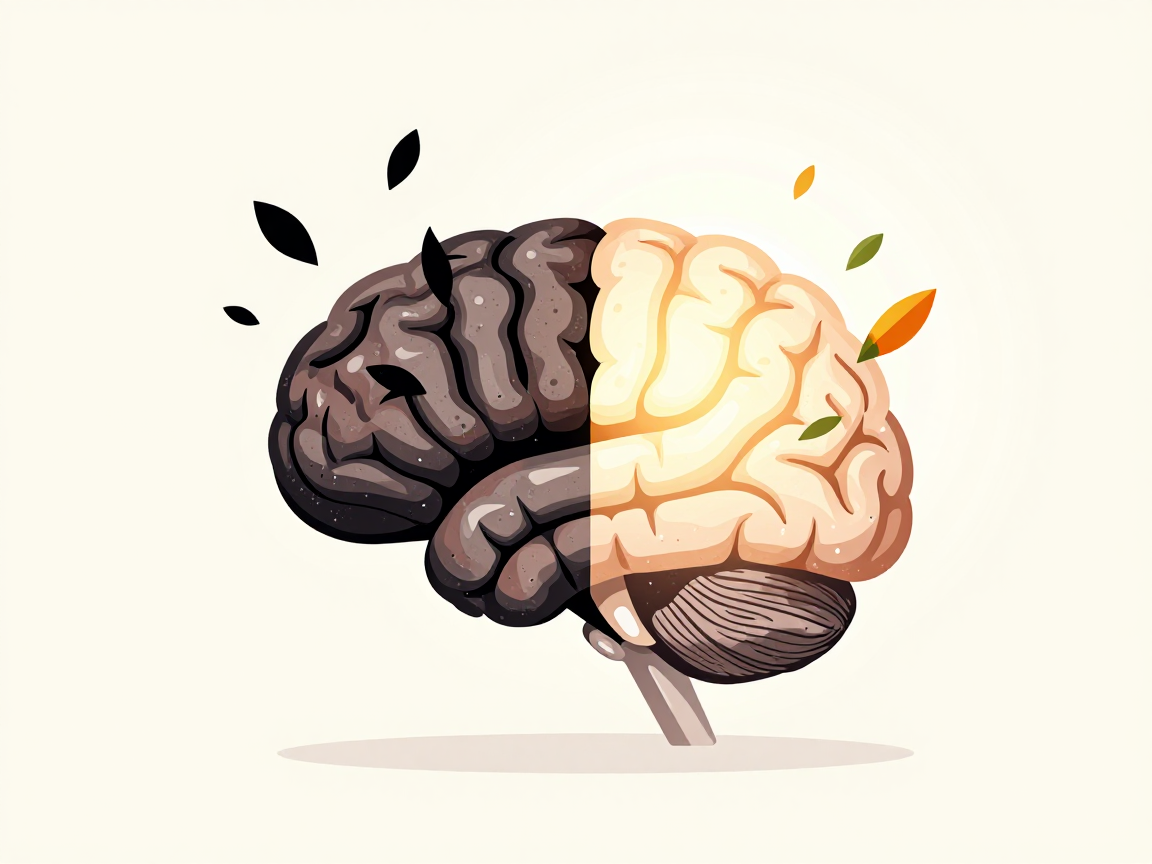
Imagine you receive a performance review at work. Your manager spends twenty minutes praising your creativity, your dedication, and your recent project success. Then, in the final thirty seconds, they mention one minor area for improvement regarding your email response times. You leave the office, but you don't think about the twenty minutes of praise. Instead, you spend the entire evening obsessing over that one small critique, feeling a pit in your stomach and questioning your entire career trajectory. This phenomenon is known as the negativity bias, and it is a fundamental, albeit frustrating, part of the human experience.
This psychological quirk ensures that negative events, thoughts, and emotions have a significantly greater impact on our psychological state than positive ones. We are essentially built to feel the sting of a rebuke more intensely than the joy of a compliment. While this can feel like a personal flaw or a sign of an inherently pessimistic personality, it is actually a deeply ingrained survival mechanism. Understanding how the negativity bias works is the first step toward reclaiming your mental space and fostering a more balanced perspective on life. To move beyond it, we must first understand that our brains are not designed to make us happy; they are designed to keep us alive.
The Science of the Velcro Brain
Neuropsychologist Rick Hanson famously describes the human brain as being like Velcro for negative experiences and Teflon for positive ones. This metaphor perfectly encapsulates how our internal wiring handles information. From a neurological standpoint, the brain responds more intensely to stimuli it perceives as threats. When we encounter something negative, the amygdala—the brain's alarm bell—uses about two-thirds of its neurons to look for bad news. Once it finds a threat, it stores it into long-term memory almost instantly.
Positive experiences, on the other hand, usually require a much more conscious effort to take root. For a positive event to be transferred from short-term memory to long-term storage, we often need to focus on it for several seconds or even minutes. Because the brain prioritizes survival over happiness, it treats the negative as urgent and the positive as optional. This is why a single harsh word from a partner can ruin a perfectly good date, or why one bad news headline can overshadow a day filled with small wins. The brain’s electrical activity is literally higher when processing negative images compared to positive ones, showing that the negativity bias is not just a feeling, but a measurable physiological event.
The Evolutionary Root of Your Inner Critic
To understand why we have a negativity bias, we have to look back at our ancestors. For an early human living on the savannah, the cost of ignoring a threat was much higher than the cost of ignoring a reward. If a hunter-gatherer missed an opportunity to find berries, they were hungry for a day. But if they missed the rustle of a predator in the tall grass, their life was over. Evolution didn't care if our ancestors felt "blissful"; it cared if they survived long enough to pass on their genes.
Evolutionary biology favored those who were hyper-vigilant and constantly scanned the environment for danger. Over thousands of years, our brains became finely tuned to detect, react to, and remember anything that could be perceived as a risk. In the modern world, we rarely face saber-toothed tigers, but our brains still treat a critical social media comment, a sudden stock market dip, or a stern email from a boss with the same level of intensity. We are living in a digital age with biological hardware that is still optimized for the Stone Age. This mismatch is where the negativity bias creates the most friction in our daily lives, leading to chronic stress and a constant sense of "waiting for the other shoe to drop."
The High Cost of Unchecked Negativity
When we allow the negativity bias to run the show without intervention, it begins to skew our reality in ways that can be deeply damaging. This skew impacts three major areas of our existence:
- Decision Making: We become overly cautious. The fear of loss often outweighs the potential for gain, a concept in behavioral economics known as loss aversion. This leads us to stay in unfulfilling jobs or stagnant situations because the risk of "something bad happening" feels more visceral than the benefit of a better life.
- Mental Health: Constant focus on negative stimuli can lead to a cycle of rumination—the repetitive dwelling on negative thoughts. This contributes significantly to anxiety and depression, as the brain begins to see the entire world through a lens of threat and scarcity, eventually leading to a state of learned helplessness.
- Relationships: Negativity bias can be a silent killer of intimacy. We tend to remember our partner's mistakes more vividly than their acts of kindness. This creates a "deficit" mindset where we feel the relationship is failing even when it is objectively healthy. We stop seeing the person and start seeing a collection of disappointments.
Research by Dr. John Gottman has shown that in stable, happy relationships, there is typically a 5:1 ratio of positive to negative interactions. This means it takes five good deeds, kind words, or moments of connection to counteract the emotional weight of just one negative interaction. This ratio is a direct reflection of how heavily the negativity bias weighs on our social bonds.
5 Practical Strategies to Rebalance Your Brain
While we cannot delete the negativity bias from our DNA, we can use the principle of neuroplasticity to weaken its grip. Neuroplasticity is the brain's ability to reorganize itself by forming new neural connections throughout life. By consciously directing our attention, we can "re-wire" our neural pathways to become more receptive to the good. Here are five research-backed strategies to start that process.
1. The 20-Second Savoring Rule
Because positive experiences are like Teflon, they need extra time to "stick." When you experience something pleasant—a good cup of coffee, a sunset, or a kind word—don't just acknowledge it and move on. Stay with the feeling for at least 20 seconds. Let the physical sensation of the joy, warmth, or calm sink into your body. This duration helps the brain move the experience from temporary working memory into permanent storage. You are essentially giving your brain the time it needs to register that "this matters."
2. Cognitive Reframing and Evidence Hunting
When a negative thought arises, try to look at it as a "hypothesis" rather than a "fact." If you think, "I am failing at this project," challenge that thought immediately. Ask yourself: "What evidence do I have for this?" and "What evidence do I have against it?" Most of the time, the negativity bias highlights the evidence for the failure while ignoring the evidence of your progress. Reframing allows you to zoom out and see the full picture, preventing the bias from narrowing your vision.
3. The Three Positives Practice
At the end of each day, write down three things that went well. They don't have to be major life events; "I hit all the green lights on the way to work" is a valid entry. The key is to force your brain to scan the day for positive data points. Over time, this trains your reticular activating system (the brain's filter) to start noticing positive events as they happen, rather than just identifying threats.
4. Controlled Information Intake
Our modern "doomscrolling" habits are a buffet for the negativity bias. News outlets and social media algorithms are designed to trigger our alarm systems because fear generates engagement. Set strict boundaries on your news consumption—perhaps 15 minutes in the morning and evening—and avoid it entirely before bed. Curate your social feeds to include content that inspires or educates. If your environment is 90% negative, your brain will have no choice but to stay in survival mode.
5. Name the Bias
There is power in labeling. When you find yourself spiraling into a negative thought, say to yourself, "This is my negativity bias talking." This simple act of naming creates a "cognitive gap" between you and the thought. It reminds you that the thought is a biological byproduct of an ancient survival system, not necessarily a reflection of the truth of your current situation.
The HEAL Framework: A Step-by-Step Rewiring Exercise
Developed by Dr. Rick Hanson, the HEAL framework is a structured way to build "inner strengths" by consciously taking in the good. Use this exercise once a day to counteract your natural tendency toward negativity.
- H - Have a Positive Experience: Notice a positive experience that is already present in your background, or create one. It can be as simple as the feeling of your breath, the comfort of your chair, or the satisfaction of finishing a small task. Turn a passing thought into a felt experience.
- E - Enrich It: Stay with the experience for 10 to 30 seconds. Make it last. Try to feel it in your body as intensely as possible. Imagine it getting bigger and brighter in your mind. Is the feeling warm? Is it expansive? This "enriches" the neural firing, making the trace stronger in your nervous system.
- A - Absorb It: Visualize the experience sinking into you. Some people imagine a golden light or a soothing balm being absorbed by their cells. Others imagine the experience being tucked away into a jewelry box in their heart. This step signals to the brain that this information is valuable and worth keeping for the long haul.
- L - Link It: (Optional) If you feel comfortable, hold both the positive experience and a mild negative one in your mind at the same time. Let the positive experience "soothe" or "fill in" the negative one. This helps the brain learn that the positive can coexist with and even heal the negative. However, if the negative starts to overwhelm the positive, drop the negative and return to the positive.
Breaking the Cycle in a Digital World
It is important to remember that the goal of overcoming the negativity bias is not to achieve "toxic positivity" or to ignore the real problems in the world. Being aware of risks is still a vital skill. We need to know if a storm is coming or if a business deal is risky. However, the goal is to reach a state of "functional realism."
In a state of functional realism, you can acknowledge a problem without being paralyzed by it. You can see a mistake as a data point for growth rather than a total indictment of your character. You learn to see the world as it truly is—a complex mix of both shadow and light—rather than a terrifying landscape of constant threats.
As you begin to practice these techniques, you may notice that the "internal weather" of your mind starts to shift. You might find that you recover from setbacks a little faster or that you notice the beauty in your surroundings more frequently. This is not magic; it is biology. By consistently choosing to focus on the good, you are physically changing the way your brain processes the world. You are moving from a life of constant survival into a life of genuine flourishing. Treat your mind like a garden: the weeds of negativity will grow on their own, but the flowers of joy and resilience require your intentional care.