Why Your Birth Chart Is a Map of Your Psyche: A Deep Dive into Jungian Astrology
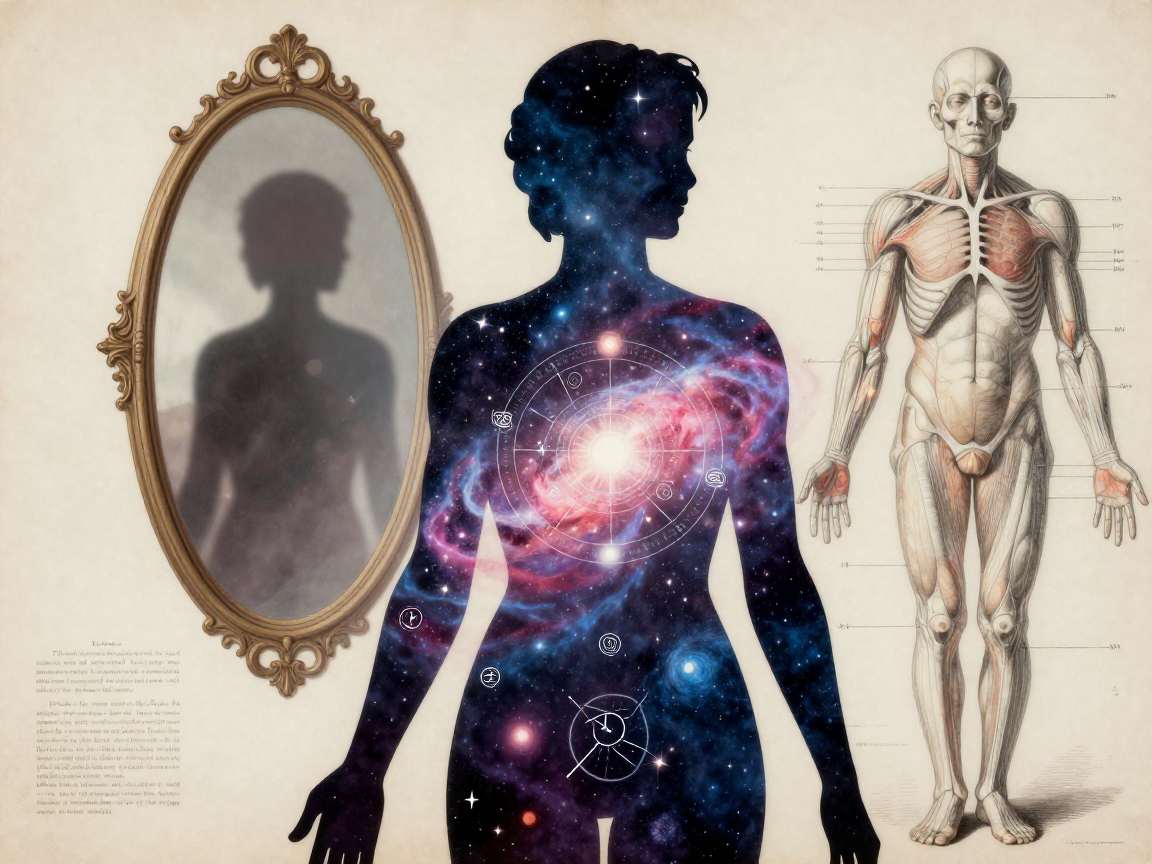
The shift from traditional, predictive astrology to what we now call jungian astrology marks a profound evolution in how we perceive our place in the universe. For centuries, astrology was used as a tool for divination—a way to predict harvests, wars, or the favor of kings. However, through the lens of Carl Jung’s analytical psychology, the focus shifted inward. Instead of asking what the stars will do to us, jungian astrology asks what the stars reveal about the internal landscape of the human soul. It treats the birth chart not as a fixed blueprint of destiny, but as a dynamic map of the psyche, designed to guide us toward wholeness.
Jungian astrology is built on the premise that the cosmos and the human mind are mirror images of one another. Carl Jung, the Swiss psychiatrist, recognized that the symbols found in ancient astrological traditions corresponded directly to the universal archetypes he observed in his patients' dreams and the collective myths of humanity. By integrating these two worlds, we move away from a fatalistic view of life and toward a psychological model of self-discovery where the goal is not to avoid one's fate, but to consciously inhabit it.
The Psychology of Fate and Synchronicity
To truly grasp the depth of jungian astrology, one must first understand Jung’s concept of synchronicity. Jung defined synchronicity as a "meaningful coincidence"—an event in the external world that aligns perfectly with an internal state of mind, even though there is no direct cause-and-effect link. In this context, the planets do not emit physical rays that control our behavior. Rather, the positions of the planets at the moment of our birth and their movements throughout our lives are synchronized with the unfolding of our psychological development.
This perspective changes everything. When we look at a difficult planetary placement in our chart, we no longer see it as a "curse" or a sign of inevitable bad luck. Instead, we see it as an archetypal tension that requires our attention. If we remain unconscious of these internal patterns, they will manifest in our lives as external events that seem to happen to us against our will. As Jung famously noted, until you make the unconscious conscious, it will direct your life and you will call it fate. Jungian astrology is the tool we use to pull those strings of fate out of the darkness and into the light of awareness.
The Planetary Archetypes: Actors in Your Inner Drama
In the practice of jungian astrology, the planets are viewed as functional components of the psyche. They represent the various "sub-personalities" or archetypes that reside within the collective unconscious. When we analyze a birth chart, we are essentially looking at a character breakdown for the play that is your life.
The Sun and Moon: The Core of Identity
In the jungian framework, the Sun represents the Ego—the center of our conscious identity. It is the part of us that strives for recognition, purpose, and self-expression. It is our "hero's journey" in its most basic form. However, the Sun cannot exist in a vacuum. It is balanced by the Moon, which represents the Unconscious, the emotional body, and the Anima or Animus. The Moon describes our subjective reality, our needs for security, and our instinctive reactions. While the Sun is who we are learning to become, the Moon is who we are at our most vulnerable and private levels. Integration in jungian astrology often begins with reconciling the drive of the Sun with the needs of the Moon.
Saturn: The Shadow and the Great Teacher
Saturn is perhaps the most critical planet in jungian astrology. Traditionally viewed as the "Greater Malefic" associated with restriction and suffering, Jungian practitioners see Saturn as the "Guardian of the Threshold." Saturn represents the Shadow—the parts of ourselves we find shameful, inadequate, or frightening. Wherever Saturn sits in your chart is where you are most likely to experience a "complex" or a recurring sense of failure. Yet, it is also the site of your greatest potential mastery. By facing the limitations and fears that Saturn presents, you build the psychological "ego strength" necessary to engage with the deeper, more chaotic forces of the collective unconscious.
The Outer Planets: Transpersonal Transformation
Uranus, Neptune, and Pluto represent forces that are beyond the control of the individual ego. They are the agents of transpersonal change:
- Uranus (The Awakener): Represents the urge for liberation and the sudden disruptions that break us out of stagnant psychological patterns.
- Neptune (The Mystic): Represents the urge to dissolve the ego and connect with something divine, though it can also manifest as addiction or delusion if not integrated.
- Pluto (The Alchemist): Represents the process of psychological death and rebirth. It is the archetype of the "underworld journey" where we must confront our deepest darkness to retrieve our true power.
A 5-Step Framework for Interpreting Your Chart Psychologically
Moving from a predictive mindset to a psychological one requires a structured approach. Use this framework to begin your own practice of jungian astrology.
- Reframe Your Aspects as Internal Dialogues: Instead of seeing a "square" as a bad omen, view it as a conversation between two parts of yourself that don't yet speak the same language. If Mars (your drive) is square Neptune (your ideals), you aren't doomed to fail; you are being asked to find a way to act that honors your spiritual values.
- Analyze Your Persona (The Ascendant): Your Rising Sign represents the mask you wear in public. Ask yourself: Is my persona an authentic expression of my inner self, or is it a rigid shell I use to hide behind? Jungian astrology helps you make this mask more flexible.
- Map Your Shadow Work (Saturn and the 12th House): Look at the house and sign placement of Saturn. This is your primary area of self-doubt. By acknowledging these "negative" traits, you prevent them from being projected onto others.
- Engage with the Anima/Animus (Venus and Mars): These planets describe how you relate to the "inner other." Understanding these placements can explain why you attract certain types of partners and help you integrate the qualities you usually look for in someone else.
- Track Transits as Rites of Passage: When a slow-moving planet like Pluto or Saturn hits a point in your chart, don't ask "What will happen to me?" Ask "What part of my psyche is being asked to grow up or be transformed right now?"
The Process of Individuation through the Zodiac
Individuation is the central concept of Jung’s work—the lifelong process of becoming the person you were always meant to be, a whole and unique individual. Jungian astrology views the entire zodiacal wheel as a map of this process. The journey starts at the First House (the birth of the ego) and moves through the development of values (Second House), communication (Third House), and roots (Fourth House), eventually reaching the outer houses where we engage with the collective.
In this view, the "goal" of astrology is not to have a "perfect" chart, but to fully inhabit the chart you have. This involves the difficult work of bringing our contradictory parts into a state of harmony. For instance, someone with a very logical Gemini Sun and a highly emotional Scorpio Moon may spend the first half of their life feeling split in two. Jungian astrology provides the symbolic language to bridge that gap, allowing the individual to see how their logic can serve their depth, and how their depth can inform their communication.
Shadow Work and Projecting the Stars
One of the most practical applications of jungian astrology is the identification of projection. Because the shadow is unconscious, we cannot see it in ourselves; instead, we see it in the people around us. If you find yourself consistently enraged by people who are "selfish," and you have a heavily suppressed Aries (the archetype of the self) in your chart, you are likely projecting your own unowned need for autonomy onto others.
By using the birth chart to identify where we are "out of balance," we can begin to withdraw these projections. This not only improves our relationships but also returns to us the energy we were wasting by judging others. A planet in the 12th House, often called the house of "hidden enemies," is frequently where our most potent shadow qualities live. In jungian astrology, these are not enemies but "unlived lives" waiting to be integrated through dreams, journaling, and active imagination.
Conclusion: Your Chart as a Living Map
Jungian astrology ultimately rescues us from the cold, deterministic view that we are merely victims of the stars or our biology. It suggests that we live in a participatory universe where our level of consciousness directly affects how we experience our lives. Your birth chart is not a list of things that will happen to you; it is a description of the psychological equipment you have been given to navigate the world.
When we stop looking to astrology for a guarantee of future success and start looking to it for a deeper understanding of our internal conflicts, we begin the sacred work of individuation. We learn that every challenge indicated in our chart is an invitation to grow, and every talent is a responsibility to be fulfilled. In the world of jungian astrology, there are no bad charts—only different paths toward the same goal: becoming a whole, conscious human being who no longer calls their unlived life "fate."