Stop Forcing, Start Flowing: How to Recognize and Follow Inspired Action Without the Burnout
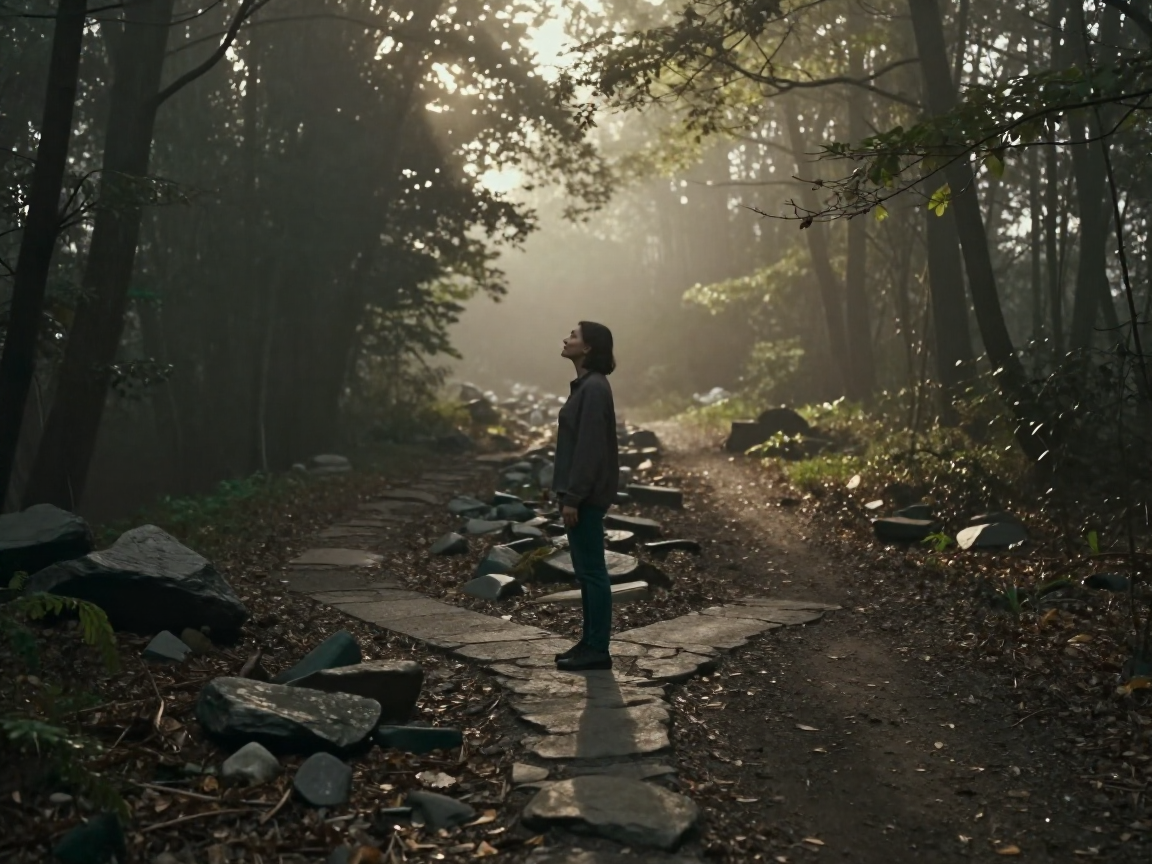
We live in a culture that treats productivity as a badge of honor and exhaustion as a necessary price for success. Most of us have been conditioned to believe that if we are not constantly grinding, we are falling behind. This mindset creates a state of perpetual forced effort—a way of living where every step forward feels like dragging a heavy weight uphill. We set goals, we make checklists, and we push our bodies and minds to the brink, often wondering why the results feel so hollow when they finally arrive.
There is, however, a different way to move through the world. It is the path of inspired action. Unlike forced action, which is fueled by anxiety, pressure, and the fear of failure, inspired action comes from a place of alignment and clarity. It is the difference between swimming against a powerful current and finally turning around to let the water carry you toward your destination. When you act from inspiration, the work does not necessarily become effortless, but it does become easeful. It feels right, it feels timely, and it feels like the natural next step in your evolution.
Defining Inspired Action: Moving Beyond Mere Effort
To understand inspired action, we must first define what it is not. It is not the same thing as impulsivity, nor is it a synonym for laziness. Many people mistakenly believe that waiting for inspiration means sitting on the couch until a lightning bolt of genius strikes. In reality, inspired action is a proactive state of being where your external movements are synchronized with your internal wisdom.
Inspired action feels like a "pull" rather than a "push." When you are forcing things, you are trying to make the world bend to your will through sheer force of logic and stamina. You might say things like, "I have to do this" or "I should be working harder." When you are in a state of inspiration, the language shifts. You might find yourself saying, "I can't wait to try this" or "This idea just makes sense." The energy behind the movement is one of curiosity and excitement rather than obligation.
One of the hallmark signs of inspired action is a sense of timelessness. You may sit down to work on a project and suddenly realize that three hours have passed in what felt like twenty minutes. This is often referred to as a "flow state." In this state, the ego—the part of you that worries about how you look or whether you will succeed—steps aside, allowing your natural talents and intuition to take the lead. This is where your most impactful work happens because it is not diluted by second-guessing or self-doubt.
The Difference Between Busywork and Inspired Action
It is easy to confuse being busy with being productive. We can fill our days with emails, meetings, and minor tasks that make us feel like we are moving forward, but often this is just a sophisticated form of procrastination. We do the "safe" work because we are afraid of the "real" work. This type of action is often a response to a nervous system that feels unsafe in stillness. If we aren't doing something, we feel anxious.
Inspired action, by contrast, is often focused and surgical. It might involve doing less in terms of volume, but what you do accomplish has ten times the impact. While forced action is quantitative, inspired action is qualitative. It requires the courage to stop doing the things that don't matter so you have the energetic space to notice the things that do.
Consider the way an artist works. A forced artist might tell themselves they must paint for eight hours a day regardless of how they feel. They might produce many canvases, but the work may lack soul. An artist moving through inspired action might spend days observing the light, walking in nature, or sitting in silence. When the internal signal finally flashes, they might finish a masterpiece in a single afternoon. The "work" was not just the painting; it was the cultivation of the state that allowed the painting to happen.
The Neuroscience of Alignment and Flow
There is a biological basis for why inspired action feels so much better than forced effort. When we are forcing ourselves to do things out of fear or pressure, our bodies are often in a state of sympathetic nervous system activation—the "fight or flight" response. Our brains are flooded with cortisol and adrenaline. While these chemicals can give us a temporary burst of energy, they also narrow our focus and inhibit creative problem-solving. We become rigid and reactive.
When we transition into a state that facilitates inspired action, we move into a state of "rest and digest" or "social engagement" governed by the parasympathetic nervous system. In this state, the brain releases dopamine, endorphins, and serotonin. These neurochemicals enhance our ability to see patterns, connect disparate ideas, and remain resilient in the face of challenges.
Furthermore, researchers have found that during moments of high creativity and inspiration, the brain's Default Mode Network (DMN) and Executive Control Network work together in a unique way. Usually, these two networks are at odds—one is for daydreaming, the other is for focusing. But in a state of inspired action, they collaborate. This allows you to stay focused on the task at hand while remaining open to intuitive leaps and "out of the box" solutions. You are literally using more of your brain's potential when you stop forcing.
A Framework for Cultivating Inspired Action
Moving from a life of grind to a life of inspiration requires a structural shift in how you approach your day. You cannot simply wait for it to happen; you must create the internal and external environment that makes it possible. Use the following five-step framework to begin practicing this shift.
1. Cultivate Radical Stillness
Inspiration cannot reach you if your internal radio is tuned to the frequency of static and noise. Most of us are terrified of silence because it forces us to face our own thoughts. However, stillness is the laboratory of inspired action. Commit to at least ten minutes of "nothing time" every day. No phone, no podcast, no book. Just sit. This creates the vacuum that inspiration needs to fill.
2. Set the Intention, Then Detach
Decide what you want to achieve, but let go of the "how" and the "when." This sounds counterintuitive to traditional goal setting, but it is essential. When you obsess over the "how," you limit the possibilities to only what your logical mind can currently see. By stating your intention and then detaching from the specific path, you allow your intuition to suggest routes you never would have considered.
3. Monitor Your Emotional Compass
Your emotions are the most accurate feedback system you have. If a task feels heavy, draining, or creates a "knot" in your stomach, it is likely not the time for that specific action. If a task feels expansive, exciting, or even "nervous-good," it is a green light. Check in with your body several times a day and ask, "Does this action feel like an expansion or a contraction?"
4. Act on the Smallest Spark
Inspired action does not always look like a grand plan. Often, it looks like a tiny, seemingly unrelated nudge. It might be the urge to call an old friend, to buy a specific book, or to take a different route home. When you get these nudges, act on them immediately if possible. This builds trust between your conscious mind and your intuition. As you follow the small sparks, the larger flames of inspiration begin to show up more frequently.
5. Evaluate the Result Without Judgment
After you take an action that felt inspired, look at the result objectively. Did it lead where you expected? If not, did it lead somewhere better? Sometimes an inspired action is simply a bridge to the next piece of information. Do not judge a "failed" attempt as a sign that your intuition is broken. It is all data that helps you fine-tune your internal receiver.
Distinguishing Between Resistance and Misalignment
A common question arises: "How do I know if I am avoiding a task because of fear, or if I am avoiding it because it isn't the right time for inspired action?" This is a subtle distinction that requires honest self-reflection.
Resistance (Fear) usually feels like a "wall." It is often accompanied by a loud inner critic that says you aren't good enough or that you will fail. Resistance usually shows up when you actually want to do the thing, but you are afraid of the outcome. In this case, the inspired action is often to move through the fear, even if it's just by taking one tiny step.
Misalignment (The Wrong Time) feels more like "mush" or "fog." There isn't necessarily a loud voice of fear; there is just a lack of energy or a sense that the timing is off. It feels forced, like trying to plug a cord into an outlet that has no power. When you encounter misalignment, the best move is usually to step away entirely, change your state, and wait for the energy to shift.
To tell the difference, try this simple test: Imagine yourself having completed the task. If the thought of being done brings a sense of relief and genuine joy, you are likely facing resistance and should push through. If the thought of being done still feels heavy or unfulfilling, you are likely misaligned and need to wait for more clarity.
The Role of Frequency and Environment
Our environment plays a massive role in our ability to access inspired action. If you are surrounded by clutter, loud noises, and people who drain your energy, your "signal-to-noise" ratio will be poor. Creating a sacred space for your work—or even just a specific ritual like lighting a candle or playing specific sound frequencies—can prime your brain for inspiration.
Many find that listening to Alpha or Theta brainwave frequencies can help bridge the gap between the conscious and subconscious mind. These frequencies encourage a state of relaxed alertness where inspired action is more likely to occur. Similarly, physical movement—like a brisk walk or yoga—can break up stagnant energy and allow new ideas to flow into the space you've created.
Embracing the In-Between Moments
Finally, we must learn to be okay with the "in-between" moments where no inspired action is present. This is often the hardest part of the process. In a productivity-obsessed world, a day without a major breakthrough feels like a wasted day. But in the world of inspiration, these are the periods of "gestation."
Think of a farmer. They do not plant seeds and then dig them up every hour to see if they are growing. They understand that most of the work is happening underground, in the dark, out of sight. Your creative and professional life works the same way. When you aren't feeling the "pull" to act, your job is to rest, play, and nourish yourself. This isn't "doing nothing"; it is protecting the soil.
When you master the art of inspired action, you stop living for the weekend and start living in the flow of the present moment. You realize that your value isn't tied to how much you can suffer, but to how well you can align with the natural intelligence of life. The results you seek are not at the end of a long, painful struggle; they are waiting for you to get out of your own way and let the inspiration lead the way.