The Science of Self-Evolution: How to Change Your Brain by Design Rather Than Default
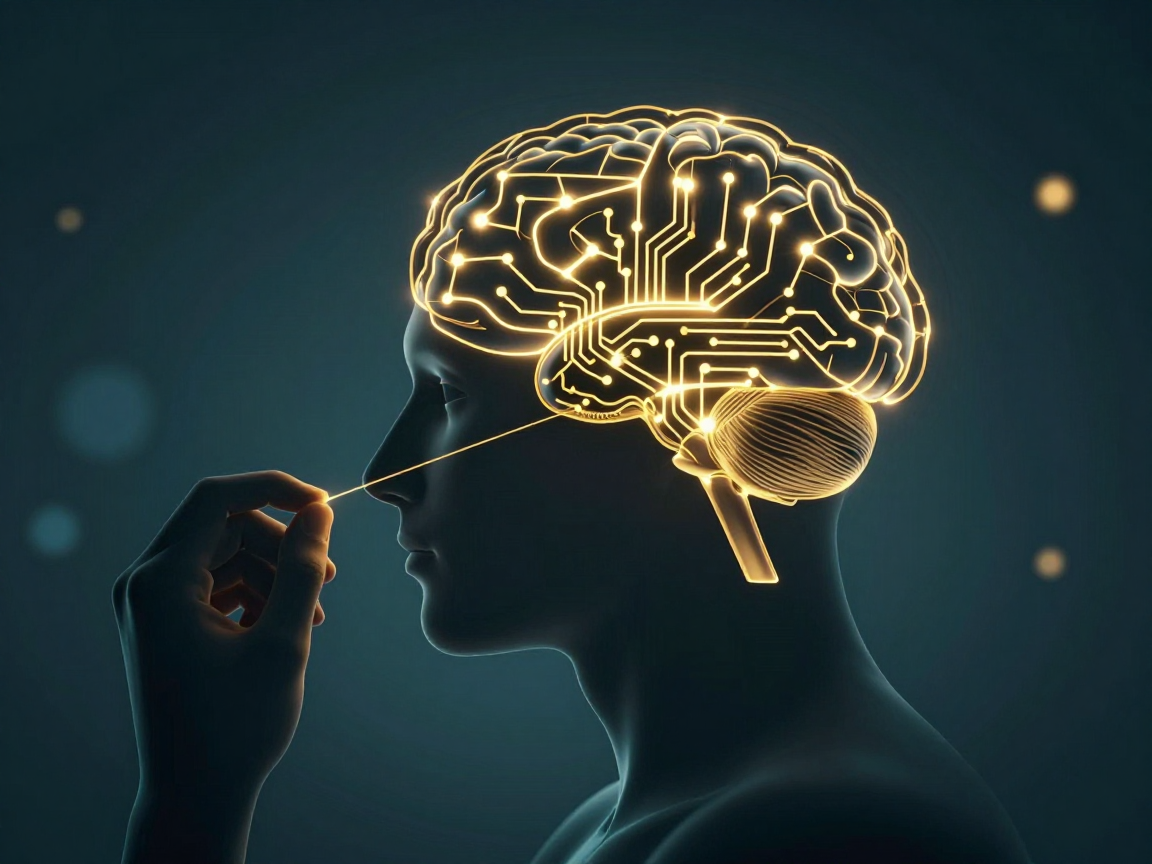
For a long time, the scientific community believed a discouraging myth: that the human brain was a static organ. The consensus was that once you reached adulthood, your neural circuitry was essentially locked in place, and any decline or damage was permanent. We were told we were merely the tenants of a biological house we didn't build and couldn't renovate. This perspective fueled a sense of fatalism regarding personality, habits, and cognitive ability. If you were an anxious person, that was just your hardware. If you struggled with focus, your circuits were simply wired that way.
However, the emergence of neuroplasticity has completely overturned this rigid worldview. We now know that the brain is more like plastic or clay than marble. It is a dynamic, living system that reorganizes itself in response to experience, thought, and environment. Every time you learn a new skill, shift a perspective, or choose a new reaction to an old trigger, you are physically altering your internal architecture. Understanding how to change your brain is not just a matter of self-improvement; it is an act of reclaiming your agency over your own biology.
The Mechanics of Neuroplasticity: How the Rewiring Happens
To understand how to change your brain, you first need to understand the fundamental principle of neuroscience known as Hebb - 's Law: "neurons that fire together, wire together." Your brain contains roughly 86 billion neurons, each connected to thousands of others. These connections, called synapses, form the pathways through which information flows. When you perform an action or think a thought repeatedly, the synaptic connection between those specific neurons becomes stronger and more efficient.
Think of your brain like a lush, grassy field. The first time you walk from one side to the other, you barely leave a mark. But if you walk the same path every day, the grass eventually yields, and a clear trail forms. If you stop using that path, the grass eventually grows back, and the trail disappears. This process is known as synaptic pruning. The brain is highly economical; it strengthens the pathways you use most often and dissolves the ones you ignore. This is why habits - both good and bad - feel so automatic. You have spent years paving those neural highways.
Changing your brain requires two primary actions: weakening old, unwanted pathways and deliberately building new ones. This is why "just trying harder" rarely works. You aren't just fighting your willpower; you are fighting physical structures in your head. To create lasting change, you must provide the brain with the right conditions to signal that a specific pathway is important enough to become permanent.
The Five Pillars of Neural Transformation
If you want to move from accidental living to intentional design, you need a framework. Realizing how to change your brain involves more than just positive thinking; it requires a multi - faceted approach that addresses the biological requirements of neuroplasticity.
- Focused Attention: The brain does not change if you are on autopilot. Attention is the signal that tells the brain to "record this." When you focus intensely on a task or a new way of thinking, you release neurochemicals like acetylcholine and norepinephrine, which mark those specific synapses for strengthening.
- Novelty and Challenge: The brain is a prediction machine. If you do the same things every day, it operates in its default mode. To trigger growth, you must introduce novelty. Learning a new language, picking up an instrument, or even taking a different route to work forces the brain to create new maps.
- Emotional Saliency: We remember what we feel. Events or thoughts associated with strong emotions - whether positive or negative - are prioritized for neural encoding. By consciously associating a new habit with a strong, positive emotional outcome, you accelerate the wiring process.
- Repetition and Consistency: A single workout doesn't build a muscle, and a single meditation session doesn't cure anxiety. The brain requires repeated firing of the new circuit to turn a dirt path into a paved highway. Consistency tells the brain that this new behavior is vital for survival.
- Quality Recovery: Most of the physical remodeling of the brain happens while you sleep. Without adequate rest, the brain cannot consolidate new information or perform the metabolic cleanup necessary to maintain healthy synapses.
Practical Strategies for Daily Rewiring
Transitioning from theory to practice is where most people get stuck. If you are serious about how to change your brain, you need a daily toolkit. Here are the most effective, evidence - based methods for inducing neuroplastic change.
Mindfulness and Cognitive Reappraisal
Mindfulness is more than just a relaxation technique; it is a tool for self - observation. By practicing mindfulness, you develop the ability to "catch" an automatic thought before it triggers a physical reaction. This creates a gap between stimulus and response. In that gap, you can use cognitive reappraisal - the act of consciously reinterpreting a situation. For example, instead of thinking, "I am failing at this," you might choose to think, "My brain is currently building the capacity to understand this." This shift doesn't just change your mood; it changes which neurons are firing.
Targeted Skill Acquisition
One of the most powerful ways to maintain brain health and flexibility is through lifelong learning. However, the learning must be challenging. Watching a documentary is passive; practicing a complex skill like coding, woodworking, or dancing is active. This active engagement stimulates the production of Brain - Derived Neurotrophic Factor (BDNF), often referred to as "miracle - grow for the brain," which supports the survival of existing neurons and encourages the growth of new ones.
Physical Exercise as a Catalyst
Physical movement is arguably the most potent "biohack" for brain change. Aerobic exercise increases blood flow to the hippocampus, the area of the brain responsible for memory and learning. It also lowers systemic inflammation, which can otherwise hinder neuroplasticity. If you are struggling to learn something new or break a habit, doing a short burst of exercise beforehand can prime your brain to be more receptive to change.
A Step - by - Step Action Plan for Rewiring a Habit
To see how to change your brain in action, let's look at a concrete plan for replacing an old habit with a new one. Suppose you want to stop reacting with anger during work meetings and instead cultivate a calm, analytical response.
- Step 1: Identification. Clearly define the "cue" that triggers the old circuit (e.g., a specific colleague's tone of voice).
- Step 2: Visualization. Spend five minutes each morning vividly imagining the trigger happening and yourself responding calmly. The brain often cannot distinguish between a vivid imagination and a real experience; you are "pre - wiring" the circuit.
- Step 3: Implementation Intention. Create an "if - then" plan. "If I feel my chest tighten when they speak, then I will take one deep breath and count to three before speaking."
- Step 4: Immediate Reward. When you successfully use the new circuit, give yourself a mental "win." This releases dopamine, which acts as a chemical cement for the new neural connection.
- Step 5: Evening Review. Reflect on the day. If you succeeded, celebrate it. If you failed, analyze where the circuit broke down without judgment and plan for tomorrow.
The Role of Frequency and Environment
While internal work is paramount, we cannot ignore the external environment. Your brain is constantly absorbing data from its surroundings. This is where tools like sound frequencies and environmental design come into play. Listening to specific frequencies - such as Alpha or Theta waves - can help shift the brain out of a stressed, "beta" state and into a more receptive, plastic state.
Similarly, your social environment acts as a mirror for your neural pathways. We have "mirror neurons" that naturally adopt the patterns of the people we spend the most time with. If you want to change your brain to be more growth - oriented, you must surround yourself with people who exhibit those traits. You are essentially "outsourcing" some of the neural heavy lifting by immersing yourself in a culture that reinforces your desired changes.
The Patience of the Neural Architect
It is vital to remember that biological change takes time. Many people give up on their journey of how to change your brain because they don't see results in a week. They assume they are "broken" or that neuroplasticity doesn't work for them. In reality, they are simply in the middle of the construction phase.
When you begin rewiring, you will feel resistance. This is often called the "extinction burst." As an old neural pathway begins to starve, it sends out frantic signals to be used one last time. This manifests as intense cravings or the strong urge to fall back into old patterns. Understanding that this discomfort is actually a sign of progress can be the difference between failure and a breakthrough.
Changing your brain is not about becoming someone else; it is about stripping away the layers of conditioning and reactive patterns that no longer serve you. It is a process of returning to your most capable, flexible self. By consistently applying the principles of focus, novelty, and repetition, you stop being a passenger in your own mind and start becoming the architect. The hardware you were born with is just the starting point; where you take it from here is entirely up to you.