Beyond Focus: How the RAS Works to Gatekeep Your Reality (and How to Reprogram It)
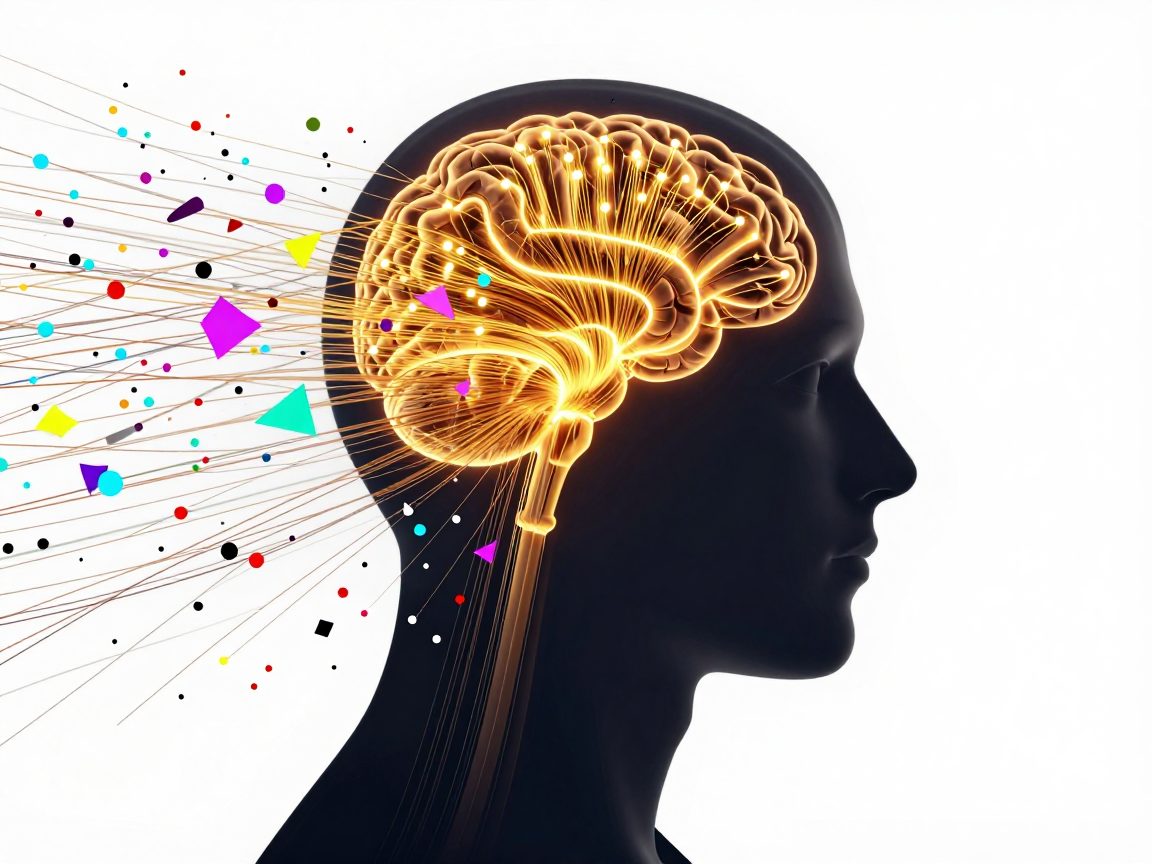
Every single second, your brain is bombarded with roughly 11 million bits of information. From the subtle hum of a distant air conditioner and the sensation of your clothes against your skin to the thousands of visual micro-details in your peripheral vision, the sheer volume of sensory data is staggering. If your conscious mind tried to process all of it simultaneously, you would experience immediate and total neurological collapse. To prevent this, your brain employs a sophisticated gatekeeper known as the Reticular Activating System, or RAS. This small, pencil-sized bundle of nerves located in the brainstem serves as the ultimate information sieve, deciding which data points are important enough to reach your conscious awareness and which can be safely discarded.
Understanding how the RAS works is akin to finding the operating manual for your own perception. It explains why you can sleep through a loud thunderstorm but wake up instantly at the soft sound of your name being whispered. It is the reason why, after you decide to buy a specific model of car, you suddenly see that car on every street corner. It is not just a biological curiosity; it is the mechanism that determines what you notice, what you believe to be true about the world, and ultimately, how you act. By learning the mechanics of this internal search engine, you can begin to consciously direct your focus rather than remaining a passenger to your subconscious habits.
The Biological Architecture: Where the Gatekeeper Resides
To grasp how the RAS works, we must first look at its physical location. The Reticular Activating System is a network of neurons located in the brainstem, specifically stretching from the medulla through the pons and into the midbrain. It connects the spinal cord to the higher centers of the brain, such as the thalamus and the cerebral cortex. This positioning is strategic. Because it sits at the fundamental entry point of the brain, it can intercept sensory signals before they ever reach the parts of the brain responsible for complex thought, emotion, or decision-making.
Physiologically, the RAS is responsible for more than just filtering focus; it is the fundamental "on" switch for human consciousness. It plays a critical role in the sleep-wake cycle (circadian rhythm). When the RAS is active, it sends a steady stream of electrochemical signals to the cortex, keeping you alert, awake, and responsive to your environment. When its activity slows down, you transition into sleep. If the RAS were to be significantly damaged, the brain would lose its ability to maintain consciousness, often resulting in a permanent vegetative state or coma. This highlights how essential this system is—it is the prerequisite for all human experience.
Beyond basic arousal, the RAS functions as a sophisticated relay station. It receives input from the eyes, ears, skin, and internal organs (though notably, not from the sense of smell, which bypasses the RAS). As these signals move upward toward the higher brain, the RAS evaluates them based on a set of parameters programmed by your survival instincts, your current interests, and your deeply held beliefs. It asks one simple question: "Is this signal relevant to our survival or our current goals?" If the answer is no, the signal is dampened. If the answer is yes, the signal is amplified and broadcast to the cortex for conscious processing.
Data Overload: Understanding the Information Sieve
We often think of ourselves as objective observers of an external world, but the reality is far more selective. We do not see the world as it is; we see the world as our RAS allows us to see it. This is a survival mechanism that evolved over millions of years. In an ancestral environment, the RAS was tuned to detect the snap of a twig in the woods or the specific stripe of a predator in the tall grass. Today, while we face fewer physical predators, the system operates with the same intensity, filtering for what it deems "essential" information in a world filled with digital noise.
How the RAS works as a sieve depends heavily on the "search terms" you have provided it. Think of it as a highly advanced Google search engine that is constantly running in the background of your mind. If you tell the search engine to look for "reasons why I am not good enough," it will scan your environment, your conversations, and your history to find every piece of evidence that supports that query. It will ignore your successes and focus entirely on your setbacks because that is the specific instruction you provided. Conversely, if you program it to look for opportunities for growth, those opportunities seemingly begin to "pop out" of the background noise of daily life.
This phenomenon is often called the Baader-Meinhof phenomenon, or the frequency illusion. It occurs when a piece of information you recently learned suddenly seems to appear everywhere. The cars were always there, and the word was always being used, but your RAS was filtering them out as noise. Once you assigned value to that specific piece of information, the gatekeeper began letting it through the barrier. This proves that we have much more control over our perceived reality than we might think—the world doesn't change, but our window into it does.
The Self-Fulfilling Prophecy: How Beliefs Influence Your Filter
One of the most profound aspects of how the RAS works is its relationship with our belief systems. The RAS does not distinguish between what is "good" for you and what is "bad" for you in a moral sense; it simply looks for what is "consistent" with your internal programming. This is known as confirmation bias in action. If you have a core belief that "people are generally out to get me," your RAS will go to work filtering for evidence of hostility. It will notice a subtle frown from a coworker or a driver failing to signal, while simultaneously ignoring dozens of acts of neutral or positive cooperation.
This creates a powerful neurological feedback loop. Your filter gathers evidence for your beliefs, which strengthens those beliefs, which in turn makes the filter even more specialized in finding that specific type of evidence. This is why two people can walk into the same networking event and have entirely different experiences. One person might see a room full of potential friends and collaborators, while the other sees a room full of judgment and pretension. Their respective Reticular Activating Systems are serving them different versions of the same physical reality based on their pre-existing settings.
To change your life, you must change the settings of the filter. You cannot simply wish for a different life while your RAS is still programmed to search for your old problems and limitations. You must consciously override the default settings by providing new, high-priority "search terms" to your brain through intentional mental practices.
A 5-Step Framework to Recalibrate Your Brain's Attention
If you want to master how the RAS works, you need to treat it like a piece of software that requires regular updates. You can train your brain to notice things that align with your goals, happiness, and well-being. Use the following framework to begin recalibrating your internal gatekeeper.
1. Strategic Visualization with Sensory Depth
Visualization is a powerful tool for programming the RAS because the brain often struggles to distinguish between a vividly imagined event and a real one. When you visualize a goal, do not just see a flat image. Incorporate sound, texture, and especially the emotional state of achieving it. By "rehearsing" your success, you are telling your RAS that these specific details are highly relevant. As a result, when real-world opportunities that match your visualization appear, your RAS will alert you to them immediately, often providing a "gut feeling" that you should pay attention.
2. Precise Goal Definition (The Data Input Phase)
Vague goals like "I want to be successful" do not give the RAS enough data to work with. How the RAS works best is with extreme specificity. Instead of "success," define exactly what that looks like in the physical world. Is it a specific job title? A certain number in a bank account? A specific morning routine? The more granular the detail, the better the RAS can scan the environment for the resources, people, and information required to achieve it. It needs a clear "target image" to match against the chaos of reality.
3. Affirmations as Search Queries
While affirmations are often dismissed as simple positive thinking, they serve a biological purpose. Repetitive statements, when paired with conviction, act as a command to the RAS. By saying, "I am looking for creative solutions to my current challenges," you are setting a new search query. You are explicitly instructing your brain to stop focusing on the "obstacle" aspect of a situation and start highlighting the "solution" aspect. Over time, this shifts your default perception from one of being stuck to one of seeing possibilities.
4. Intentional Environmental Curation
Your RAS is heavily influenced by the inputs you allow into your immediate space. If you consume constant negative news or surround yourself with people who habitually complain, you are training your RAS to prioritize "threats" and "grievances." To optimize how the RAS works, you must curate your environment. Follow people who inspire you, read books that expand your thinking, and spend time in spaces that reflect the reality you want to create. This provides a steady stream of high-quality data for your filter to prioritize.
5. The "Pattern Interrupt" Question
When you feel stuck or negative, ask yourself: "What am I choosing not to see right now?" This question forces a pattern interrupt. It signals to the brain that the current filter might be missing something vital. By consciously looking for the "hidden" upside or the "unnoticed" resource, you can temporarily bypass your standard filters and allow new, contradictory information to enter your conscious mind. This is often where breakthroughs happen.
RAS and Manifestation: The Science of "Luck"
In recent years, the concept of "manifestation" has exploded in popularity, often framed as a mystical process of attracting things from the ether. However, when we look at the science of how the RAS works, we find a much more grounded, biological explanation for these experiences. "Manifesting" is largely the process of priming your Reticular Activating System to notice what was already there but was previously filtered out.
When someone says they "manifested" a new business partner, what often happened is that they became so clear on their need and vision that their RAS stopped filtering out the subtle mention of a contact during a casual conversation or a profile on a social network. The opportunity did not appear out of thin air; rather, the individual finally became "awake" to its presence. By acknowledging the biological reality of the RAS, we move away from magical thinking and toward a disciplined practice of mental management. Luck, in this context, is simply the intersection of preparation and the neurological ability to recognize opportunity.
Moving from Passive Filtering to Active Direction
Most people live their entire lives at the mercy of a Reticular Activating System that was programmed by their childhood, their traumas, and their social environment. They wonder why they keep having the same negative experiences and meeting the same types of people, unaware that their own brain is filtering for those exact outcomes to maintain internal consistency. However, the most important takeaway from understanding how the RAS works is that the filter is neuroplastic—it can be changed at any age.
Taking control of your RAS requires a shift from passive observation to active direction. It involves the daily work of choosing your focus, questioning your assumptions, and being intentional about the information you consume. It is not a one-time fix but a lifestyle of mental hygiene. When you begin to work with your brain's natural filtering system rather than against it, the world begins to look like a very different place. You realize that you are not just a witness to your life, but the architect of the reality you experience through the lens of your own focus.