Beyond Willpower: How Decoding the Habit Loop Can Finally Change Your Behavior
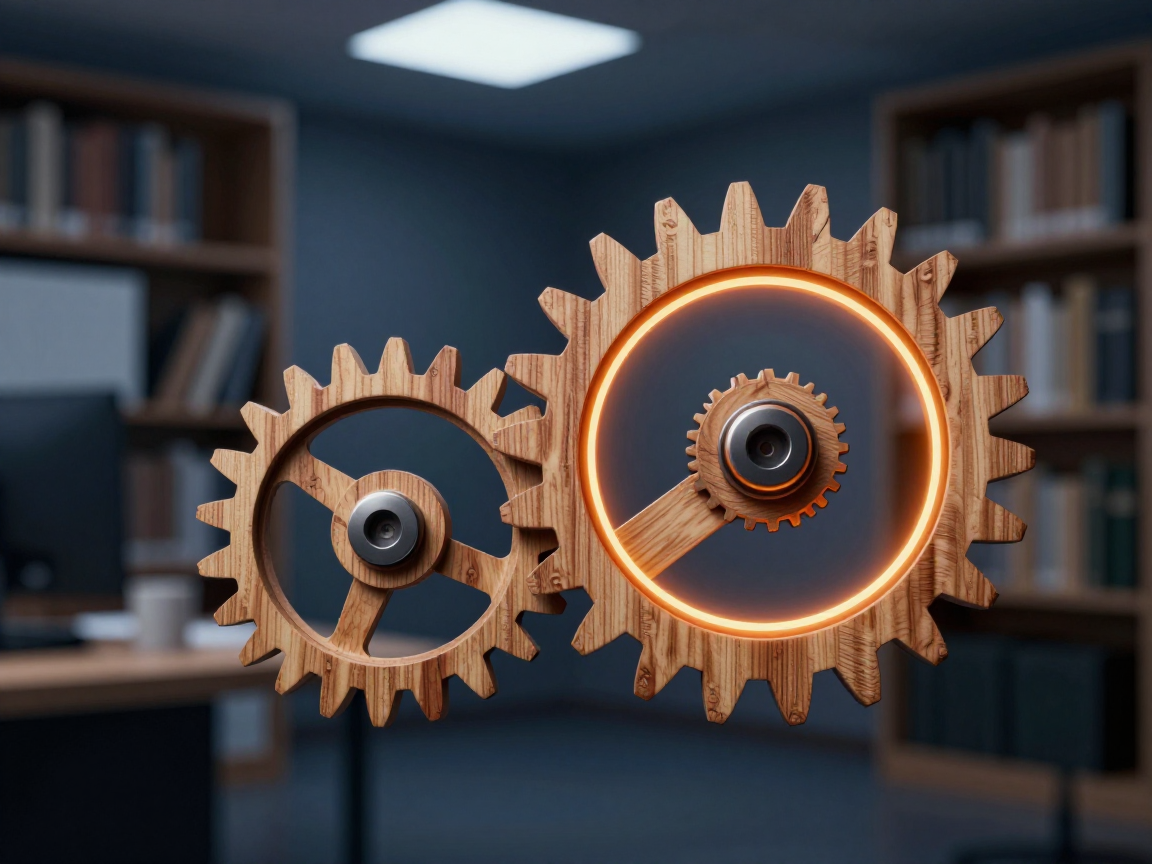
Most of us treat our habits as moral failings or signs of weak character. When we fail to hit the gym for the third day in a row, or when we find ourselves mindlessly scrolling through social media at midnight, we blame a lack of discipline. We tell ourselves that if we just had more willpower, we could finally change. However, the reality of human behavior is far more mechanical than we like to admit. Our lives are not governed by a series of conscious decisions, but by a neurological cycle known as the habit loop.
Understanding the habit loop is the difference between swimming against the current and learning how to navigate the tides. This cycle is a fundamental piece of our brain architecture, designed to save us energy by automating repetitive tasks. Whether you are trying to break a pattern of procrastination or build a routine of daily meditation, the process remains the same. By deconstructing the way your brain processes cues and rewards, you can stop fighting your biology and start using it to your advantage.
The Anatomy of a Habit Loop
At its core, a habit is a simple neurological circuit that becomes more efficient every time it is repeated. This circuit is comprised of four distinct stages: the cue, the craving, the response, and the reward. While this model has been popularized by researchers and authors like Charles Duhigg and James Clear, its roots lie deep in the study of behavioral psychology.
The first stage is the cue. This is the trigger that tells your brain to go into automatic mode and which habit to use. It can be anything—a specific time of day, a physical location, a certain person, or even an internal emotional state. The cue is the "if" in the logic of your brain: "If I walk into the kitchen, then..."
The second stage is the craving. This is often the most misunderstood part of the habit loop. You do not crave the habit itself; you crave the change in state it provides. You do not crave a cigarette; you crave the relief from nicotine withdrawal. You do not crave a glass of wine; you crave the feeling of relaxation that follows. The craving is the motivational force behind every habit. Without some level of desire or expectation—without craving a change—we have no reason to act.
The third stage is the response. This is the actual habit you perform, whether it is a thought or an action. Whether a response actually occurs depends on how motivated you are and how much friction is associated with the behavior. If an action requires more physical or mental effort than you are willing to expend, then you will not do it.
Finally, there is the reward. The reward is the end goal of every habit. It serves two purposes: it satisfies your craving and it teaches your brain which actions are worth remembering in the future. If the reward is positive, your brain creates a memory of the link between the cue and the response, reinforcing the habit loop for the next time the cue appears.
Why Your Brain Loves Automating Behavior
You might wonder why our brains are so eager to lock us into these repetitive cycles. The answer is simple: mental efficiency. The human brain is an energy-hungry organ, and it is constantly looking for ways to conserve effort. When a habit loop is fully formed, the brain stops participating in the decision-making process.
This shift in activity can actually be seen in the brain. When you first learn a new task, your prefrontal cortex—the part of the brain responsible for complex thinking and decision-making—is highly active. You are focused on every movement and choice. However, as the behavior becomes a habit, the activity shifts to the basal ganglia, a deeper, more primitive part of the brain associated with pattern recognition and physical memory.
This allows the prefrontal cortex to go "offline," freeing up mental space for other things. This is why you can drive to work while thinking about your grocery list or brush your teeth while planning your day. The problem arises when we accidentally automate behaviors that do not serve our long-term goals. To the basal ganglia, there is no difference between a "good" habit and a "bad" habit. It only cares about the loop.
Identifying the Hidden Cues in Your Life
If you want to change a behavior, you must first become a detective of your own life. Most people try to change the "response" (the bad habit) without ever identifying the "cue" that triggers it. If you do not understand the trigger, you are constantly fighting a battle you have already lost.
Research suggests that almost all habitual cues fall into one of five categories:
- Location: Certain environments trigger specific behaviors. Do you always feel the urge to snack when you sit on a specific sofa?
- Time: Our internal clocks are powerful. Many habits are tied to the rhythm of the day—the morning coffee, the mid-afternoon slump, or the late-night scroll.
- Emotional State: This is a common trigger for "comfort" habits. Stress, boredom, anxiety, and loneliness are some of the most potent cues for unhealthy habit loops.
- Other People: We are social creatures. You might find that you only smoke when you are with a certain friend, or you only spend money excessively when you are with another.
- Immediately Preceding Action: Many habits are part of a chain. Checking your email often leads to checking social media. Putting on your pajamas might lead to checking the fridge one last time.
The 3-Day Habit Audit: A Step-by-Step Practical Framework
To map your own habit loop, you must move from passive observation to active data collection. Use this framework for three days to decode your most persistent routines.
- Select the Target: Pick one habit you want to understand (e.g., afternoon snacking, evening scrolling).
- The Trigger Log: Every time the urge for this habit arises, pause and record the following variables:
- Where am I? (Physical location)
- What time is it? (Clock time)
- What is my emotional state? (Bored, anxious, tired, etc.)
- Who else is around? (Or am I alone?)
- What did I just do? (The preceding action)
- Pattern Recognition: After three days, look for the common denominator. Does the urge always happen at 3:30 PM? Does it always happen when you feel a specific type of work stress? This commonality is your primary cue.
The Framework for Habit Redesign
Once you have identified the components of your habit loop, you can begin the process of redesign. It is much easier to "swap" a habit than it is to delete one entirely. This is known as the Golden Rule of habit change: keep the cue, provide the same reward, but insert a new response.
Step 1: Isolate the Craving
To change a habit, you must understand what you are actually getting out of it. If you have a habit of eating a sugary snack at 3:00 PM every day, is it because you are hungry? Or is it because you need a break from your desk?
To find out, experiment with different rewards. One day, when the cue hits, take a walk outside. The next day, have a piece of fruit. The next, talk to a colleague for five minutes. If you find that the walk satisfies the urge just as well as the snack, you realize the craving was for "mental stimulation" or "movement," not sugar.
Step 2: Minimize Friction for the New Response
If you want a new habit loop to take hold, the response must be as easy as possible. The brain will always gravitate toward the path of least resistance.
- To build a habit: Reduce the number of steps between you and the action. If you want to run in the morning, lay out your clothes the night before. This is known as "priming your environment."
- To break a habit: Increase the number of steps. If you want to stop watching so much TV, take the batteries out of the remote and put them in another room. The extra effort required to find the batteries often breaks the automaticity of the loop.
Step 3: Utilize Implementation Intentions
Planning is the bridge between intention and action. Use "If-Then" statements to program your brain's response to a cue before it happens.
- Example: "If I feel the urge to check my phone while working, then I will take three deep breaths and write down the one task I need to finish next."
Common Pitfalls: Why We Slip Back Into Old Loops
Even with a perfect understanding of the habit loop, relapse is common. This is usually due to two factors: stress and the "all or nothing" mentality.
When we are under high stress, our prefrontal cortex—the logical part of the brain—becomes exhausted. In this state, the brain defaults to its most deeply ingrained patterns. This is why people "fall off the wagon" during difficult life events. To combat this, you need "emergency versions" of your habits. If you can't do a full workout, do ten pushups. The goal is to keep the loop alive, even in its most minimal form.
Another pitfall is the belief that a single failure ruins the entire process. This is often called the "What the Hell" effect. You eat one cookie, feel like you've failed, and then think "What the hell, I might as well eat the whole box." Remember that a habit is not a singular event; it is a neurological trend. One missed day does not erase the neural pathways you have built. The most important thing is to "never miss twice."
The Role of Identity in Lasting Change
Ultimately, the most effective way to lock in a new habit loop is to shift your identity. True behavior change is actually identity change. You might start a habit because of motivation, but you only stick to it because it becomes part of who you are.
Instead of saying "I am trying to quit smoking," say "I am a non-smoker." Instead of saying "I am trying to write," say "I am a writer." When your behavior and your identity are aligned, you are no longer forcing yourself to act. You are simply acting in accordance with who you believe you are. The habit loop becomes the evidence of that identity. Every time you perform the response, you are reinforcing the belief: "This is who I am."
Designing Your Future
The habit loop is not a prison; it is a blueprint. By understanding the mechanics of how we function, we gain the power to architect our own lives. We can stop being victims of our impulses and start being the designers of our routines.
Change does not happen overnight. It happens in the small, quiet moments when we choose to notice a cue, understand a craving, and consciously choose a new response. It happens when we realize that willpower is a finite resource, but the habit loop is an infinite engine. By focusing on the system rather than the goal, we can create a life that runs on positive automation, leading us toward our highest potential one loop at a time.
As you move forward, be patient with your basal ganglia. It took years to build your current loops, and it will take time to wire new ones. But with every conscious repetition, the path becomes easier, the craving becomes manageable, and the reward becomes a natural part of your daily existence. You are not stuck. You are simply in a loop—and now, you have the tools to change its direction.