Why You Suddenly See the Same Thing Everywhere: Understanding the Frequency Illusion (Baader-Meinhof)
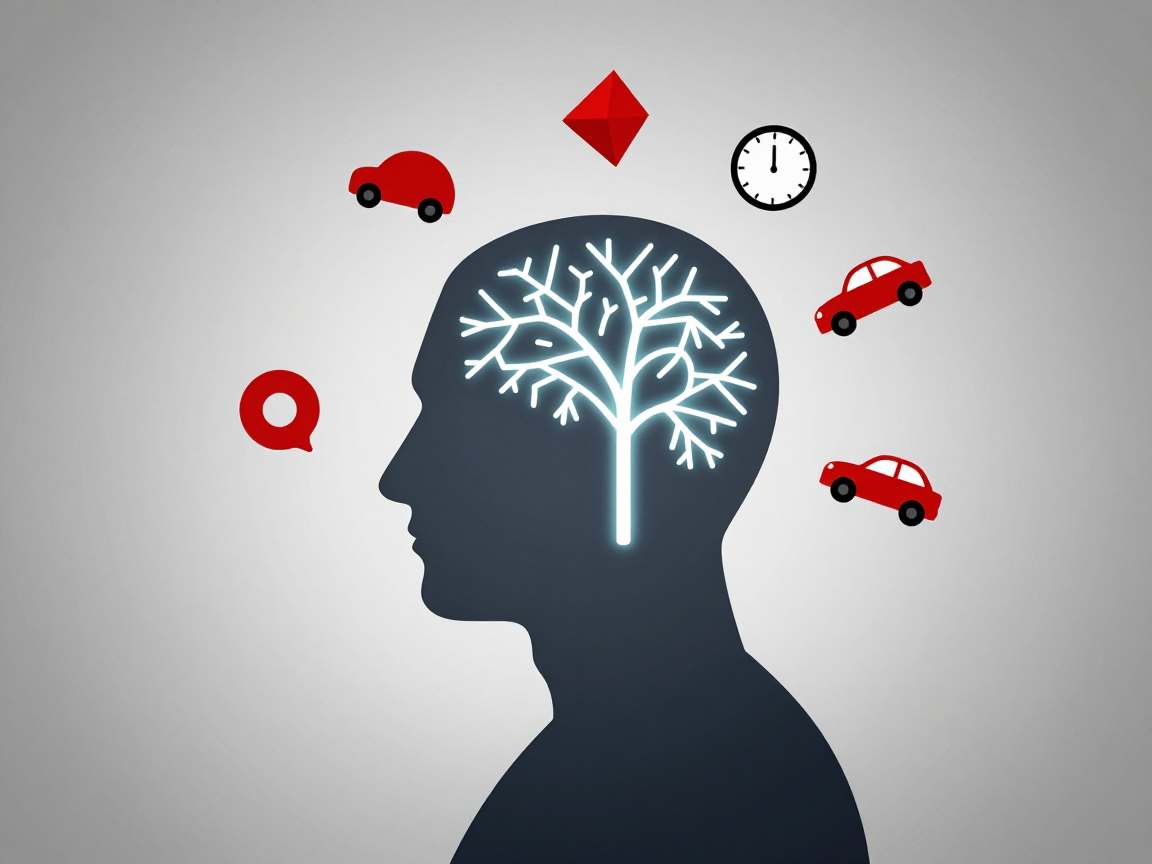
It happens to almost everyone. You learn a relatively obscure word in a book - perhaps a word like 'callipygian' or 'crepuscular' - and within forty-eight hours, you hear a character on a television show say it, see it in a news headline, and overhear it in a coffee shop conversation. Or maybe you decide you want to buy a very specific make and model of a car in a niche color, only to realize that every third vehicle on the highway seems to be that exact car. You start to wonder if the universe is sending you a sign or if you have somehow stumbled into a glitch in the matrix.
This experience is not a supernatural coincidence, nor is it a sign that the world is suddenly obsessed with your personal interests. It is a well-documented cognitive phenomenon known as the frequency illusion (baader-meinhof). It occurs when something you have recently noticed, experienced, or been told about suddenly seems to appear with improbable frequency in your daily life. While it feels like the thing itself has increased in number, the reality is that your brain has simply changed the way it filters the staggering amount of data it processes every second.
The Anatomy of a Mind Trick: What is the Frequency Illusion (Baader-Meinhof)?
The term 'Baader-Meinhof phenomenon' originated in 1994 when a reader of the St. Paul Pioneer Press wrote into a column to describe a peculiar experience. After mentioning the German terrorist group known as the Baader-Meinhof Group in conversation, he encountered the name again in a completely unrelated context shortly after. Since then, the term has stuck in popular culture, though linguist Arnold Zwicky later coined the more descriptive name 'frequency illusion' in 2005.
At its core, the frequency illusion (baader-meinhof) is the result of two distinct cognitive processes working in tandem. The first is selective attention. Your brain is constantly bombarded with millions of bits of information through your senses. To prevent you from losing your mind to overstimulation, your brain acts as a rigorous gatekeeper, filtering out 'noise' that it deems irrelevant. When you learn something new or develop a specific interest, that piece of information is moved from the 'irrelevant' pile to the 'meaningful' pile. Suddenly, the gatekeeper lets it through every time it appears.
The second process is confirmation bias. Once you notice the item a second or third time, your brain begins to search for more evidence to support the idea that the item is indeed appearing more frequently. You subconsciously ignore all the times the item does not appear and hyper - focus on the times it does. This creates a powerful feedback loop that convinces you a genuine pattern is emerging in the external world, even though the only thing that has changed is your internal perception.
The Science of Selective Attention and Filter Bubbles
To understand the frequency illusion (baader-meinhof), we have to appreciate the sheer efficiency of the human brain. We like to think we see everything in our field of vision, but in reality, we see very little of it with actual focus. Scientists often refer to this as 'inattentional blindness'. If you aren't looking for something, you are effectively blind to it, even if it is right in front of you.
When the frequency illusion (baader-meinhof) kicks in, your brain is essentially updating its search parameters. Imagine your brain as a search engine. For years, you never searched for 'mid-century modern chairs'. Then, one day, you read an article about them. Suddenly, your brain adds that term to its 'high priority' list. Now, when you walk into a room, your brain highlights every mid-century chair like a glowing objective in a video game.
This mechanism is evolutionary. Our ancestors needed to be able to identify specific patterns - like the shape of a predator's ear in the tall grass or the specific color of a ripe berry - while ignoring the millions of swaying blades of grass around them. In the modern world, this same hardware is what makes you notice every Tesla on the road after you have spent an hour looking at them online.
Frequency Illusion (Baader-Meinhof) vs. Real Synchronicities
In spiritual and manifestation circles, many people interpret the frequency illusion (baader-meinhof) as a form of synchronicity or 'signs from the universe'. There is a fine line between a cognitive glitch and a meaningful coincidence. While science explains the 'how' through selective attention, many practitioners of mindfulness and the Law of Attraction argue that the 'why' is just as important.
If you are focusing on abundance and suddenly start seeing symbols of wealth or opportunities everywhere, is it just your brain filtering for them, or are you actually attracting them? From a practical standpoint, the result is often the same. Whether the world is changing or your perception is changing, your reality is being reshaped. By understanding the frequency illusion (baader-meinhof), you can bridge the gap between cognitive science and intentional living, using your brain's natural filtering system to your advantage.
5 Ways to Use the Frequency Illusion (Baader-Meinhof) for Personal Growth
You can actually 'hack' this illusion to help you achieve your goals or change your mindset. By intentionally 'priming' your brain to notice specific things, you can shift your lived experience. Here is a framework for utilizing the frequency illusion (baader-meinhof) intentionally:
- Language Acquisition and Learning: When you learn a new word or concept, immediately find three different ways to use it. This primes your brain to look for it in the wild, which reinforces your memory through repeated exposure in natural contexts.
- Gratitude Priming: If you feel stuck in a cycle of negativity, spend five minutes in the morning looking for things that are 'small wins'. Because of the frequency illusion (baader-meinhof), your brain will begin to filter for 'wins' throughout the rest of the day, making you feel more optimistic.
- Solution-Oriented Thinking: When facing a problem, focus intensely on the 'feeling of a solution' rather than the frustration of the obstacle. You may find that your brain starts noticing resources, tools, or people that could help - things that were likely there all along but were being filtered out as noise.
- Creative Inspiration: Artists often use this by focusing on a specific theme - such as 'circular shapes' or 'the color teal'. By priming the brain, they find inspiration in everyday objects that they previously overlooked.
- Networking and Opportunity: If you are looking for a career change, start talking about your desired field. As you engage with the topic, the frequency illusion (baader-meinhof) will make you more likely to notice relevant job postings, conversations, or news articles that lead to your next move.
Common Pitfalls: When Noticing Everything Becomes Overwhelming
While the frequency illusion (baader-meinhof) can be a tool for growth, it also has a darker side. It plays a significant role in health anxiety (hypochondria) and paranoia. If you read about a rare medical symptom, you might suddenly start 'noticing' every tiny twitch or ache in your body. Your brain, having been primed by the information, highlights these sensations and convinces you they are happening more frequently or intensely than before.
Similarly, this illusion can fuel conspiracy theories. If a person becomes convinced of a specific 'secret sign', they will start seeing that sign everywhere - on license plates, in television commercials, and in random street art. This isn't because the signs are being planted by a secret organization, but because the human brain is a master at finding patterns where none exist.
To manage this, it is helpful to practice 'metacognition' - thinking about your thinking. When you start seeing something everywhere, take a step back and ask? 'Is this actually happening more often, or is my brain just better at spotting it now?' This simple question can help ground you in reality and prevent the illusion from causing unnecessary stress or delusion.
Why This Matters for Your Mental Well-being
Understanding the frequency illusion (baader-meinhof) is a superpower for emotional regulation. It teaches us that our reality is highly subjective. We do not see the world as it is; we see the world as we are. If your internal state is one of fear, your brain will efficiently filter for things that justify that fear. If your internal state is one of curiosity and openness, your brain will find countless reasons to be curious.
By taking responsibility for what we choose to notice, we reclaim power over our daily experience. We can't always control the 'noise' of the world, but we can certainly influence the 'signal' our brain chooses to tune into.
In conclusion, the frequency illusion (baader-meinhof) is a fascinating reminder of the brain's complexity. It shows us that we are active participants in the construction of our reality. The next time you see that 'rare' car for the fifth time in a week or hear that new word twice in one hour, take a moment to appreciate the incredible filtering system sitting behind your eyes. Your brain is doing exactly what it was designed to do - finding meaning in a world of chaos. The only question remains? What will you choose to notice next?