Are Your Thoughts Actually Real? The Fascinating Evidence For and Against Thoughts
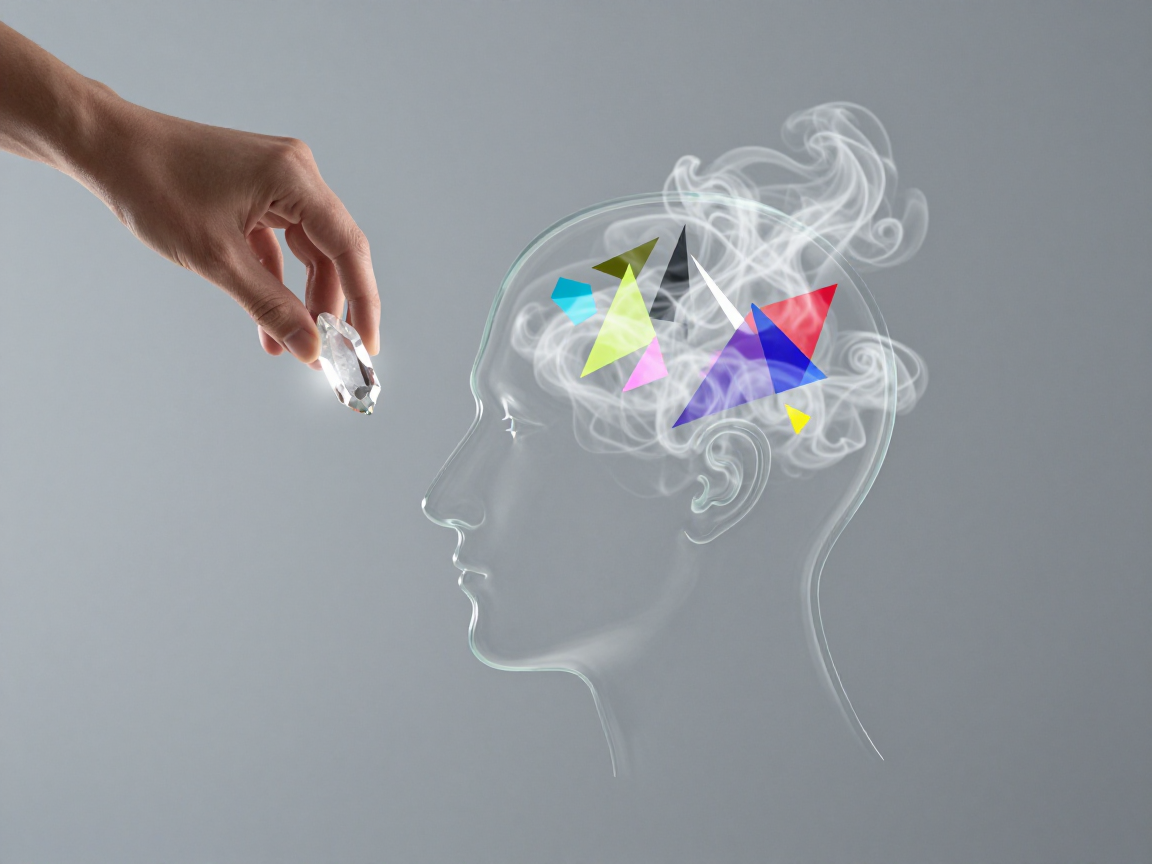
Most of us live our lives under the quiet assumption that our thoughts are an accurate reflection of reality. We hear a voice in our head telling us that a friend is angry with us, or that we are unqualified for a promotion, and we respond to those internal statements as if they were objective facts. We behave as if our minds are mirrors of the world, perfectly capturing the truth of our circumstances. However, if you have ever been convinced that you forgot to lock the front door - only to find it bolted tight - you have experienced the inherent unreliability of the human mind.
Understanding the evidence for and against thoughts is a transformative step in mental health and personal development. By examining the biological and psychological data, we can start to see thoughts not as absolute truths, but as mental events - temporary, often biased, and sometimes entirely fabricated. This distinction is the difference between being a slave to your inner monologue and being the conscious observer of it. To navigate the complexities of the human experience, we must look at how the brain generates these narratives and why they so often lead us astray.
The Physicality of Mind: Evidence for Thoughts as Real Entities
When we look at the evidence for and against thoughts, we have to start with the biological reality. Thoughts are not just abstract ghosts in the machine; they have a physical footprint. In the field of neuroscience, there is overwhelming evidence that thoughts correspond to specific patterns of neural activity. Functional Magnetic Resonance Imaging (fMRI) has shown that when a person thinks about a specific concept - such as a hammer or a house - specific regions of the brain light up in a predictable way. In some cutting - edge studies, researchers have even been able to reconstruct basic images from a person's mind based solely on their brain activity.
This physical evidence suggests that thoughts are real biological events. They consume energy, they involve the release of neurotransmitters, and they can be measured by machines. Furthermore, thoughts have a profound impact on the physical body. A stressful thought can trigger the release of cortisol and adrenaline, increasing the heart rate and suppressing the immune system. A peaceful thought can stimulate the parasympathetic nervous system, promoting healing and relaxation. This cause - and - effect relationship provides strong evidence for the validity of thoughts as powerful drivers of our physiological state.
Another pillar of evidence for thoughts lies in their evolutionary utility. If our thoughts were completely disconnected from reality, our ancestors would not have survived. The thought "there is a predator in those bushes" was a life - saving mental representation that allowed for quick action. This suggests that the primary function of thought is to serve as a predictive model of the environment. Our brains are essentially prediction machines, and thoughts are the output of those predictions. While the output isn't always 100% accurate, the fact that it has helped the human species dominate the planet is a testament to its general usefulness.
The Great Deception: Why Science Provides Evidence Against Thoughts as Truth
Despite their biological presence, there is a mountain of evidence against thoughts being reliable arbiters of truth. One of the most compelling arguments comes from the study of cognitive biases. Human beings are prone to dozens of systematic errors in thinking, such as confirmation bias - the tendency to only notice information that supports what we already believe - and the availability heuristic, which causes us to overestimate the importance of information that is easy to remember. These biases demonstrate that our thoughts are often filtered through a distorted lens before they ever reach our conscious awareness.
Neuropsychology also provides evidence against thoughts through the phenomenon of "confabulation". This occurs when the brain creates a false narrative to explain a behavior or an event, and the individual honestly believes the fabrication. This is most famously seen in split - brain patients. If the right hemisphere of the brain is given a command to "walk", the person will start walking. When asked why they are walking, the left hemisphere (which didn't see the command) will immediately make up a plausible reason, such as "I wanted to get a soda". The person is not lying; their brain is simply generating a thought to maintain the illusion of a coherent, rational self. This proves that our thoughts can be entirely invented after the fact to justify actions we don't fully understand.
Furthermore, the existence of intrusive thoughts provides clear evidence against the idea that our thoughts represent our true character or reality. Many people experience sudden, unwanted thoughts that are violent, sexual, or otherwise disturbing. In the context of Obsessive - Compulsive Disorder (OCD), these thoughts are recognized as "brain noise". They are electrical misfires that mean nothing about the person experiencing them. If we were to accept these thoughts as truth, it would lead to a total breakdown of identity. Recognizing these as evidence against the reliability of the mind is often the first step in clinical recovery.
The Map is Not the Territory
In linguistics and philosophy, there is a famous phrase: "The map is not the territory". This is a core concept when weighing the evidence for and against thoughts. The thought is the map; reality is the territory. A map is a useful tool that helps you navigate, but you cannot live inside a map, and a map can never capture every blade of grass or every pebble on the ground. When we mistake our thoughts for reality, we are essentially trying to drive our car onto a piece of paper.
Our brains are constantly simplifying complex sensory data into manageable "thoughts". This process of abstraction is necessary for survival, but it inherently involves the loss of information. When you think the thought "my boss hates me", you are taking a thousand subtle interactions, facial expressions, and emails and flattening them into a single, two - dimensional narrative. This abstraction is a useful shorthand, but it is not the reality of the relationship. The evidence against thoughts often stems from this realization that the mind is a master of simplification, often at the expense of accuracy.
The Thought Audit: A 5 - Step Framework for Evaluating Your Mind
Since we cannot simply stop thinking, we need a practical way to manage the evidence for and against thoughts as they arise. Using a structured framework allows you to step back and act as a scientist of your own mind. This process, often used in Cognitive Behavioral Therapy (CBT), helps bridge the gap between internal narrative and external reality.
- Identify the Core Thought: Pinpoint the specific sentence running through your head. Instead of "I feel bad", try to find the specific thought, such as "I am going to fail this presentation".
- Search for Supporting Evidence: What are the objective facts that support this thought? (e.g., "I haven't finished the slides yet"). Be strictly factual and avoid emotional interpretations.
- Examine the Evidence Against: What are the facts that contradict the thought? (e.g., "I have given five successful presentations this year", "My manager said my initial outline was strong").
- Check for Cognitive Distortions: Is this thought a result of "catastrophizing", "mind reading", or "all - or - nothing thinking"? Labeling the distortion helps strip the thought of its power.
- Generate a Balanced Alternative: Create a new thought that incorporates all the evidence. Instead of "I am going to fail", the balanced thought might be "I have a lot of work to do, but I have a track record of success and I am capable of completing this".
This framework doesn't ask you to ignore your thoughts or replace them with "positive thinking". Instead, it asks you to weigh the evidence for and against thoughts in a way that aligns with reality. By doing this, you reduce the emotional weight of distorted thinking.
Why We Are Wired to Believe Our Own Lies
If there is so much evidence against thoughts, why do we believe them so fervently? The answer lies in the concept of "cognitive ease". The brain is an energy - hungry organ, and it is constantly looking for ways to save calories. It is much easier for the brain to accept a pre - packaged thought than it is to engage in the strenuous process of critical thinking and self - reflection. When a thought pops into our head, it feels familiar and effortless, which the brain interprets as being "true".
Moreover, many of our thoughts are tied to our identity and our ego. We have a deep psychological need to feel that we are right and that we understand the world around us. Admitting that our thoughts might be wrong feels like a threat to our very sense of self. This is why people will often cling to a thought even in the face of overwhelming evidence to the contrary. Understanding this biological and psychological bias is essential for anyone looking to master their mental health. We are not designed for truth; we are designed for survival and efficiency.
Living with a Thinking Mind: The Path Forward
Ultimately, the evidence for and against thoughts leads us to a middle ground. We should not dismiss all thoughts as meaningless noise, nor should we worship them as divine truth. Thoughts are tools. They are biological signals that provide a rough approximation of our internal and external environments. They are the "user interface" of the brain.
To live a more grounded life, we must practice what psychologists call "cognitive defusion". This is the ability to see a thought as just a thought, rather than getting tangled up in it. When you have the thought "I am a failure", cognitive defusion allows you to say, "I am having the thought that I am a failure". That small shift creates a space of observation. In that space, you can evaluate the evidence for and against thoughts without being overwhelmed by the emotions they trigger.
By acknowledging that our minds are capable of both brilliant insight and profound delusion, we become more resilient. we learn to take our inner monologue with a grain of salt. We begin to look for evidence in the real world rather than just the world inside our heads. In the end, the goal is not to have a perfectly quiet mind, but to have a mind that you can trust because you finally understand its limitations.