Why We See What We Want: 10 Powerful Confirmation Bias Examples and the Framework to Stop Them
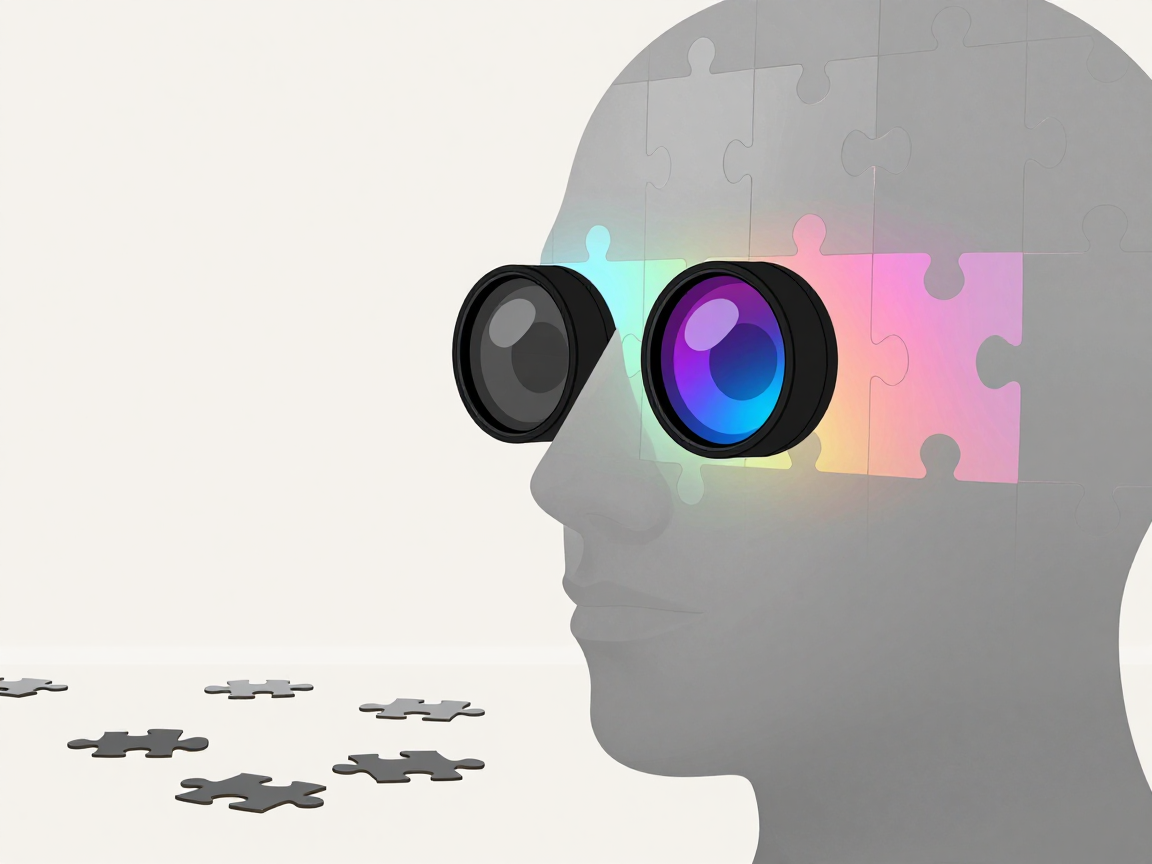
We like to imagine our minds as high-definition cameras, capturing reality exactly as it unfolds. We believe that when we make a decision—whether it is which car to buy, whom to vote for, or how to invest our savings—we are weighing the evidence like an impartial judge. However, decades of psychological research suggest a much more humbling reality. Our brains are not objective observers; they are more like defense attorneys, tirelessly working to protect our existing worldviews while filtering out any evidence that might suggest we are wrong.
This mental shortcut is known as confirmation bias. It is the tendency to search for, interpret, favor, and recall information in a way that confirms what we already believe. It is perhaps the most pervasive cognitive bias we face because it operates beneath the level of conscious thought. By examining specific confirmation bias examples, we can begin to see how this invisible force shapes our lives and, more importantly, how we can break free from its grip.
The Psychology of the Mental Filter
To understand why confirmation bias examples are so prevalent, we have to look at the brain’s need for efficiency. We are bombarded with millions of bits of information every single day. If we had to analyze every single data point from scratch, we would be paralyzed by indecision. To survive, our brains create mental models of how the world works.
When we encounter information that fits our model, our brain rewards us with a small hit of dopamine. It feels good to be right; it provides a sense of security and intellectual mastery. Conversely, encountering information that contradicts our beliefs creates "cognitive dissonance." This is a state of mental discomfort that feels like a physical threat. To resolve this tension, our brains often choose the path of least resistance: we ignore the evidence, attack the source, or rationalize it away. This internal protective mechanism is the root of almost every confirmation bias example we see in society today.
Confirmation Bias Examples in Everyday Life
Most of us don't notice our biases because they are woven into our daily routines. These confirmation bias examples show how easily we can become trapped in a self-reinforcing loop.
1. The Social Media Echo Chamber
Perhaps the most modern of all confirmation bias examples is the way we consume news. If you hold a particular political view, your social media feed is likely a curated gallery of voices that agree with you. When you see a headline that aligns with your perspective, you click it, like it, and share it without a second thought. However, when an article from the "other side" appears, you likely scroll past it or immediately look for reasons to discredit the author. You aren't seeking information; you are seeking validation.
2. The "First Impression" Trap in Relationships
We often decide how we feel about someone within the first few minutes of meeting them. If you decide a new coworker is "arrogant," your brain will actively look for evidence to support that label. Every time they speak up in a meeting, you see it as grandstanding. Meanwhile, you might completely ignore the times they stayed late to help a colleague or offered a genuine compliment. Your initial bias creates a filter that only lets the "arrogant" behavior through.
3. Health and Wellness Trends
Consider the person who becomes convinced that a specific supplement—let’s say Vitamin C—is a miracle cure for the common cold. They will remember every time they took Vitamin C and felt better within two days. They will conveniently forget the times they took it and stayed sick for a week, or the times they didn't take it and recovered quickly anyway. Because they want to believe in the cure, they only count the "hits" and ignore the "misses."
High-Stakes Confirmation Bias Examples: Finance and Law
While personal biases can be frustrating, confirmation bias examples in professional fields can lead to catastrophic consequences. When billions of dollars or human lives are on the line, the mental filter becomes a dangerous liability.
4. The Investor's Blind Spot
In the world of finance, confirmation bias is a major driver of market bubbles. An investor might fall in love with a tech startup and convince themselves it is the next big thing. They seek out bullish reports and join online forums filled with other enthusiasts. When a financial analyst points out that the company has a failing business model or massive debt, the investor dismisses them as a "hater" or someone who "doesn't get it." By the time the stock crashes, the investor has ignored months of warning signs that were hidden in plain sight.
5. Investigative Tunnel Vision
One of the most sobering confirmation bias examples occurs in criminal justice. If a detective becomes convinced early in an investigation that a specific suspect is guilty, they may unconsciously focus only on evidence that supports that theory. They might interpret ambiguous witness statements as incriminating and overlook forensic evidence that points elsewhere. This "tunnel vision" has led to numerous documented cases of wrongful convictions, showing that even those trained to be objective are susceptible to this bias.
The Digital Acceleration of Bias
Technology hasn't just exposed our biases; it has weaponized them. Algorithms on platforms like YouTube, TikTok, and Facebook are designed to maximize engagement. They have learned that we stay on the platform longer when we are shown content that we agree with.
This creates a digital environment where we are rarely challenged. We begin to believe that our viewpoint is the "common sense" view because everyone we see online shares it. This makes the other side appear not just wrong, but irrational or even malicious. These digital confirmation bias examples highlight why it is becoming increasingly difficult to find common ground in a polarized world.
A Framework for De-Biasing Your Thinking
We cannot simply turn off confirmation bias; it is hardwired into our biology. However, we can build systems to mitigate its effects. Use this four-step action plan to sharpen your objectivity.
1. The "Red Team" Strategy
In the military, a "Red Team" is a group tasked with finding the flaws in a plan. You can do this for your own beliefs. Whenever you feel certain about a topic, stop and ask: "If I were tasked with proving myself wrong, what evidence would I use?" Actively look for the strongest possible version of the opposing argument. If your belief can’t stand up to its strongest critic, it might be time to rethink it.
2. Seek the "Misses," Not Just the "Hits"
If you have a theory about something, stop looking for reasons why it’s true. Instead, look for one reason why it might be false. For example, if you believe a certain stock is a great buy, search for "Reasons NOT to buy [Stock Name]." This forces your brain to acknowledge the data points it has been filtering out.
3. Practice Intellectual Humility
Intellectual humility is the recognition that you don't know everything and that your brain is fallible. Try to adopt these habits:
- Use Probabilities: Instead of saying "I am 100% sure," try saying "I am 70% sure." This leaves a 30% window for new information to change your mind.
- The Five-Minute Rule: When you hear an opposing view that makes you angry, wait five minutes before responding. Use that time to ask yourself why that information felt like a threat.
4. Diversify Your Information Diet
Go beyond your usual sources. If you lean left, read a respected right-leaning publication. If you are a proponent of a specific scientific theory, read the peer-reviewed critiques of that theory. The goal isn't necessarily to change your mind, but to ensure you are seeing the full landscape of information.
Checklist: Are You Falling for Confirmation Bias?
Ask yourself these questions when evaluating new information:
- [ ] Did I only read the headline because it agreed with me?
- [ ] Am I dismissing the source of this information because I don't like their politics?
- [ ] Would I accept this same evidence if it supported the opposite conclusion?
- [ ] Have I spoken to anyone who disagrees with me about this in the last month?
- [ ] Does being right about this feel more important than finding the truth?
The Competitive Advantage of Being Wrong
Most people view changing their mind as a sign of weakness or inconsistency. In reality, the ability to update your beliefs in the face of new evidence is one of the most powerful competitive advantages you can have.
The most successful entrepreneurs and scientists are often those who are the fastest to realize they are wrong. They don't tie their identity to their ideas; they tie their identity to the process of finding the truth. When you stop looking for confirmation bias examples in others and start looking for them in yourself, you open the door to genuine growth. You become a better problem solver, a more empathetic partner, and a clearer thinker.
Conclusion: Choosing Truth Over Comfort
Confirmation bias is the path of least resistance. It is the comfortable, warm blanket of being "right." But that comfort comes at a high price: it limits our growth, creates division, and leads to poor decision-making. By recognizing confirmation bias examples in our daily lives—from the articles we share to the way we judge our coworkers—we can begin to peel back the filter.
The goal is not to be a person who has no biases; that is an impossible standard. The goal is to be a person who is aware of their biases and has the courage to challenge them. It requires a commitment to truth over comfort and a willingness to embrace the occasional discomfort of being wrong. In the end, a world seen clearly, even with its contradictions, is much more interesting than a world seen through a narrow lens of our own making.