Why Your Brain Gets Stuck: The Science of Cognitive Flexibility and How to Master the Mental Pivot
We have all experienced that frustrating moment when a well-laid plan falls apart. Perhaps it is a traffic jam that makes you late for a crucial meeting, or a sudden shift in a project at work that renders weeks of effort irrelevant. For some, these moments are minor hiccups. For others, they feel like insurmountable roadblocks that trigger stress, anger, or a total mental shutdown. The difference between these two reactions often comes down to a single, vital mental trait: cognitive flexibility.
Cognitive flexibility is the brain's ability to switch between thinking about different concepts, to adapt to new information, and to change your behavior when your current approach isn't working. It is the mental equivalent of being a gymnast rather than a statue. While a statue is strong, it is also brittle; when the ground shifts, it topples. A gymnast, however, can bend, twist, and find their footing regardless of the terrain. In our rapidly changing world, building this mental agility is no longer just a "nice to have" skill—it is a fundamental requirement for emotional resilience, professional success, and long-term mental health.
The Science of the Mental Pivot
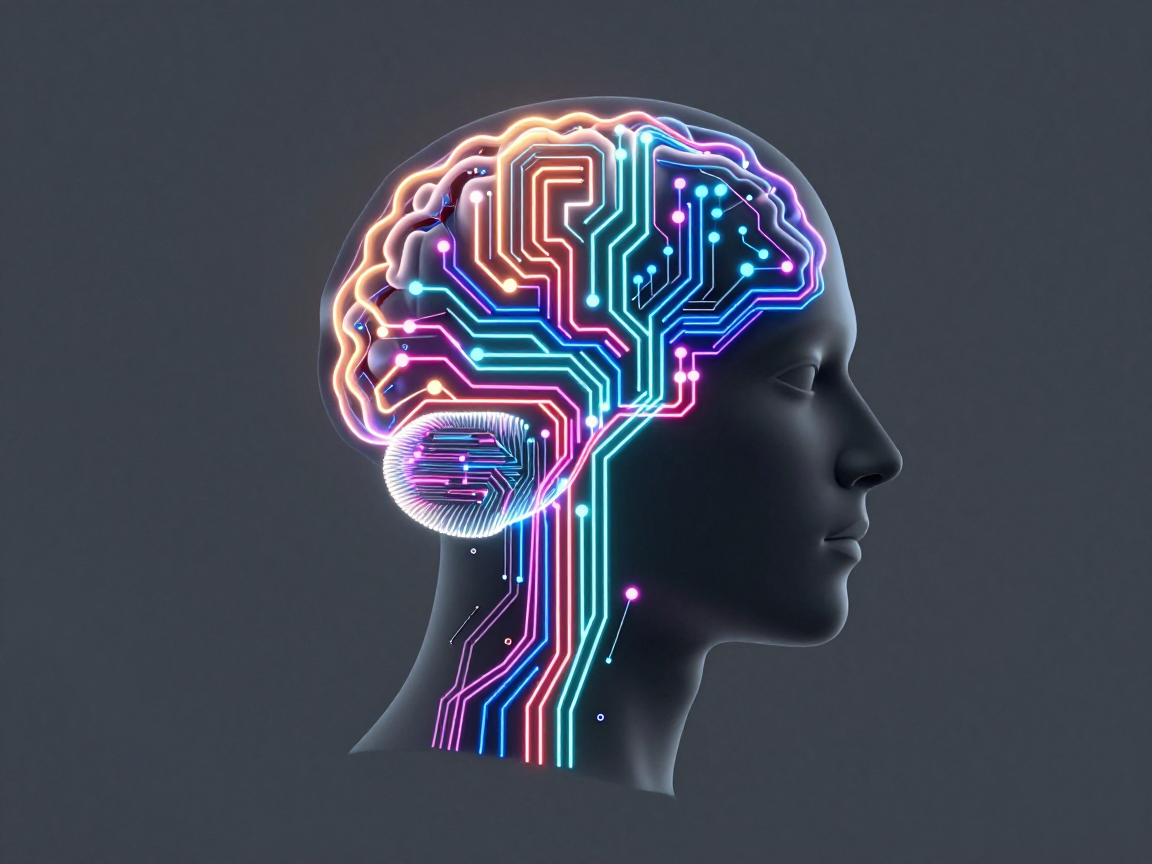
To understand cognitive flexibility, we have to look at the "control center" of the brain: the prefrontal cortex (PFC). This area handles what psychologists call executive functions. These include working memory, impulse control, and, most importantly, set-shifting. Set-shifting is the actual neurological process of moving your focus from one task or mental framework to another. It is the brain's ability to realize that the "set" of rules you were using is no longer applicable and that a new set must be loaded.
When you exercise cognitive flexibility, your brain is actively inhibiting an old response and activating a new one. It involves a complex dance between the prefrontal cortex and the anterior cingulate cortex (ACC), which acts as a sort of conflict monitor. This monitor notices when the old way of doing things is producing an error or a suboptimal result. In a flexible brain, this signal triggers an immediate search for alternatives. In a rigid brain, however, the signal often leads to "looping"—where the person continues to apply the same failed strategy with increasing intensity and frustration.
Neuroplasticity plays a massive role here. Our brains are not hardwired; they are more like a dense forest with well-trodden paths. Every time we think a certain way or react to stress with the same habit, we pack down that path, making it easier to follow next time. Cognitive flexibility is the act of stepping off the path and carving a new trail. It is harder work at first, requiring more glucose and mental energy, but over time, it creates a more "navigable" brain that can reach the same destination through a dozen different routes. This structural change is what allows high-performers to remain calm under pressure while others panic.
Signs You Are Struggling with Cognitive Rigidity
Most people do not realize they lack cognitive flexibility until they are faced with a crisis. However, the signs of "mental rigidity" show up in small, everyday behaviors. Identifying these patterns is the first step toward loosening the grip of old habits and opening up to new possibilities.
- The "One Right Way" Trap: You find yourself getting unusually upset when someone does a task differently than you would, even if the result is the same. This stems from a need for certainty and control.
- Difficulty with Transitions: You feel a sense of dread or irritation when switching from one activity to another, such as leaving work to go to a social event, even if you like the event.
- Overwhelming Stress During Change: When a plan changes at the last minute, you feel a physical "clench" in your chest or a sense of panic rather than a curious "what now?" response.
- Struggling to See Other Perspectives: In arguments, you find it nearly impossible to understand how the other person could possibly be right, or even why they feel the way they do. This is often called "cognitive egocentrism."
- Ruminating on Mistakes: You replay past errors over and over, unable to shift your focus toward a solution or a lesson learned. Your brain stays stuck on the "error" signal.
When these behaviors become the default, we limit our potential. We miss out on creative solutions because we are too busy mourning the plan that failed. We damage relationships because we cannot empathize with a different worldview. Most importantly, we live in a state of constant, low-level anxiety because the world is inherently unpredictable, and a rigid mind views unpredictability as a direct threat to its safety.
The Core Benefits of a Flexible Mind
Cultivating cognitive flexibility does more than just help you handle a cancelled flight. It fundamentally changes how you interact with reality. When you train your brain to be agile, you unlock several key advantages that ripple through every area of your life:
- Enhanced Problem-Solving: Flexible thinkers can "zoom out" and see the big picture. They are better at divergent thinking, which is the ability to generate many different solutions to a single problem. They don't just look for the "right" answer; they look for the "best available" answer.
- Emotional Regulation: If you can quickly reframe a negative event—for example, seeing a job loss as an opportunity for a career pivot rather than a final failure—you reduce the time you spend in a state of emotional distress. This is the hallmark of emotional intelligence.
- Improved Resilience: Life will inevitably knock you down. Cognitive flexibility is the tool that allows you to "rebound" by helping you find new meaning and new paths forward when the old ones are closed. It is the literal foundation of grit.
- Stronger Relationships: Flexibility allows for better "theory of mind," which is the ability to understand that others have beliefs, desires, and intentions different from your own. This leads to less conflict, more effective negotiation, and deeper connection.
The Pivot Protocol: A 5-Step Framework for Cognitive Flexibility
If you feel that your thinking has become "stiff," you can use the following framework to practice the mental pivot. Think of this as a structured workout for your prefrontal cortex. Like any muscle, the brain’s ability to shift gears improves with intentional repetition.
Step 1: Catch the Clench
The first step is purely physical. When you encounter a change or a challenge, notice the "clench" in your body. It might be a tight jaw, hunched shoulders, or a knot in your stomach. This is your nervous system reacting to a perceived threat to your "plan." Simply naming it by saying "I am feeling rigid right now" can help dampen the amygdala's response and re-engage the logical parts of your brain.
Step 2: Interrupt the Loop
When we are stuck, our thoughts usually loop around the problem: "This shouldn't be happening" or "Why is this so difficult?" Interrupt this loop by asking a disruptive, open-ended question. My favorite is: "What else could this mean?" This forces the brain to look for a second, third, and fourth interpretation of the situation, breaking the binary "good/bad" thinking.
Step 3: The "Rule of Three"
To build the "divergent thinking" muscle, force yourself to come up with at least three different ways to handle a situation—even if they seem ridiculous. The first two options are usually the ones you’ve always used. The third one usually requires the kind of creative leap that builds cognitive flexibility. If a meeting is cancelled, don't just go back to your desk. Option 1: Go to the desk. Option 2: Go for a 10-minute walk. Option 3: Use the time to write a handwritten note to a mentor.
Step 4: Seek Discomfort in Logic
Practice "steel-manning" an argument you disagree with. Instead of finding the weakest part of someone else's point of view, try to build the strongest possible version of their argument. This is one of the most advanced exercises for cognitive flexibility because it requires you to hold two opposing ideas in your mind at once without immediate judgment.
Step 5: Execute and Evaluate
Action is the best cure for rigidity. Pick a new path and try it. Afterward, reflect on the result. Did the "new way" work? Even if it didn't work as well as the old way, the act of trying something different has successfully rewired a tiny part of your brain. You are proving to your nervous system that trying something new is safe.
Daily Habits to Maintain Mental Agility
Beyond using the Pivot Protocol during moments of stress, you can build a "reserve" of cognitive flexibility through small, daily lifestyle choices. These habits keep the brain's "switching" mechanism lubricated and ready for use when the stakes are high.
- Break the Routine: If you always walk the same path to the coffee shop, take a different street. If you always brush your teeth with your right hand, use your left. These minor disruptions force the brain out of "autopilot" and into a state of active, mindful awareness.
- Learn a "Useless" Skill: Pick up a hobby that has nothing to do with your career or your current identity. Learning to juggle, speak a few phrases of a new language, or cook a complex dish forces your brain to build new neural pathways from scratch, increasing overall plasticity.
- The Role of Diverse Inputs: We often live in "echo chambers" of people who think exactly like us. Seek out books, podcasts, and conversations that challenge your worldview. Exposure to "cognitive dissonance" is the weightlifting of mental agility.
- Prioritize Restorative Sleep: Cognitive flexibility is one of the first things to go when we are sleep-deprived. The prefrontal cortex requires significant energy to perform "set-shifting" tasks. Without sleep, we naturally default to our most rigid, habitual, and survival-based behaviors.
Overcoming the "Cognitive Tunnel"
When we are under high stress, we experience "cognitive tunneling." This is an evolutionary survival mechanism where our focus narrows to the immediate threat, and our ability to think flexibly vanishes. This is why you can't find your keys when you are in a rush, even if they are sitting right in front of you. Your brain has lost its "flex."
To combat this, you must lower your physiological arousal before you try to solve the problem. Deep, diaphragmatic breathing or a quick "cold water splash" to the face can reset the nervous system. Once your body feels safe, the prefrontal cortex can come back online, and you regain access to the higher-order thinking required for cognitive flexibility. You cannot "think" your way out of a tunnel; you have to "breathe" your way out first.
Embracing the "What If?" Mindset
Ultimately, cognitive flexibility is about moving from a "What Is" mindset to a "What If?" mindset. The "What Is" mindset is fixed, certain, and often brittle. It sees things as they are and demands they stay that way. The "What If?" mindset is curious, expansive, and resilient. It views the world not as a set of rules to be followed, but as a series of experiments to be conducted.
As you move through your day, look for opportunities to be the reed rather than the statue. When things go wrong, remind yourself that this is an opportunity to practice your "mental pivot." Over time, you will find that the world feels less threatening and more like a playground for your curiosity. You aren't just becoming smarter; you are becoming more free. The "stuckness" you once felt is replaced by a sense of agency, knowing that no matter what the world throws at you, you have the mental agility to dance with it.