Beyond the \"Glitch\": Why Your Brain Lies to You and a Comprehensive Cognitive Biases List for Sharper Thinking
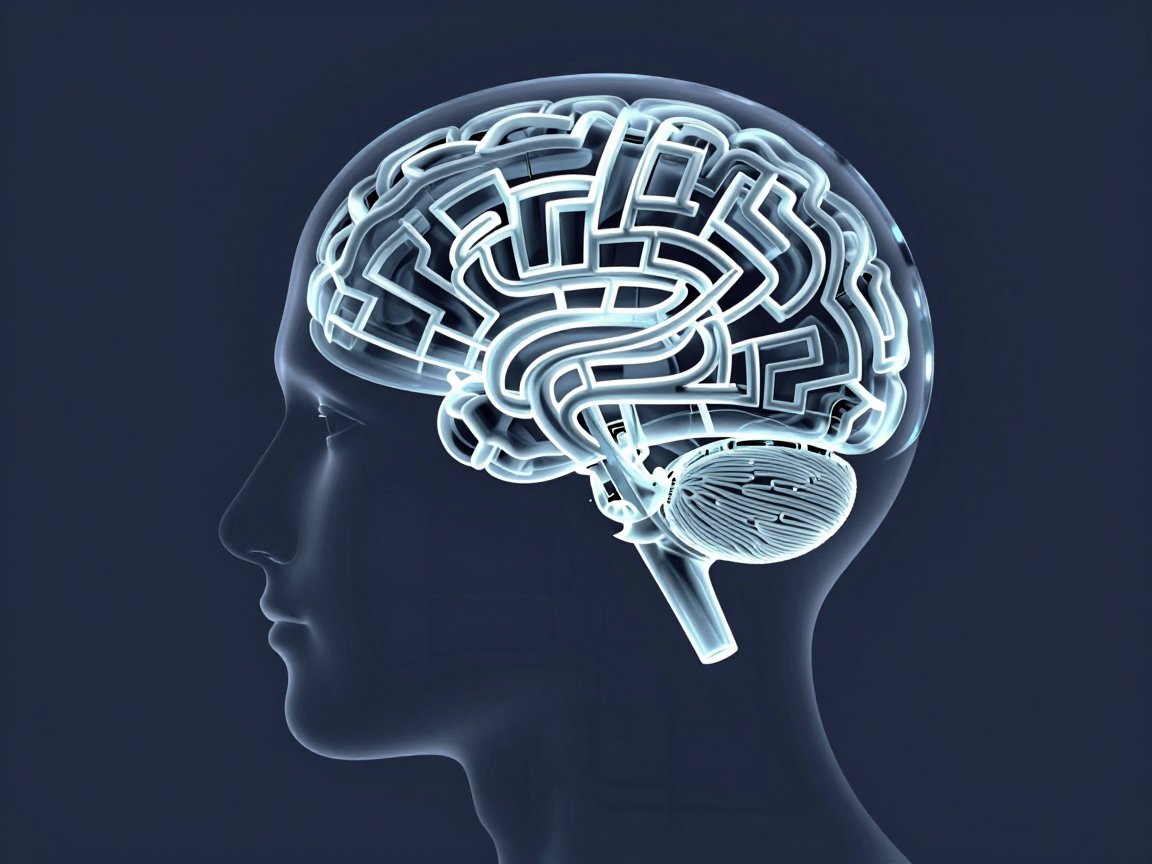
We like to believe we are rational creatures. We imagine our minds as high-performance computers, weighing facts, analyzing data, and reaching logical conclusions with cold, mathematical precision. But the reality is far messier. The human brain is not a calculator; it is a biological organ shaped by millions of years of evolution. It is designed more for survival on the prehistoric savannah than for navigating the complexities of the modern information age. To save energy and react quickly to threats, our brains rely on mental shortcuts known as heuristics. While these shortcuts are often efficient, they frequently lead to systematic errors in judgment.
These errors are what psychologists call cognitive biases. They are the invisible filters through which we view the world, often distorting our perception of reality without us ever realizing it. Understanding a comprehensive cognitive biases list is not just an academic exercise in psychology; it is a vital survival skill for anyone who wants to make better financial decisions, build healthier relationships, and think more clearly in an era of constant distraction and misinformation. By identifying these mental glitches, we can begin to build systems that protect us from our own irrationality and navigate the world with a clearer, more objective lens.
The Invisible Architecture of Your Thoughts
Your brain processes approximately 11 million bits of information every second, yet your conscious mind can only handle about 40 to 50 bits in that same timeframe. To bridge this massive gap, the brain takes the path of least resistance. It looks for patterns where none exist, prioritizes information that confirms what we already believe, and gives undue weight to recent or emotionally charged events. This is the 'efficiency trade-off' of the human mind: we trade total accuracy for rapid processing.
This cognitive architecture was brilliant for avoiding predators. If you heard a rustle in the grass, it was safer to assume a lion was there (a false positive) than to wait for definitive proof and get eaten (a false negative). However, in a world of complex stock markets, nuanced political debates, and hyper-targeted social media algorithms, these same instincts lead us astray. When we refer to a cognitive biases list, we are essentially looking at a map of the potholes in the human road to logic. These biases are not signs of low intelligence; they are universal features of the human hardware. Even the most brilliant scientists and world leaders are susceptible to them, often more so because they believe their intelligence makes them immune.
The Essential Cognitive Biases List: 15 Shortcuts That Lead Us Astray
To navigate life effectively, you must recognize the most common ways your mind tends to trip. This cognitive biases list categorizes the major mental errors that influence our daily lives, from how we spend money to how we judge the people around us. Recognizing these patterns is the first step toward intellectual autonomy.
1. Confirmation Bias
This is the most pervasive entry on any cognitive biases list. It is the tendency to search for, favor, and recall information that confirms our pre-existing beliefs while ignoring or undervaluing evidence that contradicts them. In the digital age, this bias is amplified by algorithms that show us only what we want to see, creating 'echo chambers' that make us feel increasingly certain of our own correctness while becoming more detached from reality.
2. The Anchoring Bias
Humans rely too heavily on the first piece of information offered (the 'anchor') when making decisions. If you are negotiating a salary and the employer mentions a low number first, your entire perception of a 'fair' wage is pulled toward that figure. Retailers use this constantly by showing a 'suggested retail price' that is much higher than the actual price, making the sale price feel like an objective bargain.
3. The Availability Heuristic
This bias leads us to overestimate the importance of information that comes to mind quickly. Because plane crashes or shark attacks are highly publicized and vivid, we fear them disproportionately. Meanwhile, we ignore statistically greater risks like heart disease or car accidents because they feel 'mundane.' We judge the probability of an event based on how easily we can remember an example of it.
4. The Sunk Cost Fallacy
This occurs when we continue an endeavor because of the resources we have already invested—time, money, or effort—rather than looking at future costs and benefits. It is the psychological force that keeps people in unfulfilling careers, failing businesses, or toxic relationships simply because they 'already put so much into it.' Logic dictates that we should only care about future utility, but our brains hate 'wasting' what has already been spent.
5. The Dunning-Kruger Effect
This is a bias where people with low ability at a task overestimate their competence. Because they lack the skills required for the task, they also lack the ability to realize how poorly they are performing. Conversely, highly competent individuals often underestimate their relative ability, assuming that what is easy for them must be easy for everyone else.
6. The Halo Effect
Our overall impression of a person influences how we feel and think about their character in specific areas. If someone is physically attractive or charismatic, we are statistically more likely to perceive them as intelligent, kind, or trustworthy, even in the absence of evidence. This bias is heavily exploited in marketing, where celebrities are used to sell products they have no expertise in.
7. Self-Serving Bias
This is the tendency to attribute our successes to our own character or skills but blame our failures on external, situational factors. If you close a big deal at work, it’s because you’re a talented closer; if you lose the deal, it’s because the economy is bad or the client was difficult. It protects our ego but prevents us from learning from our mistakes.
8. Hindsight Bias
Often called the 'I knew it all along' phenomenon, this is the tendency to overestimate our ability to have predicted an outcome after it has already occurred. It makes the past look much more predictable and linear than it actually was, which leads to overconfidence when trying to predict future events.
9. The Negativity Bias
Evolutionarily, noticing a threat was more important than noticing a reward. As a result, negative events, comments, or emotions have a much more significant impact on our psychological state than positive ones. Research suggests it takes approximately five positive interactions to outweigh the emotional impact of a single negative one.
10. The Optimism Bias
Despite our negativity bias regarding the world, we often believe that we personally are less at risk of experiencing a negative event compared to others. This is why people continue to smoke despite health warnings or fail to save for retirement, believing that 'things will just work out' for them specifically.
11. The Framing Effect
How information is presented significantly affects how we process it. For instance, a medical procedure described as having a '90% survival rate' sounds much more appealing than one with a '10% mortality rate,' even though the statistics are identical. The 'frame' dictates our emotional reaction and our subsequent choice.
12. Fundamental Attribution Error
We tend to explain others' behavior based on their internal personality traits while explaining our own behavior based on situational factors. If a coworker is late, we assume they are 'lazy'; if we are late, we point to the 'unexpected traffic.' It is the primary driver of workplace conflict and social misunderstanding.
13. The Bandwagon Effect
This is the tendency to do or believe something because many other people do or believe the same. It is the psychological root of fads, market bubbles, and herd mentality. Our brains are hardwired to seek safety in numbers, making it incredibly difficult to stand against a majority opinion, even when that opinion is factually wrong.
14. The Curse of Knowledge
Once we know something, we find it incredibly difficult to imagine what it is like not to know it. This makes it hard for experts to explain basic concepts to beginners. They 'skip steps' in their logic because they assume the foundational knowledge is as obvious to everyone else as it is to them.
15. Loss Aversion
Psychologically, the pain of losing something is twice as powerful as the pleasure of gaining something of equal value. This leads to overly cautious behavior. We would rather avoid losing $100 than take a calculated risk that has a high probability of gaining $200. This bias often prevents us from making necessary changes or taking beneficial risks.
The Mental Audit: A Framework for Debugging Your Logic
Simply memorizing a cognitive biases list is not enough to stop them. These biases operate at a subconscious, 'System 1' level—fast, instinctive, and emotional. To counteract them, you need a conscious framework to engage 'System 2'—slow, deliberate, and logical thinking. Use this four-step 'Mental Audit' when facing major decisions.
- Identify the Emotional Charge: Are you feeling particularly excited, defensive, or fearful? Strong emotions are often the 'smoke' that signals a cognitive bias is active. If you feel a desperate need to be 'right' in an argument, Confirmation Bias is likely at play. Pause and name the emotion before proceeding.
- Seek the Discomforting Evidence: Actively look for data that proves you wrong. If you are convinced a certain investment is a 'sure thing,' search for 'why this investment will fail' rather than looking for more success stories. This is known as 'red teaming' your own ideas.
- Change the Frame: Rephrase the problem. If you are struggling with a 'sunk cost' situation (like a project that isn't working), ask yourself: 'If I were coming into this situation today with zero prior investment, would I choose to start this now?' If the answer is no, it is time to walk away.
- The Outsider Test: Imagine you are advising a best friend on this exact problem. We are often much more rational when viewing others' lives than our own. What would 'Rational You' tell someone else to do? This provides the necessary psychological distance to see through the 'Halo Effect' or 'Self-Serving Bias.'
A Daily Checklist for High-Stakes Thinking
To keep your mind sharp and your decisions objective, integrate these questions into your daily reflection or professional meeting culture. Using a cognitive biases list as a practical checklist can prevent groupthink and individual errors.
- Is this an anchor? Am I stuck on the first number, price, or idea mentioned in this conversation?
- Who is missing from the room? Am I only listening to people who agree with me or share my background?
- What if the opposite were true? Have I spent at least five minutes genuinely considering the counter-argument?
- Am I 'HALT'? (Hungry, Angry, Lonely, or Tired). Cognitive biases are significantly stronger when our mental and physiological energy is depleted.
- Am I oversimplifying? Am I attributing a complex situation to someone's 'bad character' (Fundamental Attribution Error) instead of looking at the environment they are operating in?
The Power of Cognitive Humility
It is important to realize that you will never fully 'cure' yourself of cognitive biases. They are not a disease; they are part of the biological machinery of the human brain. The goal is not to become a cold, emotionless logic machine, but to develop 'cognitive humility.'
Cognitive humility is the acceptance that your perspective is inherently limited and potentially flawed. When you internalize a cognitive biases list, you become less defensive when challenged and more curious about why you think the way you do. You start to realize that 'being right' is far less important than 'getting it right.'
By building better habits—such as seeking out diverse perspectives, slowing down your decision-making process, and using frameworks to check your logic—you can mitigate the impact of these mental glitches. Clear thinking is not an innate talent; it is a practiced discipline. In a world designed to exploit our biases for clicks, sales, and votes, reclaiming your agency through psychological awareness is one of the most powerful things you can do for your future.