The Invisible Ceiling: Why Changing Core Beliefs is the Final Step in True Transformation
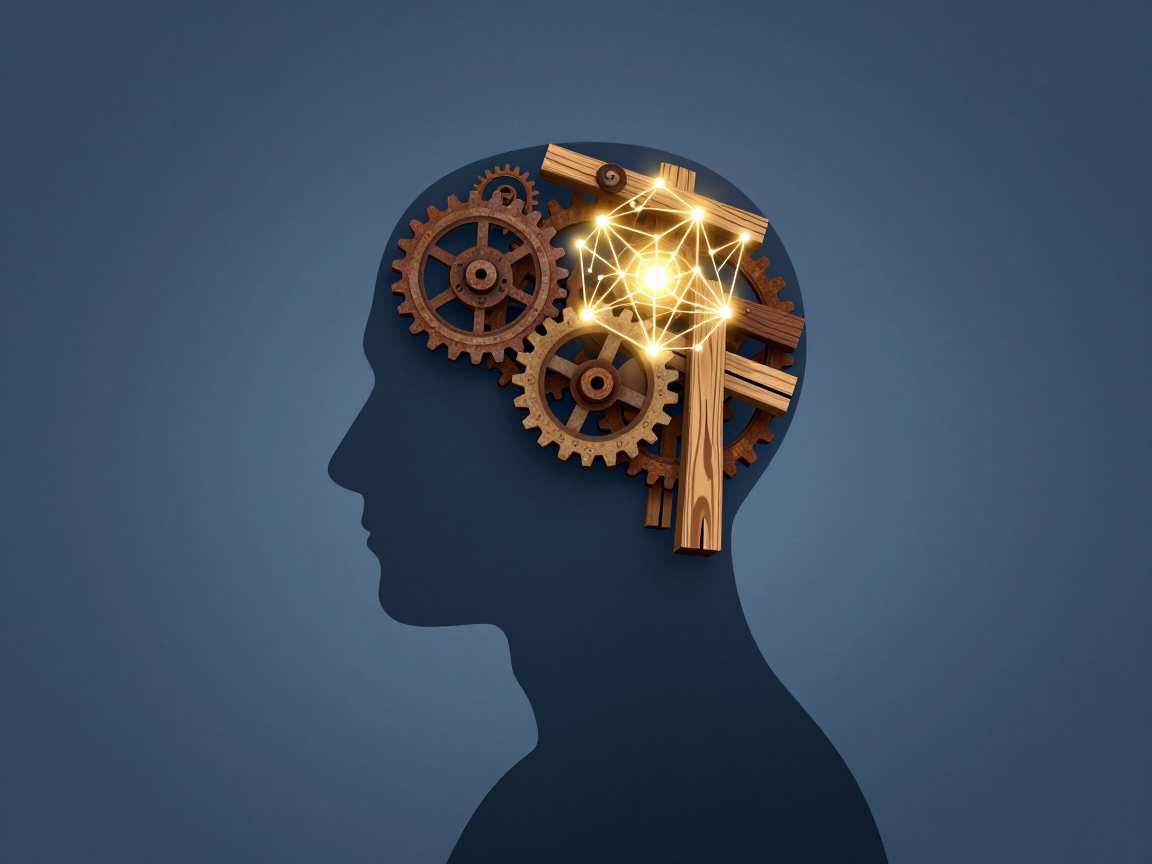
We often approach personal growth like a gardener who merely clips the tops of weeds. We try to change our habits, adjust our morning routines, or force ourselves into a more positive mindset through sheer willpower. Yet, despite these efforts, many of us find ourselves circling the same patterns of self-doubt, relationship conflict, or career stagnation. This repetitive cycle occurs because we are addressing the symptoms of our internal world rather than the source. The source is not our behavior; it is the collection of deeply held, often unconscious assumptions we carry about ourselves and the world around us.
Changing core beliefs is the process of diving beneath the surface of daily thought to examine the architectural blueprints of your identity. These beliefs act as a filter through which every experience is processed. If your underlying filter says, "I am fundamentally flawed", then even a massive success will be interpreted as a fluke or a mistake. Until you address the filter itself, no amount of external achievement will make you feel successful. To move forward, we must understand how these beliefs were formed and, more importantly, how they can be dismantled and replaced with truths that serve our growth.
Understanding the Architecture of the Subconscious Mind
Core beliefs are the absolute truths we hold about our identity, other people, and the way the world functions. They are usually formed in early childhood, a period when our brains are in a highly absorbent state. During these years, we lack the critical thinking skills to filter the information we receive. If a parent was consistently distant, a child might not conclude that the parent is struggling with their own mental health. Instead, the child often forms a core belief such as, "I am not worth noticing".
These beliefs are not just idle thoughts; they are survival mechanisms. Once a belief is established, the mind seeks to protect it through a phenomenon known as confirmation bias. Your brain actively looks for evidence that supports your existing belief while ignoring or discounting evidence that contradicts it. This creates a self-reinforcing loop. For instance, someone with a core belief that "people are untrustworthy" will focus intensely on a friend being five minutes late, while completely ignoring the twenty times that same friend was perfectly reliable. Over time, these loops harden into what feels like objective reality. Changing core beliefs requires interrupting this loop and demanding a higher level of evidence for the stories we tell ourselves.
Why Traditional Affirmations Often Feel Like a Lie
Many people struggle with the concept of changing core beliefs because they have been told to simply use positive affirmations. They stand in front of a mirror and say, "I am a confident leader", while every fiber of their being screams, "No, you are not". This cognitive dissonance happens because the new, positive statement is in direct conflict with a deeply rooted subconscious certainty.
When you attempt to layer a positive thought over a negative core belief without doing the work of deconstruction, your subconscious mind views the new thought as a threat to its internal consistency. It rejects the affirmation to maintain the integrity of its current map of reality. True transformation requires more than just adding new thoughts; it requires a systematic dismantling of the old ones. You cannot build a new skyscraper on the foundation of a crumbling shack. You have to clear the lot first. This is why the focus must shift from simply thinking happy thoughts to the rigorous psychological work of changing core beliefs at the foundational level.
The Framework for Changing Core Beliefs: A 5-Step Process
To effectively shift your internal narrative, you need a structured approach that bypasses the ego's defenses. This framework combines elements of cognitive behavioral therapy with somatic awareness to ensure the change is integrated into both your mind and your nervous system.
1. Identify the Hidden Narrative
The first step is identifying the specific belief that is causing the blockage. This is harder than it sounds because core beliefs often hide behind "surface thoughts". For example, the surface thought might be, "I am stressed about this presentation". To find the core belief, use the Downward Arrow Technique. Ask yourself, "If that were true, what would it mean about me?"
- Surface thought: "I am stressed about this presentation".
- Meaning: "I might mess up my words".
- If I mess up my words, what does that mean? "People will think I am incompetent".
- If people think I am incompetent, what does that mean? "I don't belong in this job".
- And if I don't belong? "I am a failure".
In this example, the core belief is "I am a failure". This is the root that must be addressed.
2. Socratic Questioning and Evidence Gathering
Once the belief is exposed, you must take it to court. Most of our core beliefs are based on old, outdated, or incomplete data. Ask yourself: What is the objective evidence that this belief is 100% true? Are there any times in my life when this belief was not true? Am I overgeneralizing a single event into a universal rule? By treating the belief as a hypothesis rather than a fact, you begin to loosen its grip on your identity.
3. Create a Functional Alternative
Changing core beliefs is not about moving from one extreme to another - such as moving from "I am a failure" to "I am the greatest person alive". The latter is often too unbelievable for the subconscious to accept. Instead, aim for a functional, evidence-based alternative. A more effective shift might be: "I am a person who is capable of learning and growing through challenges". This is grounded in reality and provides a bridge for the mind to cross over into a new way of thinking.
4. Conduct Behavioral Experiments
Your brain needs experiential proof to fully adopt a new belief. If you want to change the belief that "it is unsafe to speak my mind", you must perform small, controlled experiments where you speak up in a low-stakes environment. When the world doesn't end and people actually listen, your nervous system begins to register that the old belief is no longer necessary for your survival.
5. Somatic Integration
Core beliefs are often stored in the body as tension or a specific "felt sense". When you work on changing core beliefs, notice where you feel the old belief in your body. Does your chest tighten? Does your stomach knot? As you practice your new, functional alternative, consciously breathe into those areas of tension. This helps signal to your lizard brain that you are safe, allowing the new psychological structure to take root.
Overcoming the Safety Response of the Ego
It is important to recognize that as you begin changing core beliefs, you will likely encounter internal resistance. The ego views any change to its foundational map as a potential danger. You might experience a sudden surge of anxiety, a desire to quit the process, or a voice in your head telling you that "this is stupid".
This is actually a sign of progress. It means you have reached the boundary of your comfort zone and are starting to push against the walls of your mental cage. When this happens, do not fight the resistance. Instead, acknowledge it. Tell yourself, "My brain is trying to protect me by keeping things the same, but I am safe to change". By neutralizing the fear response, you make the process of changing core beliefs much more fluid and less of an internal battle.
Daily Practices for Lasting Mental Rewiring
Lasting change does not happen in a single breakthrough moment; it happens through the consistent application of new perspectives. Use this checklist to stay on track as you work through the layers of your subconscious:
- The Morning Mirror Check: Instead of affirmations, ask yourself, "What lens am I choosing to wear today?" and consciously choose your new, functional belief.
- The Evidence Log: At the end of each day, write down three small pieces of evidence that support your new belief. If your new belief is "I am capable", list three things you handled well, no matter how small.
- Mindful Labeling: When an old, negative thought arises, label it. Say, "That is a thought coming from my old core belief". This creates distance between your true self and the narrative.
- Cognitive Reframing: When you face a setback, intentionally ask, "How would someone with my new belief look at this situation?"
Rebuilding Your Reality from the Ground Up
Changing core beliefs is perhaps the most difficult work a human being can do. It requires honesty, courage, and a relentless commitment to truth over comfort. However, the rewards are immeasurable. When you shift the foundational rules of your internal world, the external world begins to reflect that change with surprising speed.
Relationships become healthier because you no longer believe you are unworthy of love. Careers flourish because you no longer believe you are an imposter. Most importantly, you gain a sense of internal peace that is not dependent on external circumstances. You are no longer at the mercy of a script written by a younger, less experienced version of yourself. By consciously changing core beliefs, you reclaim the pen and become the author of your own life story. The invisible ceiling is finally gone, and the path forward is as wide as you choose to make it.