Beyond the Noise: How to Reclaim Your Focus by Mastering Your Brain Filter System
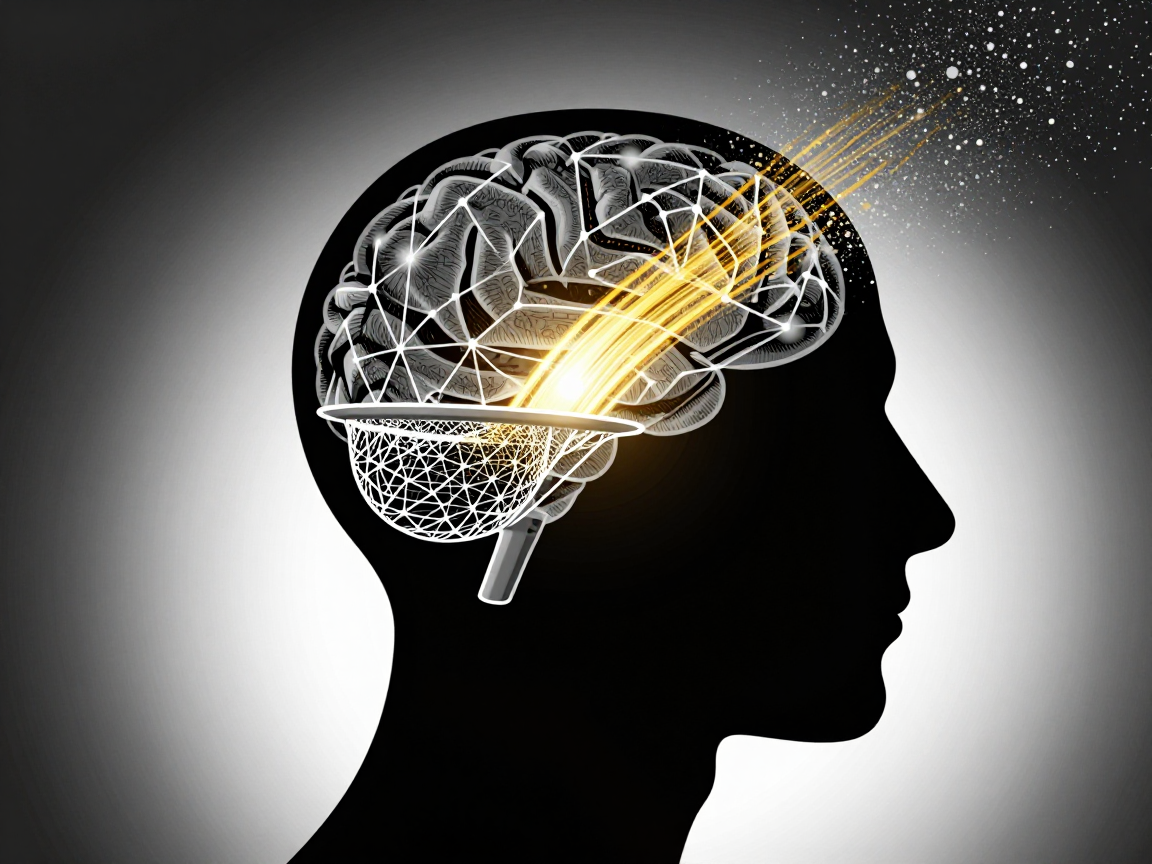
Every single second, your senses are bombarded by approximately 11 million bits of information. From the subtle hum of a refrigerator and the texture of your clothes against your skin to the flickering of a lightbulb and the thousands of visual details in your peripheral vision, the world is a chaotic storm of data. If your mind tried to process all of this at once, you would experience immediate neurological collapse. You would be unable to hold a conversation, drive a car, or even find your way to the kitchen.
To prevent this overwhelm, nature has equipped you with a sophisticated gatekeeper known as the brain filter system. This internal mechanism acts as a high-speed sorting office, deciding in real-time which pieces of information deserve your conscious attention and which should be discarded as background noise. The reality you experience is not a direct reflection of the world around you; it is a curated, edited version created by this filter. When you understand how this system functions, you gain the ability to change what you notice, how you feel, and ultimately, the opportunities you are able to seize.
The Science of the Gatekeeper: Understanding the RAS
At the heart of your brain filter system lies a small, finger-sized bundle of nerves in the brainstem called the Reticular Activating System (RAS). This neural network serves as the bridge between your subconscious mind and your conscious awareness. It functions much like a security guard at the entrance of a high-profile event, checking every piece of incoming sensory data against a list of "VIP" priorities. If the data matches the list, it gets through to your conscious mind. If it doesn't, it is ignored.
This system explains the "Cocktail Party Effect"—the phenomenon where you can be in a room full of loud conversations and hear nothing clearly, yet the moment someone across the room says your name, you snap to attention. Your name is a high-priority item in your brain filter system. It also explains why you suddenly see a specific model of car everywhere after you decide you want to buy it. The cars were always there; your filter was simply deleting them because they didn't have a "priority tag" attached to them.
Physiologically, the RAS connects the spinal cord, cerebrum, and cerebellum. It regulates sleep-wake transitions and helps focus your attention. But its most profound impact is on your perception of reality. By filtering out the "noise" of the world, it ensures that your conscious mind—which can only handle about 40 to 50 bits of information per second—is not overwhelmed. However, if the settings of this filter are tuned toward negativity, scarcity, or fear, your entire experience of life will reflect those themes.
Why Your Filter Might Be Working Against You
The brain filter system is not inherently good or bad; it is simply efficient. It takes its cues from your past experiences, your deeply held beliefs, and your current emotional state. This is where many people find themselves stuck in cycles of frustration or stagnation. If you believe that the world is a dangerous place or that you are "unlucky" in business, your RAS will actively search for evidence to support those beliefs while ignoring evidence to the contrary.
This is known as confirmation bias, and it is a direct output of your internal filtering mechanism. When you are convinced that people are generally rude, your brain filter system will highlight every instance of someone cutting you off in traffic or failing to hold a door open. Meanwhile, it will skip right over the dozens of small acts of kindness you encountered throughout the day because they don't match your established "rule" for reality. In this sense, we do not see the world as it is; we see the world as we are.
Furthermore, chronic stress can severely distort the brain filter system. When the body is in a state of high cortisol, the filter tends to narrow, focusing exclusively on potential threats. This "tunnel vision" is a survival mechanism designed to help us escape predators, but in the modern world, it often means we stop seeing creative solutions, beauty, or opportunities for connection. We become blind to everything except our problems, creating a feedback loop of anxiety and perceived lack.
Reprogramming the Filter: A 5-Step Framework
The good news is that the brain filter system is highly plastic. You can consciously choose to update the "priority list" that your RAS uses to scan the environment. By intentionally directing your attention and reinforcing new patterns, you can train your brain to notice things that align with your goals and well-being.
Use the following framework to begin recalibrating your mental gatekeeper:
- Define Your Focus Targets
Your filter needs clear instructions. If your goals are vague, like "I want to be successful," the filter doesn't know what to look for. Instead, define specific targets. If you want to improve your health, tell your brain to look for "nutritious meal ideas" or "moments of physical energy." This gives the RAS a concrete signal to track.
- Utilize Intentional Visualization
The brain has difficulty distinguishing between a vividly imagined event and a real one. When you visualize a successful outcome in detail, you are essentially pre-programming your brain filter system. You are telling it that this specific scenario is important. When you then enter the real world, your filter will be primed to notice the resources, people, and information that can make that visualization a reality.
- Audit Your Information Diet
The data you consume acts as a primary input for your filter settings. If you spend hours consuming negative news or scrolling through stressful social media feeds, you are teaching your brain filter system that "outrage" and "danger" are high priorities. Curate your environment to include more of what you want to see in your life. Surround yourself with books, podcasts, and people that reflect the reality you want to inhabit.
- The Power of Conscious Questioning
Questions are the steering wheel for your focus. When you ask, "Why does this always happen to me?" your brain filter system will dutifully find every reason why you are a victim. If you change the question to, "What is the opportunity here?" or "What can I learn from this?" you force the filter to scan the situation for constructive data that it otherwise would have discarded.
- Evening Reflection and Gratitude
Before sleep, your brain is in a highly suggestible state. By listing three things you were grateful for that day, you are effectively telling your brain filter system, "These are the types of things I want you to notice tomorrow." Over time, this shifts your baseline perception toward abundance rather than lack.
The Role of Sensory Curation and Sound
While internal focus is vital, external inputs also play a significant role in how our brain filter system manages energy. In a world of constant digital pings and urban noise, our filters are often exhausted. This exhaustion leads to "filter fatigue," where we become irritable, distracted, and unable to focus on complex tasks. This is why many people find relief in sensory curation—the intentional use of sound, light, and environment to soothe the nervous system.
Sound frequencies, for example, can act as a "tuning fork" for the brain. Listening to steady, low-frequency sounds or white noise can help quiet the overactive scanning of the RAS. When the external environment is predictable and soothing, the brain filter system can "relax" its high-alert status, allowing for deeper states of concentration and creativity. This is why many people use specific soundscapes to enter a "flow state." By masking unpredictable noises, they reduce the workload on their internal filter, freeing up cognitive energy for the task at hand.
A Checklist for Mental Clarity
If you feel overwhelmed or like you are constantly missing the "good stuff" in life, your filter might need a manual reset. Use this checklist daily to ensure your brain filter system is working for you, not against you:
- Morning Intent Setting: Did I decide on one specific thing I want to notice today?
- Environmental Check: Is my workspace free of unnecessary visual or auditory clutter that might drain my filter?
- Language Audit: Am I using words like "always," "never," or "impossible"? (These words create rigid, restrictive filter settings).
- Sensory Break: Did I spend at least ten minutes in silence or with calming sound frequencies to allow my RAS to reset?
- Evidence Log: Did I write down at least one win or opportunity I noticed today?
Living with an Optimized Filter
Mastering your brain filter system is not about ignoring the challenges of life or living in a state of naive optimism. It is about recognizing that your cognitive resources are limited and that you have a choice in how they are allocated. When you stop letting your filter be shaped by random external stressors and start shaping it with conscious intention, the world seems to change around you.
Opportunities that seemed "hidden" suddenly become obvious. Solutions to long-standing problems appear out of nowhere. You begin to notice the beauty in the mundane and the potential in the difficult. This isn't magic—it is simply the result of a well-tuned brain filter system finally showing you the parts of reality you were previously told to ignore. Your life is a reflection of what you pay attention to. Choose to pay attention to what matters!