Rewiring Your Reality: How to Use Binaural Beats for Subconscious Reprogramming and Deep Change
Most people spend their lives trying to change their behavior through sheer force of will. They set New Year resolutions, buy productivity planners, and tell themselves they will finally stop procrastinating or start believing in their own worth. Yet, after a few weeks, the old patterns inevitably return. This happens because our conscious efforts represent only a tiny fraction of our mental activity. The real architect of our reality is the subconscious mind, a vast reservoir of automated programs, beliefs, and memories that operates below the level of our awareness.
To create lasting change, we have to find a way to communicate with this inner architect. Traditional methods like talk therapy or simple positive thinking often hit a wall because the conscious mind acts as a "critical filter" that rejects new information that does not align with existing beliefs. This is where binaural beats subconscious entrainment becomes a powerful tool. By using specific sound frequencies, we can effectively lower the gate of the critical filter, allowing us to plant new seeds of thought directly into the subconscious soil.
The Hidden Engine: Why the Subconscious Mind Rules Your Life
To understand why binaural beats subconscious tools are so effective, we must first look at the hierarchy of the human mind. Think of your mind as an iceberg. The tip above the water is your conscious mind - the part that makes choices, analyzes data, and sets goals. Everything beneath the water is the subconscious. It controls your heart rate, your digestion, your emotional triggers, and, most importantly, your self-image.
From the ages of zero to seven, we exist primarily in a state of high suggestibility. We are like sponges, absorbing the beliefs and behaviors of our parents, teachers, and culture without question. These early inputs form the "operating system" of our lives. If you were told as a child that money is hard to come by or that you are not good enough, those programs continue to run in the background of your adult life. No matter how much you consciously want success, your subconscious will sabotage your efforts to stay consistent with its internal programming.
Accessing this area of the mind is difficult because the brain naturally operates in high-frequency Beta waves during the day. Beta is the state of alertness, logic, and critical thinking. While useful for solving math problems, the Beta state is terrible for change because it is highly skeptical. To change the program, we need to slow the brain waves down to a state where the subconscious becomes accessible and receptive.
How Binaural Beats Subconscious Entrainment Works
Binaural beats are an auditory illusion created by playing two slightly different frequencies in each ear. For example, if you play a 200 Hz tone in your left ear and a 206 Hz tone in your right ear, your brain does not hear two separate notes. Instead, it perceives a third, pulsing beat at the mathematical difference of the two - in this case, 6 Hz.
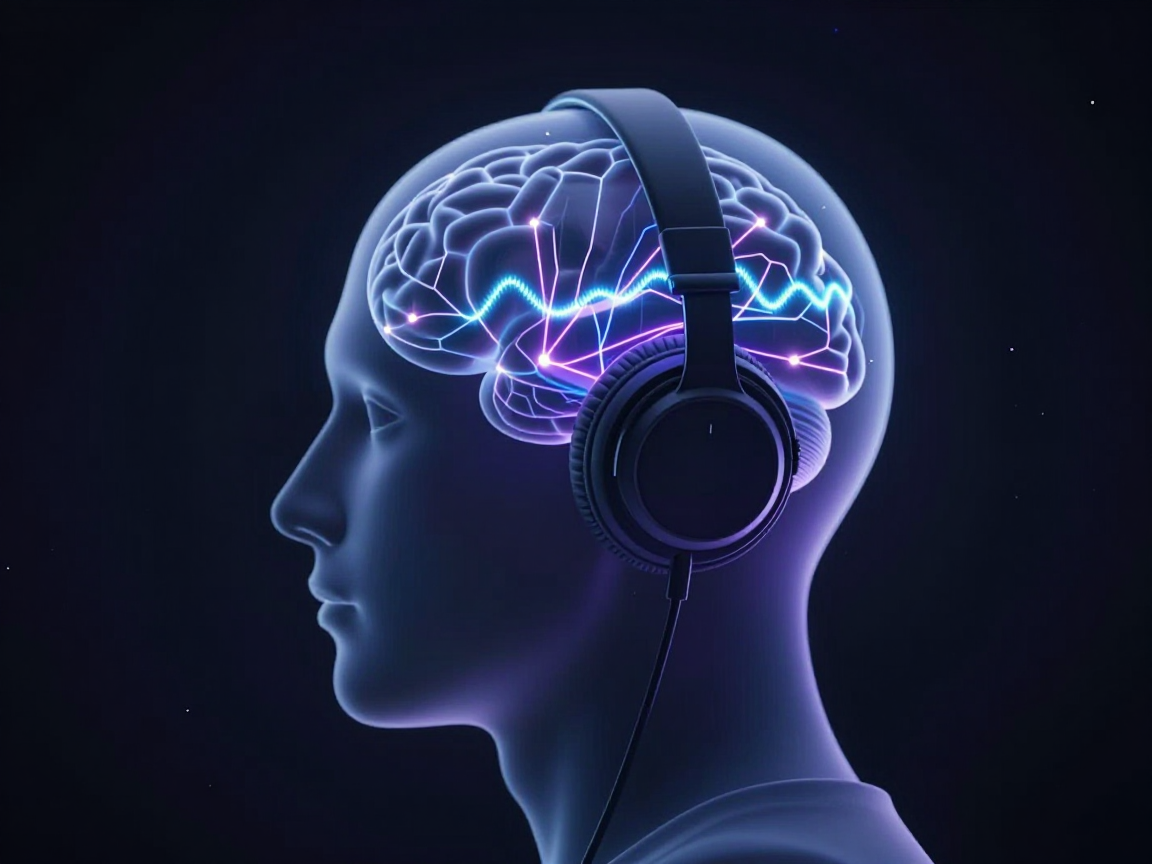
This phenomenon is known as the "Frequency Following Response". When the brain is presented with this phantom beat, it naturally begins to synchronize its own electrical activity to match that frequency. This process allows us to "hand-steer" our brain states into specific zones that are conducive to subconscious work. By choosing the right frequencies, we can move out of the analytical Beta state and into the more fluid Alpha and Theta states.
The Theta State: The Gateway to Change
While Alpha waves (8 - 12 Hz) are great for relaxation and light visualization, the Theta range (4 - 8 Hz) is the true "sweet spot" for binaural beats subconscious reprogramming. Theta is the state we experience right before we fall asleep and right as we wake up. It is the bridge between the conscious and the subconscious worlds.
In the Theta state, the critical filter is at its weakest. This is the realm of vivid imagery, deep intuition, and profound learning. By using binaural beats to hold the brain in a prolonged Theta state, we can bypass the ego's defenses. This allows affirmations, visualizations, and new perspectives to take root without being dismissed by the logical mind as "unrealistic" or "untrue".
A 5-Step Framework for Reprogramming Your Mind with Sound
Simply putting on headphones and listening to random tracks is rarely enough to see significant results. To truly leverage binaural beats subconscious potential, you need a structured approach that combines sound technology with intentional psychological work.
- Define the Target Program
Before you begin, you must identify the specific belief or habit you want to change. Be precise. Instead of saying "I want to be happy", try "I am releasing the need for external validation". Write this down in the present tense, as if it is already your reality. This gives your subconscious a clear directive to follow while you are in the receptive state.
- Select the Correct Frequency Track
For deep subconscious work, look for tracks specifically designed for the Theta range. If you are a beginner, you might start with Alpha to get used to the sensation of entrainment. Ensure the track is pure binaural beats or has very light ambient music. Avoid tracks with distracting melodies or sudden volume changes that might startle your conscious mind back into an alert state.
- Use High-Quality Headphones
Because binaural beats rely on the difference between the left and right ear, they will not work through standard speakers. You must use stereo headphones. Noise-canceling headphones are ideal as they prevent external sounds from breaking your focus and pulling you out of the meditative state.
- The "Hypnagogic" Timing Strategy
The most effective times to use binaural beats subconscious tracks are during the "hypnagogic" and "hypnopompic" states - the windows of time just before you fall asleep and just after you wake up. During these times, your brain is already naturally dipping into Theta. Using binaural beats during these windows amplifies the effect, making the subconscious mind exceptionally pliable.
- Layering with Affirmations and Visualization
While the sound does the heavy lifting of changing your brainwaves, you must provide the content for the new program. As you listen, mentally repeat your chosen affirmations or visualize yourself living your desired reality in vivid detail. Engage all your senses - what does the new reality smell like? How does it feel in your body? The more emotional charge you can generate, the more likely the subconscious is to accept the new data.
Common Mistakes That Stall Progress
Many people experiment with binaural beats subconscious techniques for a few days and quit because they do not see an immediate shift. However, subconscious reprogramming is a process of neuroplasticity, which requires consistency and time.
- Expecting Instant Magic: You are essentially trying to overwrite years, or even decades, of mental conditioning. This does not happen in one twenty-minute session. Think of it like going to the gym for your brain. The results are cumulative.
- Listening at High Volumes: Binaural beats should be listened to at a low to moderate volume. If the sound is too loud, it can cause ear fatigue or even trigger a stress response, which moves you back into Beta and defeats the purpose of the practice.
- Lack of Emotional Connection: If you repeat affirmations like a robot while listening, they won't stick. The subconscious speaks the language of emotion and imagery. If you don't "feel" the change, the mind treats the input as noise rather than a directive.
- Inconsistency: The brain needs repeated exposure to the new frequency and the new thought patterns to create new neural pathways. Missing days in the beginning can allow the old, stronger pathways to reassert themselves.
The Role of Consistency and the 21-Day Rule
While the "21 days to form a habit" rule is often debated, in the realm of binaural beats subconscious work, it serves as a useful minimum benchmark. It typically takes about three weeks of daily practice for the brain to begin accepting a new frequency response as its "new normal". During the first week, you might feel more relaxed. By the second week, you might notice subtle shifts in your reactions to stress. By the third week, many users report that their internal monologue begins to change naturally, reflecting the affirmations or visualizations they have been practicing.
It is helpful to keep a journal during this period. Track your moods, your dreams, and your reactions to daily events. Often, subconscious change is so subtle that we don't notice it until we look back and realize we no longer feel the same anxiety or self-doubt that used to plague us. This "retrospective awareness" is a hallmark of deep internal shifting.
Practical Tips for Your Daily Practice
To ensure you get the most out of your sessions, create a conducive environment. Find a place where you will not be interrupted for at least 20 to 30 minutes. Dim the lights or use an eye mask to shut out visual stimuli, which forces the brain to process internal data more intensely.
Sit or lie down in a comfortable position. If you find yourself falling asleep, that is actually acceptable, as the subconscious remains active and receptive even during slumber. In fact, many people find that "sleep learning" with binaural beats is one of the most effective ways to break through stubborn mental blocks.
Remember that the goal is not to "do" something, but to "be" something. Let the sound wash over you. Don't struggle to focus or get frustrated if your mind wanders. When you notice your thoughts drifting, gently bring them back to your affirmations or the sensation of the pulsing tones. Over time, the resistance will fade, and the process will become a deeply nourishing part of your daily routine.
Conclusion: Stepping Into a New Mental Architecture
The use of binaural beats subconscious technology represents a fascinating intersection between ancient meditative wisdom and modern neuroscience. We no longer have to be victims of our early conditioning or the limiting beliefs that have held us back for years. By understanding how to influence our brainwaves, we gain the keys to the control room of our own lives.
Transformation is not about becoming someone else; it is about stripping away the programs that are not yours to begin with. As you use these tools to quiet the noise of the conscious mind and speak directly to your inner self, you will likely find that the person you always wanted to be has been there all along, simply waiting for the right frequency to be heard. The journey from the "survival mode" of the conscious ego to the "creative mode" of the subconscious is one of the most rewarding paths anyone can take. With patience, the right tools, and a clear intention, you can quite literally tune your mind to a new reality.