Why the Easiest Memories Lead to the Hardest Mistakes: A Guide to the Availability Heuristic
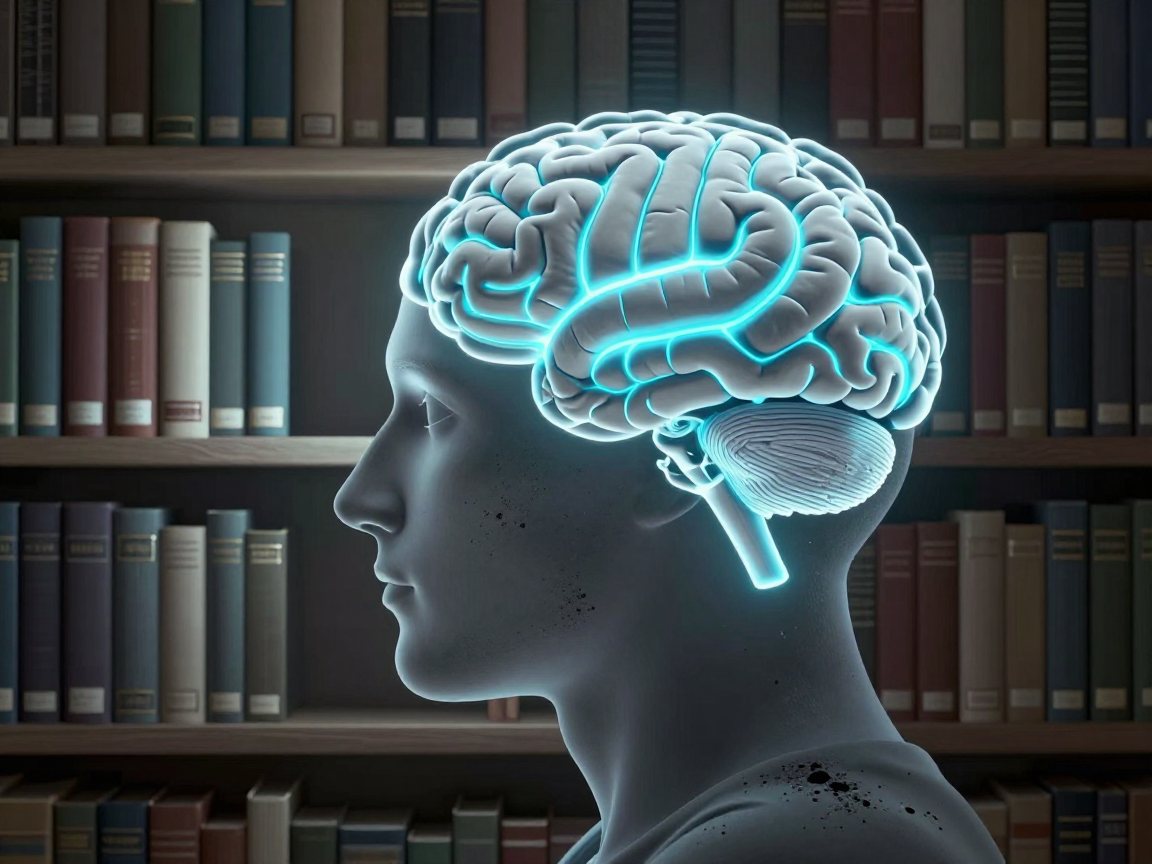
Imagine you are planning a vacation. You have two options: a road trip across the country or a flight to a tropical island. Suddenly, a memory of a news report about a recent plane crash flickers in your mind. You feel a surge of anxiety, and despite the statistical reality that driving is significantly more dangerous than flying, you choose the car. This mental pivot is not a result of careful calculation or a deep dive into safety data. Instead, it is the result of a powerful mental shortcut known as the availability heuristic.
Our brains are not naturally built to be statistical engines. We are built for survival and efficiency. In the complex landscape of daily life, we cannot weigh every single variable for every single decision. To cope with this cognitive load, we use heuristics - simple, efficient rules that help us make judgments. However, the availability heuristic can lead us astray because it causes us to estimate the probability of an event based on how easily examples of that event come to mind. If we can remember it quickly, we assume it must be common or likely. In a world of sensationalized media and 24-hour news cycles, this internal logic can create a distorted version of reality that impacts our finances, our health, and our relationships.
The Mechanics of the Availability Heuristic
The availability heuristic was first identified in the 1970s by psychologists Amos Tversky and Daniel Kahneman. Their research suggested that people assess the frequency of a class or the probability of an event by the ease with which instances or occurrences can be brought to mind. While this often works well - things that happen frequently are usually easier to remember - the system breaks down when certain memories are disproportionately vivid, emotional, or recent.
There are three primary factors that make information more "available" to our conscious mind. The first is recency. An event that happened yesterday will carry more weight in our decision-making process than something that happened five years ago. The second is vividness. A dramatic, colorful, or high - stakes event is far more likely to stick in the memory than a dry statistic. The third is frequency of exposure. If you hear about a specific risk or trend ten times a day on social media, your brain will flag it as a primary concern, even if it is statistically insignificant.
This shortcut creates a gap between perception and reality. We tend to overestimate the likelihood of rare but dramatic events, such as shark attacks or lottery wins, while underestimating more common but mundane risks, like heart disease or the importance of consistent savings. Because the mundane does not make for a good story, it does not occupy the available space in our memory, leading us to ignore the very things that matter most.
Why Your Brain Prefers Ease Over Accuracy
To understand why we rely on the availability heuristic, we have to look at the concept of cognitive ease. The human brain is a massive energy consumer, and it seeks to conserve that energy whenever possible. When we encounter a problem, we have two ways of thinking: System 1 and System 2. System 1 is fast, instinctive, and emotional. System 2 is slower, more deliberative, and logical.
The availability heuristic is a hallmark of System 1 thinking. When we ask ourselves a difficult question - such as "How safe is this investment?" - System 1 swaps it for an easier question: "How many stories of people losing money in this investment can I remember?" If the answer is "many", we conclude the investment is unsafe. This process happens almost instantaneously and often without our conscious awareness. We feel a sense of intuitive rightness because the information came to us so easily.
Psychologists refer to this as the fluency effect. When information is easy to process, we tend to believe it is more true or more important. Conversely, when we have to work hard to find data or analyze complex spreadsheets, our brains can become resistant. We mistake the lack of ease for a lack of validity. This is why a single testimonial from a friend often carries more weight in our minds than a clinical study involving thousands of participants. The friend's story is vivid and fluent; the study is abstract and difficult to process.
Real-World Consequences of the Availability Heuristic
The impact of this mental shortcut extends far beyond personal travel choices. It shapes the way we perceive societal trends and how professionals make high - stakes decisions. In the world of finance, the availability heuristic often drives market bubbles and crashes. When investors see news headlines about everyone getting rich on a specific stock, that information becomes highly available. They ignore the underlying fundamentals and buy in, driven by the ease of recalling success stories. When the market turns, the vividness of the loss causes a panic, leading to irrational selling.
In healthcare, physicians are not immune to the availability heuristic either. A doctor who has recently diagnosed three patients with a rare condition may be more likely to see that same condition in a fourth patient with similar symptoms, even if a more common ailment is a better fit. This is often called "recency bias" , and it can lead to misdiagnosis if the doctor does not consciously slow down to engage their System 2 thinking.
Furthermore, the availability heuristic plays a massive role in our perception of public safety. Because local news and social media often focus on crime and tragedy, many people believe that the world is becoming more dangerous over time, even when long - term statistics show that crime rates are falling. We are not reacting to the data; we are reacting to the ease with which we can recall frightening images. This can lead to increased anxiety, support for reactive policies, and a general sense of distrust in our communities.
The Media Loop: How Technology Feeds the Bias
In the digital age, the availability heuristic has been put on steroids. Algorithms on social media platforms are designed to show us content that triggers an emotional response, as this keeps us engaged for longer. This usually means we are fed a constant stream of the most extreme, outrageous, or terrifying content available.
When our feeds are filled with specific types of information, that information becomes the most available data point in our minds. If you follow accounts that only focus on the failures of a particular industry, you will eventually find it impossible to believe that industry could ever succeed. You are not seeing a representative sample of reality; you are seeing a curated selection of vivid outliers. This creates an echo chamber where our biases are not only confirmed but amplified by the sheer volume of available examples.
A Framework for More Objective Decision - Making
While you cannot turn off the availability heuristic entirely - it is a hardwired part of human cognition - you can learn to mitigate its effects. Moving from reactive intuition to proactive logic requires a deliberate shift in how you process information. Use the following framework to check your biases when making important decisions:
- Seek Out the Baseline: Before reacting to a vivid story, ask for the "base rate". What is the actual statistical probability of this event occurring? If you are worried about a specific risk, look at the data for the entire population, not just the sensationalized cases.
- The Rule of Three: When you find yourself leaning toward a conclusion based on a memory, challenge yourself to find three pieces of evidence that contradict your initial thought. This forces your brain to engage System 2 and move past the first available answer.
- Evaluate the Source: Ask yourself why this information is available. Is it because it is common, or is it because it is dramatic, recent, or frequent in your social media feed? Identifying the "vividness factor" can help you discount its weight in your logic.
- Delay the Decision: Because System 1 is fast and emotional, it often loses its grip if you simply wait. Sleep on the decision or step away from the screen. This allows the emotional charge of a vivid memory to dissipate, making room for more analytical thought.
- Focus on the Process, Not the Outcome: We often remember bad outcomes more than bad processes. If you made a choice that resulted in a negative result, don't automatically assume the choice was wrong. Look at the information you had at the time. Was your process sound? This helps prevent you from over - correcting based on a single, available failure.
Practicing Intellectual Humility
At the heart of overcoming the availability heuristic is a quality known as intellectual humility. This is the recognition that our minds are imperfect and that our first impressions are often flawed. It is the understanding that "I can think of an example" is not the same thing as "This is a universal truth".
When we practice intellectual humility, we become more curious. We start to ask better questions, such as "What am I missing?" or "What does the data say that my gut feeling doesn't?" This doesn't mean we should ignore our intuition entirely; intuition is a powerful tool for survival. However, it means we should treat our intuition as a starting point for investigation rather than the final word on reality.
By acknowledging that the easiest examples are often the most misleading, we open ourselves up to a much richer and more accurate understanding of the world. We stop being held hostage by the latest headline or the most dramatic story. Instead, we begin to build a worldview based on consistency, evidence, and a deeper appreciation for the complexities of life. The next time you feel a strong urge to make a choice based on a vivid memory, pause. Remind yourself that your brain is trying to take a shortcut, and then take the long way around to the truth.