Beyond Biology: Why Your Ancestors' Unresolved Pain Is Shaping Your Life—and How to Start Ancestral Healing
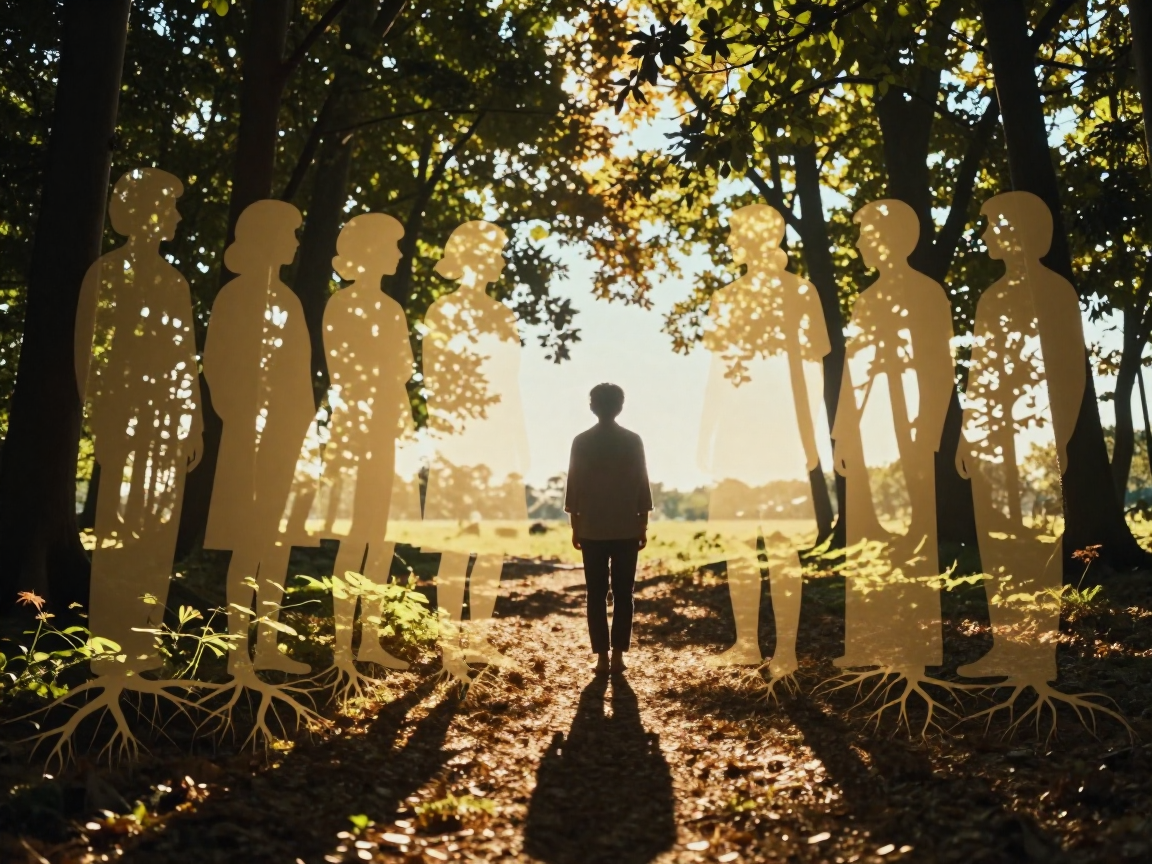
We often walk through life carrying weights we cannot name. You might find yourself grappling with an inexplicable sense of scarcity despite a stable bank account, a recurring fear of abandonment that sabotages healthy relationships, or a physiological stress response that seems entirely disconnected from your actual environment. For many, these are not personal failures or character flaws—they are the echoes of those who came before us. This is the core realization of ancestral healing: the understanding that we are not isolated islands, but the current expression of a long, unbroken chain of human experience.
Ancestral healing is the intentional practice of connecting with, honoring, and clearing the emotional and psychological imprints of our predecessors. It posits that unresolved traumas, as well as the profound strengths of our lineage, live on within our DNA, our nervous systems, and our subconscious minds. When a grandfather survives a famine, or a great-grandmother endures systemic displacement, the resulting hyper-vigilance doesn't simply vanish when the threat ends. Instead, it ripples forward as a survival strategy, often outliving its usefulness and becoming a burden for the descendants. To engage in this work is to decide that the story of the past no longer has to be the script for your future.
The Science of Epigenetics and Emotional Inheritance
While the concept of ancestral healing has been central to Indigenous cultures and Eastern philosophies for millennia, modern Western science is finally providing a biological framework for it through the field of epigenetics. Epigenetics studies how your behaviors and environment can cause changes that affect the way your genes work. Unlike genetic changes, epigenetic changes do not change your DNA sequence, but they do change how your body reads a DNA sequence.
In landmark studies, researchers found that the biological impact of trauma—such as the high levels of cortisol associated with chronic stress—can be passed down from parents to children. In famous observations of the descendants of Holocaust survivors and those who lived through the Dutch Hunger Winter, scientists noted that the offspring often possessed altered stress-hormone profiles, making them more susceptible to anxiety, depression, and metabolic issues, even if they grew up in peace and plenty.
This means that ancestral healing is as much a biological endeavor as it is a spiritual one. When we work on these patterns, we are attempting to signal to our nervous system that the danger is over. We are effectively "metabolizing" the unprocessed grief and terror of our ancestors so that it no longer has to be stored in our cells. By doing so, we shift the biochemical blueprint we pass on to the next generation.
Signs You Are Carrying Ancestral Trauma
Identifying whether your struggles are purely personal or rooted in your lineage requires a specific kind of internal listening. Ancestral trauma often manifests as "inherited memories" or somatic responses that feel disproportionate to your current life events. If you find yourself repeatedly hitting a wall in your personal growth, it may be because you are fighting a battle that started three generations ago.
- Unexplained Hyper-vigilance: A persistent feeling that the "other shoe is about to drop," even when things are going well. This is often seen in lineages that survived sudden loss, war, or economic collapse.
- The Weight of Silence: Growing up in a family where certain topics (money, sexuality, or specific relatives) are strictly taboo. These "holes" in the family narrative often represent areas where trauma remains unintegrated.
- Chronic Scarcity Consciousness: An inability to feel "enough," leading to hoarding, workaholism, or intense anxiety about resources, even when you are financially secure.
- Displaced Grief: A deep, heavy sadness that doesn't seem to belong to any specific event in your own life. You may feel like you are mourning a home you never lived in or a culture you were disconnected from.
- Repetitive Relational Cycles: Finding that the women or men in your family have experienced the exact same type of toxic partnership or abandonment for several generations.
- Physical Symptoms Without Diagnosis: Chronic inflammatory conditions or autoimmune issues that mirror the physical suffering of ancestors who were unable to express their pain or seek safety.
A 5-Step Framework for Ancestral Healing
Healing a lineage is not a weekend project; it is a gradual process of excavation and reclamation. To move from being a victim of your history to the steward of your legacy, consider this structured approach to ancestral healing.
1. The Investigation and Pattern Mapping
Start by becoming a "family detective." Look beyond names and dates to the emotional themes of your family tree. Who were the survivors? Who were the ones who left? Who were the ones who stayed and suffered? If you are adopted or have no access to your biological history, you can still do this work by focusing on the "archetypal" patterns present in your body and your cultural heritage. Identify the core limiting belief that seems to run through your family, such as "It is not safe to be seen" or "Love always leads to pain."
2. Somatic Differentiation
Trauma lives in the body, not just the mind. When you feel an inherited fear arise, practice differentiating your experience from the ancestor’s. You might say to yourself: "I feel this terror of starvation. This was my grandmother’s truth in 1940. It is not my truth in the present moment." This creates a boundary between your nervous system and the inherited past, allowing you to witness the emotion without being consumed by it.
3. Creating a Dialogue of Compassion
Many people approach ancestral healing with anger toward the "toxic" ancestors who caused harm. However, true healing requires moving from judgment to compassion. Most ancestors were doing the best they could with shattered nervous systems and limited resources. By acknowledging the suffering that made them the way they were, you begin to loosen the energetic knot. You can tell them (internally or through writing): "I see how much you suffered, and I see the choices you made to survive. I honor your survival, but I am choosing a different path."
4. The Act of Symbolic Release
Because the subconscious speaks the language of symbols and metaphors, rituals are essential. This might involve writing down the burdens you no longer wish to carry and safely burning the paper, or returning a symbolic object to the earth. The goal is to provide your psyche with a clear "ending" to the old cycle.
5. Reclaiming the Ancestral Gifts
It is vital to remember that your ancestors did not only leave you their pain; they also left you their resilience. For you to be alive today, your ancestors had to be incredibly resourceful, brave, and enduring. Ancestral healing must include an intentional reclamation of these strengths. Ask yourself: "What brilliance did my ancestors possess that has been overshadowed by their trauma?" Reach back and pull that golden thread forward into your life.
Practical Rituals for Daily Connection
To keep the momentum of ancestral healing alive, integrate small, meaningful rituals into your routine. These acts act as a bridge between the physical and spiritual worlds, signaling your commitment to the healing process.
- The Ancestor Table: Dedicate a small shelf or table to your lineage. Place photographs of ancestors who inspire you, or simply a candle and a fresh glass of water. This serves as a daily reminder that you are supported by a vast network of life.
- Letter Writing: Write letters to the "Well Ancestors"—those who lived before the trauma began or those who have already found peace in the afterlife. Ask for their guidance and protection as you do the difficult work of breaking cycles.
- Root Meditation: During meditation, visualize yourself as a tree. See your roots going deep into the earth, connecting with the generations that came before. Visualize a healing light flowing up from the ancient, healthy roots, through the knotted parts of the trunk, and into the new leaves (which represent you and your future).
- Ancestral Foods: Prepare a dish that was significant to your heritage. As you cook and eat, do so with the intention of nourishing the parts of your lineage that were once hungry or deprived. This is a powerful way to bring healing into the physical body.
The Role of the "Cycle Breaker"
Being the one in the family who chooses to pursue ancestral healing is a profound, albeit often lonely, responsibility. In every family, there is eventually a "cycle breaker"—the person who possesses the awareness and the resources to stop the transmission of trauma.
If you are that person, you may face resistance. Living family members who are still enmeshed in the trauma may feel judged by your healing or threatened by your new boundaries. It is important to realize that you are not responsible for healing your living relatives; you are responsible for healing your relationship to the lineage. By changing your own frequency and refusing to pass on the old wounds, you change the entire family system. You are the point where the pain stops and the new story begins.
Conclusion: Reclaiming Your Sovereignty
Ancestral healing is ultimately an act of liberation. It allows you to stop living a life dictated by the ghosts of the past and start living one defined by your own values and desires. While we cannot change what happened to those who came before us, we can change how their stories live within us.
By honoring the road your ancestors walked—the mud they trudged through and the mountains they climbed—you gain the clarity to pave a brand new path. You transition from being a prisoner of your history to becoming its most evolved expression. In the quiet moments of healing, you may find that as you clear the way for yourself, you are also bringing peace to those who never had the chance to find it while they were here. The work you do today is the greatest gift you can give to your ancestors, yourself, and the generations yet to come.