Beyond Memory: Why Your Ancestors May Be Reaching Out Through Ancestral Dreams
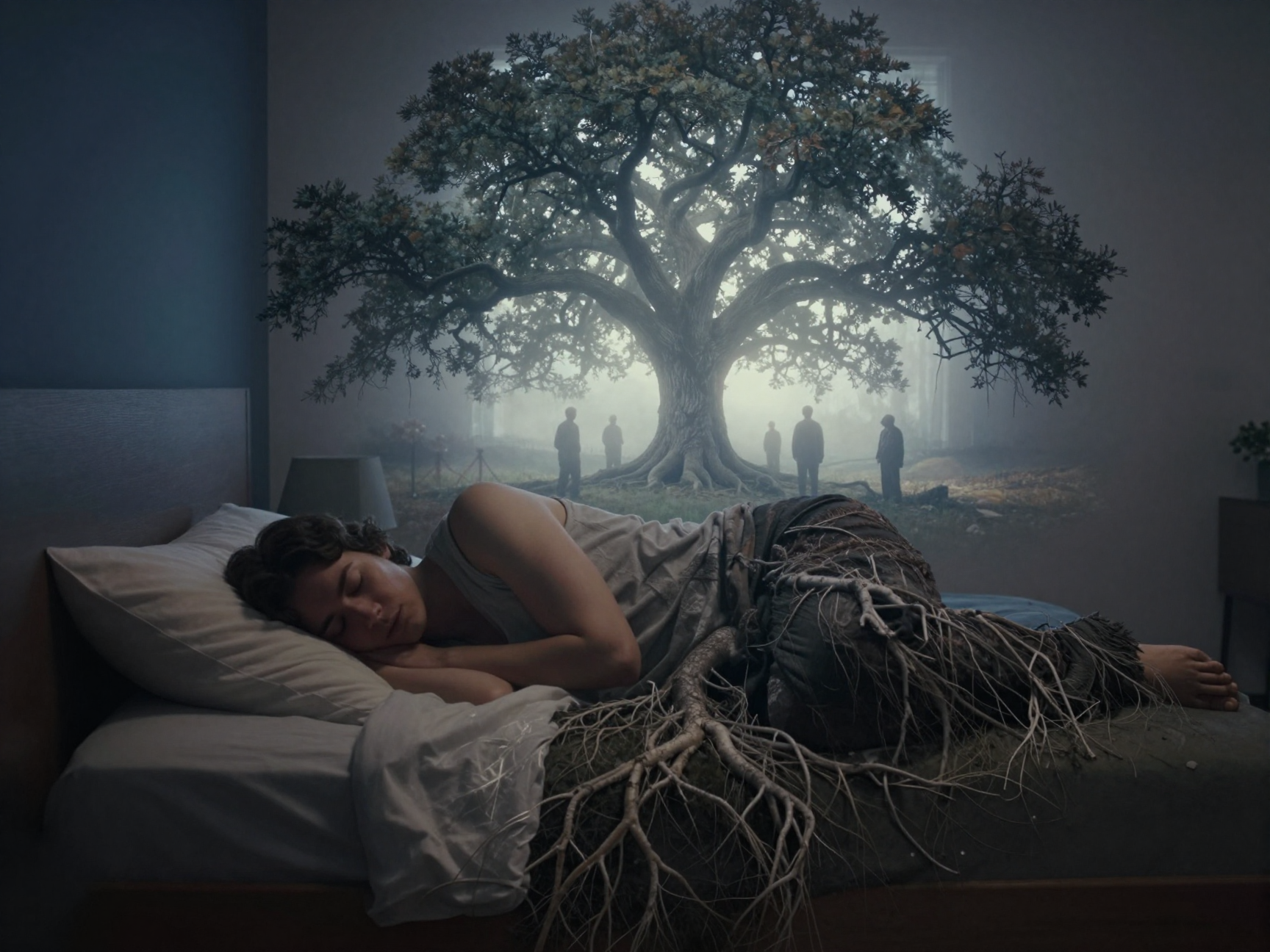
There is a specific kind of silence that follows a dream of someone you have never met but somehow recognize. You might wake up in your modern bedroom, surrounded by the familiar sounds of the city or the hum of a refrigerator, yet your mind is still lingering in a dust-filled landscape from a century ago. These experiences are often more than just random firing of neurons or a byproduct of a late-night movie. They are what many cultures and psychologists refer to as ancestral dreams, a phenomenon where the barrier between the past and the present becomes porous during sleep.
For many, ancestral dreams serve as a profound bridge to a history that was never written down. They can arrive as vivid scenes of a grandparent's kitchen, a cryptic warning from a long-deceased patriarch, or even a sensory immersion into a culture your family left behind generations ago. Understanding these dreams requires a blend of psychological insight, biological curiosity, and a willingness to listen to the whispers of the bloodline. When we pay attention to these nocturnal visitations, we often find they are not just haunting memories, but active invitations to heal, grow, and reclaim parts of our identity that have been lost to time. These dreams represent the "long body" of our lineage reaching through the veil of the subconscious to offer guidance, seek resolution, or simply remind us that we do not walk this path alone.
The Science and Mystery of the Generational Mind
While the concept of ancestral dreams might sound purely mystical, modern science is beginning to catch up with ancient intuition. The field of epigenetics suggests that the experiences of our ancestors—specifically their traumas and triumphs—can leave chemical marks on our DNA. Studies, such as those looking at the descendants of trauma survivors, have shown that stress responses and heightened sensitivities can be passed down through generations. This means that the "memory" of a significant event might be physically housed within your very cells. When you experience ancestral dreams, you may be tapping into this biological archive, where the subconscious mind uses the language of imagery to process inherited information.
From a psychological perspective, Carl Jung spoke extensively about the collective unconscious, but he also recognized the personal and familial layers that precede it. He believed that we all carry a reservoir of shared human experiences and archetypes. Ancestral dreams sit at the intersection of this collective pool and our specific family lineage. They are the moments where the personal "I" gives way to the familial "We." In these states, the mind isn't just dreaming for itself; it is dreaming for the entire family tree, attempting to resolve conflicts or acknowledge truths that previous generations were forced to suppress for the sake of survival. In this way, our dreams serve as a biological and spiritual cleanup crew, sorting through the unresolved business of our predecessors.
How to Identify True Ancestral Dreams
Not every dream featuring a relative is an ancestral message. Sometimes, we dream of our parents or grandparents simply because we miss them or because they were part of our daily lives. However, true ancestral dreams usually carry a distinct "flavor" or weight that sets them apart from standard subconscious processing. If you are wondering whether your dream was a simple memory or a visitation, look for these specific markers:
- Hyper-Vividness: These dreams often feel more real than your waking life. The colors are sharper, the smells are more distinct, and the emotional resonance lingers for days after you wake up. It feels less like a movie and more like an immersive experience.
- The Unknown Familiar: You meet a person in the dream whom you have never seen in photographs or real life, yet you feel an immediate, profound bond with them. You "know" they are your people, even without an introduction.
- Anachronistic Details: You find yourself in a setting that predates your birth, featuring clothing, tools, or languages that you have no personal experience with, yet you navigate the space with ease. You might find yourself using a spinning wheel or harvesting a crop you’ve never seen in person.
- A Sense of Urgency: The dream often carries a specific message, a plea for help, or a directive to "remember" something specific. It doesn't feel like the typical rambling narrative of a standard dream.
- Physical Sensations: You may wake up with physical sensations that match the dream, such as the feeling of a hand on your shoulder, a cold chill, or the lingering taste of a specific traditional food that you haven’t eaten in years.
The Purpose Behind the Visitation
Why do ancestral dreams happen? Usually, they are not random. In many indigenous traditions, it is believed that the ancestors are just as interested in our lives as we are in theirs. They act as guardians, but they also have their own agendas for healing. One of the most common reasons for ancestral dreams is the need to break a cycle of generational trauma. If a great-grandmother suffered in silence, that unresolved pain may "leak" into the dreams of a descendant who finally has the resources or the emotional safety to heal it. By showing you their story, the ancestor is asking you to witness them, thereby releasing the energy that has been stuck in the family line for decades.
On a more positive note, these dreams can also be a source of immense strength. In times of crisis, ancestral dreams often appear to remind the dreamer of the resilience they have inherited. You might see an ancestor surviving a hardship far greater than your own, serving as a silent reminder that their survival is the reason you exist today. This can provide a grounded sense of belonging and a "superpower" of perspective that modern life rarely offers. You are not just a person dealing with a modern problem; you are the product of thousands of people who successfully navigated their own catastrophes.
A 5-Step Framework for Working with Ancestral Dreams
If you believe you are receiving messages from your lineage, it is important to move from passive observation to active engagement. You can use the following framework to deepen your connection and decode the messages being sent. This process helps turn a fleeting dream into a tangible tool for personal growth.
1. The Practice of Incubation
Before you go to sleep, set a clear intention. This is known as dream incubation. You might say, "I am open to hearing from my ancestors tonight" or "If there is something I need to know about my lineage, please show me." This prepares the subconscious to filter for ancestral themes rather than just processing the stress of your workday. It creates a "call" for which the dream is the "response."
2. The Documentation Phase
Keep a dedicated notebook by your bed. When you wake up from ancestral dreams, record every detail immediately—even the things that seem irrelevant. Don't worry about the "plot" as much as the sensory details. What was the weather like? What were they wearing? Did they use any specific words? These details are often the "keys" that unlock historical records or family stories you might later discover in ancestry archives.
3. The Symbolic and Historical Audit
Once you have the dream recorded, do some detective work. If the dream featured a specific type of flower or a unique tool, research its cultural significance. You might find that the "weird hat" your dream-grandfather wore was actually a traditional garment from a specific region of your ancestral homeland that you never knew about. This validates the dream as something beyond your own personal imagination.
4. Engaging in Active Imagination
Sit in a quiet space and "re-enter" the dream while awake. This is a meditative technique. Imagine the ancestor is standing before you. Ask them, "What is it you want me to see?" or "How can I honor your memory?" Listen for the first response that pops into your head without overthinking it. This technique helps bridge the gap between the conscious and unconscious mind, allowing the message to become clearer.
5. Integration Through Action
Ancestral dreams usually require a response in the physical world. This might mean placing a photograph of the ancestor on a shelf, cooking a meal they loved, or finally going to therapy to address a habit that has plagued your family for generations. Action is the language of the physical world, and it shows the ancestors that you have heard them. It closes the loop of communication.
Navigating the Difficulty of Heavy Ancestral Dreams
It is important to acknowledge that not all ancestral dreams are comforting. Sometimes, we dream of the "difficult" ancestors—those who caused harm, were deeply troubled, or were the source of family fracture. These dreams can be frightening or leave us feeling tainted by association. It is vital to remember that dreaming of a troubled ancestor does not mean you are destined to repeat their mistakes or that you are being "cursed."
In many cases, these dreams are a request for boundary setting or witness. You may need to say, "I see you, and I acknowledge your pain, but I will not carry it anymore." This is a form of energetic housekeeping. By witnessing the "shadow" of the family tree in your ancestral dreams, you gain the power to decide which traits you will carry forward and which you will leave in the past. You are the editor of your lineage's future, and these dreams give you the raw footage you need to make informed choices. Healing the ancestor in the dream is often a metaphor for healing that specific trait within yourself.
Common Symbols Found in Generational Dreaming
While every family is unique, there are certain symbols that appear frequently in ancestral dreams. Understanding these can provide a shorthand for what your subconscious is trying to communicate:
- The Great Tree: Often represents the lineage itself. Roots suggest the past, the trunk is the present, and the branches are the future. The health of the tree in the dream can indicate the current "health" of your family dynamics.
- Water and Crossings: Dreaming of crossing a river or an ocean often points to the literal migrations your ancestors made. If the water is turbulent, there may be unresolved grief regarding a relocation or a forced displacement.
- Heirlooms and Keys: Being handed an object, like a key or a piece of jewelry, usually symbolizes the passing of a specific gift, talent, or responsibility from the ancestor to you. It is an inheritance of the spirit.
- Large Tables and Feasts: These often represent the need for family gathering or the healing of a "hunger" (either literal or emotional) that occurred in previous generations. It is an invitation to come back to the "table" of your heritage.
Honoring the Thread That Connects You
In our fast-paced, individualistic society, we often feel like islands, disconnected from the vast continent of those who came before us. Ancestral dreams are a natural correction to this feeling of isolation. They remind us that we are the living tip of a very long spear, propelled by the momentum of thousands of lives, loves, and struggles. When we begin to take these dreams seriously, we start to walk through the world with a different kind of posture—one that is supported by the weight of history rather than crushed by it.
You realize that you are never truly alone and that your personal healing is part of a much larger, historical project. Whether you view these experiences as spiritual visitations, biological echoes of DNA, or Jungian archetypes, the result is the same: a deeper, richer understanding of who you are and where you come from. By listening to the stories told in the dark, you gain the wisdom to lead your lineage into the light, transforming the ghosts of the past into the guardians of your future.