Beyond Positive Thinking: The Neuroscience of Activating the RAS for Radical Focus
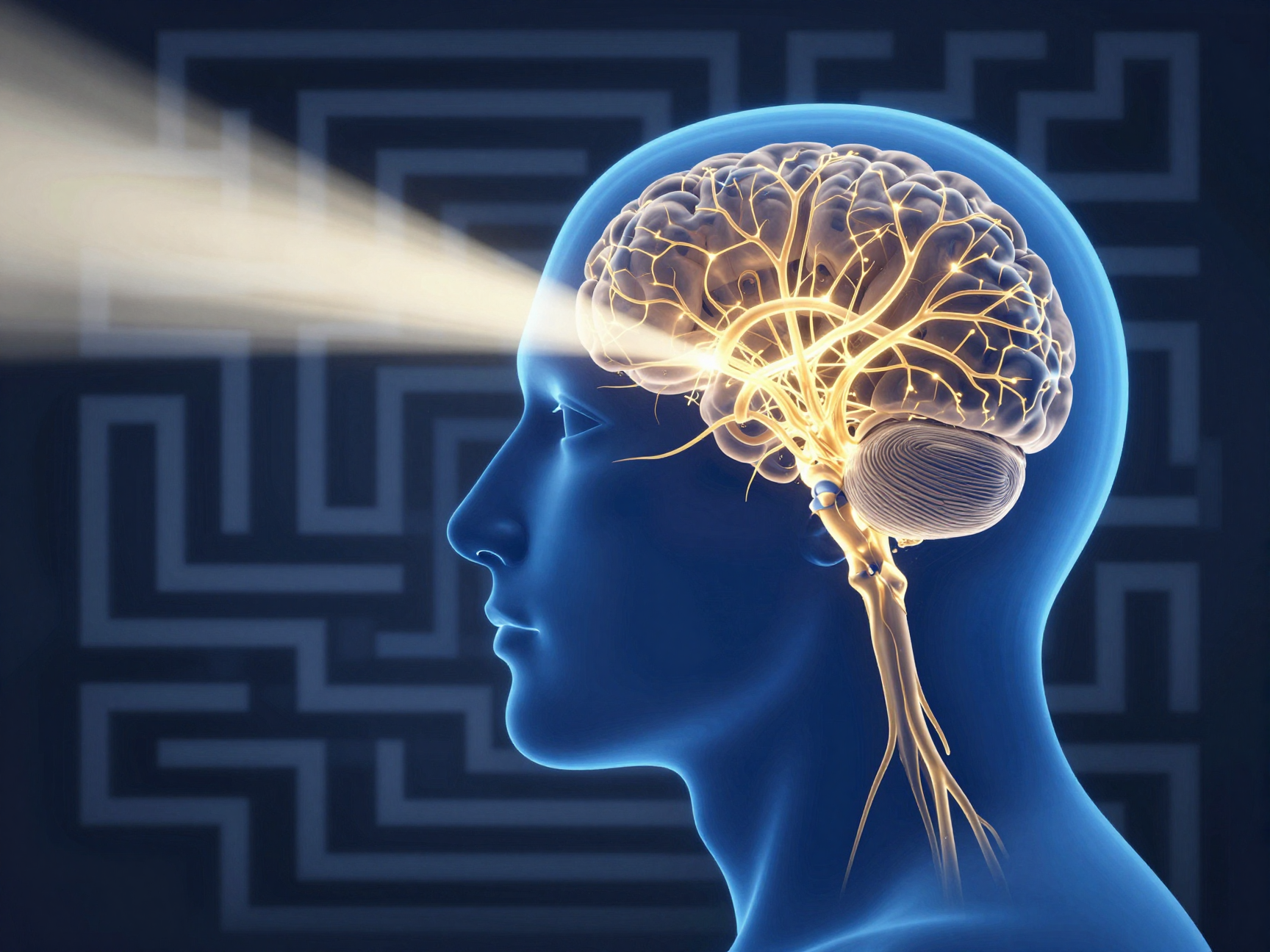
Every second of the day, your brain is bombarded with millions of bits of information. From the subtle hum of the refrigerator and the feeling of your socks against your ankles to the thousands of visual stimuli in your peripheral vision, the sheer volume of data is staggering. If your conscious mind tried to process every single one of these inputs simultaneously, you would experience immediate neurological overload. To prevent this, your brain employs a highly sophisticated filtering system located in the brainstem—a bundle of nerves known as the Reticular Activating System (RAS).
Activating the RAS is the process of intentionally programming this filter to prioritize the information that aligns with your specific goals, values, and desires. When you understand how this gatekeeper works, you move from being a passive recipient of your environment to an active designer of your reality. You begin to notice opportunities that were always there but remained invisible to you simply because your brain had labeled them as "irrelevant." This is the biological foundation of what many call luck or synchronicity, but in truth, it is the result of a finely tuned neurological filter.
The Science Behind Activating the RAS
To effectively start activating the RAS, one must first understand its biological architecture. The Reticular Activating System is a network of neurons located in the brainstem that mediates overall levels of consciousness and alertness. It acts as the bridge between your subconscious mind and your conscious awareness. Think of it as a nightclub bouncer who decides which "data points" are important enough to enter the exclusive club of your conscious thought.
Historically, the RAS evolved as a survival mechanism. Its primary job was to alert our ancestors to threats—a rustle in the grass that might be a predator—or rewards, such as the sight of a berry bush. Today, while we face fewer physical predators, the RAS remains the primary tool for managing our attention. When you decide to buy a specific model of car and suddenly see that car on every street corner, you are witnessing your RAS in action. The cars were always there; your brain simply stopped filtering them out because you signaled that they were now important.
Activating the RAS involves moving beyond these accidental triggers and into the realm of intentionality. By providing the system with clear, vivid, and emotionally charged instructions, you can train it to scan your environment for resources, people, and ideas that will help you achieve a desired outcome. This is why high performers often seem to have an uncanny ability to be in the right place at the right time—they have simply programmed their brains to see the doors that others walk past.
Why Most People Fail to Program Their Filter
The primary reason people struggle with activating the RAS is a lack of specificity. The RAS does not respond well to vague commands like "I want to be successful" or "I want to be happy." Success and happiness are abstract concepts that provide no concrete sensory data for the filter to latch onto. Without a clear target, the RAS defaults to its factory settings: focusing on threats, negative news, and the repetitive patterns of your past.
Furthermore, many people unknowingly program their RAS with negative instructions. When you constantly worry about debt, your brain views "debt" as a high priority. Consequently, your RAS becomes expertly tuned to notice more bills, more financial stressors, and more reasons why you cannot afford what you want. Activating the RAS for growth requires a conscious pivot away from what you fear toward what you intend to create. It requires a level of mental discipline that most people never fully develop because they treat their attention as something that happens to them, rather than something they command.
A Five-Step Framework for Activating the RAS
If you want to stop leaving your focus to chance, you need a systematic approach. The following framework is designed to move your brain from a state of passive filtering to active pursuit of your objectives.
- Define the Precision Target: To begin activating the RAS, you must define your goal with extreme clarity. Use sensory language. Instead of saying "I want a new job," define the specific industry, the daily tasks, the salary figure, and even the aesthetic of the office. The more data points you provide, the easier it is for the RAS to "find the signal in the noise."
- Utilize High-Intensity Visualization: Visualization is not just a mental exercise; it is a neurological rehearsal. When you visualize a successful outcome with emotional intensity, your brain struggles to distinguish between the mental image and physical reality. This process primes the RAS to seek out external stimuli that match the internal image you have created.
- Implement Daily Affirmations (with a Twist): Standard affirmations often fail because they feel like lies. To use them for activating the RAS, frame them as questions or "becoming" statements. Instead of saying "I am a millionaire," try asking, "Why am I noticing so many opportunities to increase my income today?" This forces the RAS to search for answers, effectively turning it into a heat-seeking missile for solutions.
- Create a Sensory Anchor: Give your goal a physical or sensory trigger. This could be a specific scent, a piece of music, or a physical object on your desk. By associating this sensory input with your goal, you create a shortcut. Every time you encounter the anchor, it sends a pulse to the RAS to refresh its search parameters for your objective.
- The Evidence Log: Your brain loves validation. Whenever you see a small sign of progress or a minor coincidence that aligns with your goal, write it down. This "Evidence Log" proves to your subconscious that the process is working, which reinforces the importance of the filter you have set. The more you acknowledge the small wins, the more the RAS will work to find the big ones.
The Role of Emotional Charge in Brain Programming
One of the most overlooked aspects of activating the RAS is the necessity of emotion. The brainstem is closely connected to the limbic system, which is the seat of our emotions. Information that is emotionally neutral is frequently discarded as unimportant. This is why we remember our wedding day or a traumatic accident with vivid detail, but we cannot remember what we ate for lunch three Tuesdays ago.
When you are in the process of activating the RAS, you must infuse your goals with a strong emotional "why." Logic alone is rarely enough to penetrate the deep layers of the subconscious. You must feel the excitement, the relief, or the pride of the accomplished goal as if it has already occurred. This emotional surge acts like a neon sign for the Reticular Activating System, shouting, "Pay attention to this! This matters for our survival and thriving!"
Daily Habits to Maintain Your Mental Filter
Activating the RAS is not a one-time event; it is a maintenance task, much like keeping a lens clean. If you do not actively manage your filter, it will naturally become clogged with the "noise" of modern life—social media distractions, societal fears, and petty grievances.
- Digital Detox: Your phone is designed to hijack your RAS by using bright colors and notifications to trigger a dopamine response. Set boundaries to ensure your brain's filter isn't being rented out by advertisers.
- Morning Intention Setting: Spend the first five minutes of your day, before looking at any screens, declaring your primary focus. This "boots up" the RAS with your priorities before the world has a chance to impose its own.
- Evening Reflection: Ask yourself, "What did I see today that moved me closer to my goal?" This trains the brain to stay alert for opportunities even while you sleep.
Overcoming the Negativity Bias
Humans are biologically wired with a negativity bias. In the wild, it was more important to notice the tiger than the beautiful sunset. In the modern world, this bias manifests as an obsession with what could go wrong. Activating the RAS for positive outcomes requires working against thousands of years of evolutionary conditioning.
To combat this, you must be ruthless about the information you consume. If you spend your evenings watching sensationalized news or scrolling through toxic social feeds, you are effectively training your RAS to look for disaster. You are telling your brain that the world is a dangerous, scarce place. By curating your environment and focusing on constructive narratives, you give the RAS permission to search for abundance and solutions instead of threats.
The Intersection of Science and Manifestation
While the term "manifestation" is often associated with the mystical, activating the RAS provides a grounded, scientific explanation for why the practice often works. It is not that the universe is bending to your will through magic; it is that your brain is finally seeing the path that was always there.
When people talk about the "Law of Attraction," they are often describing the subjective experience of a highly active RAS. When you align your focus, your brain becomes a tool for pattern recognition. You start to see connections between disparate ideas. You overhear a conversation at a coffee shop that provides the exact contact you needed. You notice a book title on a shelf that answers a question you have been struggling with. These are not coincidences; they are the result of a brain that has been told, "This is what we are looking for."
Final Thoughts on Mastering Your Attention
In an age of infinite distraction, the ability to control your focus is your most valuable asset. Activating the RAS is the ultimate "life hack" because it utilizes your existing biological hardware to do the heavy lifting for you. You do not need to work harder if you can work more intelligently by enlisting the help of your subconscious mind.
By defining your goals with sensory precision, fueling them with emotion, and consistently validating your progress, you turn your brain from a chaotic filter into a precision instrument. The world does not change when you start activating the RAS; you simply start seeing the version of the world that contains your success. The opportunities are already here. It is time to tell your brain to stop ignoring them.