Beyond the Gut Feeling: How to Identify and Master Your Specific Types of Intuition (Clairs)
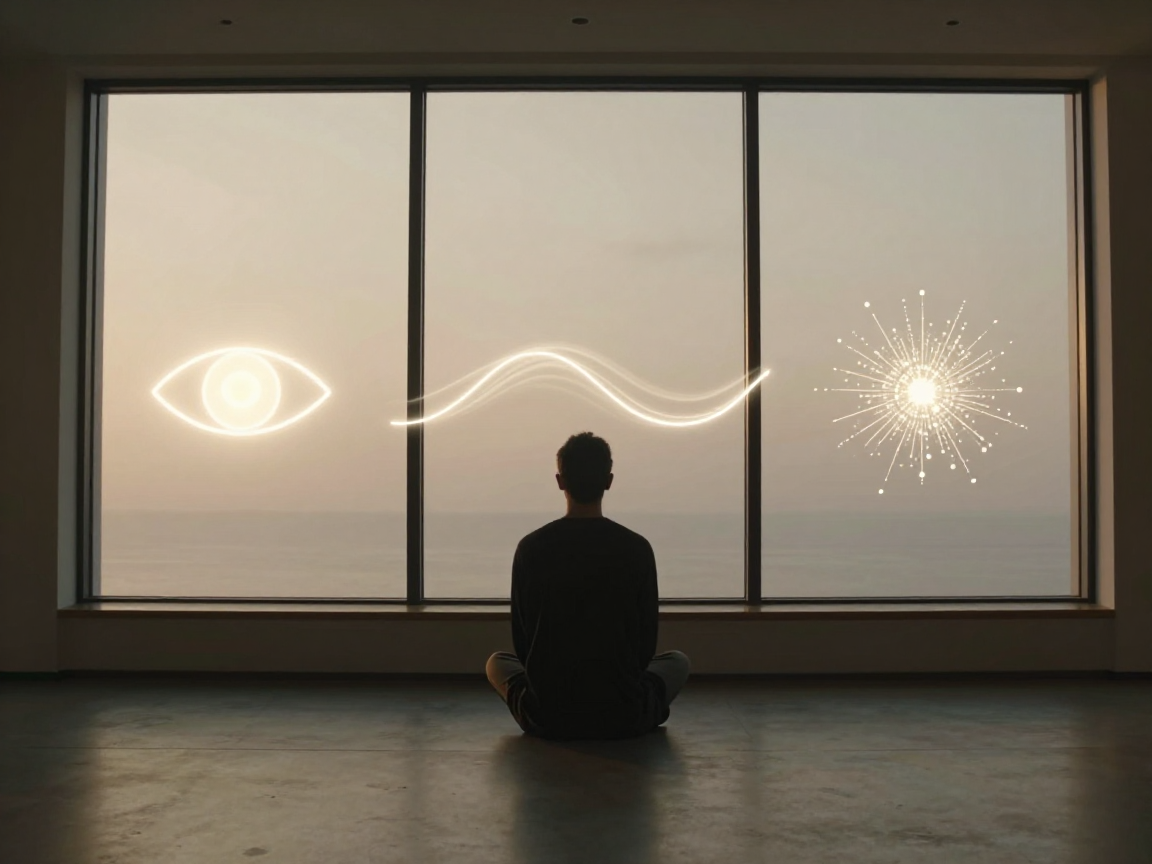
We have all experienced that sudden, inexplicable flash of certainty. Perhaps you felt a nagging urge to take a different route to work, only to find out later there was a massive accident on your usual path. Or maybe you met someone and instantly felt a wave of warmth - or a prickly sense of caution - before they even spoke a word. We often group these experiences under the umbrella of a gut feeling, but the truth is that our inner guidance system is far more sophisticated than a single physical sensation. Just as we have five physical senses to navigate the material world, we possess a parallel set of spiritual or psychic senses often referred to as the clairs.
When we talk about the various types of intuition (clairs) , we are looking at the specific ways your subconscious mind and your energetic body process information that isn't available to the logic - driven brain. Understanding these pathways is the difference between feeling like you are occasionally lucky and actually being able to tune in to a reliable internal compass. By identifying which of these channels is most active in your life, you can stop second - guessing your insights and start using them as a practical tool for decision - making, creativity, and self - protection.
Understanding the Clairs: The Hidden Senses of the Mind
The word clair is derived from the French word for "clear" . Therefore, each of the types of intuition (clairs) represents a form of clear sensing. While Western culture tends to prioritize the analytical mind, these intuitive faculties are actually innate biological and energetic functions. Everyone has access to them, though most of us have one or two that are naturally more developed, similar to how some people are visual learners while others learn best through touch or sound.
Developing these senses isn't about becoming a mystic overnight; it is about refinement. It is about learning to distinguish the signal from the noise. In a world that is constantly screaming for our attention, the clairs provide a quieter, more subtle stream of data. When you understand the different types of intuition (clairs) , you can begin to categorize your experiences. You might realize that your vivid dreams are actually a form of clairvoyance, or that your sudden "lightbulb moments" are the hallmark of claircognizance.
The Four Primary Types of Intuition (Clairs)
Most people lead with one of four primary intuitive styles. These are the most common ways that non - local information enters our awareness. Identifying with one of these usually feels like a homecoming - a realization that the way you've always perceived the world actually has a name.
1. Clairvoyance (Clear Seeing)
Clairvoyance is perhaps the most famous of the clairs, but it is also the most misunderstood. It is rarely like a high - definition movie playing in front of your eyes. Instead, it usually manifests as symbols, colors, or brief snapshots in the mind's eye. You might see a specific flower that reminds you of a friend, only to have that friend call you minutes later. People with strong clairvoyance often have very vivid dreams, a strong sense of visual aesthetics, and the ability to visualize goals with extreme clarity.
2. Clairaudience (Clear Hearing)
Clairaudience is the ability to receive intuitive information through sound. This can be an internal voice - one that sounds like your own but possesses a different tone or wisdom - or it can be external. Have you ever heard your name called when no one was there? Or perhaps a specific song lyric keeps playing in your head right when you need a specific message? This is often the work of clairaudience. It is a subtle nudge that comes through the auditory channel, providing verbal guidance or warnings.
3. Clairsentience (Clear Feeling)
If you are an empath, you are likely high in clairsentience. This is the ability to physically and emotionally feel the energy of a person, place, or situation. Clairsentients often experience physical sensations in their body that mirror the environment. You might feel a sudden tightness in your chest when walking into a room where an argument just happened, or a sense of immense peace when meeting a specific person. This is the classic "gut feeling" taken to a highly sensitive level.
4. Claircognizance (Clear Knowing)
Claircognizance is the "aha!" moment. It is a sudden download of information that arrives without any logical explanation or prior study. It is characterized by a sense of absolute certainty. You simply know that a business deal is wrong, or you know exactly how a complex problem should be solved, even if you can't explain the steps to get there. It is the fastest of the clairs and often the one most easily dismissed as a lucky guess.
The Subtle Clairs: Smell, Taste, and Touch
While the four primary clairs dominate the conversation, there are several more subtle types of intuition (clairs) that are equally valid. These are often more specialized and can be surprisingly specific in the information they provide.
- Clairalience (Clear Smelling): This involves smelling scents that have no physical source. A common example is smelling the perfume of a deceased grandmother or the scent of tobacco in a non - smoking house. These scents are often used by the subconscious to trigger a specific memory or association.
- Clairgustance (Clear Tasting): This is the ability to taste something without putting anything in your mouth. It is rarer but can be used to identify substances or even the emotional "flavor" of a situation. Some describe it as a metallic taste when something is dangerous or a sweet taste when something is aligned.
- Clairtangency (Clear Touching): Also known as psychometry, this is the ability to handle an object and receive information about its history or the person who owned it. People with this gift might feel overwhelmed in antique shops or feel a strong connection to family heirlooms.
How to Identify Your Dominant Intuitive Pathway
Determining which of the types of intuition (clairs) you lead with can help you lean into your strengths. Use the following framework to assess your natural tendencies. Think back over the last few months and see which of these scenarios resonates most with your lived experience.
- The Visual Test: When you recall a memory, do you see it like a photograph? Do you notice the color of people's eyes or the way the light hit the room? If yes, you likely lead with Clairvoyance.
- The Physical Test: Do you find yourself saying things like "I feel like..." or "This doesn't feel right" ? Do you get physical symptoms like goosebumps or a heavy stomach in certain situations? This points toward Clairsentience.
- The Logical Test: Do you often find yourself knowing the answer to a question before it is finished being asked? Do people call you a "know - it - all" because you have random insights that turn out to be true? This is a hallmark of Claircognizance.
- The Auditory Test: Do you talk to yourself often? Do you find that the best advice comes to you as a clear thought that feels like it was whispered? Are you highly sensitive to noise? You are likely a Clairaudient.
3 Steps to Strengthen Your Intuitive Senses
Intuition is like a muscle; if you don't use it, it remains weak. However, anyone can sharpen their perception by intentionally engaging with these different types of intuition (clairs) . Here is a simple three - step framework to begin your development.
Step 1: The Daily Check - In
Three times a day, stop what you are doing and ask yourself: "What am I sensing right now?" Don't look for a logical answer. Look for a visual, a sound, a feeling, or a knowing. By acknowledging the data coming through your clairs, you signal to your subconscious that you are paying attention, which encourages more information to flow.
Step 2: Test Your Hits
Start small. Before you look at your phone to see who is texting, try to "feel" or "see" who it is. When you are about to enter a meeting, try to sense the "temperature" of the room before anyone speaks. Keep a small journal of these hits. Seeing a written record of when your clairs were correct helps build the trust necessary to use them for bigger life decisions.
Step 3: Clear the Static
Intuition is a subtle frequency. If your life is constantly filled with digital noise, stress, and clutter, you won't hear it. Create periods of silence. Whether it is a ten - minute walk without headphones or a seated meditation, giving your mind a break from external input allows the internal input of the clairs to surface.
Overcoming the Logic Gap
The biggest obstacle to mastering the types of intuition (clairs) is the rational mind. We are taught to value only what can be measured, proven, and repeated in a lab. When an intuitive hit arrives, the logical brain immediately tries to debunk it. It calls the insight a "coincidence" or "just my imagination" .
To bridge this gap, stop looking for proof before you act. Start experimenting with low - stakes intuitive decisions. If you have a clairsentient feeling to take a different street, take it. The worst that happens is you are two minutes late. The more you act on these small nudges, the more you build a relationship with your inner self. You begin to realize that your intuition isn't trying to replace your logic; it is trying to provide the context that logic misses. Logic is great for organizing information, but intuition is what gathers the information that isn't yet visible.
Integrating Your Intuitive Gifts into Daily Life
Once you recognize your primary types of intuition (clairs) , life starts to feel less like a series of random events and more like a guided journey. You stop looking outside of yourself for every answer and start consulting your internal database. This doesn't mean you will never make a mistake, but it does mean you will be more in tune with the lessons those mistakes are meant to teach.
Whether you are a clairvoyant who sees the future in symbols or a clairsentient who feels the world through their skin, your intuition is a gift. It is a specialized tool designed to help you navigate a complex world with grace. By honoring these "clear senses" , you open the door to a deeper level of self - awareness and a more profound connection to the world around you. Trust what you see, hear, feel, and know - it is there for a reason.