Reclaiming Your Natural Rhythm: Why Seasonal Living is the Antidote to Modern Burnout
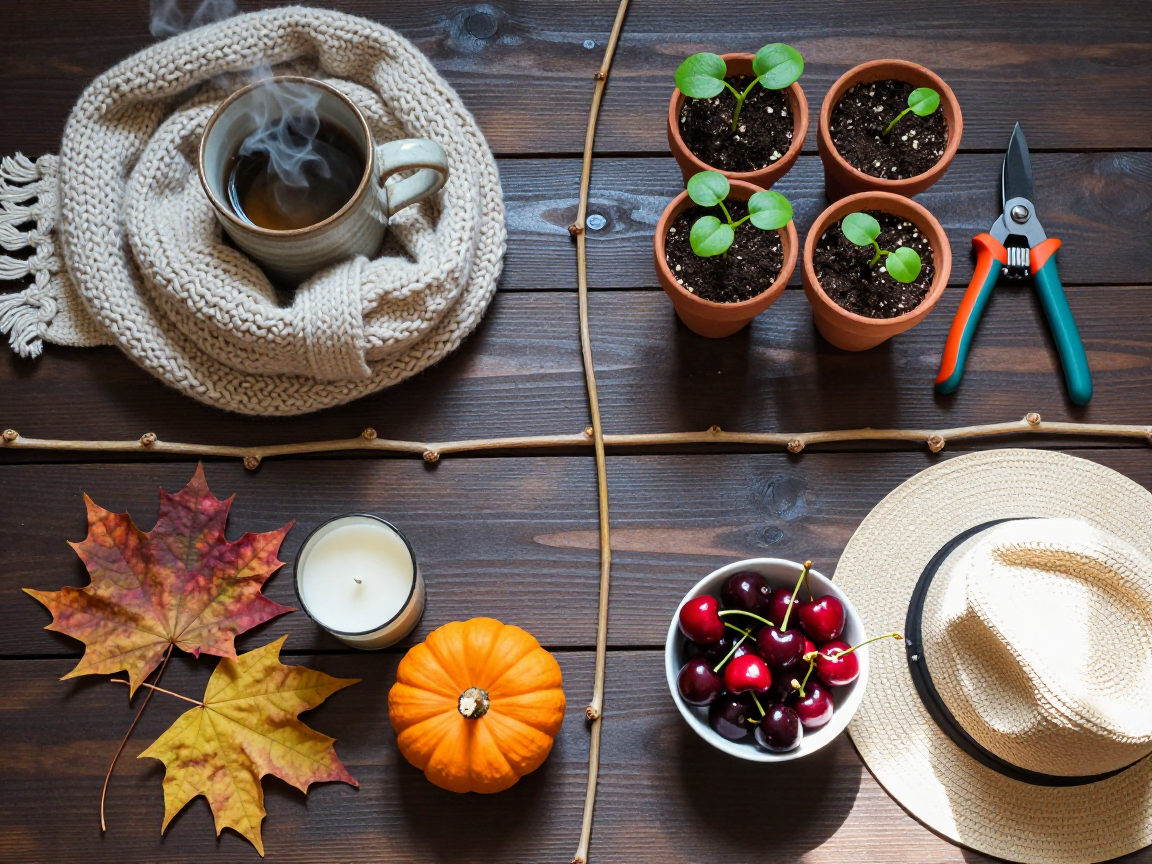
In the modern era, we live in a world of artificial light and climate-controlled environments that trick us into believing we should be equally productive every single day of the year. We have created a society that functions in a state of 'eternal summer,' where fresh strawberries are available in December and we are expected to maintain the same high-energy output in the dark of January as we do in the bright heat of July. This disconnect from the natural world is not just a philosophical issue; it is a primary driver of the chronic stress, decision fatigue, and burnout that define our current cultural moment.
Seasonal living is the intentional practice of aligning your lifestyle, habits, and mindset with the natural cycles of the year. It is an invitation to stop fighting against the ebb and flow of the Earth and to start working with it instead. By recognizing that we are biological beings deeply connected to the planet, we can find a more sustainable way to live, work, and grow. This approach allows us to honor our need for rest just as much as our need for action, leading to a more balanced and deeply fulfilling existence.
The Biological Case for Seasonal Living
Our bodies are not static machines; they are highly sensitive biological systems that respond to the environment. The primary driver of our internal biology is the light-dark cycle. For thousands of years, humans lived in close proximity to nature, meaning their sleep patterns, diet, and activity levels changed drastically with the seasons. Modern science confirms that our circadian rhythms—the internal clocks that regulate everything from sleep to hormone production—are profoundly influenced by seasonal changes in day length.
When we ignore these signals through the practice of seasonal living, we often experience 'social jetlag.' This occurs when our internal biological clock is at odds with our external social requirements. In winter, for example, the lack of sunlight naturally increases melatonin production, making us feel more sluggish and inclined toward rest. If we force ourselves to maintain a peak-summer level of activity during these darker months, we run the risk of adrenal fatigue and weakened immune function. Seasonal living encourages us to listen to these cues, perhaps by sleeping an extra hour in the winter or increasing our physical activity when the days lengthen in the spring.
Furthermore, our digestive systems and metabolic rates are also geared toward seasonal shifts. Historically, humans ate what was available locally. This meant a diet rich in cooling, hydrating fruits and vegetables in the summer and calorie-dense, warming root vegetables and healthy fats in the winter. Today, we know that seasonal eating supports gut health by providing a diverse range of nutrients that match our body's needs at specific times. Aligning our diet with the seasons is one of the most practical and immediate ways to begin practicing seasonal living.
Moving from Linear to Cyclical Time
Most modern professional structures are built on the concept of linear time—a constant, upward trajectory of growth and achievement. This model suggests that if we aren't constantly 'doing,' we are failing. It is a philosophy of 'more, faster, better' that leaves no room for the natural decay and dormancy required for true health. However, nature operates on cyclical time. A tree does not produce fruit all year round; it spends months in deep dormancy, gathering the energy it needs to bloom when the conditions are right.
When we embrace cyclical time, we remove the guilt associated with periods of low productivity. We begin to see that 'rest' is not the opposite of 'work,' but rather a vital part of the work itself. Without the dormancy of winter, there can be no harvest in autumn. By applying this logic to our personal and professional lives, we can plan our major projects for the high-energy months and schedule our deep reflection and administrative tasks for the slower months. This shift in perspective transforms how we view our own energy levels and helps prevent the resentment that often follows a period of forced overexertion.
The Seasonal Living Framework: A Guide Through the Year
To help you navigate this transition, it is useful to have a framework for how each season can influence your daily life. While your local climate will dictate the specifics, the general energy of the four seasons remains a powerful guide for personal development and well-being.
Winter: The Art of Rest and Restoration
Winter is the season of the 'root.' In nature, energy is pulled inward and downward into the earth. For humans, seasonal living in winter means prioritizing rest, reflection, and internal cultivation. It is a time to slow down, simplify your schedule, and nourish your body with warmth.
- Focus: Recovery, dreaming, and integration.
- Mindset: 'I allow myself to be still.'
- Practices: Journaling, reading, early bedtimes, and slow-cooked meals. This is the time to review the previous year and integrate the lessons learned before moving into a new cycle.
- Social Energy: Small, intimate gatherings rather than large parties; focusing on deep connection over broad networking.
Spring: Planting Seeds of Intention
As the light returns, so does our energy. Spring is the season of the 'seed.' It is a time for awakening and new beginnings. Just as the earth begins to stir, you may find yourself feeling a renewed sense of curiosity and a desire to start new projects. This is the ideal time for 'spring cleaning'—not just of your home, but of your mental space as well.
- Focus: Growth, planning, and clearing space.
- Mindset: 'I am planting the seeds of my future.'
- Practices: Decluttering, starting new habits, spending more time outdoors as the weather warms, and introducing fresh greens into your diet.
- Actionable Step: Write down three goals you want to 'harvest' by autumn and define the first small steps to plant them now.
Summer: Maximizing Energy and Connection
Summer is the season of the 'bloom.' It is the peak of the year, characterized by high energy, long days, and outward expression. This is the time to be social, to take action on the plans you made in the spring, and to enjoy the abundance of the natural world. In the context of seasonal living, summer is when we are most 'out in the world.'
- Focus: Action, vitality, and community.
- Mindset: 'I shine my light brightly.'
- Practices: Social gatherings, outdoor exercise, travel, and enjoying raw, hydrating foods.
- Sustainability Tip: Be mindful of the heat and ensure you are balancing this high energy with moments of cool, quiet shade to avoid burnout before the season ends.
Autumn: Harvesting Lessons and Letting Go
Autumn is the season of the 'harvest.' It is a transitional period where we begin to gather the fruits of our labor and prepare for the coming cold. It is also the season of 'release,' as symbolized by the falling leaves. Seasonal living during autumn involves taking stock of what you have achieved and consciously letting go of what no longer serves you.
- Focus: Gratitude, refinement, and preparation.
- Mindset: 'I harvest my successes and release the rest.'
- Practices: Preserving food, finishing major projects, practicing gratitude, and establishing routines that will support you during the darker winter months.
- Reflective Question: What 'leaves' do I need to drop this year to ensure I don't carry dead weight into my winter rest?
5 Ways to Start Practicing Seasonal Living Today
You do not need to live on a farm or move to the countryside to embrace seasonal living. It is a series of small, intentional choices that can be integrated into even the most urban lifestyle. Use the following checklist to begin your transition:
- Observe the light: Spend at least 15 minutes outside each morning, regardless of the weather. Notice the position of the sun and how the light changes as the weeks progress. This helps reset your circadian rhythm and anchors you in the current time of year.
- Eat with the seasons: Visit a local farmer's market and buy whatever is currently in season. If you shop at a supermarket, look for produce that is grown locally rather than imported from another hemisphere. Seasonal produce is more nutrient-dense and aligns with your body's current needs.
- Adjust your home environment: Use textiles, lighting, and scents to reflect the season. Bring in heavy blankets and warm cedar or cinnamon scents in winter; switch to light linens and citrus or floral scents in summer. Use more candles in the dark months to honor the 'hygge' lifestyle.
- Align your exercise: Match your workout intensity to your energy levels. You might choose high-intensity interval training or long hikes in the summer but opt for restorative yoga, stretching, or gentle walks in the winter.
- Review your calendar: At the start of each new season (the solstices and equinoxes), look ahead at the next three months. Where can you create more space for rest? Where can you schedule your most ambitious goals to align with your natural energy peaks? Work with your boss or team to 'front-load' intensive work during high-energy periods.
Overcoming the Obstacles of Modern Life
The biggest challenge to seasonal living is the 'always-on' nature of the digital world. Our smartphones and computers do not have seasons; they provide a constant stream of information and demands 24/7. To combat this, you must be the gatekeeper of your own energy. This might mean setting stricter digital boundaries during the winter or choosing to do a significant digital detox when the natural world is at its most vibrant in the summer.
Another obstacle is the feeling of being 'out of sync' with others. When everyone else is rushing around in December, choosing to slow down and embrace the quiet can feel like a radical, even rebellious act. However, as you begin to embody the benefits of seasonal living—such as improved sleep, better mood, and sustained energy—you may find that others are inspired by your centeredness. You aren't 'falling behind'; you are simply moving at a pace that is sustainable for the long haul. Remember that the pressure to be 'on' all the time is a modern invention, not a biological requirement.
Embracing the Cycle
Ultimately, seasonal living is about returning to a state of grace and self-compassion. It is an acknowledgment that you are part of a larger whole and that your needs change just as the world around you changes. When we stop trying to be the same version of ourselves every day, we open the door to a more authentic and resilient way of being. We stop fighting our biology and start nurturing it.
As you move through the year, ask yourself: 'What does this season need from me?' and 'What do I need from this season?' By living in conversation with the earth, you will find that the burnout and exhaustion of modern life begin to fade, replaced by a steady, grounded sense of purpose. Whether you are in a season of deep rest or high-stakes action, remember that each phase is necessary, each phase is temporary, and each phase brings its own unique magic to your life. Nature never rushes, yet everything is accomplished; by adopting the path of seasonal living, you can find that same quiet efficiency in your own existence.