The Map You Were Born With: Why a Natal Chart Reading Is the Ultimate Guide to Your True Self
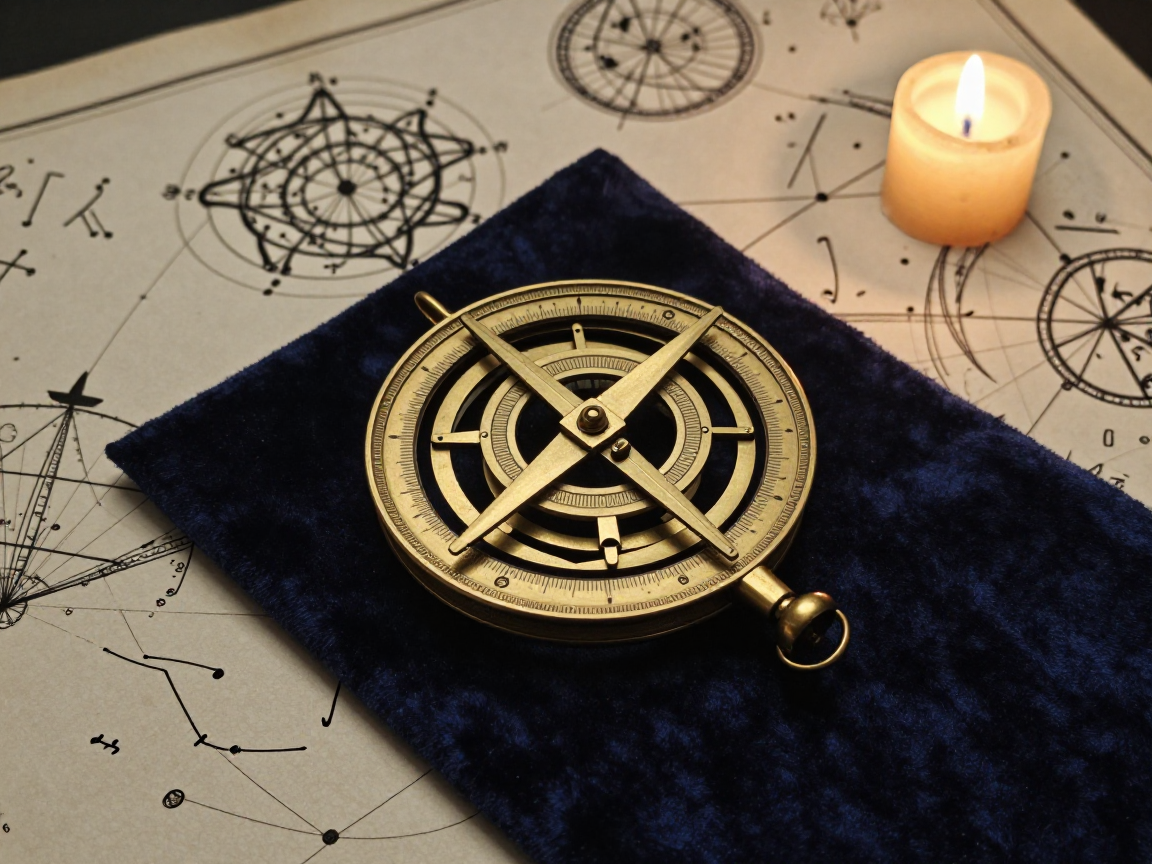
Most people know their Sun sign. It is the answer we give at parties or the section we scan in the Sunday paper. But viewing your entire personality through the lens of a single zodiac sign is like trying to understand the ocean by looking at a single drop of water. You are far more complex than a one-word description of your ego. To truly understand the architecture of your soul, you have to look at the sky exactly as it appeared the second you took your first breath. This is what we call a natal chart reading.
A natal chart reading is essentially a snapshot of the heavens from the precise longitude and latitude of your birth. It serves as a celestial blueprint that outlines your psychological predispositions, your karmic challenges, and your highest potential. It does not tell you what will happen to you in a fatalistic sense—rather, it reveals the tools you have in your toolkit and the specific landscape you are meant to navigate. By learning to decode this map, you stop fighting against your natural temperament and start leaning into the unique rhythm of your own life. In a world that often demands we conform to external standards, this practice offers a radical return to self-acceptance.
Beyond Your Horoscope: What Exactly Is a Natal Chart?
To the untrained eye, a natal chart looks like a confusing wheel of symbols, lines, and numbers. However, each element within that wheel represents a specific dimension of your human experience. When you sit down for a natal chart reading, you are looking at a 360-degree circle divided into twelve sections called houses. Within these houses, the planets are positioned based on their location in the zodiac at the time of your birth.
The beauty of a natal chart reading lies in its nuance. While millions of people share your Sun sign, the mathematical probability of someone having the exact same natal chart as you is nearly zero. It takes roughly 25,000 years for the planets to return to the same configuration. This makes your birth chart the most personalized piece of data you will ever own. It accounts for why two Leos can be entirely different people—one might have a quiet, sensitive Moon in Pisces, while the other has a fiery, aggressive Mars in Aries. It is the difference between a generic character sketch and a multi-dimensional biography.
Understanding your chart requires moving away from the "good" or "bad" labels often found in pop astrology. In a professional natal chart reading, there are no "bad" placements. There are only "easy" aspects, which represent natural talents you might take for granted, and "challenging" aspects, which represent the friction necessary for soul growth. Without that friction, we would never have the motivation to evolve. The difficult spots in your chart are often where your greatest resilience is forged.
The Three Pillars: Your Sun, Moon, and Rising Sign
When beginning a natal chart reading, the first things to identify are often referred to as the "Big Three." These three placements form the core of your identity and provide the quickest route to self-understanding. If your chart is a play, the Sun is the lead actor, the Moon is the inner monologue, and the Rising sign is the stage set and costume.
The Sun: Your Core Identity and Purpose
The Sun represents your ego, your basic personality, and what gives you vitality. It is the "you" that you are becoming as you grow more conscious. In a natal chart reading, the Sun sign tells us what you need to feel seen and validated. If your Sun is in Capricorn, you feel vital when you are achieving and building. If it is in Libra, you feel alive when you are creating harmony and connection. The Sun is your "inner light" that directs your journey and represents your fundamental will to exist.
The Moon: Your Emotional Landscape
While the Sun is what we show the world, the Moon is what we feel when we are alone at night. It governs your emotions, your subconscious habits, and your sense of safety. A natal chart reading often provides the most "aha" moments when discussing the Moon. For instance, someone with a Moon in Scorpio may have a deep need for privacy and emotional intensity, even if their Sun sign appears lighthearted. Understanding your Moon sign helps you learn how to nurture yourself and what you truly need in a relationship to feel secure. It represents your past, your roots, and your mother-figure archetypes.
The Rising Sign: Your Lens on the World
The Rising sign, or Ascendant, is the zodiac sign that was rising on the eastern horizon at the moment of your birth. This is why having an accurate birth time is vital for a natal chart reading. The Rising sign dictates how you present yourself to strangers and how you instinctively react to new environments. It is the "filter" through which you see the world and the world sees you. It also determines the layout of the rest of your chart, assigning specific signs to specific houses of life. If the Sun is the "why," the Rising sign is the "how."
The Language of the Planets: Your Internal Committee
If the Big Three are the pillars, the other planets are the supporting cast that governs specific functions of your life. During a natal chart reading, we look at where each planet is "hanging out" to understand how you process information, how you love, and how you take action.
- Mercury: This planet rules communication, intellect, and logic. It tells us whether you are a linear thinker or a poetic, intuitive one. It governs your learning style and how you exchange ideas with the world.
- Venus: The planet of love, beauty, and values. In your natal chart reading, Venus shows what you find attractive and how you express affection. It also indicates your relationship with money, pleasure, and the arts.
- Mars: This is your drive, your energy, and your "fight." Mars shows how you go after what you want, your physical energy levels, and how you handle anger or competition.
- Jupiter: The planet of growth, luck, and expansion. It shows where you find meaning and where you are likely to experience abundance and optimism.
- Saturn: The planet of discipline, boundaries, and structure. It represents the "hard lessons" and the areas where you must work the hardest to achieve mastery.
- The Outer Planets (Uranus, Neptune, Pluto): These planets move slowly and represent generational themes. Uranus is about innovation and rebellion; Neptune is about dreams and spirituality; Pluto is about power, death, and rebirth.
The 12 Houses: Where the Action Happens
In a natal chart reading, the planets are the "what" and the zodiac signs are the "how." The houses, however, are the "where." The twelve houses represent different areas of life, from your finances to your career to your subconscious mind. Think of the houses as the different rooms in the house of your life.
For example, the 1st House is the House of Self, dealing with your physical appearance and first impressions. The 4th House governs your home, family, and inner foundations. The 7th House is the realm of committed partnerships and open enemies, while the 10th House (the Midheaven) represents your public reputation and career achievements.
If you have Venus (the planet of love) in your 10th House, you might find that you are very well-liked in your professional life or that you may even meet a partner through your work. If you have Saturn (the planet of restriction) in your 2nd House (the house of money), you might experience financial delays early in life that eventually lead to great wisdom and stability regarding resources. A comprehensive natal chart reading synthesizes all of these layers to show you how your internal personality traits play out in the external world.
A 5-Step Framework for Interpreting Your Natal Chart
If you are looking at your chart for the first time and feel overwhelmed, follow this structured approach to make sense of the data. This framework is designed to help you peel back the layers of a natal chart reading systematically.
- Verify the Foundations: Ensure your birth time is accurate to the minute. Even a four-minute difference can change your Rising sign or move a planet into a different house. Use a reliable calculation tool to generate the wheel.
- Synthesize the Big Three: Don't just read about them separately. Ask yourself: How does my emotional Moon sign support or conflict with my external Sun sign? If your Sun is in fire and your Moon is in water, you might often feel like you are "steaming"—experiencing a lot of internal tension between your desires and your feelings.
- Find Your Chart Ruler: Look at your Rising sign. The planet that rules that sign is your "Chart Ruler." If you are an Aries Rising, your Chart Ruler is Mars. Find where Mars is in your chart; this planet will be a primary driver of your life's theme and where you focus your most vital energy.
- Identify House Concentrations: Look for "Stelliums," which are clusters of three or more planets in a single house or sign. This indicates a major focus of energy. If you have many planets in the 7th House, your life will largely revolve around themes of partnership and one-on-one relationships.
- Look for the Aspects: This is the most advanced part of a natal chart reading. Aspects are the angles planets make to each other. "Squares" and "Oppositions" create tension that forces you to grow, while "Trines" and "Sextiles" represent areas where energy flows easily and gifts are present.
Common Misconceptions About Natal Chart Readings
One of the biggest hurdles people face when diving into a natal chart reading is the fear of "bad news." You might see a planet in a difficult position and assume you are "cursed" in that area of life. This is a misunderstanding of how astrology works. Astrology is about tendencies and energetic potentials, not inevitable fates.
A "difficult" placement in a natal chart reading is often where your greatest strength lies. For example, some of the most successful public speakers have Mercury in a "challenging" aspect to Saturn. Because they had to work harder to find their voice early in life, they eventually became more disciplined and articulate than those for whom communication came easily. The struggle created the mastery.
Another mistake is focusing too much on "compatibility" with others before understanding yourself. People often run to see if their chart matches a crush's chart. However, you cannot truly navigate a relationship with another person until you understand the blueprints you are both working with. A natal chart reading provides the self-awareness necessary to take responsibility for your own triggers and patterns, which is the foundation of any healthy partnership.
Integrating the Wisdom of Your Chart
A natal chart reading is not meant to be a one-time event that you forget about a week later. It is a living document. As you move through different stages of life, different parts of your chart will "wake up" and become more relevant through a process called transits (where the current planets interact with your birth positions).
The goal of a natal chart reading is integration. It is about looking at the parts of yourself that you have judged or ignored and realizing they are part of a larger, intentional design. When you see your struggles written in the stars, they become less like personal failures and more like "assignments" for your soul.
By understanding your chart, you move from being a passenger in your life to being the conscious navigator of your own destiny. You begin to see that your quirks are actually your superpowers and your challenges are the very things that will make you wise. Ultimately, a natal chart reading doesn't tell you who you should be—it gives you permission to finally be who you already are.