Beyond the Calendar: How Living by the Wheel of the Year Restores Your Natural Rhythm
Most people today live in a state of chronological flatness. We experience time as a linear progression of deadlines, digital alerts, and identical office environments that look the same in July as they do in January. This detachment from the physical world often leads to a specific kind of modern fatigue - a sense of being unmoored from the earth and the passage of time. When we treat every day as a carbon copy of the last, we lose the vital emotional and spiritual nourishment that comes from observing the world's natural transitions.
The wheel of the year offers a profound alternative to this linear exhaustion. It is a seasonal calendar that follows the cycle of the sun and the changing of the earth, marking eight distinct points known as sabbats. By observing the wheel of the year, we acknowledge that life is not a straight line toward an invisible finish line, but a repeating circle of birth, growth, harvest, and rest. This ancient perspective provides a framework for grounding ourselves, allowing us to find meaning in the darkness of winter and celebration in the abundance of summer.
Understanding the Origins and Structure
While the specific term "wheel of the year" emerged in the mid - 20th century, its roots are deeply buried in the agrarian and indigenous traditions of Europe. It combines the solar festivals of the Germanic peoples with the seasonal fire festivals of the Celts. The resulting calendar splits the year into eight segments, effectively providing a check - in point every six to seven weeks. This frequency ensures that we never drift too far from the current state of the natural world.
The wheel is divided into two types of holidays. The first are the solar festivals, often called the "Lesser Sabbats", which coincide with the solstices and equinoxes. These are the astronomical turning points determined by the sun's position. The second are the four "Greater Sabbats", also known as cross - quarter days. These fall roughly midway between the solar points and are often associated with the peaks of the seasons rather than their astronomical beginnings.
The Eight Spokes of the Wheel
To live in alignment with the wheel of the year, one must understand the unique energy of each "spoke". Each festival is a psychological and spiritual mirror of what is happening in the soil and the sky.
Samhain (October 31 - November 1)
Often considered the Witches' New Year, Samhain marks the final harvest and the onset of winter. In the Northern Hemisphere, this is a time when the "veil is thin", symbolizing a transition between the seen and unseen worlds. It is a period for honoring ancestors and reflecting on the concept of death - not as an end, but as a necessary phase of the cycle. It is a time for introspection and shedding what no longer serves us.
Yule (December 20 - 23)
The Winter Solstice, or Yule, represents the longest night of the year. While the world outside is dark and cold, Yule celebrates the return of the light. From this point forward, the days begin to lengthen. It is a festival of hope, internal warmth, and the quiet promise that life persists even in the depths of winter. Rituals often involve bringing evergreen plants indoors to symbolize eternal life.
Imbolc (February 1 - 2)
Imbolc is the first stirrings of spring. Though the ground may still be frozen, the light is visibly returning. This festival is dedicated to purification and the first signs of growth. It is a time for "spring cleaning" in both a physical and spiritual sense. We plant the seeds of our intentions during Imbolc, nurturing the ideas that we hope will bloom later in the year.
Ostara (March 20 - 23)
The Spring Equinox, or Ostara, is a moment of perfect balance between day and night. It marks the official arrival of spring. The energy of Ostara is one of exuberant growth and fertility. As flowers begin to bud and animals emerge from hibernation, we are encouraged to take action on the intentions we set at Imbolc. It is a time for new beginnings and the celebration of life's resilience.
Beltane (May 1)
Beltane is the peak of spring and the beginning of the "light half" of the year. It is a fire festival celebrating fertility, passion, and the union of earth and sky. Traditionally marked by maypoles and bonfires, Beltane is an outward - facing holiday. It encourages us to embrace our desires, connect with others, and celebrate the sheer vitality of the natural world.
Litha (June 20 - 23)
The Summer Solstice, or Litha, is the day of maximum light. The sun is at its highest point, and the earth is in full bloom. Litha is a celebration of power, success, and the abundance of nature. However, it also carries a subtle reminder of the coming darkness; from this peak, the days will slowly begin to shorten. It is a time to celebrate our achievements while remaining mindful of the need for future rest.
Lammas or Lughnasadh (August 1)
Lammas marks the first of the three harvest festivals. It is the time when the first grains are gathered. The focus here is on the transition from growth to harvest. It is a bittersweet time; we enjoy the fruits of our labor, but we also acknowledge that the heat of summer is beginning to fade. Lammas teaches us about the cycles of sacrifice and the necessity of hard work to ensure future survival.
Mabon (September 20 - 23)
The Autumn Equinox, or Mabon, is the second harvest and the second point of balance in the year. Day and night are equal once again, but this time we are tilting toward the dark. Mabon is the quintessential harvest festival - a time of thanksgiving and taking stock of what we have gathered throughout the year. It is a period of preparation, both physically and mentally, for the leaner months ahead.
The Psychological Benefits of Rhythmic Living
Why should a modern person care about the wheel of the year? Beyond the historical interest, following these cycles offers significant mental health benefits. Our current culture demands constant productivity, a state of "eternal summer" where we are expected to be always blooming and always producing. This is unsustainable.
The wheel of the year teaches us that fallow periods are not failures; they are requirements. By aligning our personal expectations with the seasons, we give ourselves permission to rest in the winter (Yule) and permission to be wildly creative in the spring (Ostara). This rhythmic living reduces burnout because it validates the natural fluctuations in our energy levels. When we see ourselves as part of the earth, we stop fighting against our own internal tides.
A Practical Framework for Observing the Wheel
You do not need elaborate rituals or specialized tools to participate in the wheel of the year. The most effective way to observe these points is through simple, consistent actions that acknowledge the current environment. Use the following framework to create your own tradition for any of the eight sabbats:
- Observe the Landscape: Spend fifteen minutes outside without your phone. What do you see? What are the trees doing? What is the temperature of the air? Notice the subtle shifts since the last spoke of the wheel.
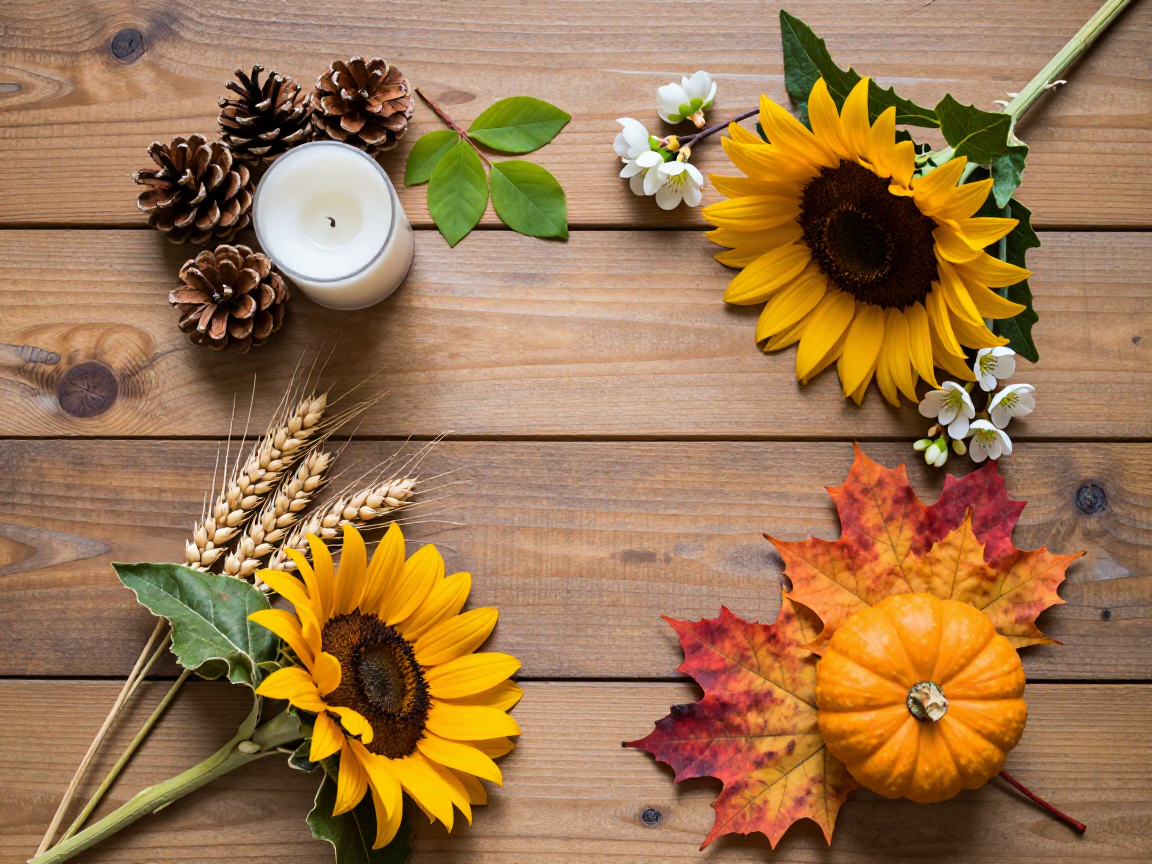
- Bring the Outside In: Create a small seasonal display in your home. This could be a bowl of acorns in autumn, a vase of wildflowers in spring, or a candle in the winter. This serves as a visual anchor to the current season.
- Eat Seasonally: Prepare a meal using ingredients that are currently being harvested in your local area. Food is one of the most direct ways to connect with the earth's current state.
- Reflect and Journal: Ask yourself how your internal energy matches the external world. If it is Mabon, what are you harvesting in your life? If it is Imbolc, what seeds of thought are you starting to water?
- Perform a Simple Act of Connection: This could be lighting a candle, taking a walk, or planting a seed. The goal is a conscious acknowledgment of the turning wheel.
Reclaiming the Circle
Living by the wheel of the year is an act of quiet rebellion against a world that wants us to be machines. It reminds us that we are biological beings, inextricably linked to the planet we inhabit. Each time we celebrate a solstice or mark a cross - quarter day, we step out of the frantic, linear rush and back into the grounded, circular pace of the natural world.
Whether you view the wheel through a spiritual lens or simply as a way to improve your mindfulness, the result is the same: a deeper sense of belonging. You are no longer just an observer of the seasons; you are a participant in them. As the wheel turns from the darkness of winter to the heat of summer and back again, you can find peace in the knowledge that every phase has its purpose and every ending is merely the precursor to a new beginning.