Is it Just a Coincidence? A Deep Dive into What Synchronicity Is and How it Guides Us
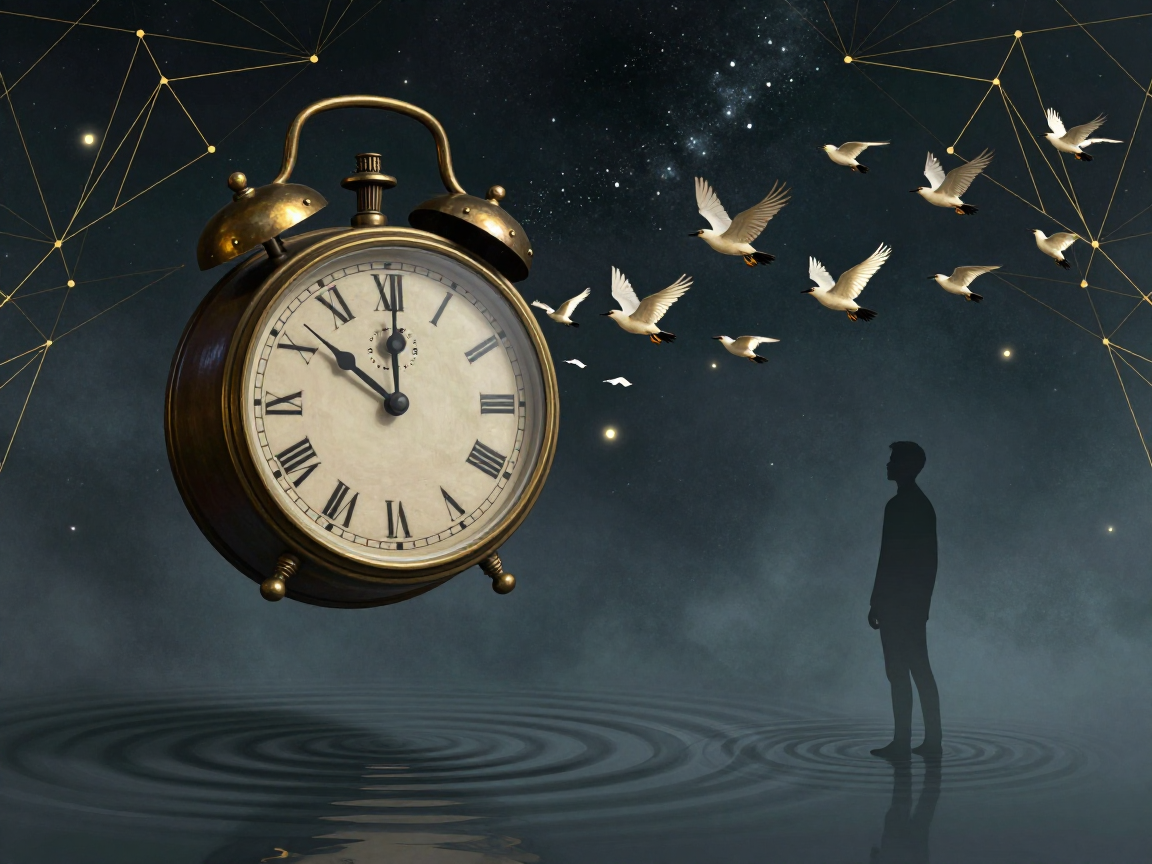
We have all experienced moments where the world seems to align in ways that defy simple math. You think of an old friend you haven't spoken to in a decade, and three minutes later, your phone buzzes with a text from them. You are struggling with a specific problem at work, and you happen to overhear a stranger on the bus discussing the exact solution. These moments feel electrified with a strange, quiet significance. They feel like more than just a roll of the dice.
At its core, understanding what is synchronicity requires us to look beyond the surface level of cause and effect. It is a concept that suggests the internal landscape of our minds and the external landscape of the physical world are not nearly as separate as we think. When an objective event aligns perfectly with a subjective state of mind, and the connection between them is not causal but meaningful, we enter the realm of the synchronous. It is a bridge between what we feel and what we see, a wink from the universe that suggests a deeper order beneath the chaos of daily life.
The Origin of the Concept: Jung and the Golden Scarab
The term was coined by Swiss psychologist Carl Jung in the 1920s, though he spent decades refining the idea before publishing his landmark paper on the subject. Jung was a pioneer who dared to look at the parts of the human experience that science often ignored. He was fascinated by the way certain events seemed to mirror the psychological state of his patients in ways that could not be explained by linear logic.
The most famous example involved a patient who was highly rational and emotionally guarded. She was stuck in her treatment because she approached everything with a rigid, intellectualized perspective. During a session, she told Jung about a dream she had the night before in which someone gave her a piece of jewelry - a golden scarab. At that very moment, Jung heard a tapping at the window. He opened it and caught a large insect as it flew into the room. It was a scarabaeid beetle, whose gold - green color closely resembled the jewelry in the woman's dream. Jung handed the beetle to her and said, "Here is your scarab!"
This moment shattered the woman's rational defenses. The sheer improbability of a rare beetle appearing precisely when she was discussing its dream counterpart was enough to open her mind to a new way of thinking. This is the essence of what is synchronicity: an event that acts as a catalyst for psychological or spiritual growth by breaking our standard perception of reality.
Defining the Characteristics of a Synchronous Event
Not every coincidence is a synchronicity. To distinguish between a random occurrence and a truly synchronous one, Jung identified several key characteristics. Understanding these helps us filter out the noise of everyday life and focus on the moments that actually carry weight.
- Meaningful Connection: Unlike a simple coincidence, which is often just a quirk of statistics, a synchronicity feels deeply personal. It carries a message, a sense of irony, or a feeling of "Aha!" that resonates with your current situation.
- Non-Causality: In the standard world of physics, A causes B. In synchronicity, there is no physical link between the two events. Thinking about a song doesn't "cause" the radio to play it, yet the timing suggests a connection that transcends physical force.
- Subjective Timing: These events almost always occur during periods of transition, intense emotional stress, or deep searching. They seem to arrive exactly when the individual is at a crossroads.
- The Element of Surprise: Synchronicities often have a quality of being "just right" in a way that feels miraculous or mathematically impossible.
Why Does Synchronicity Happen? Exploring the Theories
When people ask what is synchronicity, they are usually looking for a "why." Why does the universe seem to respond to our thoughts? There are several frameworks used to explain this phenomenon, ranging from the psychological to the quantum.
The Collective Unconscious
Jung believed we all share a deep layer of the psyche called the collective unconscious. This layer is populated by archetypes - universal patterns and symbols that every human being understands. When an archetype is activated within us - such as the archetype of the "Healer" or the "Seeker" - it may manifest both internally as a dream or thought and externally as a physical event. In this view, synchronicity is the psyche projecting itself onto the physical world.
The Pauli-Jung Collaboration
Interestingly, Jung developed many of his ideas through a long correspondence with Wolfgang Pauli, a Nobel Prize - winning physicist and a pioneer of quantum mechanics. Pauli was fascinated by the idea that mind and matter might be two sides of the same coin. They proposed that just as there are laws of physics that govern the physical world, there might be "acausal" laws that govern the relationship between mind and matter. They suggested a "unitary" reality where the boundary between the observer and the observed is blurred.
Quantum Entanglement
In modern times, some look to quantum physics for answers. Quantum entanglement shows that two particles can remain connected across vast distances, where a change in one instantaneously affects the other. While it is a leap to apply this to human psychology, many find it a compelling metaphor. If the universe is fundamentally interconnected at the subatomic level, perhaps our consciousness is "entangled" with the events around us in ways we don't yet have the math to explain.
A Practical Framework: How to Recognize and Interpret Synchronicities
Navigating these moments requires a balance of openness and groundedness. You don't want to become someone who sees a "sign" in every cloud formation, but you also don't want to be so cynical that you miss the genuine guidance offered by life. Here is a framework for working with synchronicity.
- Cultivate Awareness and Presence: You cannot notice patterns if you are constantly distracted by your phone or lost in ruminative thoughts. Synchronicity requires a state of "active waiting." By being present in the moment, you become more sensitive to the subtle shifts in your environment.
- Note the Emotional Resonance: When something unusual happens, check your internal temperature. Did the event give you goosebumps? Did it make you feel a sudden sense of peace or clarity? True synchronicities usually carry an emotional "charge" that sets them apart from the mundane.
- Journal Your Findings: Keep a small notebook specifically for coincidences. Often, a single event doesn't mean much, but when you look back over a month, you might see a recurring theme or a series of events leading you toward a specific decision.
- Look for the Symbolic Meaning: Don't take the event literally. If you see a recurring number or a specific animal, ask yourself what that symbol means to you. Use your own intuition rather than just looking up definitions in a book. The meaning is always personal.
- Test the Direction: If a synchronicity seems to be pointing you toward a specific action, take a small step in that direction and see what happens. If more synchronicities follow, you are likely in "flow." If the path becomes blocked and the signs disappear, you may have misinterpreted the message.
The Shadow Side: Apophenia and Cognitive Bias
To truly understand what is synchronicity, we must also acknowledge the pitfalls. The human brain is a pattern-matching machine. We are evolved to find meaning in chaos because, in our ancestral past, failing to see a pattern in the grass could mean missing a predator. This can lead to "apophenia," which is the tendency to perceive meaningful connections between unrelated things.
Confirmation bias also plays a role. If you are thinking about buying a red car, you will suddenly see red cars everywhere. This isn't necessarily the universe telling you to buy the car; it is simply your brain filtering for what is already on your mind. A healthy approach to synchronicity requires a "double vision" - the ability to appreciate the magic of the moment while maintaining the skepticism of a scientist.
Common Types of Synchronicity People Experience
While the specific details vary, most people report synchronicities that fall into a few recognizable categories. Identifying these can help you realize that you aren't alone in these experiences.
- The Number Sequences: Seeing 11:11, 222, or other repeating patterns on clocks, license plates, or receipts. Many interpret these as "alignment checks" from the subconscious.
- The Timely Arrival of Information: Finding a book, an article, or a podcast that addresses the exact philosophical question you were pondering that morning.
- The Unexpected Encounter: Bumping into someone who has the specific skill or resource you need to finish a project you just started.
- The Animal Messenger: A specific animal appearing repeatedly in dreams and then showing up in physical reality in an unusual way.
- Parallel Lives: Discovering that someone you just met shares an incredible number of biographical details with you, such as birthdays, names of siblings, or obscure hobbies.
The Benefits of Living with Synchronicity
Why does it matter if we pay attention to these events? Beyond the thrill of the mysterious, engaging with synchronicity has practical benefits for our mental and emotional well-being. It helps reduce the feeling of isolation that is so common in the modern world. When we experience a synchronicity, we feel seen. We feel as though we are part of a larger, living system rather than just a biological accident.
It also encourages a state of "flow." When we align our internal intentions with external actions and stay open to the feedback the world provides, we tend to encounter less friction. Decisions become easier because we are looking for the "path of least resistance" that is often paved with synchronous markers. It transforms life from a series of problems to be solved into a series of mysteries to be lived.
Conclusion: The Universe as a Mirror
In the end, what is synchronicity? It is a reminder that the world is more porous than we have been led to believe. It suggests that our thoughts and our environment are in a constant, silent dialogue. Whether you view it as a quirk of the quantum field, a manifestation of the collective unconscious, or simply a beautiful mystery, synchronicity invites us to live with more wonder.
By paying attention to the "meaningful coincidences" in our lives, we begin to participate in a more enchanted reality. We stop being passive observers and start being co-creators. The next time you experience one of those strange, hair - raising moments of alignment, don't just brush it off as "just a coincidence." Stop, breathe, and ask yourself what the universe might be trying to say. You might find that the answer is exactly what you needed to hear.