Beyond the Magazine Clippings: How to Create a Vision Board for Money That Actually Shifts Your Reality
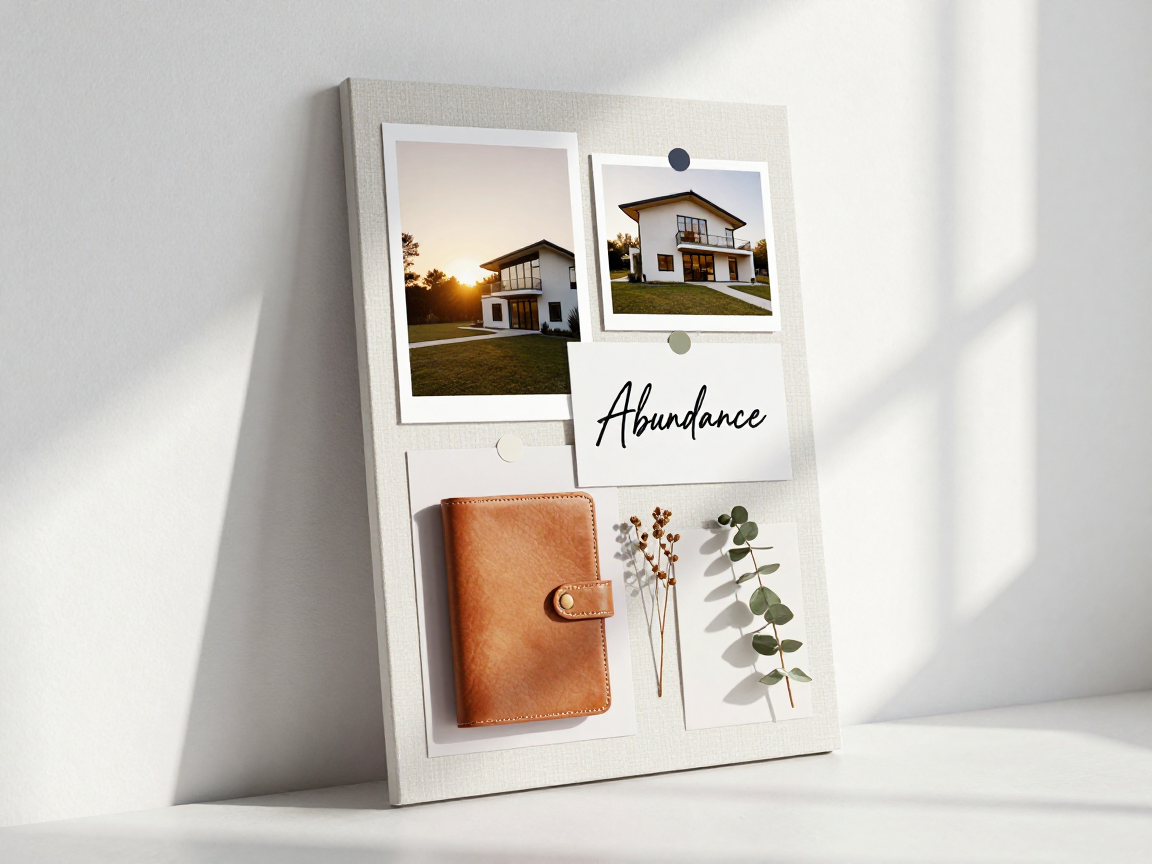
Money is rarely just about the numbers in a bank account. For most of us, it is a complex tapestry of security, freedom, legacy, and self - worth. Yet, when we try to change our financial circumstances, we often stick to dry spreadsheets or vague wishes. This is where a vision board for money comes in - not as a magical artifact that summons checks from the mail, but as a sophisticated cognitive tool designed to recalibrate your internal compass. By translating abstract desires into concrete imagery, you provide your brain with a roadmap for opportunity.
The reason most people fail with visualization is that they treat it as a passive activity. They cut out pictures of private jets and luxury watches, pin them to a corkboard, and wait for the universe to deliver. However, a truly effective vision board for money acts as a bridge between your current reality and your future potential. It works by engaging the Reticular Activating System (RAS) in your brain, the filter that decides which information is important enough to enter your conscious mind. When you consistently prime your RAS with specific financial intentions, you begin to notice the people, resources, and ideas that were previously invisible to you.
The Psychology of Financial Visualization
To understand why a vision board for money is effective, we must look at how the brain processes goals. Our subconscious mind does not communicate in spreadsheets or tax returns; it communicates in symbols and emotions. When you look at a photograph of a home you want to own, your brain doesn't just see wood and brick. It processes the feeling of stability, the pride of ownership, and the sensory details of the space.
This neurological engagement is what differentiates a "wish" from an "intention". When you create a vision board for money, you are essentially narrating a new story to yourself. Most of us carry around "money scripts" - subconscious beliefs about wealth that we inherited from our parents or culture. If your script says "money is hard to come by", your brain will look for evidence to support that. By curating a visual environment that reflects abundance and growth, you begin to rewrite those scripts. You are telling your brain that wealth is not only possible but that it is a natural part of your future.
Why Traditional Vision Boards Often Fall Short
If visualization is so powerful, why do so many people find their boards gathering dust without any change in their bank balance? Usually, it comes down to a lack of emotional resonance and specificity. A generic vision board for money that only features stacks of cash often feels hollow. The brain needs to know what that money represents.
One common mistake is focusing on the "how" instead of the "what". People often limit their vision boards to a specific job or a specific lottery win. This narrows the field of possibility. Another mistake is using images that trigger a sense of lack rather than a sense of abundance. If looking at a photo of a luxury car makes you feel sad because you don't have it, that board is reinforcing a scarcity mindset. To be effective, the imagery must evoke a feeling of "this is where I am going" rather than "this is what I am missing".
A 5-Step Framework for a Vision Board That Works
Building a vision board for money requires more than a pair of scissors and a stack of magazines. It requires an audit of your values and a clear-eyed look at your financial aspirations. Follow this framework to ensure your board is a catalyst for change.
1. Define Your Financial Archetypes
Before looking for images, define what money means to you. Is it about "Safety", "Adventure", "Impact", or "Freedom"? If your primary driver is safety, your board should feature images of a paid-off mortgage or a healthy emergency fund. If it is adventure, focus on travel and experiences. Mixing these archetypes can lead to a cluttered board that confuses your focus.
2. Curate for Emotional Resonance
Avoid using generic stock photos. Instead, find images that feel personal. If you want to earn more money to support your family, use a photo of your actual family alongside symbols of wealth. If you want a specific office, find a texture or a color palette that makes you feel productive. The goal is to trigger a visceral reaction every time you glance at the board.
3. Incorporate Specific Numbers and Dates
While the subconscious loves symbols, the conscious mind needs targets. Don't be afraid to include specific figures. This could be a printed bank statement with your goal balance photoshopped in, or a "debt-free date" written in bold calligraphy. These anchors give your brain a metric to track against.
4. Use Multi-Sensory Triggers
A vision board for money doesn't have to be strictly 2D. You can pin a key to a cabinet you want to own, a fabric swatch from a piece of furniture you are saving for, or even a specific scent associated with success. The more senses you involve, the more real the vision becomes to your nervous system.
5. Create a "Low-Friction" Placement
Your board is useless if it is hidden in a closet. Place it somewhere you will see it during transitions - like when you first wake up or right before you start your workday. You want the imagery to seep into your peripheral vision, becoming a background frequency for your daily life.
The Essential Checklist for Your Money Vision Board
As you assemble your materials, use this checklist to ensure you are covering all the necessary psychological bases:
- The Big Picture: One central image that represents your ultimate financial goal.
- The Milestones: Smaller images representing the steps to get there (e.g., a certificate of a completed course, a logo of a company you want to work with).
- The Feeling: Text or images that describe how you will feel once the money arrives (e.g., "Peace", "Expansive", "Generous").
- The Giving: An image representing how you will use your wealth to help others. This prevents the "ego trap" and keeps your motivation sustainable.
- The "Right Now" Element: Something that represents a financial win you have already achieved to remind you that you are capable of success.
Moving from Visualization to Implementation
A vision board for money is the starting line, not the finish line. The most successful people use their boards as a daily recalibration tool. When you are faced with a difficult financial decision, look at your board. Does the choice you are about to make align with the images on the wall?
This alignment is where the real magic happens. When your visual environment and your daily actions are in sync, you experience less "decision fatigue". You stop wasting money on things that don't matter because your eyes are fixed on the bigger prize. You start saying "yes" to opportunities that match the vibration of your board.
It is also helpful to update your vision board for money regularly. As you hit milestones, remove the old images and replace them with new, more ambitious ones. This keeps the board dynamic and prevents it from becoming "mental wallpaper" that you eventually stop seeing. Evolution is a sign that the process is working.
Common Pitfalls to Avoid
Even with the best intentions, it is easy to fall into traps that neutralize the power of your board. Watch out for these common errors:
- Clutter: A board that is too crowded creates mental static. Keep it focused and clean so your brain can lock onto the primary goals.
- Comparison: Don't put things on your board because they are what society says wealth looks like. If you don't actually want a Rolex, don't put one on there. Authenticity is the fuel of manifestation.
- Static Thinking: Don't treat the board as a rigid contract. If your desires change, your board should change. Allow your vision to be as fluid as your life.
- The Perfectionism Trap: Do not wait for the "perfect" images or the perfect board. A messy board that you start today is a thousand times better than a perfect board you never finish.
Conclusion: Designing Your Financial Future
At its heart, creating a vision board for money is an act of self - respect. It is a declaration that you are no longer willing to live by default, but are choosing to live by design. By taking the time to visualize your financial path, you are training your mind to look for the light in the darkness and the opportunity in the obstacle.
Remember that the images are simply a reflection of the potential that already exists within you. The board doesn't create the wealth - you do. The board simply ensures that you never forget what you are working for and who you are becoming in the process. Start today, even if it is just with one image and a single piece of paper. Your future self is waiting for you to see what is possible.