Beyond Constant Distraction: 11 Flow State Triggers to Help You Find Your Deepest Focus
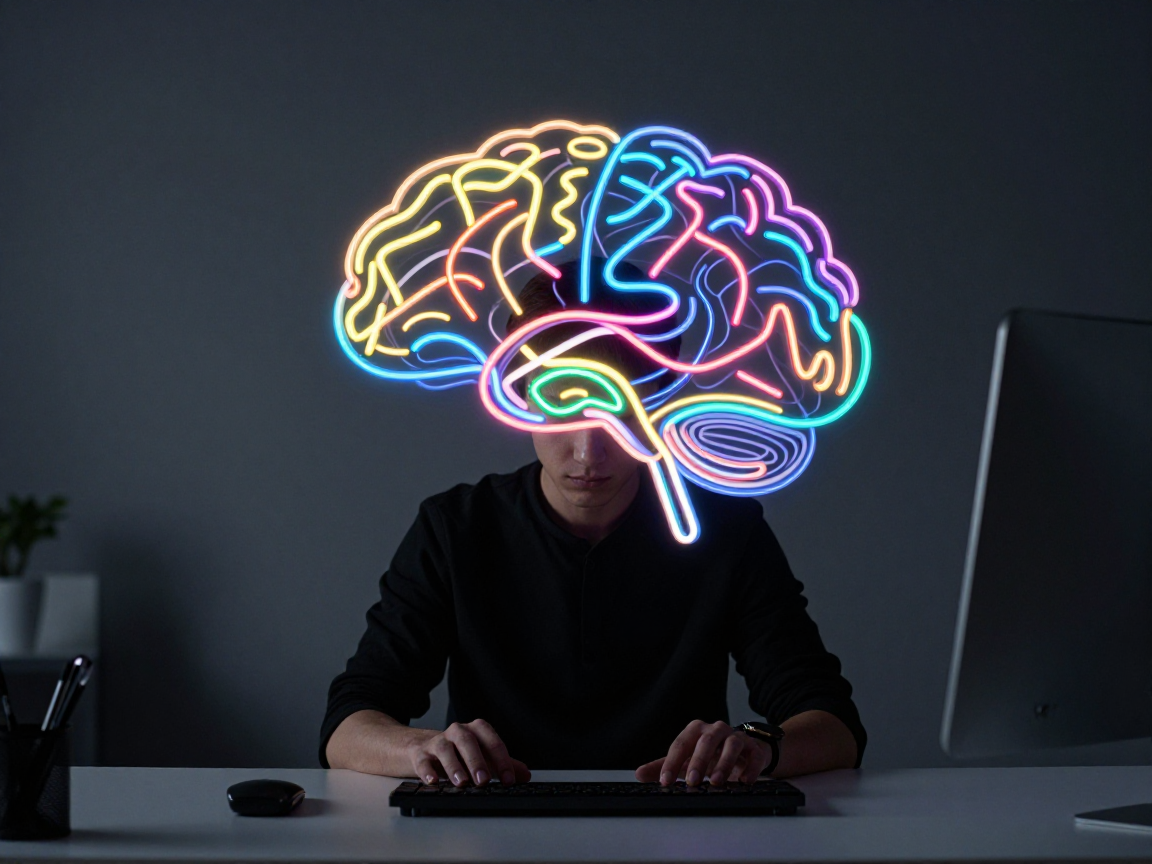
We have all experienced those rare moments where the world seems to fade into the background. Perhaps you were lost in a complex project, deep in a musical performance, or caught in the rhythm of a long run. Time begins to dilate—an hour feels like a minute, or a single second feels like an eternity. Your self-consciousness vanishes, and the task at hand becomes effortless. This is the state of flow, a term coined by psychologist Mihaly Csikszentmihalyi to describe a state of optimal experience where we feel our best and perform our best.
In our modern world of notifications, pings, and fragmented attention, reaching this state feels harder than ever. We often treat focus as a matter of willpower, a muscle we simply need to flex harder. However, the science of human performance suggests a different approach. Flow is not something you force; it is something you inhabit by creating the right conditions. By understanding and implementing specific flow state triggers, you can reliably shift your neurobiology from a state of distraction into a state of profound engagement. These triggers act as the access points to the zone, allowing you to bypass the friction of starting and stay immersed in your highest-value work.
The Neurobiology of the Flow State
Before diving into the specific flow state triggers, it is helpful to understand what is actually happening in your brain during these moments. For a long time, the prevailing myth was that flow was the result of the brain working harder or using more energy. In reality, it is the result of a process called transient hypofrontality. This is a fancy way of saying that the prefrontal cortex—the part of your brain responsible for complex logic, planning, and your inner critic—temporarily slows down.
When the inner critic is silenced, you stop second-guessing yourself. This allows for a massive surge in neurochemicals like dopamine, endorphins, anandamide, and serotonin. These chemicals not only make the experience feel incredibly rewarding but also enhance your ability to process information and recognize patterns. Using flow state triggers is essentially a way to hack your biology to encourage this shift from active, critical thinking to fluid, intuitive doing. It moves you from the "executive control" network into a state of radical presence where the action and awareness merge.
Internal Flow State Triggers: The Psychological Keys
The first category of flow state triggers involves your internal mental state. These are the psychological preconditions that you can cultivate within your own mind to prepare for deep work. They are the most accessible triggers because they don't require external tools—only a shift in how you frame your activity.
1. The Challenge-Skill Balance
This is perhaps the most critical of all flow state triggers. If a task is too easy, you become bored. If it is too difficult, you become anxious. Flow occurs in the "sweet spot" between boredom and anxiety. To trigger flow, the challenge of the task must slightly exceed your current skill level—specifically, research by the Flow Research Collective suggests the challenge should be about 4% greater than your skill. You want to feel stretched but not snapped. This creates a state of arousal that demands your full attention without overwhelming your nervous system.
2. Clear Goals
Flow requires knowing exactly what you are trying to achieve in the moment. When your goals are vague, your brain has to spend energy wondering what to do next, which keeps the prefrontal cortex active and prevents the state of transient hypofrontality. Clear goals allow the mind to stay anchored in the present. This doesn't mean you need a five-year plan; it means you need to know exactly what the "next right move" is. For example, instead of saying "I am going to work on my book," a clear goal would be "I am going to write the three-hundred-word introduction for chapter three."
3. Immediate Feedback
If you have to wait days to know if you are doing a good job, you will struggle to stay in flow. Flow state triggers rely on a tight loop between action and result. This is why video games are so effective at inducing flow; they provide instant feedback through scores, sounds, and visual cues. In your professional life, you can create this by breaking tasks into small pieces where the "win" is immediately apparent. If you are coding, the feedback is whether the code runs. If you are writing, it might be the completion of a specific argument or a perfectly turned phrase.
Environmental Flow State Triggers: Designing Your Space
Your surroundings play a massive role in your ability to concentrate. Environmental flow state triggers are external factors that signal to your brain that it is time to drop the distractions and enter the zone. By curating your environment, you reduce the cognitive load required to maintain focus.
4. High Stakes and Risk
Nature designed flow as a survival mechanism. When a mountain climber is hanging off a cliff, they don't need to "try" to focus; the stakes demand it. Risk naturally drives focus into the now. While you shouldn't put your life in danger to get a report done, you can introduce psychological stakes. Deadlines, public commitments, or even working on a project that feels personally meaningful can act as flow state triggers by increasing the level of norepinephrine in your system, which tightens focus.
5. Rich Environment
A rich environment is one that provides a high degree of novelty, complexity, and unpredictability. This is why many people find they can focus better in a bustling coffee shop than in a sterile, silent office. The slight unpredictability of the environment forces the brain to stay alert and engaged. However, this is a delicate balance. Too much noise becomes a distraction, while just enough—often referred to as "pink noise" or environmental texture—can facilitate the pop into flow. Experiment with different settings to see which level of complexity triggers your focus.
6. Deep Embodiment
Flow is not just a mental phenomenon; it is a physical one. Deep embodiment involves paying attention to multiple sensory streams at once. This is a primary reason why athletes and dancers find flow so easily. You can trigger this in sedentary work by being mindful of your posture, your breathing, or even using a standing desk. When your physical body is engaged and aligned with your mental task, the doorway to flow opens wider. Engaging the senses through tactile tools or specific lighting can also ground you in the physical space, preventing the mind from wandering into abstract anxieties.
The Social Flow State Triggers: Reaching Group Flow
Flow isn't just an individual pursuit. Have you ever been part of a team that just clicked? Where everyone knew exactly what to do without speaking? This is known as group flow. There are specific social flow state triggers that help teams reach this peak performance state together.
- Serious Concentration: The group must be focused on the same task without interruptions. One person checking their phone can break the collective flow of the entire team.
- Shared Goals: Everyone must be moving toward the same target with absolute clarity on what success looks like for the collective.
- Good Communication: Open, constant, and clear communication ensures no one is left behind. This is the "social feedback loop."
- The "Always Say Yes" Rule: Borrowed from improv comedy, this means accepting the contributions of others and building upon them ("Yes, and...") rather than shutting them down with criticism during the flow session.
- Sense of Control: Every member of the team should feel they have agency over their specific contribution while remaining part of the larger whole.
A Step-by-Step Framework to Design Your Flow Session
To make these flow state triggers practical, you need a repeatable system. You cannot simply wait for inspiration to strike. Use the following framework to build a "Flow Protocol" for your most important work.
- Identify Your Most Important Task (MIT): Choose the one thing that will make everything else easier or unnecessary. Ensure it hits that "challenge-skill" sweet spot.
- Define the "Done" State: Write down exactly what success looks like for this 90-minute block. This provides the "clear goals" trigger.
- Sanitize Your Environment: Turn off your phone, close unnecessary browser tabs, and put on noise-canceling headphones. You are removing the friction that prevents flow.
- Set a Timer for 90 Minutes: Research suggests that 90 minutes is the optimal length for a deep work session before the brain needs a break to replenish its neurochemical stores.
- Use a Physical Anchor: Start every flow session with the same ritual. This could be making a specific cup of tea, listening to a specific binaural beat track, or taking three deep, intentional breaths. This conditions your brain to recognize that a flow session is starting.
- Embrace the Struggle: The first 15 to 20 minutes of any session are usually difficult. This is the "struggle phase" where your brain is loading the necessary information and trying to find the rhythm. Do not quit during this phase. If you push through the frustration, the neurochemistry will eventually shift from cortisol and norepinephrine into dopamine and anandamide.
Overcoming the Enemies of Flow
Even with the best flow state triggers in place, certain habits can sabotage your efforts. The greatest enemy of flow is multitasking. Every time you check an email or glance at a text message, you incur what researchers call "attention residue." Your brain stays partially stuck on the last thing you looked at, making it impossible to achieve the intense focus required for flow. It can take up to 20 minutes to fully regain your previous level of focus after a single interruption.
Another enemy is the fear of failure. Flow requires a certain level of risk-taking and the willingness to make mistakes. If you are too focused on being perfect, your inner critic will remain active, preventing the transient hypofrontality necessary for the state. To combat this, remind yourself that the flow session is a "drafting phase" where judgment is suspended in favor of execution. You can edit, critique, and refine later; during the flow session, the only goal is to stay in the stream of action.
The Long-Term Benefits of a Flow-Centric Life
Mastering flow state triggers is about more than just getting more work done. Studies show that people who experience flow regularly are generally happier, more creative, and more resilient. Flow is an autotelic experience, meaning it is intrinsically rewarding. The activity itself becomes the reward, regardless of the outcome. This creates a sustainable loop of motivation that doesn't rely on external validation or material rewards.
By intentionally structuring your day around these triggers, you move away from the "survival mode" of reacting to everyone else's priorities. You begin to reclaim your time and your cognitive sovereignty. Whether you are a writer, a coder, an athlete, or a parent, learning to access the zone on demand is one of the most powerful skills you can develop in the 21st century. It is the antidote to the burnout and fragmentation that define the modern workplace.
As you begin to experiment with these flow state triggers, remember that consistency is key. You are essentially training your nervous system to operate at a higher level of efficiency. Start small, identify the triggers that work best for your unique personality, and build your life around the moments that truly matter. Flow is not a gift for the lucky few; it is a state of being available to anyone willing to create the space for it.