Reclaiming Your Body: Why Trauma-Sensitive Yoga is the Missing Link for True Healing
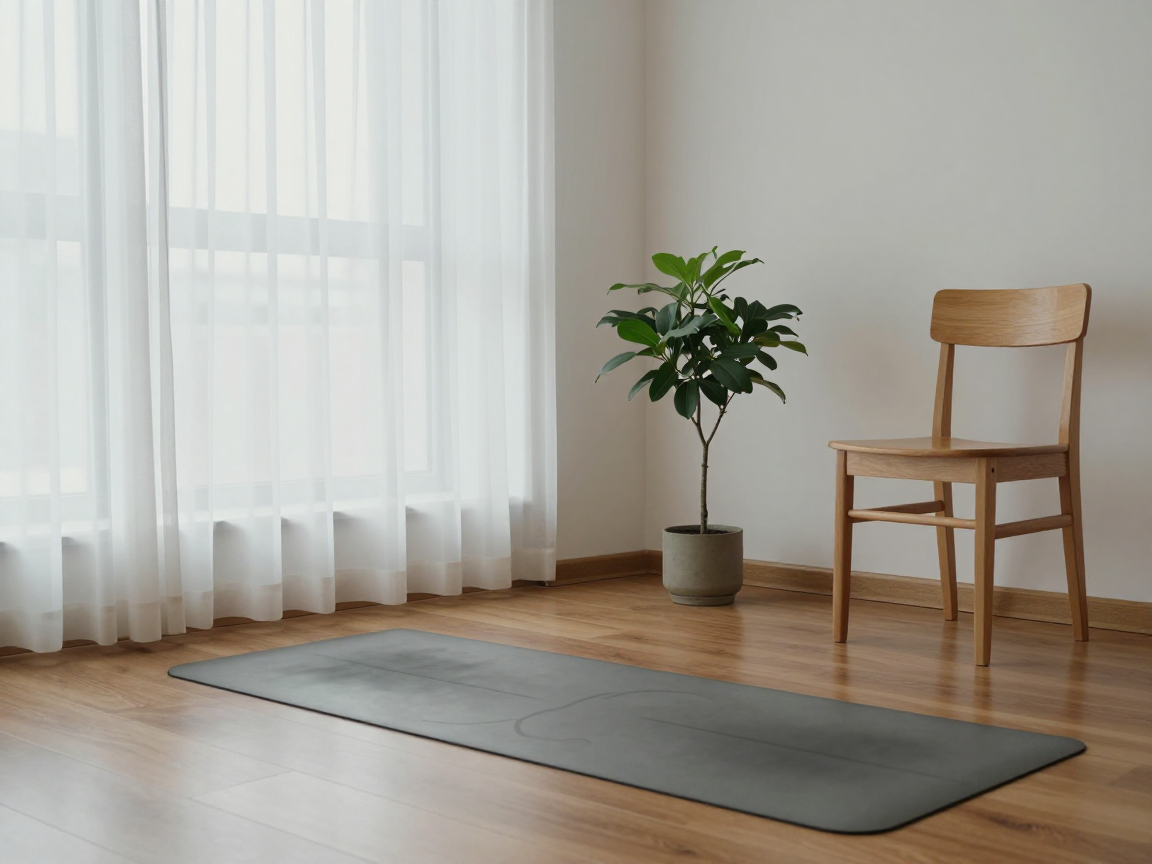
For many people living with the aftermath of a distressing event or prolonged periods of high stress, the body can feel like a foreign or even hostile environment. We are often told that time heals all wounds, yet for survivors of trauma, time seems to stand still in the nervous system. You might find yourself stuck in a loop of hypervigilance, where every sudden noise is a threat, or perhaps you feel a persistent sense of numbness, as if you are watching your life from behind a thick pane of glass. This disconnection is not a personal failing; it is a sophisticated survival mechanism designed to protect you from pain that felt too big to process at the time.
Traditional talk therapy is an invaluable tool for understanding the narrative of our lives, but it often stops at the neck. We can analyze our past for years, yet still feel our hearts race or our breath catch when triggered. This is where trauma-sensitive yoga enters the conversation. Unlike standard fitness-based yoga, this practice is not about flexibility, aesthetics, or mastering a difficult pose. It is a clinical intervention designed specifically to help individuals reconnect with their physical selves in a way that feels safe, predictable, and entirely within their own control.
The Difference Between Standard Yoga and Trauma-Sensitive Yoga
If you have ever walked into a mainstream yoga studio, you are likely familiar with the environment: mirrors on the walls, upbeat music or perhaps deep chanting, and an instructor who gives direct commands like "place your foot here" or "push through the discomfort". For many, this is a healthy challenge. For someone living with PTSD or complex trauma, however, this environment can be a minefield. Being told exactly what to do with your body by an authority figure can mirror the power dynamics of past abuse. Physical adjustments - where a teacher walks around and touches students to correct their form - can be deeply triggering.
Trauma-sensitive yoga, or TCTSY (Trauma Center Trauma-Sensitive Yoga), was developed specifically to address these issues. The primary goal is not to get a workout, but to cultivate a sense of agency. In a trauma-sensitive yoga session, there are no physical adjustments. The facilitator does not walk around the room; instead, they stay on their own mat, practicing alongside you. The language used is purely invitational. Instead of hearing "do this", you might hear "if you like, you might try moving your arm", or "you are welcome to keep your eyes open or closed". This shift in language returns the power to the practitioner, allowing them to make choices about their own body perhaps for the first time in a very long time.
Rebuilding Interoception: Learning to Feel Again
One of the most profound impacts of trauma is the loss of interoception. Interoception is the internal sense that tells us what is happening inside our bodies - whether we are hungry, tired, cold, or even if we need to use the bathroom. When we experience trauma, the brain often turns down the volume on these internal signals because the sensations of fear and pain are too overwhelming to bear. Over time, this leads to a state of being "numb from the neck down".
Trauma-sensitive yoga works to slowly turn that volume back up. By engaging in gentle, repetitive movements and being asked to notice what those movements feel like, you begin to rebuild the neural pathways between your body and your brain. A facilitator might ask, "As you lift your heel, do you notice any sensation in the back of your leg?" There is no right or wrong answer. If the answer is "no, I feel nothing", that is a valid observation. The goal is simply to notice. This process of noticing without judgment is the first step in moving from a state of survival to a state of embodiment.
The Five Core Pillars of a Trauma-Sensitive Practice
To understand how trauma-sensitive yoga functions as a healing modality, it helps to look at the specific framework that guides every session. These pillars are designed to create an environment that is the polar opposite of the chaotic, unpredictable nature of a traumatic event.
- Invitational Language: Every suggestion is an invitation, not a command. Using phrases like "I invite you to" or "when you are ready" reinforces the idea that the participant is in charge of their experience.
- Choice-Making: Participants are given multiple options for every movement. This allows the individual to practice making decisions based on what their body needs in that exact moment, fostering a sense of self-efficacy.
- Shared Authentic Presence: The facilitator is not an all-knowing guru. They are a human being sharing the space. By practicing the movements with the students, the facilitator creates a sense of safety and equality, breaking down traditional power hierarchies.
- Non-Coercion: In many exercise environments, there is a subtle pressure to "keep up" or perform. Trauma-sensitive yoga removes this pressure entirely. If a participant chooses to sit still for the entire session, that is considered a successful practice because they made a choice that felt right for them.
- Focus on the Present Moment: Trauma often keeps us stuck in the past or worrying about the future. TSY uses the physical body as an anchor to the "here and now". Noticing the feeling of feet on the floor or the rhythm of breath helps ground the nervous system in the safety of the current moment.
The Science of the Nervous System and Somatic Healing
Why does moving your body in a specific way help heal deep-seated psychological wounds? The answer lies in the polyvagal theory and our autonomic nervous system. When we experience trauma, our nervous system can become stuck in a state of "fight or flight" (sympathetic activation) or "freeze" (dorsal vagal shutdown). In these states, the prefrontal cortex - the part of the brain responsible for logic, language, and planning - often goes offline.
Trauma-sensitive yoga helps to expand what clinicians call the "window of tolerance". This is the zone where we can handle the ups and downs of life without becoming overwhelmed or shutting down. By gently introducing physical sensations and movement in a controlled environment, we teach the nervous system that it is possible to feel sensation without being in danger. We are essentially retraining the amygdala to recognize that the present moment is safe. This bottom-up approach - starting with the body to influence the brain - often succeeds where top-down approaches (like talk therapy) may struggle, especially for those with non-verbal or early childhood trauma.
What to Expect in a Trauma-Sensitive Yoga Session
If you are considering trying trauma-sensitive yoga, it is helpful to know that it will likely look very different from the yoga you see on social media. There are no mirrors, as seeing one's own reflection can sometimes lead to self-criticism or dissociation. The lighting is often soft and consistent. There is no physical contact from the instructor, and the poses are generally kept simple to avoid the stress of complex coordination.
During the session, the facilitator will offer various forms. You might be invited to sit on a chair, lie on a mat, or stand. The movements might involve simple stretches, neck rolls, or lifting your arms. Throughout the practice, the facilitator will use "inquiry-based" cues. Instead of saying "stretch your side", they might say, "as you lean to the left, you might notice a stretching sensation along your ribs; or you might not notice much at all". This lack of expectation creates a space where you can simply exist without needing to perform.
Creating a Safe Space at Home: A Checklist for Self-Practice
While working with a certified TCTSY facilitator is highly recommended, you can begin to integrate the principles of trauma-sensitive yoga into your own life. Use the following checklist to create a practice that feels supportive and safe:
- Clear the Environment: Choose a space where you are unlikely to be interrupted. If possible, face the door so you can see who is entering the room, which can help reduce hypervigilance.
- Focus on Comfort: Wear clothes that allow you to move comfortably. Have props nearby - like blankets, pillows, or a sturdy chair - so you can adapt any movement to fit your needs.
- Set a Time Limit: Even five minutes of intentional, choice-based movement can be beneficial. You don't need to commit to a full hour if that feels overwhelming.
- Practice Self-Observation: Before you start, ask yourself, "How does my body feel right now?" After you finish, ask the same question. The goal is not to change the feeling, but to acknowledge it.
- Give Yourself an Out: Remind yourself before you begin that you can stop at any time. Giving yourself permission to quit is a powerful exercise in agency.
Moving Toward Embodiment
Healing from trauma is rarely a linear process. It is a slow, often quiet journey of reclaiming the parts of yourself that were lost to survival. Trauma-sensitive yoga offers a bridge back to the self. It provides a laboratory where you can experiment with making choices, noticing sensations, and inhabiting your own skin without the pressure to be "fixed".
When we begin to trust our bodies again, the world starts to change. We become better at setting boundaries because we can actually feel when someone is overstepping. We become better at self-soothing because we recognize the early signs of a nervous system spike. Most importantly, we begin to realize that while the trauma happened to us, it is not who we are. By using trauma-sensitive yoga as a tool for exploration, you are not just exercising; you are participating in a profound act of self-reclamation. You are telling your nervous system, "I am here, I am safe, and I am in control".