When God Feels Far Away: How to Navigate the Complex Intersection of Trauma Recovery and Faith
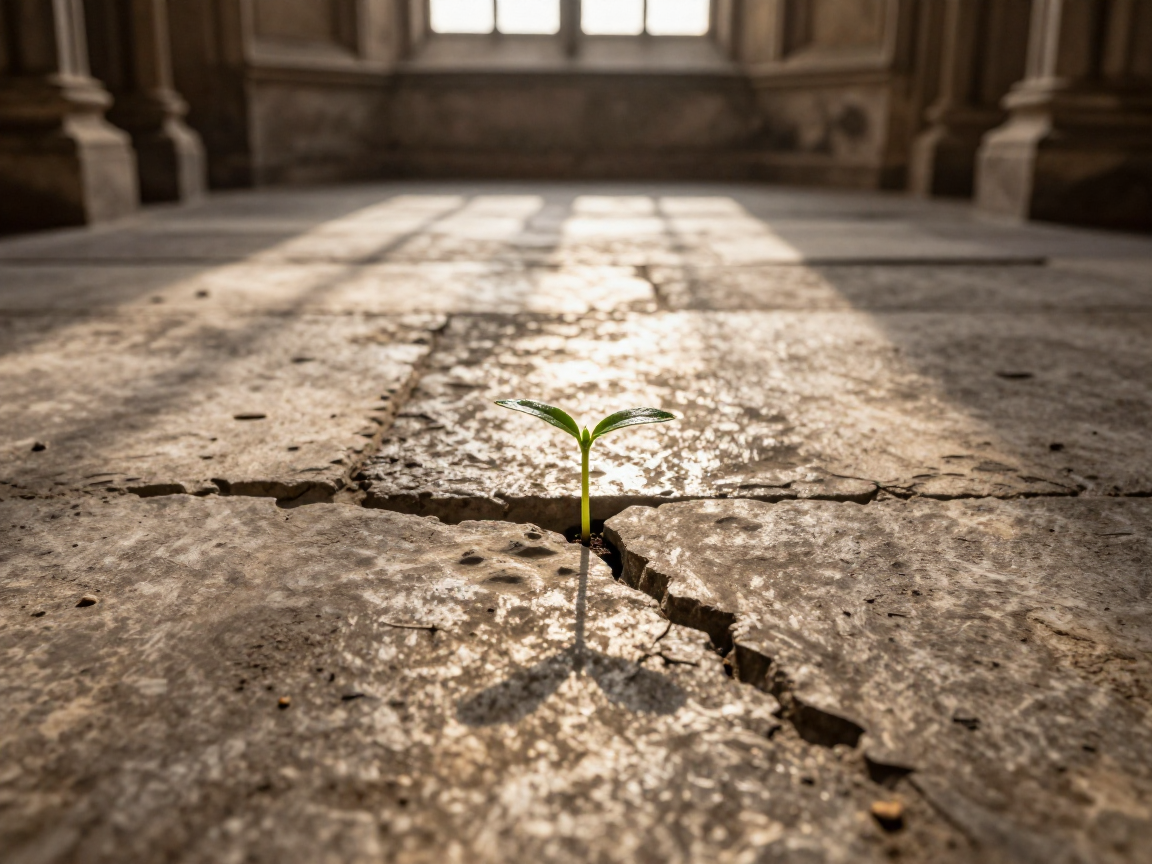
Trauma does not just impact the mind; it leaves a lasting imprint on the soul and the nervous system. When a person experiences an overwhelming event, their internal compass for safety and meaning is often recalibrated to detect threat everywhere. For many people, this shift creates a profound tension between their lived experience of pain and their long - held spiritual beliefs. The journey of trauma recovery and faith is rarely a straight line of ascending peace. Instead, it is often a winding, difficult path marked by questions that do not have easy answers.
For some, faith provides a bedrock of support during the darkest hours. For others, the trauma itself may have been tied to religious institutions or spiritual figures, complicating the very source of comfort they once relied upon. Navigating the intersection of trauma recovery and faith requires an approach that honors the complexity of the human brain while making space for the mysteries of the divine. It is a process of deconstructing what was lost and slowly, intentionally, rebuilding something that can withstand the weight of reality.
The Physiological Reality of Spiritual Doubt
One of the most common struggles in trauma recovery and faith is the feeling of spiritual numbness or abandonment. It is frequent for survivors to feel as though their prayers are hitting a brass ceiling or that God has gone silent. While this is often interpreted as a spiritual failure or a lack of belief, it is frequently a physiological response to a dysregulated nervous system. When the body is in a state of 'fight, flight, or freeze', the prefrontal cortex - the part of the brain responsible for complex thought and spiritual connection - often goes offline to prioritize survival.
In this state, the body is focused entirely on the present threat. It is difficult to feel a sense of 'transcendence' or 'divine love' when your amygdala is screaming that you are in danger. Understanding that spiritual dryness can be a symptom of a protective biological response can be incredibly liberating. It shifts the narrative from 'I am failing God' to 'My body is trying to keep me safe'. Trauma recovery and faith must involve a deep compassion for the body's limitations during the healing process.
Deconstructing the Trap of Spiritual Bypassing
In many religious circles, there is a temptation to use spiritual truths to 'bypass' the hard work of emotional processing. This is known as spiritual bypassing. It often sounds like well - intentioned advice: 'Just have more faith', 'Forgive and forget', or 'God won't give you more than you can handle'. While these sentiments may be rooted in scripture or tradition, when applied to deep psychological wounding, they can be incredibly harmful.
Spiritual bypassing suggests that if you are still hurting, you are simply not 'spiritual' enough. This creates a secondary layer of trauma: shame. True trauma recovery and faith require us to sit with the 'lament'. Throughout history, faith traditions have included a language for protest and grief. By acknowledging that pain is real and that healing takes time, we move away from a fragile, performative faith and toward one that is rugged and honest. Healing is not about suppressing the pain with platitudes; it is about integrating the pain into a larger story of resilience.
A Framework for Integrated Healing
To move forward, it is helpful to look at trauma recovery and faith through a holistic lens. We cannot heal the spirit while ignoring the body, and we cannot heal the mind while ignoring our search for meaning. The following framework, often called the 'Three Pillars of Integrated Recovery', can help guide the process.
- Safety and Stabilization: Before any deep spiritual work can happen, the survivor must feel safe in their environment and their body. This involves grounding techniques, establishing boundaries, and finding physical security. Faith at this stage might simply look like the belief that 'I am allowed to exist and be safe'.
- Remembrance and Mourning: This is the stage where the story is told and the grief is felt. In the context of trauma recovery and faith, this often involves 'Lament'. Lament is the spiritual practice of telling God exactly how bad things are without censoring the anger or the despair. It is an act of profound intimacy to be honest about one's pain.
- Reconnection and Growth: Eventually, the survivor begins to look toward the future. This is where faith can be redefined. It is no longer a 'fair - weather' belief system, but a 'post - traumatic' faith that understands suffering but still chooses to hope.
Practical Steps for Balancing Recovery and Belief
If you find yourself struggling to bridge the gap between your spiritual life and your mental health journey, consider the following practical shifts. These are designed to help you stay grounded while remaining open to spiritual growth.
- Practice Somatic Prayer: Instead of traditional spoken prayer, which can sometimes feel abstract or frustrating, try 'body - based' practices. This could be walking in nature, focusing on your breath as a gift of life, or using repetitive movements like knitting or painting as a form of meditation.
- Curate Your Community: Not every spiritual community is equipped to handle the nuances of trauma. Seek out groups or leaders who understand the 'trauma - informed' perspective. A safe community will never pressure you to 'get over it' or shame you for your symptoms.
- Reclaim Rituals on Your Own Terms: If certain religious rituals trigger a trauma response, it is okay to step away from them. You can create new, smaller rituals that feel safe. Lighting a candle, reading a specific poem, or sitting in silence can be your 'holy ground' for now.
- Prioritize Professional Help: Faith is a powerful tool, but it is not a substitute for clinical intervention. Working with a therapist who respects your faith but understands the mechanics of the brain is often the most effective way to navigate trauma recovery and faith simultaneously.
The Power of Lament as a Spiritual Tool
In many modern spiritual contexts, there is an overemphasis on 'victory' and 'joy'. However, a significant portion of ancient spiritual texts is dedicated to 'Lament'. Lament is not just crying; it is a structured way of bringing a complaint to the divine. It acknowledges that the world is broken and that the current situation is unacceptable.
For someone in trauma recovery and faith, lament provides a 'safety valve'. It allows for the expression of righteous anger. Anger is often a sign that you value yourself enough to know that what happened to you was wrong. By bringing that anger into your spiritual life, you are not moving away from faith; you are bringing your whole, authentic self into it. A faith that cannot handle your anger is a faith that is too small for your life.
Moving Toward Post - Traumatic Growth
While trauma is something no one would choose, there is a phenomenon known as 'Post - Traumatic Growth'. This does not mean the trauma was 'good'. Rather, it means that through the process of struggling with the crisis, the individual develops a deeper sense of personal strength, improved relationships, and a more profound spiritual life.
In the realm of trauma recovery and faith, this growth often manifests as a shift from 'certainty' to 'trust'. Certainty is fragile because it relies on everything going right. Trust is resilient because it exists even when things go wrong. A survivor's faith after trauma is often less about having all the answers and more about being able to sit in the questions without being consumed by them.
Building a Sustainable Spiritual Practice
Recovery is a marathon, not a sprint. Your spiritual practices should reflect that. If you find that reading long texts or attending long services is too much for your nervous system, give yourself permission to do less. 'Micro - practices' can be incredibly effective. Five minutes of intentional breathing, a single sentence of gratitude, or a moment of acknowledging the sun on your skin can be a profound spiritual act.
Remember that the goal of trauma recovery and faith is not to return to the person you were before the event. That person no longer exists. The goal is to become a new, integrated version of yourself - one who carries the scars of the past but also the wisdom and the depth that only comes from having walked through the fire.
Your healing is not a sign that your faith was weak; it is a testament to the fact that you are human, and your survival is a testament to your incredible strength. By honoring both your psychological needs and your spiritual longing, you create a foundation for a life that is not just recovered, but truly redeemed in every sense of the word.