Decoding the Thoth Tarot: Why This Masterpiece of Alchemy is the Ultimate Mirror for Your Soul
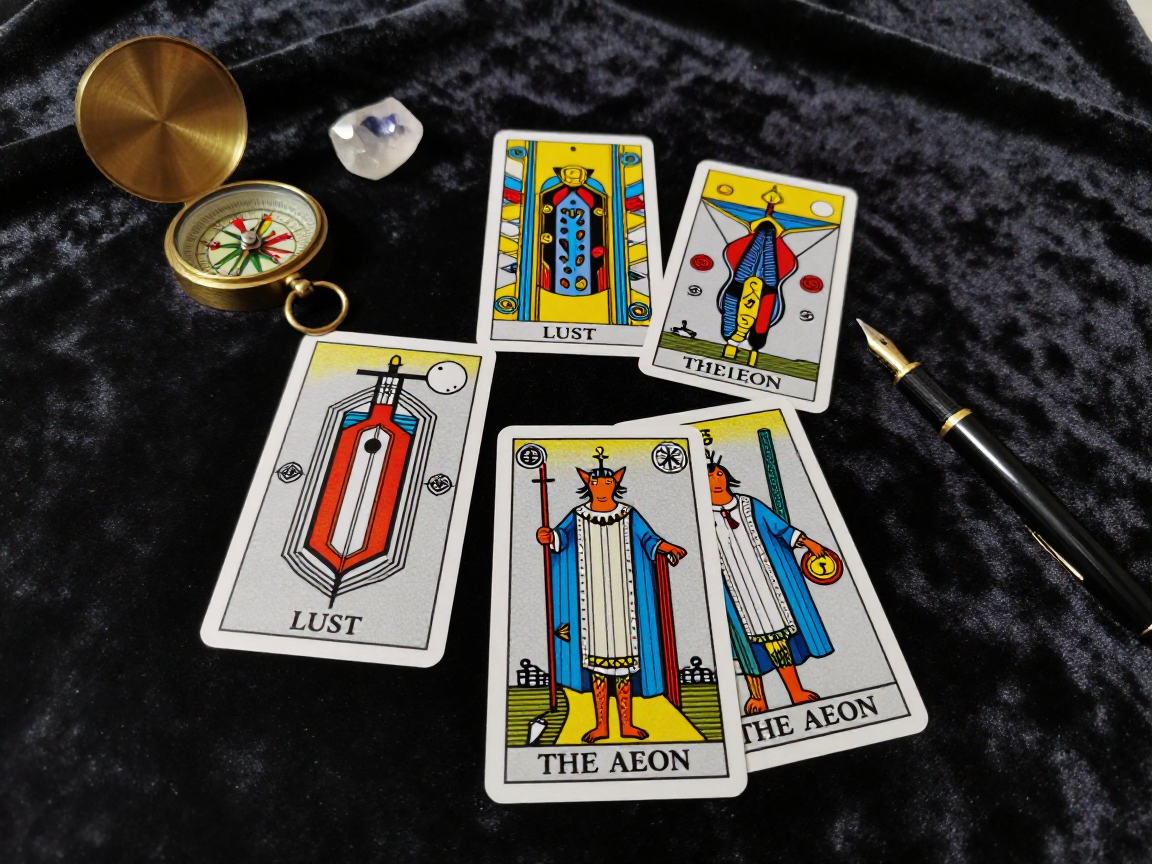
For many tarot enthusiasts, the first encounter with the thoth tarot is a moment of profound sensory overload. Unlike the familiar, pastoral scenes of the Rider-Waite-Smith deck, the thoth tarot vibrates with a different kind of energy. It is geometric, abstract, and unapologetically intense. The colors seem to pulse from the card stock, and the symbols - drawn from astrology, Egyptian mythology, and alchemy - layered upon one another create a visual language that feels ancient and futuristic all at once.
While some beginners find the deck intimidating, others find it to be the only system that truly resonates with the complexities of the modern psyche. Created by Aleister Crowley and Lady Frieda Harris during the mid - 20th century, this deck was never intended to be just another fortune-telling tool. It was designed as a comprehensive map of the human soul and the cosmic laws that govern it. To work with the thoth tarot is to engage in a conversation with your subconscious, using a lexicon of universal archetypes that bypass the logical mind and speak directly to the spirit.
The Artistic Alchemy of Lady Frieda Harris
One cannot discuss the thoth tarot without acknowledging the incredible labor of Lady Frieda Harris. While Crowley provided the intellectual framework and the esoteric correspondences, it was Harris who spent five years meticulously painting the 78 cards. Her style, influenced by projective geometry and Art Deco, gives the deck a sense of movement and multidimensionality that was revolutionary for its time.
Every line and shade in the thoth tarot is deliberate. Harris used a specific technique to ensure that the geometry of the cards reflected the mathematical principles behind the occult concepts Crowley described. This collaboration was not always easy - Harris often pushed back against Crowley's more abrasive ideas, resulting in a deck that feels balanced. It contains the raw power of Crowley's magickal philosophy tempered by Harris's refined artistic intuition. This synergy is exactly why the deck remains a masterpiece of occult art nearly a century after its inception.
How the Thoth Tarot Differs from Traditional Decks
If you are coming from a traditional tarot background, the thoth tarot will challenge your assumptions. Several major shifts occur in the structure of the deck that change the way a reader interprets the cards. These are not merely cosmetic changes; they reflect a specific philosophical worldview.
The Major Arcana Renamed
In the thoth tarot, several of the Major Arcana cards have been renamed to better reflect their esoteric meaning.
- Adjustment instead of Justice: Crowley felt that "Justice" was too narrow a term, preferring the idea of equilibrium and the constant balancing of the universe.
- Lust instead of Strength: This is perhaps the most famous change. Rather than the quiet taming of a lion, "Lust" represents the ecstatic union of the self with the creative fires of life.
- The Aeon instead of Judgment: Replacing the Christian imagery of the resurrection, The Aeon signifies the birth of a new era and the awakening of a higher consciousness.
- Art instead of Temperance: This card focuses on the alchemical process of mixing opposites to create something entirely new and divine.
The Minor Arcana and the Small Cards
In the thoth tarot, the Minor Arcana - often called the "Small Cards" - do not feature the narrative, character-driven scenes found in other decks. Instead, they use evocative, abstract arrangements of the suit symbols (Wands, Cups, Swords, and Disks) set against backgrounds that suggest the psychological state of the card. Each small card is also assigned a specific keyword printed at the bottom, such as "Cruelty", "Success", or "Indolence". These keywords act as a psychological anchor, helping the reader bypass the need for memorization and move straight into intuition.
Navigating the Four Worlds and Astrology
The thoth tarot is deeply rooted in the Qabalah and the Tree of Life. Each card corresponds to a specific path or sephira on the tree, and each suit corresponds to one of the four elements and the four Qabalistic worlds.
- Wands (Fire): Represents the world of Atziluth, the realm of pure spirit, will, and the initial spark of creation.
- Cups (Water): Represents Briah, the world of creation, emotions, and the subconscious mind.
- Swords (Air): Represents Yetzirah, the world of formation, intellect, conflict, and logic.
- Disks (Earth): Represents Assiah, the world of action, the physical body, and material manifestation.
Furthermore, the thoth tarot integrates astrology more deeply than almost any other deck. Each of the Minor Arcana (numbered 2 through 10) represents a specific decan of the zodiac. For example, the Three of Wands represents the first decan of Aries, ruled by the Sun. This means that a reader who understands basic astrology can unlock layers of meaning in the cards that go far beyond simple keyword associations. You are not just looking at a card; you are looking at a planetary energy acting through a zodiacal sign.
A Framework for Your First Thoth Tarot Reading
Because the thoth tarot is so dense with information, it helps to have a structured approach when you first sit down with the deck. Use this five-step framework to navigate a reading without becoming overwhelmed by the symbolism.
- Clear the Mental Noise: Before shuffling, take a moment to center yourself. The thoth tarot responds best to a focused, calm mind. State your question clearly, focusing on "why" or "how" rather than "when".
- Observe the Color Palette: Before looking at the specific symbols, look at the dominant colors in the spread. Are they fiery reds and oranges? Cooling blues? This gives you an immediate energetic temperature of the situation.
- Identify the Element Balance: Look at the distribution of suits. A reading heavy in Swords suggests a situation dominated by thoughts and communication, while a reading heavy in Disks points toward physical health or financial matters.
- Connect the Keywords: Look at the keywords on the Small Cards. Do not treat them as final judgments, but as starting points for a conversation. If you see "Interference", ask yourself where you are allowing outside opinions to cloud your judgment.
- Synthesize with the Major Arcana: The Major Arcana in your spread represent the "Big Picture" or the archetypal forces at play. If a Major Arcana card appears, it suggests that the situation is part of a larger spiritual lesson that transcends the mundane details of the Minor Arcana.
The Court Cards: A Different Hierarchy
One of the most confusing aspects for newcomers is the change in the Court Cards. In the thoth tarot, the traditional Page, Knight, Queen, and King are replaced by the Princess, Prince, Queen, and Knight.
- The Knight (Fire of the suit): He is the active, aggressive force, often depicted on horseback. He represents the King in other systems.
- The Queen (Water of the suit): She is the receptive, nurturing, and reflective power of the element.
- The Prince (Air of the suit): He represents the intellectual application and the movement of the element.
- The Princess (Earth of the suit): She represents the final manifestation and the grounding of the element's energy.
Understanding this hierarchy is vital because it changes the "personality" of the reading. When a Prince appears, he is not just a young man; he is the active intellect of that suit attempting to manifest a goal.
Why We Still Use the Thoth Tarot Today
In a world that often feels superficial, the thoth tarot offers a path toward depth. It does not shy away from the darker aspects of human experience - cards like "Failure" or "Disaster" are present because they are part of the human condition. However, the deck also provides the tools to transform that darkness into light through the process of alchemy.
Reading with the thoth tarot is an act of courage. It asks you to look past the surface of your life and confront the underlying energetic patterns that create your reality. It demands that you take responsibility for your spiritual evolution. Whether you are using it for daily guidance or deep meditative work, the thoth tarot remains one of the most sophisticated and effective mirrors for the soul ever created. It is not just a deck of cards; it is an invitation to explore the vast, intricate architecture of your own existence.