The Hidden Language of Perception: How to Trust Your Third Eye Intuition When Logic Fails
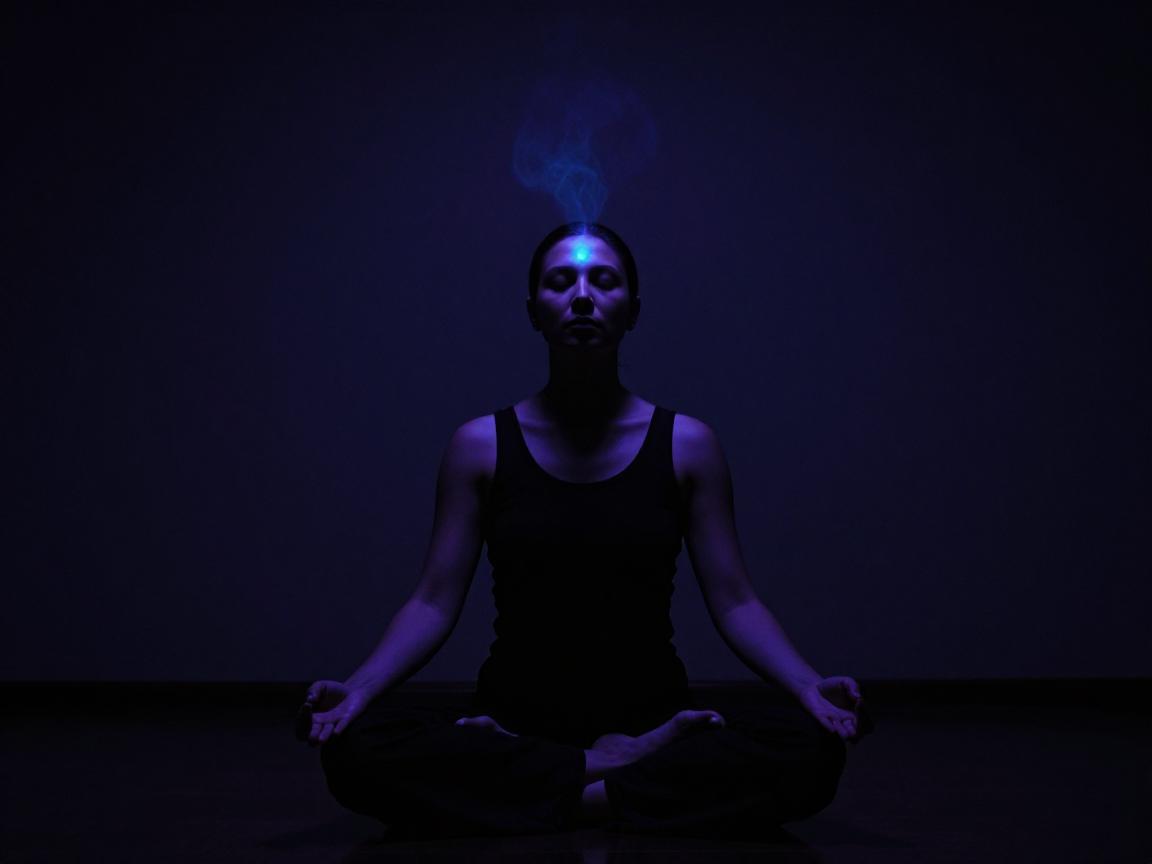
We have all experienced those moments where logic falls short. You might be standing at a crossroads in your career, looking at a spreadsheet of pros and cons that tells you to stay put, yet a persistent, quiet pull in your chest tells you to walk away. Or perhaps you meet someone new, and despite their perfectly polished exterior, an internal alarm bells sounds without a clear reason. This is not just a random firing of neurons; it is the early stirrings of third eye intuition. It is a form of intelligence that operates beyond the five physical senses, acting as a bridge between the conscious mind and the deeper truths of the universe.
While we often hear people talk about a "gut feeling", third eye intuition is slightly different. If the gut is our survival radar - focusing on safety and immediate reaction - the third eye is our visionary lens. Located at the brow point, it is associated with the Ajna chakra in Eastern traditions and the pineal gland in Western biological contexts. It is the seat of clarity, foresight, and the ability to see the "big picture" when the details of life feel overwhelming. Developing this faculty is not about becoming a psychic overnight; it is about reclaiming the natural ability to perceive reality without the distortion of fear, ego, or social conditioning.
Understanding the Mechanism of Third Eye Intuition
To trust your third eye intuition, it helps to understand what it actually is. Metaphysically, the third eye is the sixth chakra, known as Ajna, which translates to "command" or "perceive". It is considered the center of internal command, where we synthesize what we have learned with what we feel. When this center is balanced, you experience a sense of mental clarity and a profound trust in your own path. You no longer feel the need to ask twenty different people for their opinion because you have access to a direct line of internal truth.
Biologically, many researchers and spiritual practitioners point toward the pineal gland - a small, pinecone - shaped endocrine gland located deep in the brain. Interestingly, the pineal gland contains vestigial photoreceptors, similar to those found in our physical eyes. This has led many to refer to it as the "seat of the soul" or the biological counterpart to the third eye. This gland produces melatonin, which regulates our sleep cycles and our relationship with light and dark. When we talk about "awakening" our third eye intuition, we are often talking about decalcifying this gland and quieting the noise of the nervous system so we can receive the subtle signals it sends.
Third eye intuition does not usually speak in loud, booming voices. Instead, it communicates through symbols, sudden "downloads" of information, or a deep sense of resonance. It is that feeling of a puzzle piece finally clicking into place. It is less about "thinking" and more about "knowing".
Why We Lose Touch with Our Inner Vision
In our modern world, the third eye is under constant siege. We live in an era of hyper - stimulation where our attention is the most valuable commodity. Between the blue light of screens, the constant barrage of notifications, and the pressure to produce results, our internal visionary capacity often goes dormant. When we are stuck in a state of "fight or flight", the body prioritizes the lower chakras - survival, reproduction, and basic power - leaving little energy for the higher faculties of intuition.
Furthermore, we are taught from a very young age to prioritize logic above all else. We are told that if a conclusion cannot be charted on a graph or proven with a double - blind study, it is "unreliable". This cultural dismissal of the intangible creates a barrier. We begin to second - guess our third eye intuition, labeling it as "imagination" or "paranoia". Over time, the channel becomes clogged with the debris of self - doubt. Reawakening it requires a conscious decision to value your subjective experience as much as objective data.
5 Signs Your Third Eye Intuition is Trying to Communicate
Recognizing the language of the third eye is the first step toward mastering it. Here are five common ways this intuitive faculty manifests in your daily life:
- Sudden Clarity During Mundane Tasks: You might be washing dishes or driving when a solution to a complex problem suddenly appears, fully formed. This is the third eye bypassing the analytical mind.
- Increased Synchronicity: You think of a specific person and they text you moments later, or you see recurring number patterns. This is a sign that your internal vision is aligning with external reality.
- Vivid or Lucid Dreams: As the third eye activates, your dream life often becomes more intense. These dreams may feel more "real" than your waking life and often carry symbolic messages regarding your current path.
- Physical Sensations Between the Brows: You may feel a slight pressure, tingling, or warmth in the center of your forehead. This is often an energetic indicator that the Ajna chakra is being stimulated.
- Heightened Sensitivity to Environments: You might walk into a room and immediately feel the "vibe" of the space, sensing the emotional residue of an argument or the peace of a harmonious home before anyone says a word.
The S.I.G.H.T. Framework for Deciphering Intuitive Hits
One of the biggest challenges with third eye intuition is knowing how to interpret the signals you receive. To help bridge the gap between a vague feeling and actionable wisdom, you can use the S.I.G.H.T. framework:
- Stillness: Intuition cannot be heard over the roar of a busy mind. When you feel a nudge, stop. Close your eyes and take three deep breaths. Create a vacuum of silence so the signal can emerge.
- Inquiry: Ask yourself a direct question. "Is this hit coming from a place of fear or a place of truth?" Third eye intuition feels expansive and neutral, while fear feels restrictive and urgent.
- Gathering Symbols: Notice what visuals appear in your mind's eye. Does the situation feel like a "heavy fog" or a "clear path"? Don't judge the images; just observe them.
- Honing the Resonance: Check in with your body. When you think about a specific choice, does your forehead feel open or tight? Resonance is the physical "yes" to an intuitive "maybe".
- Testing the Insight: Start small. If your intuition tells you to take a different route to work, do it. By acting on small intuitive hits, you build the neural pathways (and the confidence) to trust it with larger life decisions.
Practical Exercises to Strengthen Your Third Eye
Just like any muscle, your third eye intuition requires consistent exercise. If it has been dormant for years, it may take time to regain its former strength. Here are three practical ways to stimulate your inner vision daily:
1. Trataka (Candle Gazing)
Trataka is a traditional yogic purification method that involves gazing at a single point, typically a candle flame. Place a candle at eye level, about three feet away. Gaze at the flame without blinking for as long as possible until your eyes begin to water. Then, close your eyes and focus on the "after - image" of the flame in the space between your eyebrows. This practice improves concentration and directly stimulates the pineal area.
2. Indigo Visualization
The color associated with the third eye is indigo - a deep, velvety blue - purple. During meditation, imagine a small sphere of indigo light glowing in the center of your head. With every inhale, see this light becoming brighter and more vibrant. With every exhale, imagine it clearing away any mental "fog" or confusion. This simple visualization helps align your energetic frequency with the Ajna chakra.
3. The Intuition Journal
Keep a small notebook specifically for "hits". Every time you have a hunch, write it down, no matter how insignificant it seems. Later, go back and check if the hunch was accurate. This provides concrete evidence for your logical mind, proving that your third eye intuition is a reliable source of information. Over time, this record - keeping builds an unbreakable trust in your internal guidance system.
Discerning Intuition from Anxious Thought
A common pitfall is mistaking anxiety for third eye intuition. Anxiety is usually repetitive, loud, and focused on "what if" scenarios involving catastrophe. It often carries a frantic energy. Intuition, by contrast, is usually singular. It says something once, clearly and calmly. Even if the message is a warning, it carries a sense of "be aware" rather than "be terrified".
If you find yourself cycling through the same worried thoughts, that is likely your ego trying to control the future. When your third eye intuition speaks, it often feels like a "quiet bell" ringing in the distance. It doesn't need to argue with you. It simply presents the truth and leaves it there for you to pick up.
Moving Forward with Your Inner Sight
Integrating third eye intuition into your life doesn't mean you stop using your brain. Rather, it means you have two sets of eyes - the physical eyes that see the world as it appears, and the inner eye that sees the world as it truly is. When you combine the power of logical analysis with the depth of intuitive insight, you become far more effective in your personal and professional life. You move through the world with a sense of quiet authority, grounded in the knowledge that you have the tools to navigate any uncertainty. Trusting this inner sight is a journey of coming home to yourself, discovering that all the answers you have been seeking are already held within the quiet spaces of your own mind.