Why Your Tarot Readings Aren't Stickings and How Tarot Journaling Unlocks Deep Personal Insight
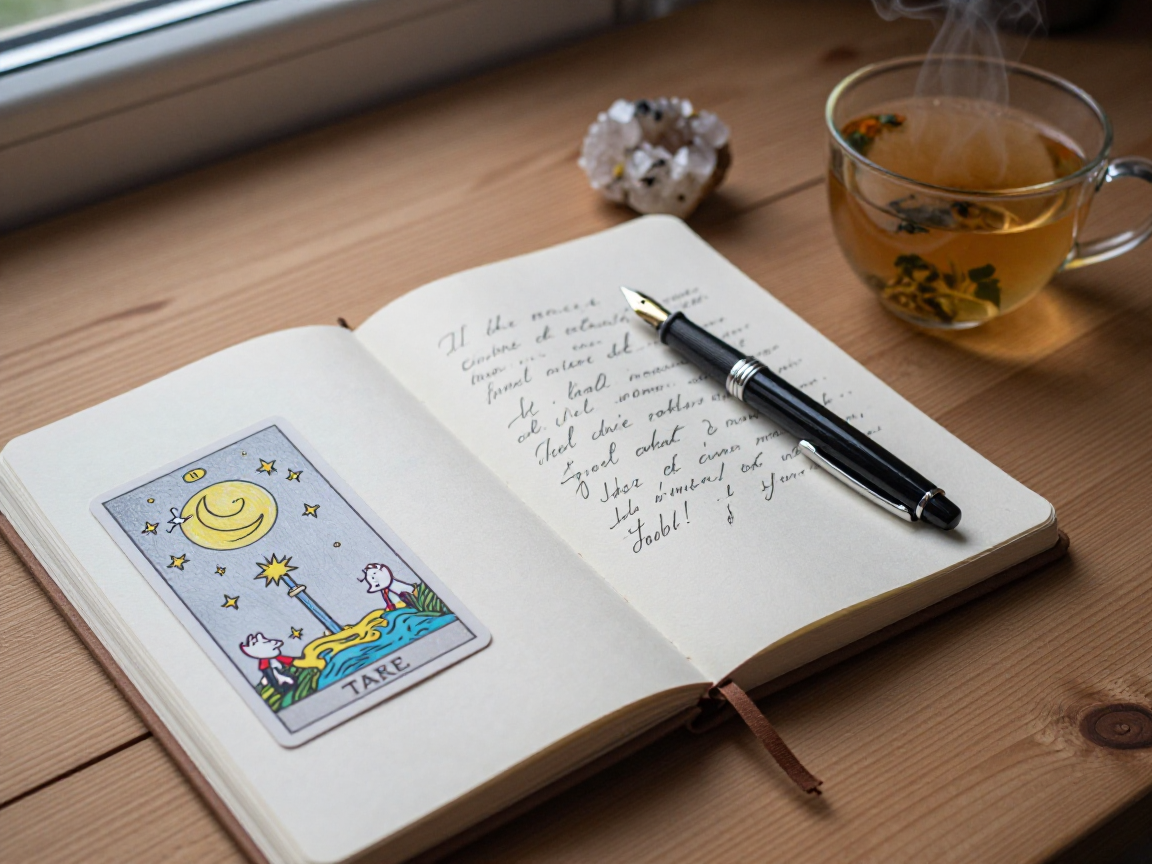
We have all been there. You sit down in a quiet moment, shuffle your deck with intention, and pull a card that feels perfectly timed. For a few minutes, the imagery resonates, and you feel a surge of clarity. But then the phone rings, the workday starts, or the laundry needs folding. By evening, the memory of that card has faded into a vague impression, its specific wisdom lost to the noise of daily life. This is the common frustration of a disconnected practice where the cards are treated as a fleeting novelty rather than a mirror for the soul.
Tarot journaling is the bridge between that temporary spark of insight and lasting personal transformation. It is more than just a record of what you pulled; it is a dedicated space to process your subconscious thoughts, track your emotional evolution, and build a relationship with the archetypes that govern our lives. By committing your readings to paper, you move from being a passive observer of symbols to an active participant in your own narrative. It turns a static deck of cards into a living, breathing dialogue with yourself.
The Psychological Power of Writing Your Readings
There is a specific magic that happens when pen meets paper. In psychology, the act of expressive writing has long been linked to improved mental health and cognitive processing. When we engage in tarot journaling, we are effectively externalizing our internal world. The tarot provides the imagery - the symbols and archetypes - while the journal provides the container for those images to take root and grow.
When you see the High Priestess appear in your deck, you might intellectually know she represents intuition and secrets. However, when you engage in tarot journaling about that card, you begin to ask yourself: "Where am I ignoring my gut feeling right now?" or "What secret am I keeping from myself?" This process forces the brain to move from abstract concepts to concrete applications. You are no longer just looking at a card; you are looking at your life through the lens of that card. Over time, this builds a repository of personal wisdom that no guidebook could ever provide.
A Structured Framework: The 4-Step Tarot Journaling Method
If you are new to the practice, a blank page can feel intimidating. You do not need to be a novelist to benefit from tarot journaling. Instead, use this simple four-step framework to give your entries structure and depth.
- The Raw Observation
Before you look at a guidebook, write down what you see. What colors stand out? What is the character in the card doing? Is there a specific detail - a bird, a mountain, a crown - that catches your eye? This step ensures your intuition speaks before the "expert" voices take over.
- The Emotional Resonance
How does the card make you feel in your body? Does it bring a sense of relief, or does it make your chest feel tight? Describe the immediate internal reaction you had when you turned the card over. Our bodies often process symbolic information faster than our logical minds.
- The Traditional Synthesis
Now, bring in the traditional meaning of the card. How does the established lore of the tarot intersect with your raw observations? This is where you find the "aha!" moment by blending ancient wisdom with your personal current context.
- The Call to Action
Tarot is most effective when it leads to change. End every entry with a single question: "Based on this reading, what is one small action I can take today?" It could be as simple as taking a five-minute walk or finally sending that difficult email.
Choosing Your Medium: Paper vs. Digital
One of the first decisions you will make in your tarot journaling journey is where to keep your notes. Both physical and digital formats have their merits, and the right choice depends entirely on your lifestyle and goals.
Analog journaling - using a physical notebook - is often preferred by those who want to disconnect from technology. There is a tactile satisfaction in the scratch of a pen and the ability to sketch the cards or add stickers. Physical journals become artifacts of your life, tangible records that you can flip through years later to see how much you have changed. They also encourage a slower, more meditative pace of thinking.
Digital journaling, on the other hand, offers unparalleled organization. Using apps or digital note-taking software allows you to search for specific cards. If you want to see every time you pulled the Tower card in the last six months, a digital search can show you that pattern in seconds. For those who travel frequently or prefer to keep their practice private, a password-protected digital journal offers convenience and security.
Tracking Your Personal Cycles and Patterns
One of the most profound benefits of consistent tarot journaling is the ability to spot recurring themes. When we do a single reading, we are looking at a snapshot. When we journal over weeks, months, and years, we are looking at a film of our lives. You might notice that every time you feel burnt out at work, the Ten of Wands starts appearing daily. Or perhaps you realize that the Lovers card always shows up when you are struggling with self-acceptance rather than romantic issues.
This pattern recognition is the key to deep healing. It moves you away from the idea that the cards are "predicting" a future you cannot control. Instead, you begin to see that you have a set of habitual responses to the world. Tarot journaling gives you the data you need to break those habits and choose new, healthier paths. It transforms the tarot from a tool of divination into a tool of personal agency.
Overcoming the I Don't Know What to Write Block
Resistance is a natural part of any creative or spiritual practice. Some days, the cards might feel silent, or your mind might feel too cluttered to form a coherent thought. In these moments, tarot journaling can feel like a chore. To overcome this, try using specific prompts to kickstart your brain.
- If I were the character in this card, what would be the first thing I would say?
- What is the "shadow" or the hidden warning in this card today?
- How would my highest self interpret this pull?
- If this card were a piece of advice from a wise friend, what would it be?
Remember that your journal does not have to be a masterpiece. It can be a collection of bullet points, a messy sketch, or even just three words that summarize your mood. The goal is not perfection; the goal is presence. The more you show up for your tarot journaling practice, the more the cards will reveal their secrets to you.
Creating a Sacred Space for Reflection
While you can certainly jot down a card pull on a sticky note while riding the bus, your tarot journaling practice will feel more meaningful if you create a small ritual around it. This does not require a complex altar or expensive candles. It simply requires a boundary between the mundane world and your reflective world.
Try to journal at the same time each day - perhaps with your morning coffee or right before bed. Clear a small space on your desk or table. Light a single candle or play a specific instrumental track. These sensory cues tell your brain that it is time to shift out of "doing" mode and into "being" mode. This intentionality honors the work you are doing and makes it more likely that you will stick with the habit long-term.
The Evolution of Your Intuition
Ultimately, the practice of tarot journaling is about building trust in yourself. We live in a world that constantly asks us to look outside for answers - to experts, to social media, to the news. Tarot journaling flips that dynamic. It asks you to look inward and trust that you have the capacity to interpret the symbols of your own life.
As your journal grows, you will likely find that you need to refer to guidebooks less and less. You will develop your own personal vocabulary for the cards. You will know that for you, the Three of Swords isn't just about heartbreak - it might be about the intellectual clarity that comes after a necessary ending. This personalized wisdom is the true fruit of the practice. It is a slow, steady unfolding of the self that happens one page at a time.
Whether you are a seasoned reader or have just bought your first deck, start today. Write down one card, one thought, and one feeling. You might be surprised at how quickly those few lines on a page begin to change the way you see your world. Tarot journaling is not just about learning the cards; it is about learning who you are when you are brave enough to look.