When Logic Isn't Enough: How to Use Tarot for Decision Making and Clarity
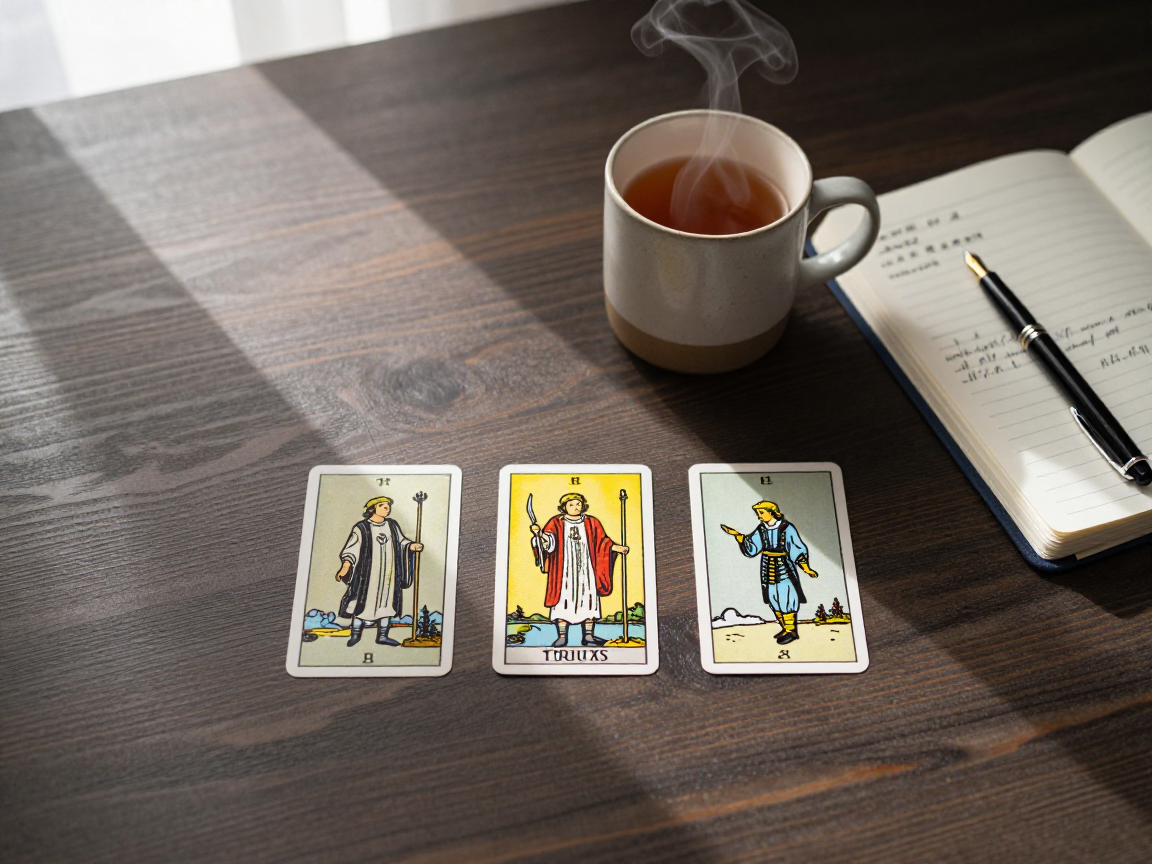
Everyone has been there—staring at a list of pros and cons that seems perfectly balanced, yet feeling an unsettling pit in the stomach. Traditional decision-making relies heavily on the spreadsheet approach: gathering data, weighing outcomes, and predicting risks. While this logic is essential, it often ignores the messy, human elements of desire, fear, and subconscious alignment. This is where the practice of tarot for decision making becomes an invaluable bridge between the analytical mind and the intuitive heart.
Tarot is often misunderstood as a tool for predicting an unchangeable future, but its true power lies in its ability to mirror the present. When we use tarot for decision making, we are not asking the cards to tell us what to do. Instead, we are using the imagery and archetypes of the deck to bypass our cognitive biases and access a deeper level of self-knowledge. It allows us to see the angles we have been ignoring and the emotional undercurrents that might be steering us off course without our realization. By externalizing our internal dialogue through cards, we gain the distance necessary to see our situation with fresh, unbiased eyes.
The Psychology of Using Tarot for Decision Making
At its core, the process of using tarot for decision making is a psychological exercise in projection and pattern recognition. When you look at a card like the Eight of Swords—which depicts a woman bound and surrounded by blades—your brain immediately begins to scan your current life situation for feelings of entrapment or self-imposed limitations. You aren't just looking at a piece of cardstock; you are engaging with a visual prompt that forces you to define your internal state.
Psychologists often refer to this as the "projective hypothesis," where individuals provide meaning to ambiguous stimuli. By using tarot, you are giving your subconscious a language to speak. If you are torn between two jobs, a card might highlight a hidden fear of failure or a repressed desire for creative freedom that your logical "pros and cons" list failed to capture. This is why tarot for decision making is so effective for people who suffer from analysis paralysis; it stops the circular thinking and forces a new perspective into the mix.
Furthermore, tarot helps combat "confirmation bias"—the tendency to search for information that supports our existing beliefs. Because we cannot control which cards are drawn, we are often presented with a perspective we didn't want to consider. This "divine interruption" to our thought process is exactly what is needed to break a mental stalemate. It forces us to confront the "shadow" aspects of our choices—the parts we’ve been too afraid or too tired to look at directly.
How to Frame Your Questions for Maximum Clarity
The quality of the insight you receive when using tarot for decision making depends entirely on the quality of the question you ask. Many people approach the cards with "Should I?" questions, which tend to yield passive, unhelpful answers. The goal is to move from a place of seeking permission to a place of seeking information. A "should" question implies that there is a single right answer written in the stars, which strips you of your agency.
Instead of asking "Should I quit my job?" consider these more empowered alternatives that foster deep reflection:
- "What is the most likely outcome if I stay in my current role for another six months?"
- "What part of myself am I neglecting in this decision-making process?"
- "What is the hidden obstacle I am refusing to see regarding Choice A?"
- "How can I best align my actions with my long-term core values right now?"
- "What is the energetic cost of remaining in my current situation?"
When you use tarot for decision making, focus on "What" and "How" questions. These keep the power in your hands and treat the cards as a consultant rather than a commander. This shift in phrasing changes the energy of the reading from one of anxiety to one of exploration. It turns the session into a collaborative dialogue with your own intuition.
3 Tarot Spreads for Navigating a Crossroads
While a single card pull is great for a quick "vibe check," more complex decisions often require a structured spread to organize the information. Here are three effective layouts for using tarot for decision making when you feel stuck.
1. The Choice A vs. Choice B Spread
This is perhaps the most practical spread for those facing a clear fork in the road. It provides a side-by-side comparison of the energetic pathways ahead of you. You will draw five cards in total.
- Card 1 (The Querent/The Heart of the Matter): Your current state of mind and the energy you are bringing to the decision.
- Card 2 (Choice A - Potential): The likely development or "growth" of the first path.
- Card 3 (Choice A - Challenge): The specific difficulty or sacrifice required if you choose path A.
- Card 4 (Choice B - Potential): The likely development or "growth" of the second path.
- Card 5 (Choice B - Challenge): The specific difficulty or sacrifice required if you choose path B.
By laying these out, you can visually compare the "flavor" of each path. One might look rewarding but exhausting, while the other might look peaceful but potentially stagnant.
2. The "What Is Hidden" Spread
Sometimes we can't make a decision because we don't have all the facts—or we are lying to ourselves about our true motivations. This three-card spread is designed to unearth the truth beneath the surface.
- The Surface: What you think the problem is (the conscious narrative).
- The Shadow: The subconscious fear, desire, or ego-driven motive driving your indecision.
- The Light: The truth or objective fact that will make the decision clear once it is accepted.
3. The Crossroads Spread
This spread is best for when you feel overwhelmed by too many factors and need to streamline your focus. It helps you see the "climate" of your choice and what is actually relevant.
- What to Leave Behind: The beliefs, habits, or attachments that no longer serve you in this situation.
- What to Carry Forward: The strengths, values, or resources you must keep close as you transition.
- The Immediate Next Step: A small, actionable task you can do today to break the stagnation.
A Step-by-Step Framework for a Decision-Making Session
To get the most out of tarot for decision making, it helps to treat the process with a degree of intentionality. This isn't about a quick flip of a card while you are stressed at your desk; it is about creating a space for reflection. Follow this framework for your next major choice.
- Center Yourself: Before touching the cards, take three deep breaths. Clear your mind of the "chatter" of the day. If you are in a state of high anxiety, the cards will likely reflect that anxiety back to you. Aim for a state of "neutral curiosity" instead.
- State the Context: Speak your situation out loud or write it in a journal. "I am struggling to decide whether to invest in this new venture or save my capital." This grounds the energy and focuses your intent.
- Shuffle with Intent: As you shuffle, visualize the different paths or the feeling of clarity you desire. Stop shuffling only when you feel a natural "click" or a sense of completion in your hands.
- Interpret Without a Book (Initially): Look at the cards you have drawn. Before looking up their traditional meanings, notice your gut reaction. Do the colors feel heavy or light? Is the character in the card looking toward or away from other cards? Your first instinct is often the most accurate application of tarot for decision making.
- Consult the Traditional Meanings: Now, look at the established definitions. Does the "Knight of Swords" suggest you are rushing in too fast? Does "The Moon" suggest that things are not as they seem? Integrate these meanings with your initial gut feeling to build a complete picture.
- Journal the "So What?": The most important part of using tarot for decision making is the conclusion. Write down one concrete action you will take based on the insight. Insight without action is just entertainment.
Essential Archetypes of Choice and Indecision
When using tarot for decision making, certain cards appear frequently because they represent universal human experiences of being stuck or moving forward. Recognizing these archetypes can provide instant relief.
- The Two of Swords: This is the ultimate "stalemate" card. It shows someone blindfolded, holding two heavy swords in balance. It often indicates that you have all the information you need, but you are refusing to choose because you are afraid of the consequences. It is a call to take off the blindfold and face the truth.
- The Lovers: While often associated with romance, in the context of decision making, this card represents "alignment" and values. It asks you to choose the path that is most consistent with your higher self, rather than the path that is most convenient or socially acceptable.
- The Chariot: This card signifies willpower and momentum. If this appears, it suggests that once a decision is made, you must pursue it with total focus. There is no room for second-guessing once the horses are in motion.
- Justice: This card is about "cause and effect." It reminds you that every choice has a price and a consequence. It encourages a cold, hard look at the facts and the long-term impact of your actions.
- The Hanged Man: This is the "non-decision" card. It suggests that the best thing you can do right now is wait and look at the situation from a different perspective. Not all problems are solved by doing; some are solved by simply being and letting the situation ripen.
Avoiding the Trap of "Double Reading"
A common mistake when using tarot for decision making is "double reading"—drawing cards, not liking the answer, and then immediately reshuffling to ask again until you get the "Sun" or the "Ten of Pentacles." This is essentially an attempt to manipulate the tool into telling you what you want to hear, which defeats the entire purpose of seeking clarity.
If the cards give you an answer that feels frustrating, confusing, or even disappointing, sit with that frustration. Ask yourself, "Why do I dislike this answer?" Often, the resistance you feel is the most important part of the reading. If you draw a card suggesting you should wait, and you feel angry, that anger reveals your underlying impatience and perhaps a need for control that is actually hindering your progress. Respect the first draw; it is the most honest reflection of the energy at hand.
Moving From Insight to Action
The final stage of using tarot for decision making is integration. Remember that the cards do not make the decision for you—you do. The tarot is a map, but you are the driver. It provides a bird's-eye view of the terrain, showing you where the potholes are and where the scenic routes lie, but you are the one who must put the car in gear.
Once you have finished your spread and journaled your thoughts, put the cards away. Don't carry the "vibe" of the reading into a space of perpetual overthinking. Use the insight as a valid data point, just like you would use a financial report, a legal opinion, or a close friend's advice. If the tarot for decision making process highlighted a fear of change, acknowledge that fear, but don't let it paralyze you. The goal of this practice is to return you to your life with a clearer sense of self and a firmer hand on the wheel. By blending the mystical imagery of the cards with your own practical wisdom, you can navigate even the most complex crossroads with confidence and grace.