Beyond the Little White Book: A Grounded Guide to Tarot for Beginners
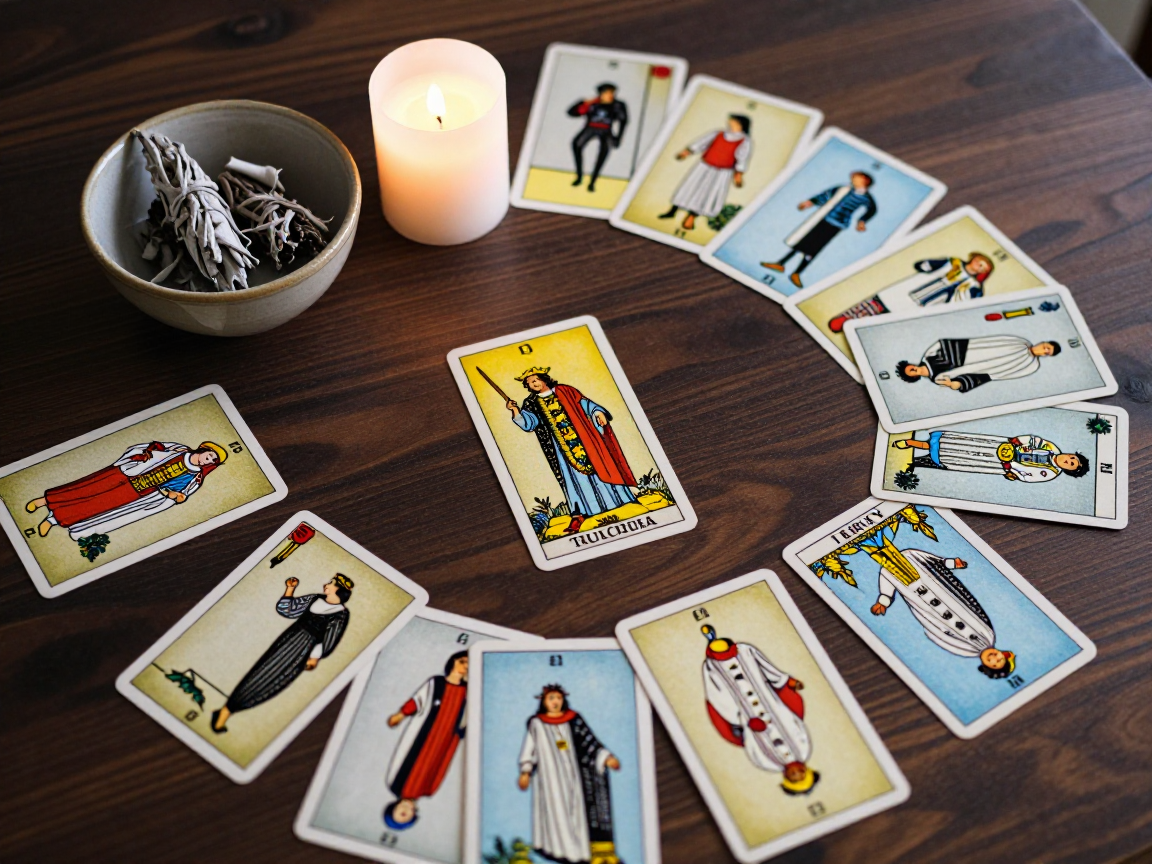
Starting a journey into the world of cartomancy can feel like trying to learn a new language while being blindfolded. You open a fresh box of cards, pull out the tiny instructional manual, and are immediately met with 78 different definitions that somehow feel both overly specific and incredibly vague. It is easy to assume that tarot for beginners requires a hidden psychic talent or a photographic memory to keep track of every symbol, astrological association, and planetary alignment. However, the true power of the cards lies not in the booklet, but in the intersection between the imagery and your own lived experience.
Tarot is essentially a mirror. It is a deck of 78 cards that represent the spectrum of human emotion, conflict, and spiritual growth. When we use tarot for beginners, we are not looking for a crystal ball to predict the exact date of a promotion or the initials of a future spouse. Instead, we are using a structured set of archetypes to bypass the logical, repetitive thoughts of the conscious mind and tap into the intuition that already exists within us. By shifting your perspective from memorization to observation, you can turn a confusing pile of cardboard into a lifelong tool for clarity and self-reflection.
Why Tarot for Beginners Is a Tool for Clarity, Not Fortune-Telling
The most common roadblock for someone starting out is the belief that the cards have a fixed, unchangeable power to dictate the future. This approach often leads to anxiety and frustration. If a beginner pulls a card like Death or The Tower, they might spiral into fear, assuming something terrible is about to happen. In reality, tarot for beginners is most effective when used as a psychological and spiritual tool for the present moment.
The cards reflect your current energy and the path you are currently walking. They offer a "weather report" rather than a written-in-stone decree. By viewing the cards as a series of prompts, you allow yourself the agency to change your direction. If you see a card that suggests burnout, you have the power to rest. If you see a card that suggests a need for communication, you can choose to speak up. This distinction is vital because it places the power back in your hands, making the practice of tarot for beginners an empowering exercise in mindfulness.
Choosing Your First Deck: The Power of Visual Language
When you begin searching for your first deck, you will find thousands of options ranging from minimalist line art to complex, surrealist oil paintings. For most people embarking on tarot for beginners, the gold standard remains the Rider-Waite-Smith (RWS) deck. Created by Arthur Edward Waite and illustrated by Pamela Colman Smith in 1909, this deck is the foundation for most modern tarot literature.
The reason the RWS deck is recommended for tarot for beginners is its use of illustrative "pips." In older decks, like the Tarot de Marseille, the Minor Arcana cards (the ones that look like a regular deck of playing cards) were simply patterns of objects. For example, the Ten of Swords would literally just be ten swords. In the RWS system, every card contains a narrative scene. The Ten of Swords shows a figure lying down with ten swords in their back, set against a dark sky. This visual storytelling makes it significantly easier to interpret the meaning of a card through intuition rather than relying solely on a textbook definition.
Tips for Selecting a Deck That Speaks to You
- Prioritize Clarity: Choose a deck where the imagery is easy to interpret. If the artwork is too abstract, you may find yourself constantly reaching for the guidebook.
- Check the Symbolism: Ensure the deck follows a system you want to learn (usually Rider-Waite-Smith, Thoth, or Marseille).
- Tactile Quality: If possible, see how the cards feel. You will be shuffling these often, so the size and cardstock matter.
- Visual Connection: Does the art resonate with you? You are more likely to practice if you enjoy looking at the cards.
Deconstructing the 78 Cards: A Map of the Human Experience
To make tarot for beginners manageable, it helps to understand the two main categories of the deck: the Major Arcana and the Minor Arcana. Think of the Major Arcana as the big "soul lessons" or the overarching themes of your life, while the Minor Arcana represents the day-to-day details, the fleeting emotions, and the mundane interactions.
The Major Arcana: Life's Big Lessons
There are 22 Major Arcana cards, starting with The Fool (numbered 0) and ending with The World (numbered 21). This sequence is often referred to as "The Fool's Journey." It represents the psychological development of a human being from birth to enlightenment. When a Major Arcana card appears in a reading, it suggests that the situation is significant. These cards deal with themes like transformation, justice, tradition, and spiritual awakening. They are the heavy hitters of the deck that point toward major life shifts or internal realizations.
The Minor Arcana: The Nuance of Daily Living
The remaining 56 cards make up the Minor Arcana. These cards are divided into four suits, much like a standard deck of playing cards. They focus on the temporary circumstances and the choices we make. If the Major Arcana is the "what" of a situation, the Minor Arcana is often the "how." Within the Minor Arcana, you also have the Court Cards—Pages, Knights, Queens, and Kings—which usually represent people in your life, different facets of your personality, or specific stages of maturity.
Mastering the Four Suits: Earth, Air, Fire, and Water
One of the most effective ways to approach tarot for beginners is to learn the elemental associations of the four suits. This allows you to understand a card's general "vibe" before you even look at the specific imagery.
- Wands (Element: Fire): Wands represent creativity, passion, action, and ambition. They are the spark of an idea and the drive to get things done. When a reading is heavy on Wands, it suggests a time of high energy, movement, or perhaps conflict and competition.
- Cups (Element: Water): Cups are the realm of emotions, relationships, intuition, and the subconscious. They deal with how we feel about ourselves and others. A lot of Cups in a spread point toward matters of the heart, healing, or the need for emotional boundaries.
- Swords (Element: Air): Swords represent the intellect, communication, logic, and the power of the mind. Swords can be sharp—they represent the truth, but they also represent the mental anxiety, overthinking, and conflict that comes from a busy mind.
- Pentacles (Element: Earth): Pentacles (sometimes called Coins) represent the material world. This includes money, work, health, the home, and the physical body. They are about stability, manifestation, and long-term security.
A 5-Step Framework for Your First Reading
You do not need to wait until you have memorized all 78 cards to do a reading. In fact, the best way to learn tarot for beginners is by doing. Use this simple framework to conduct your first session with the cards.
- Clear the Clutter: You do not need a fancy altar, but it helps to have a quiet space. Take a few deep breaths to settle your nervous system. This helps move you from a "doing" state to a "being" state.
- Ask an Open-Ended Question: Avoid "yes or no" questions, as they often lead to dead ends. Instead of asking, "Will I get this job?", ask, "What energy should I bring to my interview?" or "What do I need to know about my current career path?".
- The Physical Shuffle: Shuffle the cards in whatever way feels comfortable. There is no "wrong" way to shuffle. As you do, focus on your question. Stop whenever you feel a sense of completion.
- The First Impression: Pull one card. Before you reach for a book or look up the meaning on your phone, look at the card for sixty seconds. What is the first emotion that pops up? What is the character in the card doing? Is the sky dark or bright? Your immediate reaction is your intuition speaking.
- Identify the Narrative: Now, look at the suit and the number. If you pulled the Five of Cups, you know it is about emotions (Cups) and usually, fives represent a sense of loss or transition. Combine the visual cues with the elemental meaning to form a sentence that applies to your question.
The Myth of "Getting it Wrong"
A major hurdle in tarot for beginners is the fear of "getting it wrong." Beginners often worry that if they interpret a card as "sadness" but the book says it means "rest," they have failed. This is not the case. The book is a guide, but your context is the key. If the image of a card sparks a specific memory or a specific feeling in your gut, that message is for you. Tarot is a language, and like any language, there are dialects. Your personal "dialect" of tarot is what makes your readings meaningful.
Over time, you will start to see patterns. You might notice that every time you are feeling overwhelmed at work, the Knight of Swords appears. You might notice that when you are neglecting your creative side, the Ace of Wands keeps popping out of the deck. These "stalker cards" are the deck's way of trying to get your attention. Paying attention to these recurring symbols is a much faster way to learn than memorizing flashcards.
Avoiding the Comparison Trap in Tarot for Beginners
In the age of social media, it is easy to look at experienced readers and feel inadequate. You might see someone doing a 10-card Celtic Cross spread and interpreting it with ease, while you are struggling to understand a single card. Remember that tarot is a practice, not a performance.
One of the best habits you can develop in tarot for beginners is keeping a simple journal. Write down the date, the card you pulled, and a one-sentence summary of what you think it means. At the end of the week, look back and see how those cards manifested in your life. This creates a feedback loop that builds trust in your own intuition. When you see that the "Three of Swords" appeared right before a difficult conversation you needed to have, the card's meaning becomes cemented in your mind through experience rather than academic study.
Practical Habits for Continued Growth
To truly integrate tarot for beginners into your daily life, consistency is more important than the length of your sessions. Here is a quick checklist of habits that can help you master the cards without feeling overwhelmed:
- The Daily Draw: Pull one card every morning. Ask, "What energy should I be aware of today?". Carry that card's theme in your mind throughout the day.
- Contextualize Your Day: At the end of the day, look at the card you pulled and see if it made sense. Did that "King of Pentacles" represent your boss, or did it represent your own focus on your budget?
- Study by Suit: Spend one week focusing only on the Wands. The next week, focus on the Cups. This prevents the feeling of needing to learn all 78 cards at once.
- Trust Your Gut: If the book says a card is "happy" but you feel "anxious" looking at it, trust your anxiety. Explore why that image makes you feel that way.
Tarot is a lifelong journey. Even readers with thirty years of experience still find new nuances in the cards. By approaching tarot for beginners with a sense of curiosity and a lack of judgment, you transform it from a confusing chore into a reliable companion for navigating the complexities of modern life.