When Your Mind Won't Stop Racing: A Grounded Guide to Using Tarot for Anxiety
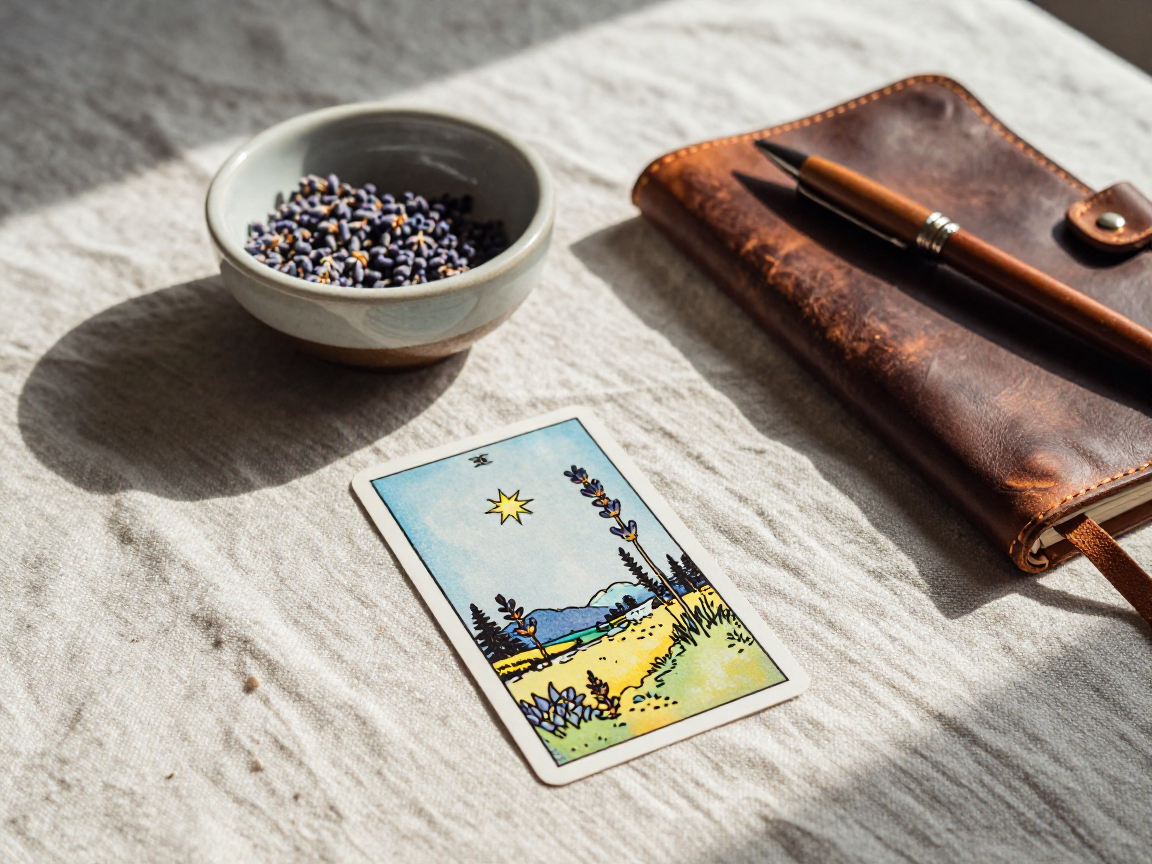
For anyone living with a constant hum of worry, the idea of looking into the future can feel less like a spiritual exercise and more like walking into a minefield. When we talk about using tarot for anxiety, there is often a misunderstanding that the cards are meant to tell us exactly what disaster is coming next. In reality, when used with intention, tarot can be one of the most effective tools for interrupting a spiral, grounding the nervous system, and shifting from a state of reactive fear into a state of reflective observation.
Anxiety thrives on the unknown. It lives in the gap between the present moment and a hypothetical future that hasn't happened yet. By engaging with tarot for anxiety, we are not searching for a crystal ball to tell us that everything will be perfect; instead, we are using the cards as a psychological mirror. They provide a tangible, visual language for the messy, abstract feelings that often feel too big to name. This practice allows us to step outside of our internal narrative and look at our situation from a slightly more objective perspective.
Moving from Prediction to Presence
The biggest mistake people make when using tarot for anxiety is asking predictive questions. When you are already feeling fragile, asking "Will I lose my job?" or "Is my partner going to leave me?" only feeds the anxious loop. If you pull a card that looks even remotely challenging - like the Tower or the Three of Swords - your brain will likely hijack the imagery to confirm your worst fears. This is why a grounded approach to tarot for anxiety must focus on the "now" rather than the "later".
Instead of asking what will happen, we should ask how we can cope. We shift the focus from external events we cannot control to our internal state, which we can influence. This subtle shift in the way we phrase our questions changes the entire energy of the reading. It moves us from a victim mindset - waiting for the universe to strike - into an empowered mindset where we are active participants in our own emotional regulation.
The Grounded Framework: A 4-Step Practice for Anxious Moments
When your heart is racing and your thoughts are fragmented, a complex ten-card spread is the last thing you need. For a successful experience with tarot for anxiety, simplicity is your greatest ally. This four-step framework is designed to help you de-escalate stress rather than add to it.
- The Physical Anchor
Before you even touch your deck, you must address the body. Anxiety is a physical experience. Sit in a chair with your feet flat on the floor. Hold your deck in your hands and feel its weight. Take three slow breaths, making the exhale longer than the inhale. This signals to your nervous system that you are safe enough to engage with your subconscious.
- The Mindful Inquiry
Avoid "yes/no" questions or questions starting with "will". Instead, use "how" or "what". A powerful question for anxiety is: "What can I focus on right now to feel more grounded?" or "What is one truth about my situation that my anxiety is currently hiding from me?".
- The Visual Observation
When you pull a card, do not immediately reach for a guidebook. Spend sixty seconds just looking at the colors, the characters, and the landscape of the card. Does the figure look safe? Is there a path? What is the weather like? By focusing on these visual details, you are practicing a form of external grounding that pulls you out of your internal thought loops.
- The Integration Phrase
After you have reflected on the card, create a single sentence that you can carry with you. If you pull the Temperance card, your phrase might be: "I have the power to find balance, even in the middle of a mess". This turns the tarot reading into a functional mantra for the rest of your day.
Specific Tarot Cards to Lean On for Comfort
While every card has a spectrum of meaning, certain archetypes are particularly healing when you are struggling with stress. If these appear in your practice of tarot for anxiety, take a deep breath and let their energy sit with you for a moment.
- The Star: This is the ultimate card of hope and healing. It suggests that the storm has passed and that it is time to pour back into your own cup. It represents the quiet calm that follows a period of intense upheaval.
- The Fool: Often misunderstood as being reckless, the Fool is actually about the beauty of not knowing. For an anxious person, not knowing is a threat. The Fool teaches us that not knowing can also be an adventure and a clean slate.
- Nine of Swords (The Reframe): While this card looks terrifying - showing a person with their head in their hands - it is actually the most relevant card for anxiety. It represents the mental prisons we build for ourselves. When this card appears, it is a compassionate reminder that your thoughts are not necessarily facts.
- The Hermit: This card encourages us to pull back from the noise of the world and look inward. It suggests that the answers we are seeking aren't "out there" in the validation of others, but within our own quiet wisdom.
Why Your Approach Matters More Than the Deck
You do not need a specific "calming" deck to use tarot for anxiety effectively. Any deck that resonates with you visually will work, provided you treat it with the right intention. The goal is to create a ritual that feels sacred and safe. If you find that you are constantly pulling cards every ten minutes to check if the "vibe" has changed, you are likely using the cards to feed a compulsion. This is a sign to put the deck away.
Healthy tarot use should feel like a conversation with a wise, calm friend. If the practice starts to feel like an interrogation or a source of more stress, take a break. Grounding yourself in the physical world - through exercise, cooking, or cleaning - is often the best thing you can do when the mental world becomes too loud.
Three Simple Spreads for Immediate Relief
When you feel the weight of the world on your shoulders, try one of these minimal spreads to find your center. These are designed to be quick and insightful without being overwhelming.
The Anchor Spread (3 Cards)
- Card 1: What is actually happening? (The objective truth)
- Card 2: What is my anxiety telling me is happening? (The narrative)
- Card 3: How can I bridge the gap between the two?
The Control Spread (2 Cards)
- Card 1: What can I control in this situation?
- Card 2: What must I practice surrendering?
The Compassion Spread (3 Cards)
- Card 1: Where am I being too hard on myself?
- Card 2: What is a strength I am currently ignoring?
- Card 3: What is the kindest thing I can do for my body today?
Establishing Boundaries with Your Practice
To ensure that tarot for anxiety remains a helpful tool and not an obsession, it is important to set some guardrails. First, limit yourself to one reading per topic. Obsessively asking the same question over and over is a form of "reassurance seeking" which actually strengthens anxiety in the long run. Second, try to avoid reading when you are at an "eight or nine" on the stress scale. If you are in the middle of a panic attack, the best tool is your breath, not your cards. Wait until you have stabilized slightly before reaching for your deck.
Finally, remember that the cards are symbols, not mandates. They offer suggestions for reflection, but you always have the final say in how you interpret them and how you act. Tarot for anxiety is most powerful when it reminds you that even when the world feels chaotic, you have an internal landscape that you can navigate with curiosity and kindness.
By turning the cards into a ritual of self-care, you transform a potentially frightening experience into one of deep nourishment. You learn that you don't need to see the whole staircase to take the first step; you just need enough light to see where your foot is landing right now. That is the true gift of the tarot: it brings the light back to the present moment, where life is actually happening.