Beyond the Little White Book: How to Master Tarot Card Meanings for Deeper Clarity
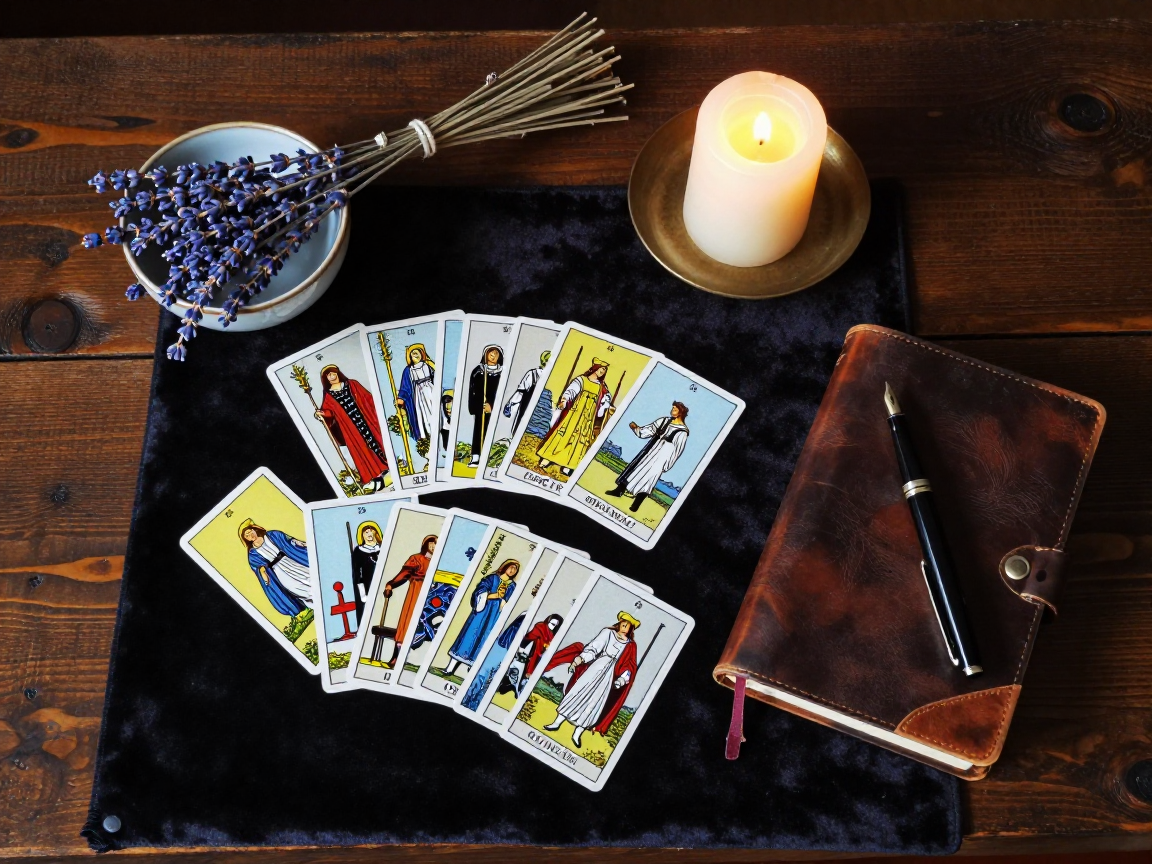
Tarot is often misunderstood as a simple tool for fortune-telling—a way to peek behind the curtain of time to see what the future holds. However, for those who practice the craft with depth, it is much more of a mirror than a crystal ball. To truly understand tarot card meanings, one must look past the surface-level definitions found in the small booklets that come with a new deck. These cards are a visual language, a system of archetypes and symbols that describe the universal human experience. When we lay them out in a spread, we are not just looking at cardboard and ink; we are looking at the landscape of our own psyche.
Developing a deep relationship with the deck requires a shift from memorization to interpretation. While it is helpful to know the traditional keywords, the real magic happens when you understand how the imagery, the elements, and the numbers interact with the specific context of your life. This guide is designed to help you bridge that gap, providing a foundational understanding of the structure of the deck while offering a practical framework to help you unlock tarot card meanings in a way that feels personal, grounded, and profoundly useful.
The Architecture of the Deck: Major and Minor Arcana
To begin exploring tarot card meanings, it is essential to understand that a standard tarot deck is divided into two distinct sections: the Major Arcana and the Minor Arcana. Each serves a different purpose in a reading and carries a different weight of significance. Think of the Major Arcana as the "big picture" themes of life, while the Minor Arcana represents the day-to-day details.
The Major Arcana: Life's Grand Themes
The 22 cards of the Major Arcana represent the "Fool's Journey," a metaphorical path from the innocence of the Fool to the completion and enlightenment of the World. These cards represent significant life lessons, karmic influences, and the overarching archetypal energies at play. When a Major Arcana card appears in a reading, it suggests that the situation is of great importance or that there are powerful forces beyond immediate control influencing the outcome.
Consider a few foundational archetypes:
- The Fool: Represents a leap of faith, new beginnings, and untapped potential. It is the energy of "starting over" with a clean slate.
- The Lovers: Often mistaken for purely romantic love, its deeper tarot card meanings involve alignment, values, and making choices from a place of integrity.
- Death: Rarely representing physical demise, this card signifies a necessary ending that clears the path for rebirth. It is the ultimate card of transition.
- The Tower: Represents the sudden breakdown of structures built on weak foundations. While jarring, it is a card of radical liberation and truth.
The Minor Arcana: The Texture of Daily Life
The remaining 56 cards make up the Minor Arcana. These cards deal with the mundane—temporary emotions, specific challenges at work, and the nuances of our relationships. They are divided into four suits, each corresponding to an element. These cards are further divided into "Pips" (numbered Ace through Ten) and "Court Cards" (Page, Knight, Queen, and King).
Court cards often represent specific personalities or roles. Pages are the messengers and students; Knights represent action and sometimes extremes; Queens represent internal mastery and emotional intelligence; and Kings represent external mastery and authority. Understanding these nuances helps you refine your grasp of tarot card meanings in a social or professional context.
Decoding the Four Elements: The Suit Meanings
One of the most effective ways to internalize tarot card meanings without memorizing 78 different definitions is to understand the four suits and their elemental associations. Each suit acts as a lens through which the energy of the card is filtered.
- Wands (Fire): This suit represents inspiration, creativity, passion, and action. It is the spark of an idea and the drive to see it through. When Wands dominate a spread, the focus is often on career, projects, or personal ambition.
- Cups (Water): Cups deal with the realm of emotions, relationships, intuition, and the subconscious. This suit reflects how we feel and how we connect with others. It is the language of the heart.
- Swords (Air): Swords represent the mind, intellect, and communication. Because the mind can be a "double-edged sword," this suit often deals with challenges, anxiety, and the need for clarity or decisive action.
- Pentacles (Earth): Also known as Coins, this suit represents the material world. It covers finances, health, home, and the physical results of our labor. Pentacles are about stability, manifestation, and long-term security.
By combining the elemental meaning of the suit with the numerical meaning of the card (for example, Threes often represent growth, while Fives represent tension), you can begin to deduce tarot card meanings even if you forget the textbook definition.
A Four-Step Framework for Decoding Any Card
If you find yourself stuck on a card during a reading, use this structured approach to uncover its significance without reaching for a guidebook. This framework helps you build trust in your own perception of tarot card meanings.
- Observe the Immediate Reaction: Look at the card and notice the first word or feeling that comes to mind. Is the image busy or calm? Is the color palette warm or cold? Your initial gut reaction is a powerful indicator of the card's message for that specific moment.
- Analyze the Symbols: Identify the key symbols within the image. Are there clouds (confusion)? Is there water (emotions)? Are there mountains (challenges)? Consider what these symbols mean to you personally, as well as their traditional associations.
- Check the Suit and Number: Apply the elemental meaning of the suit and the basic numerology. Aces are beginnings; Tens are completions. How does the number's energy interact with the element (e.g., the "beginning" of "emotion" for the Ace of Cups)?
- Synthesize with the Question: Pull the threads together. If you asked about a career change and drew the Seven of Wands (defensiveness/standing your ground), it suggests you may need to protect your vision or prepare for competition.
Common Symbols and Their Universal Meanings
While every deck is different, most are based on the Rider-Waite-Smith system. Familiarizing yourself with these universal symbols can act as a shorthand for understanding tarot card meanings across various decks:
- Mountains: Represent challenges or long-term goals that require effort to reach.
- Paths: Signify a journey, a choice, or the direction your soul is currently taking.
- Water: Calm water represents peace of mind, while turbulent water indicates emotional upheaval.
- Sun/Light: Represents clarity, truth, vitality, and the conscious mind.
- Moon: Represents the subconscious, mystery, illusion, and things that are hidden.
- Butterflies: A symbol for transformation and the evolution of the soul.
Avoiding Common Pitfalls in Interpretation
When beginners start exploring tarot card meanings, they often fall into a few common traps that hinder their growth as a reader. Awareness of these can accelerate your learning curve:
- Over-Reliance on the Book: If you spend the whole reading looking at a manual, you miss the intuitive flow. Use the book as a safety net, not a crutch.
- Ignoring the Visual "Vibe": Sometimes the traditional meaning of a card is positive, but in a specific deck or spread, it looks menacing. Trust the visual cues of the specific card in front of you.
- Fear of "Negative" Cards: Cards like Death, The Devil, or The Tower are often the most helpful because they point to areas where we are stuck. Reframe them as opportunities for growth rather than omens of doom.
- Asking the Same Question Twice: If you don't like the answer and pull more cards for the same question, you'll likely end up with a "muddled" reading. Respect the first answer and sit with it.
Why Your Personal Connection Matters
At the end of the day, the most accurate tarot card meanings are the ones that resonate with your own lived experience. The cards were designed to trigger the subconscious mind. If a card traditionally means "victory" but it makes you feel "burdened" because of the way the figure is holding the trophy, trust that feeling. Your intuition is the final authority.
One of the best ways to deepen this connection is to keep a tarot journal. Pull one card every morning and write down what you think it means for the day ahead. At the end of the day, revisit that entry and note how the card's energy actually manifested. Over time, you will develop your own personal dictionary of tarot card meanings that is far more powerful than any book you could buy.
Tarot is a lifelong study. There is always another layer of symbolism to peel back and another way to view the human condition through the lens of the 78 cards. By moving away from rigid memorization and toward a more fluid, elemental, and intuitive understanding, you transform the deck from a novelty into a profound tool for self-discovery.