Beyond Coincidence: Real-Life Synchronicity Examples and What They Are Trying to Tell You
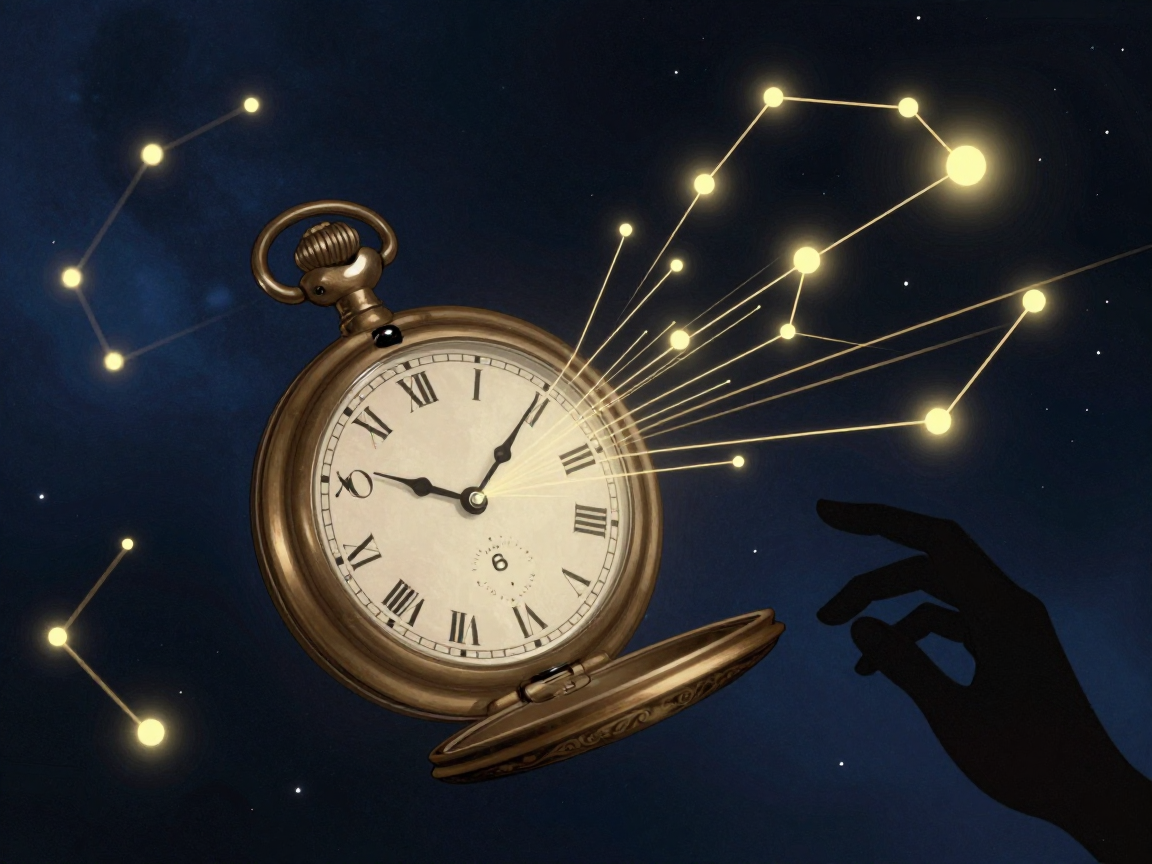
Have you ever been thinking about a long - lost friend only to have them text you five minutes later? Or perhaps you were struggling with a specific problem at work and happened to find the exact book you needed sitting on a park bench. We often brush these moments off as mere luck, yet they often feel significantly heavier than a simple roll of the dice. This phenomenon is known as synchronicity - a term coined by psychologist Carl Jung to describe meaningful coincidences that seem to defy the laws of probability.
When we look at various synchronicity examples in our own lives, we begin to see a pattern that suggests a deeper connection between our internal thoughts and the external world. Unlike a random coincidence, which feels like a statistical fluke, a synchronicity carries a sense of timing and relevance that feels personal. It is as if the universe is providing a wink or a nudge, confirming that you are on the right path or offering a solution exactly when you are ready to receive it. Understanding these moments can change how you navigate your daily life, turning a series of random events into a guided journey.
What Exactly is Synchronicity?
To understand modern synchronicity examples, we must first look at how Carl Jung defined the concept. He described it as an "acausal connecting principle". This means that two events are connected not by cause and effect, but by their meaning. For example, if you drop a glass and it breaks, that is cause and effect. However, if you are dreaming about a broken glass and wake up to find a glass has fallen off your nightstand at that exact moment, there is no physical cause connecting the dream to the fall. Yet, the meaning is undeniable.
Jung believed that the human psyche is not separate from the physical world. Instead, he proposed that there is a bridge between the two, which he called the Unus Mundus or "one world". When we experience synchronicity, we are catching a glimpse of this underlying unity. For many, these events serve as a wake-up call, shifting their perspective from a purely materialistic view of the world to one that is more interconnected and spiritual.
Common Synchronicity Examples in Everyday Life
Most people experience synchronicity without even realizing it. Because we are taught to prioritize logic and linear thinking, we often dismiss these "glitches in the matrix" as brain farts or oddities. However, once you start paying attention, you will notice that synchronicity examples usually fall into a few distinct categories.
1. The Right Information at the Right Time
You might be contemplating a major career change but feel paralyzed by fear. Later that day, you overhear a stranger in a coffee shop discussing the exact industry you want to enter, or you open a social media app to find an advertisement for a certification course in that specific field. These are classic synchronicity examples where the external world mirrors your internal questions.
2. Repeating Numbers and Symbols
Seeing 11:11 on the clock, noticing the same three - digit sequence on license plates, or encountering a specific animal multiple times in a week are common ways synchronicity manifests. While skeptics argue this is simply a result of the Reticular Activating System (RAS) - the part of the brain that filters for things we are focused on - the timing of these sightings often corresponds with moments of deep reflection or decision - making.
3. Unexpected Connections with People
This is perhaps the most frequent type of synchronicity. You think of someone you haven't spoken to in years, and they call you that afternoon. Or, you go to a networking event feeling out of place, only to sit next to someone who grew up in your hometown and happens to have a lead on the exact job you need. These moments suggest that our social networks are far more dynamic and interconnected than we perceive.
4. Songs That Speak to Your Situation
You are driving in your car, feeling overwhelmed by a recent breakup, and you turn on the radio. The song that plays contains a specific lyric that addresses your exact feeling or even mentions a name or place relevant to your situation. This form of synchronicity feels like a direct message from the subconscious, externalized through the environment.
Famous Historical Synchronicity Examples
If you feel like these experiences are too "out there", it helps to look at documented cases from history. Even some of the most analytical minds have been forced to reckon with events that probability cannot explain. Here are a few of the most famous synchronicity examples ever recorded.
The Scarab Beetle
This is the definitive example that led Carl Jung to develop the theory. He was treating a patient who was very "psychologically inaccessible" because of her overly rationalistic view of the world. During a session, she was telling Jung about a dream she had in which she was given a golden scarab beetle. At that very moment, Jung heard a tapping on the window. He opened it and caught a live scarabid beetle - the closest thing to a golden scarab found in that climate. He handed it to her and said, "Here is your scarab". This event broke through her rational defenses and allowed her therapy to progress.
The Girl from Petrovka
Actor Anthony Hopkins was once cast in a film based on the book "The Girl from Petrovka" by George Feifer. Wanting to read the original novel, Hopkins searched every bookstore in London but couldn't find a copy. While waiting for a train at Leicester Square, he looked down at a bench and found a lost copy of that exact book. Later, when he met the author, Feifer mentioned that he didn't even have a copy of his own book because he had lent his last one - filled with personal notes - to a friend who lost it in London. Hopkins pulled out the book he found and asked, "Is this it?". It was the exact same copy.
King Umberto's Double
In 1900, King Umberto I of Italy went to a small restaurant for dinner. He discovered that the owner of the restaurant looked exactly like him, was also named Umberto, and was born on the same day in the same town. Furthermore, the restaurateur had opened his business on the same day the King was crowned. The next day, the King was informed that the restaurant owner had been killed in a shooting accident. As the King expressed his regret, he was assassinated by an anarchist in the crowd. These parallel lives are one of the most chilling synchronicity examples in history.
The Psychology Behind the Pattern
While spiritualists see these events as divine intervention, psychologists offer a different perspective. It is important to look at both sides to understand why synchronicity examples impact us so deeply. From a psychological standpoint, our brains are hardwired for pattern recognition. This was an evolutionary advantage; recognizing a pattern in the grass might mean spotting a predator before it strikes.
In the modern world, this pattern recognition manifests as the Baader - Meinhof phenomenon, or frequency illusion. Once you learn a new word or buy a new car, you start seeing it everywhere. This doesn't mean the frequency of the word or car has changed; it means your brain has moved that information from the "background noise" category to the "important" category.
However, synchronicity examples often involve a level of complexity that the frequency illusion cannot fully explain. When multiple low - probability events converge with deep emotional significance, the experience transcends simple pattern matching. This is where the concept of "flow" comes in. When we are in a state of flow, we are more aligned with our environment, leading to a higher frequency of these meaningful coincidences.
A 5-Step Framework for Recognizing and Using Synchronicity
If you want to move beyond just observing synchronicity examples and start using them as a tool for personal growth, you can follow this structured approach to increase your awareness.
- Cultivate Mindfulness: You cannot notice a synchronicity if you are constantly distracted by your phone or buried in your thoughts. Practice being present in your physical environment. The more you observe, the more patterns you will see.
- Keep a "Sync" Journal: Just as people keep dream journals, keep a small notebook for odd coincidences. When you write them down, you validate the experience to your subconscious. Over time, you may notice that these events happen more frequently when you are relaxed or pursuing a specific goal.
- Identify the Emotional Resonance: When something odd happens, ask yourself, "How does this make me feel?". A true synchronicity usually carries a sense of awe, chills, or a sudden "aha!" moment. If it feels flat or purely logical, it might just be a random coincidence.
- Test the "Acausal" Link: Look at the event and ask if there is a physical cause. If there isn't, but there is a clear symbolic link to your current life situation, treat it as a signpost. What is the universe trying to highlight?
- Take Inspired Action: Synchronicity is often a call to action. If you keep meeting people from a certain city, maybe it is time to visit. If you keep seeing a specific book title, read it. Use these events as data points for your intuition.
Why Most People Miss the Signs
The biggest barrier to experiencing these moments is a rigid adherence to a "logical - only" worldview. We live in a society that prizes data, metrics, and linear progression. Anything that cannot be measured in a lab is often dismissed as "woo - woo" or coincidence. However, many of the greatest scientific breakthroughs occurred through synchronicity examples.
Take the discovery of penicillin, for instance. Alexander Fleming didn't set out to find it; he happened to leave a petri dish out, and a specific mold happened to drift in from a different floor of the building. This "accident" changed the course of human history. When we close ourselves off to the possibility of meaningful coincidence, we limit our ability to receive the unexpected gifts the world is trying to offer us.
Another reason people miss these signs is the noise of modern life. Stress, anxiety, and constant digital consumption create a "static" that drowns out the subtle signals of synchronicity. To see the patterns, the water of the mind must be still. This is why many people report experiencing their most profound synchronicity examples while on vacation, in nature, or during a period of meditation.
Moving Forward with Awareness
Synchronicity is not about predicting the future or gaining magical powers. It is about developing a relationship with life that is cooperative rather than combative. When you start noticing synchronicity examples, the world stops feeling like a cold, random place and starts feeling like a conversation. You begin to realize that you are not just a passive observer of your life, but a co - creator who is constantly receiving feedback from the environment.
Whether you view these moments as a biological quirk of the brain or a spiritual alignment with the universe, their value remains the same. They provide comfort in times of doubt, direction in times of confusion, and a sense of wonder in a world that can often feel mundane. Start looking for the patterns today. The next time you see a repeating number or hear a familiar name in an unfamiliar place, don't just walk past. Pause, take a breath, and ask yourself what the world is trying to say. You might find that the answers have been hiding in plain sight all along.