The Hidden Language of the Soul: How Understanding Spiritual Symbolism Decodes Your Life Experience
We often move through the world as if it were a collection of inanimate objects and random events. We see a bird on a fence, a recurring number on a digital clock, or a specific flower blooming in an unexpected place, and we dismiss them as coincidences. However, for those who look closer, the world is rarely silent. It speaks in a dialect of images, patterns, and echoes. This is the realm of spiritual symbolism, a sophisticated language that bypasses the analytical mind to speak directly to the deeper self.
To engage with spiritual symbolism is to stop viewing life as a series of accidents and to start seeing it as a meaningful dialogue. It is the art of recognizing that the external world often mirrors our internal state. When we learn to decipher these messages, we gain access to a reservoir of wisdom that can guide our decisions, heal our wounds, and illuminate our path during times of uncertainty. Understanding this language does not require a special gift; it simply requires a shift in perspective and a willingness to listen to what the universe is whispering through the mundane.
Defining the Lexicon: What Is Spiritual Symbolism?
At its core, spiritual symbolism is the use of a physical object, action, or event to represent an abstract idea or a spiritual truth. Unlike a literal sign—such as a red light meaning stop—a symbol is multi-layered. It carries a weight of history, culture, and personal resonance that evolves as we grow. For example, a mountain might literally be a geological formation, but in the context of spiritual symbolism, it represents the journey of the soul, the struggle of the ascent, and the clarity found at the peak.
Spiritual symbols serve as bridges. They connect the visible world of form with the invisible world of spirit. Because the human mind often struggles to grasp vast, infinite concepts like "unconditional love" or "eternal transformation," symbols provide a concrete anchor for these ideas. They allow us to interact with the divine or the subconscious in a way that feels tangible. Whether it is the lotus flower rising from the mud or the phoenix emerging from the ashes, these images provide a shorthand for the complex processes of human evolution. By studying spiritual symbolism, we begin to see that nothing is truly "ordinary."
The History of Symbolic Thinking
Humans have been symbolic thinkers since we first painted on the walls of caves. Ancient civilizations did not separate the physical from the spiritual; to them, a river was not just a source of water but a goddess or a life force. In Ancient Egypt, the scarab beetle was not merely an insect; it was a profound representation of the sun and the cycle of rebirth. In the medieval period, alchemists used complex spiritual symbolism to hide their transformative secrets from the uninitiated, using base metals to represent the unrefined human soul and gold to represent spiritual enlightenment.
This historical context is important because it reminds us that our modern, hyper-rational way of seeing the world is a relatively new development. For the vast majority of human history, we understood that the world was thick with meaning. When we reclaim our interest in spiritual symbolism, we are not adopting a new hobby; we are returning to an ancient, inherent way of being that our ancestors understood deeply. We are re-aligning ourselves with a lineage of seekers who knew that the universe communicates through metaphor.
The Psychological Mirror: Why We Dream in Symbols
The reason spiritual symbolism feels so potent is that it is hardwired into our psychology. Carl Jung, the Swiss psychiatrist, famously spoke of the "collective unconscious"—a shared pool of memories and archetypes that all humans inherit. This is why certain symbols, such as the circle or the Great Mother, appear in cultures that never had contact with one another. These symbols are not invented; they are discovered within the human psyche.
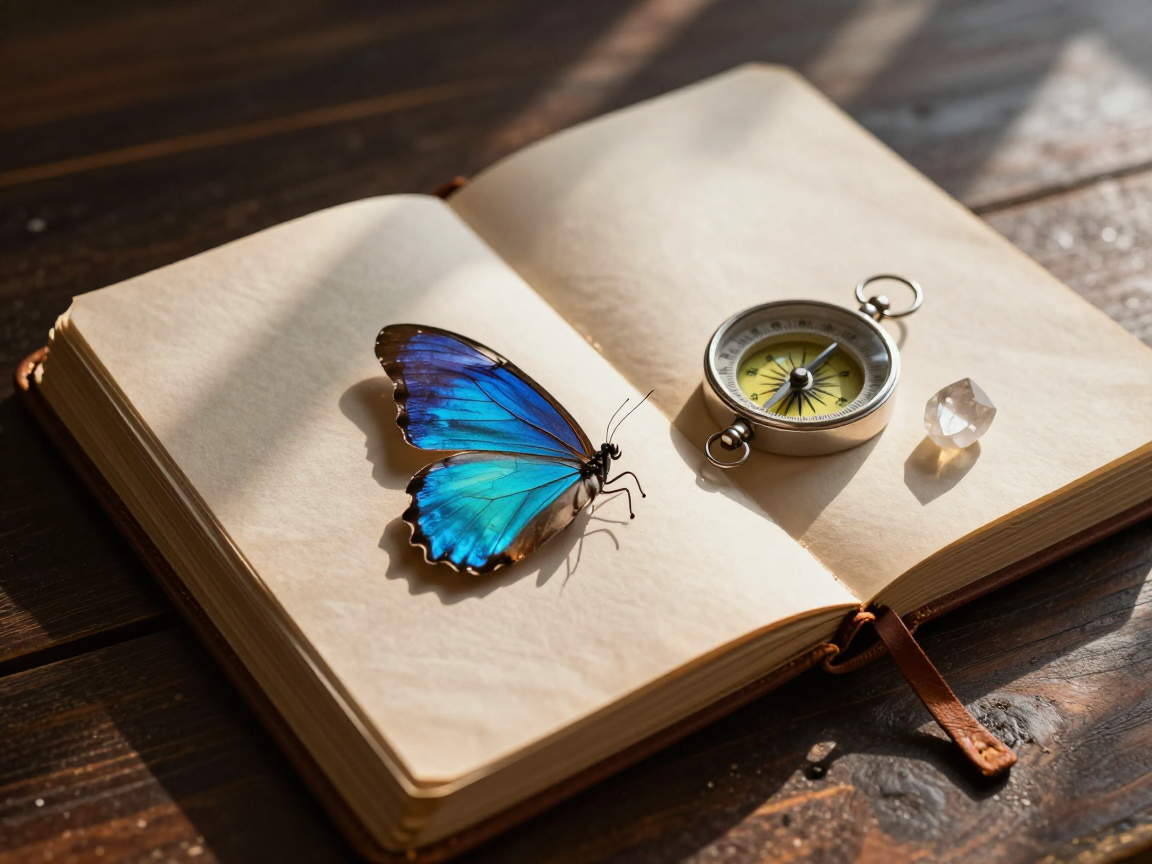
When we encounter spiritual symbolism in our waking life or our dreams, we are often tapping into this collective well. Our personal subconscious uses these universal images to get our attention. If you are going through a period of intense personal change, you might suddenly start noticing butterflies everywhere. While the butterfly is a universal symbol of metamorphosis, its appearance in your life acts as a specific "nod" from your subconscious, confirming that the discomfort you feel is part of a necessary growth process. It acts as a form of psychological validation, letting us know that we are on the right track even when we feel lost.
Nature as a Primary Source of Symbolic Meaning
Nature is perhaps the most prolific communicator of spiritual symbolism. Since the dawn of time, humans have looked to the natural world to understand their place in the cosmos. Every element of the environment carries a specific energetic frequency and symbolic weight.
The Wisdom of the Four Elements
- Water: Often represents the emotional body, intuition, and the flow of life. Stagnant water might symbolize emotional blockages, while a rushing river suggests movement and progress. The ocean, with its vast depths, often represents the deep subconscious or the divine source.
- Fire: A symbol of transformation, passion, and the "divine spark" within. It can represent both destruction and the purification necessary for new growth. Fire consumes the old to make way for the new, making it a primary symbol of alchemy.
- Air: Associated with the intellect, communication, and the breath of life. It represents the unseen forces that move us and the power of thought. Birds, as creatures of the air, often act as messengers between the heavens and the earth.
- Earth: Symbolizes grounding, stability, and the physical realm. It is the foundation upon which we build our lives and the reminder of our connection to the physical world. Roots, mountains, and stones are symbols of endurance and the "Great Mother."
Animal Messengers and Totems
Animals are frequently central to spiritual symbolism because they live in a state of pure instinct, unburdened by the ego. When an animal crosses your path repeatedly, it is often viewed as a "totem" or a messenger. The key is not just to look up a generic definition, but to observe the animal's behavior and see how it relates to your current life circumstances.
- The Owl: Represents wisdom, mystery, and the ability to see through deception. In many cultures, the owl is a guardian of the underworld, helping us navigate our own "shadow self."
- The Snake: A powerful symbol of healing and shedding the old. Because the snake sheds its skin, it represents the death of one phase and the birth of another.
- The Deer: Often symbolizes gentleness, sensitivity, and the ability to remain soft-hearted while navigating the "forest" of life's challenges.
A 5-Step Framework for Interpreting Personal Symbols
When you encounter something that feels symbolically significant, it can be overwhelming to try and "figure it out." Use this practical framework to move from confusion to clarity without getting lost in over-analysis.
- Capture the Initial Feeling: Before you look up the meaning of a symbol in a book or online, ask yourself how it made you feel. Did the sight of that white owl bring a sense of peace, or a jolt of fear? Your immediate emotional response is the most accurate guide to the symbol's intent. The soul speaks through feeling before it speaks through words.
- Contextualize the Appearance: Where and when did the symbol appear? A symbol that shows up during a difficult conversation carries a different weight than one that appears during a moment of quiet meditation. Look for the "bridge" between the symbol and your current environment. Is there a specific problem you were thinking about right before the sign appeared?
- Research Universal Meanings: Once you have your personal impression, look into the historical and cultural significance of the symbol. Does it have roots in ancient mythology? Is it a common archetype? This adds depth and "bones" to your initial intuition, connecting your personal experience to the broader human story.
- Look for the Rule of Three: In the world of spiritual symbolism, repetition is key. If you see a specific symbol once, it might be a coincidence. If you see it three times in different contexts—such as in a book, a dream, and a random conversation—it is a clear signal that requires your attention. The universe often repeats itself to ensure the message gets through our mental filters.
- Apply the Lesson: A symbol is not just for looking at; it is for acting upon. If you determine that the spiritual symbolism of a "key" is appearing to tell you that you have the power to unlock a new opportunity, ask yourself what specific door you have been afraid to open. Integration is the final, most important step of symbolic interpretation.
Distinguishing Between Meaning and Over-Analysis
A common pitfall for those beginning to explore spiritual symbolism is the tendency to see "signs" in everything. If you spend your entire day looking for hidden meanings in every leaf that falls or every license plate you pass, you may lose touch with the actual experience of living. This is often a flight into the "mental" to avoid the "physical."
True spiritual symbolism usually carries a certain "weight" or "shimmer." It feels different from a mundane observation. It often arrives with a sense of "Aha!" or a quiet internal "click." If you have to work too hard to make a symbol fit your narrative, it might just be a coincidence. The most profound symbols are those that find you when you aren't looking, cutting through the noise of your daily thoughts with a clear, resonant message. Balance is key: keep your eyes open, but don't force the universe to speak on your command.
Sacred Geometry and the Patterns of Creation
Beyond objects and animals, spiritual symbolism is found in the very geometry of the universe. Sacred geometry refers to the mathematical patterns that underpin everything from the spiral of a galaxy to the arrangement of seeds in a sunflower. These patterns—such as the Flower of Life, the Seed of Life, and the Fibonacci sequence—are considered the "blueprints" of creation.
When we engage with these symbols, we are aligning ourselves with the fundamental order of the universe. Meditating on a mandala or a geometric pattern can help quiet the mind because these shapes reflect the inherent harmony of the cosmos. They remind us that even when our lives feel chaotic, there is an underlying structure and purpose to the path we are walking. Seeing these patterns in nature is a form of spiritual symbolism that reaffirms our connection to the whole.
How to Cultivate a Symbolic Sensibility
Living a life informed by spiritual symbolism is about becoming a conscious participant in your own evolution. It requires a balance of logic and intuition. To cultivate this sensibility, start by keeping a "symbol journal." Record recurring dreams, unusual animal encounters, or striking synchronicities. Over time, you will begin to see a "mythology" emerging from your own life.
You will notice that certain symbols appear during specific cycles of your growth. Perhaps every time you are about to make a major career move, you dream of water. Or every time you are neglecting your self-care, you notice the same "warning" sign in your environment. By tracking these patterns, you develop a personalized map of your soul's journey. This practice turns your life into a living text, where every day has something new to teach you.
The Power of the Unspoken Word
Spiritual symbolism is a reminder that we are never truly alone or without guidance. It is a testament to the fact that the universe is alive, conscious, and deeply interested in our development. By learning to read the "language of the soul," we transform our daily existence into a sacred ritual. We begin to see the beauty in the mundane and the profound in the simple.
In the end, the goal of understanding spiritual symbolism is not to become a psychic or a fortune teller. It is to become more present. When we look for the symbolic meaning in our lives, we are forced to pay attention. We become observers of the present moment, listeners to the silence, and students of the great mystery. In that state of heightened awareness, the world opens up, revealing a depth and a brilliance that was there all along, just waiting for us to notice. We realize that we aren't just living in a world; we are participating in a masterpiece.