Why Your Progress Has Stalled: The Essential Guide to Spiritual Practice Pacing
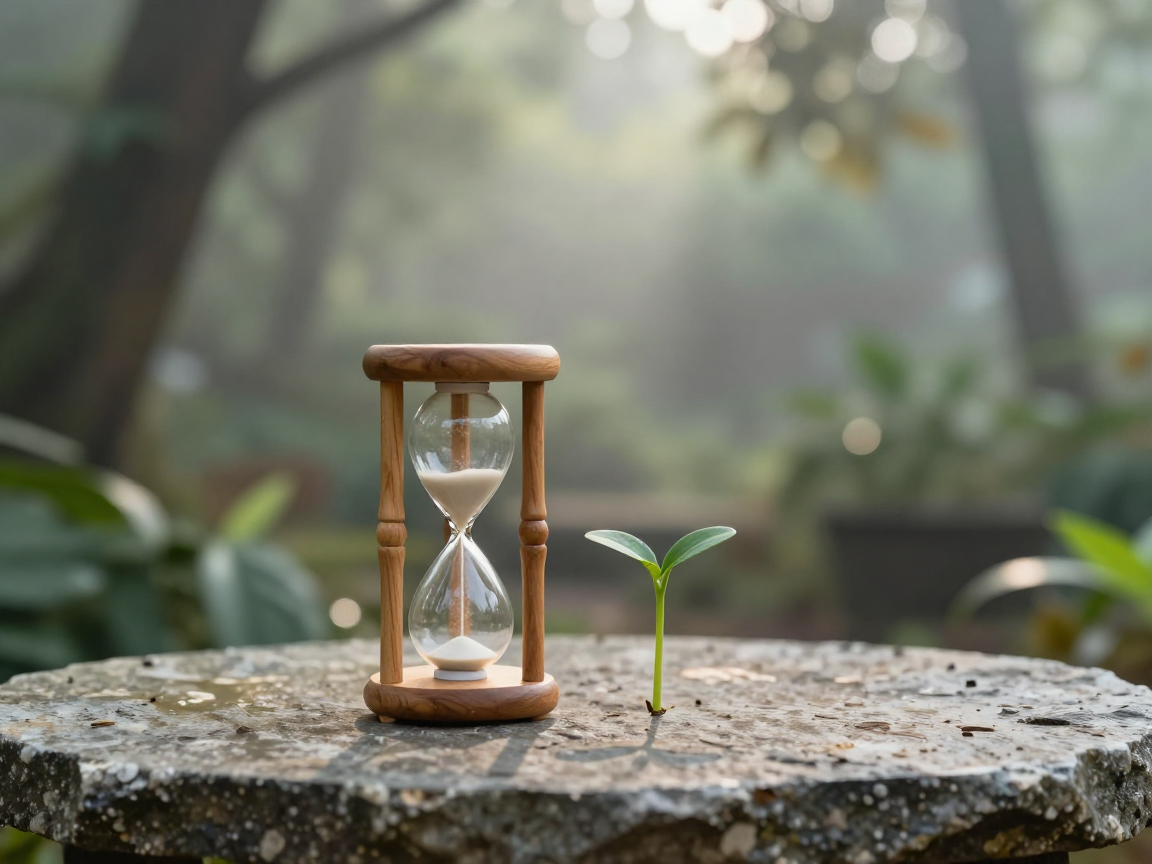
In the early days of a spiritual awakening or the discovery of a new healing modality, there is often a rush of adrenaline. It feels as though a door has been flung open, revealing a landscape of infinite possibility. Naturally, we want to explore every inch of it at once. We sign up for the retreats, we download the frequency tracks, we meditate for hours, and we dive headlong into shadow work. This phase is often called the "spiritual honeymoon," but like all honeymoons, it eventually meets the reality of daily life. When the initial surge of energy wanes, many seekers find themselves not just tired, but deeply depleted, disillusioned, or even more anxious than when they began.
This phenomenon is the result of a lack of spiritual practice pacing. We live in a culture that prizes "hustle" and "optimization" above all else, and unfortunately, we often export those same frantic values into our inner lives. We treat enlightenment like a career goal and healing like a project with a deadline. However, the soul does not operate on a quarterly review cycle. True transformation requires a rhythmic approach that respects the capacity of the nervous system and the time needed for deep integration. Learning the art of pacing is not about slowing down your progress—it is about ensuring that your progress actually sticks. When we rush the process, we create a "spiritual bypass" where we gain intellectual knowledge but fail to embody the wisdom in our nervous systems.
The Hidden Trap of the Spiritual Sprint
When we talk about spiritual practice pacing, we are addressing the "spiritual sprint"—the tendency to engage in intense practices without adequate time for the body and mind to process the shifts. There is a psychological drive behind this: the egoic desire for a quick fix. We want to bypass the discomfort of our current reality and jump straight to the "vibe high" destination. This urgency is often fueled by a sense of inadequacy, the belief that if we just meditate a little harder or attend one more workshop, we will finally be "enough" or "healed."
However, spirituality is not just an intellectual or emotional pursuit; it is a physiological one. Every time you engage in deep meditation, sound healing, or energetic clearing, you are essentially rewiring your internal circuitry. Your nervous system is habituated to certain patterns of survival, anxiety, or disconnection. Forcing a sudden shift is like trying to run 10,000 volts through a wire that is only rated for 110. The system blows a fuse. In spiritual terms, "blowing a fuse" looks like intense irritability, physical fatigue, "spiritual indigestion" (where you have a lot of knowledge but cannot apply it), or a complete loss of interest in the path altogether. Pacing allows the "wiring" of your body to gradually adapt to the higher frequencies and deeper insights you are inviting in.
Why Spiritual Practice Pacing Is Essential for Integration
Integration is the process by which a spiritual insight or an energetic shift becomes a lived reality. Without integration, a practice is just a temporary state—a "spiritual high" that evaporates as soon as you hit traffic or face a difficult conversation. Pacing is the container that allows integration to happen. It is the bridge between the cushion and the kitchen, between the retreat center and the workplace.
Consider the metaphor of a sponge. If you pour a gallon of water onto a dry sponge all at once, most of it will run off the sides. The sponge can only absorb so much at a given speed. But if you drip the water slowly, the sponge expands and holds the moisture. Spiritual practice pacing ensures that you are "absorbing" your practices rather than just letting them run off the surface of your life. Without this absorption, you might find yourself stuck in a cycle of "seeking"—constantly looking for the next peak experience because the last one didn't actually change your baseline level of peace or presence.
Effective pacing respects three core pillars:
- Biological Capacity: The nervous system needs time to return to homeostasis after intense "up-leveling" or emotional release. This is the physiological limit of how much change you can handle at once.
- Psychological Digestion: The mind needs time to dismantle old belief systems and build new ones without feeling overwhelmed or falling into a state of cognitive dissonance.
- Practical Application: You need time to practice your "new self" in the real world—at your job, in your relationships, and in your quiet moments. Growth is proven in how we respond to the mundane, not just how we feel during a ceremony.
5 Signs You Are Over-Pacing Your Spiritual Growth
Recognizing when you have exceeded your current capacity is the first step toward a more sustainable path. Here are the common red flags that your spiritual practice pacing is out of sync with your system:
- Spiritual Bypassing and Dissociation: You use your practices to avoid dealing with practical life responsibilities or uncomfortable emotions. If your sense of peace depends on you being in a controlled, quiet room and disappears the moment life gets messy, you are likely over-pacing and using spirituality as an escape rather than an integration.
- Chronic Fatigue and Adrenal Burnout: You feel physically drained despite getting enough sleep. Intense energetic work, breathwork, or constant high-frequency exposure can tax the adrenals if not balanced with deep rest and grounding. If you feel "wired but tired," your pacing is off.
- Hyper-Sensitivity and Emotional Volatility: You find yourself unable to handle the "noise" of the world. While increased sensitivity is a natural part of growth, an inability to function in daily life or sudden, uncontrollable emotional outbursts often indicate that your field is over-stimulated and under-integrated.
- The "Next Hit" Syndrome: You find yourself constantly looking for the next teacher, the next frequency track, or the next "secret" modality because the current ones aren't working fast enough. This is a sign of ego-driven urgency rather than soul-led evolution.
- Mental Fog and Un-groundedness: You feel "spaced out," dizzy, or disconnected from your physical body. This is a classic sign that your energy is focused too high in the upper chakras (transcendence) without enough grounding (embodiment) to anchor the shifts into your physical reality.
The Rhythmic Integration Framework: A Step-by-Step Plan
To move from sprinting to a sustainable pace, you can use the Rhythmic Integration Framework. This is designed to help you build a spiritual practice that grows with you rather than burning you out. This framework is about building a foundation that can support massive transformation without collapsing the structure.
Step 1: The Baseline Energy Audit
Before adding a new practice or increasing the intensity of your current one, assess your current life load. Are you currently navigating a divorce, a career change, or a health challenge? If your external life is demanding, your spiritual practice pacing should be more gentle, focused on support and grounding rather than deep expansion. If your life is stable, you may have more "bandwidth" for intense exploratory work. Never measure your pace against someone else's; their capacity is different from yours.
Step 2: The 10% Expansion Rule
Instead of jumping into a 90-minute daily meditation from zero, start with a duration that feels "too easy"—perhaps 10 minutes. Once that is integrated into your routine and feels like a natural part of your day for at least two weeks, increase the intensity or duration by only 10%. This incremental growth allows your nervous system to adjust slowly, preventing the "safety alarm" in your brain from triggering a survival response that halts progress.
Step 3: Implement "White Space" Days
Designate at least one or two days a week where you do no "formal" spiritual work. No guided meditations, no frequency tracks, no journaling, and no spiritual reading. Use these days for purely physical, grounding activities: gardening, cooking, heavy lifting, or simple play. This creates the "void" or the silence necessary for your subconscious to synthesize what you have learned. Remember, the music is in the silence between the notes.
Step 4: The Integration-to-Action Ratio
For every hour you spend in "receptive" spiritual practice (listening to frequencies, attending a workshop, receiving energy work), spend at least one hour in "active" integration. This could mean practicing a new boundary with a coworker, engaging in a creative hobby, or simply sitting in silence and noticing how your body feels. Ask yourself: "How does this practice change how I treat the person at the grocery store?" If it doesn't change your behavior, it hasn't been integrated.
How to Course-Correct When You Have Gone Too Fast
If you realize you have already "blown a fuse" and are feeling the effects of poor spiritual practice pacing, the solution is not to stop entirely, but to shift the nature of your practice. The goal is to move the energy from the head and the etheric field back down into the body and the earth.
- Prioritize Radical Grounding: Spend time in nature, ideally barefoot. Use weighted blankets. Eat root vegetables like potatoes, carrots, and beets. Focus on the physical sensation of the soles of your feet hitting the floor. These are not "lesser" spiritual practices; they are the foundation that allows higher work to be safe and sustainable.
- Simplify the Routine: Strip your practice down to the bare essentials. If you have a complex 10-step morning ritual, cut it down to one single, nourishing act. Let that one thing be the "anchor" that keeps you steady while your system recalibrates.
- Somatic Movement over Stillness: Sometimes, the best spiritual practice for an over-stimulated system is a vigorous walk or a yoga flow that focuses on strength and stability rather than "transcendence." Moving the body helps process the stagnant energy that causes mental fog.
- Honor the Pause: Recognize that a period of "nothingness" or a lack of motivation is often just the soul’s way of saying "I am busy processing, please do not disturb." Resistance is often just a request for more time. Respect it.
Pacing as a Form of Deep Devotion
There is a subtle form of violence we do to ourselves when we try to force our growth. We imply that who we are right now is not enough, and that we must "fix" ourselves as quickly as possible. When we adopt a mindful approach to spiritual practice pacing, we are practicing a form of self-love and radical acceptance. We are saying to our souls: "I trust your timing. I trust that what is meant for me will not pass me by just because I am moving at a human speed."
Ultimately, the path of spiritual evolution is a marathon, not a sprint. The goal is not to reach a finish line—because the horizon of growth is infinite—but to enjoy the walk. By pacing yourself, you ensure that the light you bring in is not a blinding flash that leaves you in the dark, but a steady flame that warms your life and the lives of those around you for years to come. Growth is inevitable when the conditions are right; your job is simply to maintain the soil and respect the seasons. When you move at the pace of nature, everything happens exactly when it needs to.