Reclaiming the Sacred After the Storm: A Grounded Guide to Spiritual Practice for Trauma Survivors
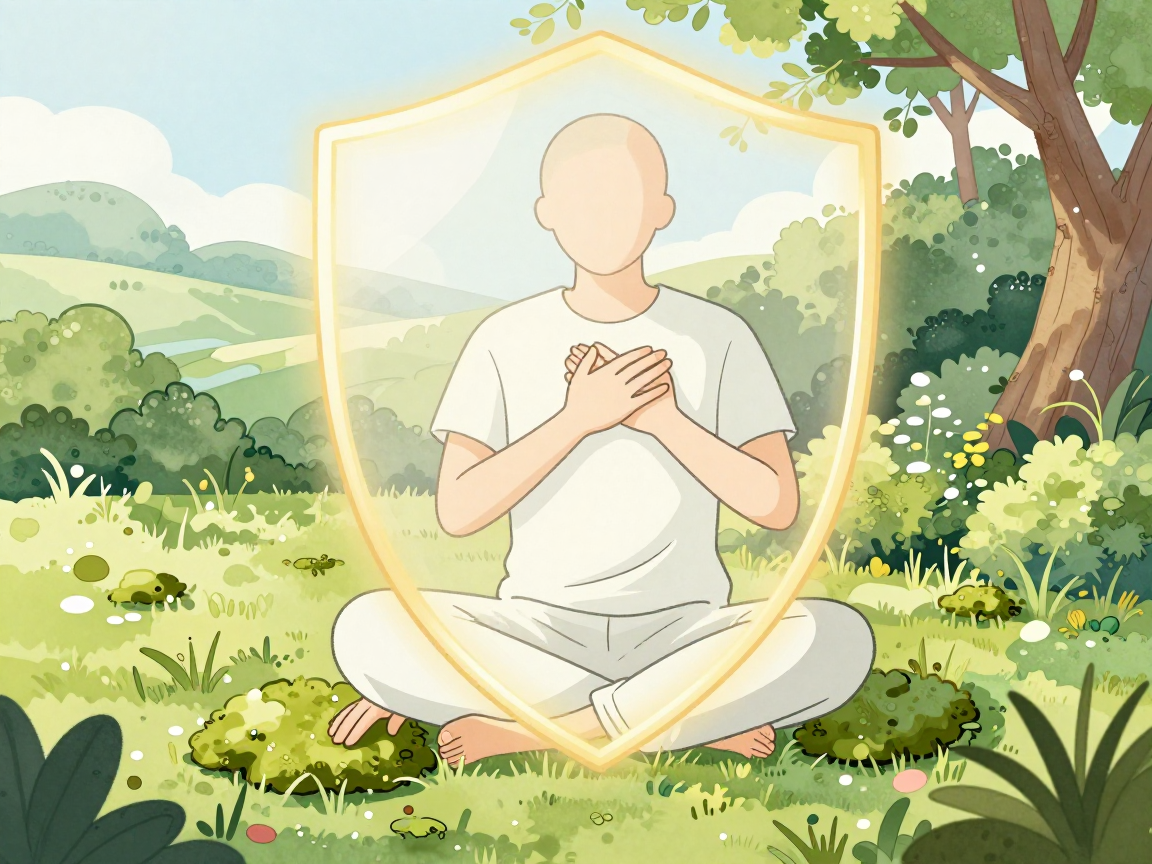
For many individuals who have walked through the fires of significant life adversity, the suggestion to sit in silence can feel less like an invitation to peace and more like a sentence to a prison of their own making. We are often told that spirituality is the ultimate balm for a wounded soul, yet for someone living with a dysregulated nervous system, the standard tools of the trade—silent meditation, intense prayer, or long retreats—can trigger the very flashbacks and anxieties they are trying to heal. This creates a painful paradox where the person feels too broken even for the things meant to fix them.
Building a meaningful spiritual practice for trauma survivors is not about forcing the mind into submission or achieving a state of blissful emptiness. Instead, it is about the slow, intentional process of reclaiming the body as a safe place to live. It requires a fundamental shift from transcendence—trying to rise above the human experience—to embodiment, which involves diving gently into the physical and emotional reality of the present moment with a sense of curiosity and profound self-compassion. This journey isn't about reaching a higher plane; it is about learning how to stay on the ground.
Why Traditional Spiritual Practice for Trauma Survivors Often Feels Impossible
To understand why traditional methods often fail, we must first look at the physiology of trauma. Trauma is not just a memory of an event; it is a physiological state where the nervous system is stuck in a loop of fight, flight, or freeze. When we ask a survivor to close their eyes and be still, we are removing the external distractions that usually keep the internal alarm system at bay. In the silence, the body's hypervigilance often ramps up, scanning the internal landscape for threats. This can lead to a state of "flooding," where emotions and physical sensations become overwhelming.
Furthermore, many survivors have spent years or decades perfecting the art of dissociation—a survival mechanism that allows the consciousness to leave the body when reality is too painful to bear. Many spiritual traditions unintentionally mirror this dissociation by encouraging practitioners to leave their ego, their body, or their worldly concerns behind. For a survivor, this isn't a spiritual achievement; it is a trigger. A helpful spiritual practice for trauma survivors must therefore be the opposite of dissociation. It must be an anchor that helps the individual stay tethered to the here and now, rather than drifting away into the "fog" of the past.
The Threat of Silence and Stillness
In the context of trauma, silence is rarely neutral. For some, silence was a precursor to harm. For others, it was the cold response to a plea for help. When a spiritual guide says, "Just be still," they may unknowingly be asking a survivor to enter a state that feels identical to the "freeze" response. When the body freezes, it is in a state of high metabolic arousal but no outward movement. This is incredibly taxing on the heart and the psyche. Realizing that stillness is a skill to be built—not a starting point—is the first step in creating a sustainable practice.
From Transcendence to Embodiment: Reimagining the Goal of Practice
Most modern spiritual discourse focuses on "reaching higher states" or "connecting with the divine." While these are noble goals, they can be dangerous if they are used to bypass the difficult work of feeling the body. For a trauma survivor, the most "spiritual" thing they can do is often the most mundane: feeling the weight of their feet on the floor, the texture of a fabric against their skin, or the cool air entering their nostrils.
Embodied spirituality suggests that the divine is not found by leaving the self, but by inhabiting the self more fully. This is a radical act for someone whose body has been a site of betrayal or pain. By shifting the focus from the celestial to the somatic, a spiritual practice for trauma survivors becomes a tool for nervous system regulation. We are no longer looking for a light at the end of the tunnel; we are learning how to carry a lamp while we are still inside the tunnel.
The Myth of Emptying the Mind
One of the most persistent and harmful myths in spirituality is that you must empty your mind to be successful. For a survivor, the mind is often a crowded, noisy place filled with "what if" scenarios and self-critical voices. Trying to empty this space is like trying to hold back the ocean with a broom. A trauma-informed approach suggests that we do not need to empty the mind. We simply need to change our relationship to the noise. We learn to see the thoughts as "symptoms of a protective brain" rather than as absolute truths or personal failures. Success is not a quiet mind; it is a mind that is treated with kindness even when it is loud.
The Safe Path Framework: 4 Pillars of Trauma-Informed Spirituality
If you are looking to build or adapt a spiritual practice for trauma survivors, consider using this framework to ensure your practice supports your healing rather than hindering it. This framework prioritizes the safety of the nervous system above all else.
- Pillar One: Titration and Pacing. In chemistry, titration is the process of adding one substance to another very slowly to prevent a volatile reaction. Spiritual practice should be the same. Instead of a thirty-minute meditation, try thirty seconds. If that feels safe, try a minute. The goal is to stay within your "window of tolerance," that zone where you feel challenged but not overwhelmed.
- Pillar Two: Radical Agency and Choice. Trauma is the ultimate loss of agency. Therefore, your spiritual practice must be the ultimate expression of it. You are the boss. If a guided meditation tells you to keep your eyes closed but you feel safer with them open, open them. If a yoga teacher tells you to hold a pose but your body says "no," listen to your body. Every choice you make to honor your own needs is a spiritual victory.
- Pillar Three: The Somatic Felt Sense. Focus on what is happening in the body. If you are praying or chanting, where do you feel the vibration? If you are sitting in nature, what is the temperature of the air? By focusing on the "felt sense," you keep your prefrontal cortex online and prevent the brain from slipping into a flashback state.
- Pillar Four: Self-Compassion as a Prerequisite. You cannot shame yourself into healing. If you find yourself unable to practice one day, or if you get triggered during a session, the practice then becomes the act of being kind to yourself about that difficulty. The "failure" is actually the most important part of the spiritual practice for trauma survivors.
7 Grounded Practices for Reclaiming Inner Safety
These exercises are designed to provide the benefits of spiritual connection while maintaining the "anchor" of physical reality. They are excellent starting points for anyone navigating the complexities of post-traumatic growth.
- Walking Meditation with Sensory Tracking: Instead of sitting still, walk slowly. For every few steps, name one thing you see, one thing you hear, and one thing you feel. This keeps the mind present and the body moving, which prevents the "freeze" response.
- Vagal Toning Through Chanting or Humming: The vagus nerve is the highway of the parasympathetic nervous system. Simple vocalizations—like humming a low tone or chanting—create vibrations in the chest and throat that physically signal to the brain that it is safe to relax.
- Ritualized Containment: Create a physical container for your practice. This could be a specific chair, a shawl you wrap around your shoulders, or a circle of stones. This acts as a boundary, telling your nervous system that inside this circle, you are safe to explore.
- Nature Observation and Interconnectedness: Spend time watching something that is not human and not "busy." Watch the way a tree moves in the wind. This fosters a sense of belonging to the larger web of life without the pressure of human interaction.
- Weighted Proprioception: Use a weighted blanket or hold a heavy stone during prayer or reflection. The pressure provides the brain with information about where the body ends and the world begins, which is highly grounding for those who struggle with dissociation.
- The "Safe Place" Visualization with an Exit Strategy: Visualize a place where you feel perfectly safe. However, always include an "exit" in your visualization—a door or a path that leads back to your current room. Knowing you can leave the visualization at any time makes it much easier to stay.
- Rhythmic Breathing without Retention: Many breathing exercises ask you to hold your breath. For survivors, breath retention can feel like suffocation or a loss of control. Stick to rhythmic, gentle inhales and exhales without the holds to keep the nervous system calm.
The Role of Ritual in a Spiritual Practice for Trauma Survivors
Ritual is often misunderstood as empty repetition, but for the traumatized brain, ritual is a language of safety. When life felt unpredictable and dangerous, the brain lost its ability to trust the future. Ritual—the act of doing the same small thing in the same way at the same time—rebuilds that trust. Whether it is lighting a candle at dusk, washing your hands mindfully before bed, or reciting a specific phrase of protection, these small loops of predictability create neural pathways of safety.
A ritual doesn't need to be religious; it simply needs to be intentional. The goal is to signal to the subconscious that "in this moment, I am in control of my environment, and I am safe." Over time, these small acts of reclaimed order build a foundation upon which more complex spiritual explorations can be built.
The Danger of Spiritual Bypassing in Recovery
As we explore a spiritual practice for trauma survivors, we must remain vigilant against "spiritual bypassing." This is the tendency to use spiritual ideas and practices to avoid facing unresolved emotional issues and psychological wounds. Phrases like "everything happens for a reason" or "just let it go" can be deeply dismissive to someone who has experienced violation.
True spirituality does not ask us to ignore our scars; it asks us to bring them into the light. If a practice feels like it is requiring you to "perform" happiness or forgiveness before you are ready, it is likely bypassing. A healthy practice allows for anger, grief, and the "dark night of the soul." It recognizes that the spiritual task is to find a way to live meaningfully despite the reality of pain, not by pretending the pain doesn't exist.
The Sacred Act of Staying
Ultimately, the most profound spiritual practice for trauma survivors is the act of staying in the body when everything in you wants to run. It is the quiet, daily commitment to being a good friend to yourself. Whether you find that connection through a formal religion, a walk in the woods, or the simple rhythm of your own breath, remember that your healing is a sacred journey.
You are not "doing it wrong" if your path looks different from the manuals. By prioritizing your safety and listening to the wisdom of your own nervous system, you are not just practicing spirituality; you are living it. Every time you choose to stay present, every time you choose compassion over shame, you are reclaiming the sacred space that trauma tried to take away. You are the architect of your own sanctuary, building it one grounded breath at a time.