Beyond the Silence: Why Sound Bath Meditation is the Easiest Way to Quiet a Racing Mind
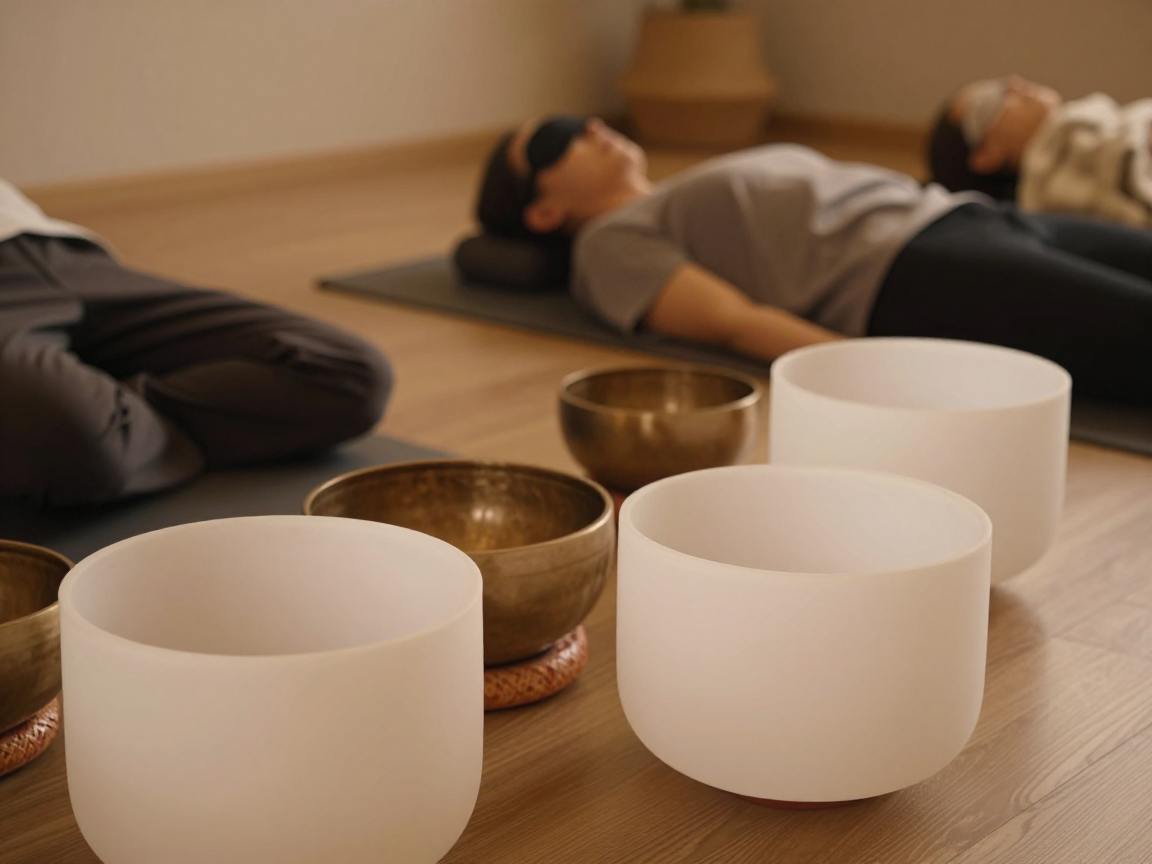
In an era defined by constant notifications and the relentless hum of digital anxiety, the search for true silence has become a modern quest. Yet, for many, sitting in a quiet room with nothing but their own thoughts is less of a sanctuary and more of a psychological battlefield. This is where the practice of sound bath meditation offers a different path. Instead of demanding that you silence your mind through sheer willpower, it invites you to submerge yourself in a sea of frequency. It is not something you do as much as it is something that happens to you.
A sound bath meditation is an immersive experience where participants are washed over by the resonant sounds of instruments like crystal singing bowls, gongs, and chimes. Unlike a concert, there is no melody to follow or rhythm to catch. The goal is to move the listener from a state of active thinking into a state of deep, restorative presence. By using specific vibrations to interact with the body on a cellular level, this practice bypasses the analytical mind and speaks directly to the nervous system. It is a shortcut to the meditative state that often takes years of traditional practice to achieve.
The Physics of Presence: How Sound Bath Meditation Affects the Body
To understand why sound bath meditation is so effective, we have to look past the mystical aesthetics and into the physics of sound. Every cell in the human body is essentially a small resonator that responds to external vibrations. When you attend a session, you aren't just hearing the sound with your ears; you are feeling it in your chest, your skin, and your bones. This is a process known as entrainment—the tendency for two vibrating bodies to lock into a common phase.
Our brains operate on different frequencies depending on our state of consciousness. During a typical workday, most people are in a Beta state, characterized by fast, reactive, and analytical thinking. Sound bath meditation uses sustained, low-frequency tones to encourage the brain to downshift into Alpha (relaxed awareness) or Theta (deep meditation and REM sleep) states. This shift is not just metaphorical. Research suggests that sound therapy can lower heart rate, reduce blood pressure, and decrease cortisol levels. By providing a physical anchor for your attention, the sound makes it nearly impossible for the mind to drift back to your to-do list.
Furthermore, the complexity of the sounds used in these sessions plays a vital role. Gongs, for example, produce a wide spectrum of overtones that the human brain cannot easily categorize. When the brain fails to find a repetitive pattern or a familiar melody, it eventually stops trying to analyze the input and simply surrenders to it. This "ego-dissolution" is exactly what traditional meditators strive for, but in a sound bath, the environment does the heavy lifting for you. It targets the vagus nerve, the main component of the parasympathetic nervous system, signaling to the body that it is safe to turn off the "fight or flight" response and enter a state of repair.
The Instruments of Resonance
Not all sounds are created equal in a therapeutic setting. A skilled practitioner selects instruments based on their ability to create long, sustaining vibrations that resonate deeply. Each instrument serves a specific purpose in the landscape of a sound bath meditation.
- Crystal Singing Bowls: Made from 99.9% pure crushed quartz, these bowls produce a clean, piercing tone. Because our bodies are largely composed of water and crystalline structures, the resonance of quartz is particularly effective at clearing energetic blockages and inducing a state of high-frequency clarity.
- Tibetan (Himalayan) Singing Bowls: Usually crafted from a blend of several metals, these bowls have a warmer, more grounded sound. They produce complex harmonics that feel earthy and stabilizing, often used for grounding the participant after more intense sonic shifts.
- Gongs: Perhaps the most powerful tool in the shed, the gong creates a wall of sound. Its vibrations are physically palpable and can be used to release deep-seated physical tension or emotional trauma through sheer sonic force. A gong flush can feel like a physical massage for the internal organs.
- Chimes and Rain Sticks: These are often used as "cleansers" or to mark transitions. Their lighter, higher frequencies act as a sensory reset, bringing the listener back to a more delicate state of awareness after the heavy resonance of the gongs.
A Step-by-Step Framework for Your First Sound Bath Meditation
If you are planning to attend a session, your experience will be greatly enhanced by a bit of preparation. Unlike a yoga class where you are moving through poses, a sound bath is a passive experience, which can surprisingly be more challenging for the restless. Use this framework to ensure you get the most out of your immersion.
- Prioritize Comfort Over Everything: You will likely be lying down for 60 to 90 minutes. Your body temperature will drop as your heart rate slows. Bring a thick yoga mat, a warm blanket, and an eye mask to block out visual distractions. If you have lower back issues, place a bolster or a rolled-up towel under your knees. The goal is to eliminate any physical signals of discomfort that might pull you out of the experience.
- Set a Soft Intention: Before the sound begins, take a moment to decide what you want from the session. This shouldn't be a complex goal. It could be as simple as "I am here to rest" or "I am open to whatever arises." An intention acts as a gentle rudder for your subconscious mind as it drifts through the sonic landscape.
- Breathe into the Vibrations: In the first ten minutes, you might feel an urge to fidget or a sense of impatience. This is normal. Use your breath to anchor yourself. Inhale the sound and imagine it traveling to parts of your body that feel tight or heavy. Think of the sound as a physical substance that can wash away debris.
- Observe the Sensory Shifts: You may experience "synesthesia," where you start to see colors or patterns behind your eyelids in response to the sound. You might feel a sensation of floating or a tingling in your limbs. Observe these without judgment or the need to explain them. Your brain is simply processing non-linear input in a creative way.
- The Gentle Return: When the sound stops, there is usually a period of silence. This is the most important part of the session—the integration. Do not rush to sit up or check your phone. Allow the stillness to settle into your bones. This "shunya" or void is where the real healing is finalized.
Why Traditional Meditation Fails (and Why Sound Baths Succeed)
The most common complaint about traditional mindfulness is "I can't stop my thoughts." The reality is that the brain is a thinking machine; its job is to produce thoughts. Expecting it to stop is like expecting the heart to stop beating. Traditional meditation requires the practitioner to constantly notice thoughts and return to the breath—a repetitive "rep" for the mind that can feel exhausting when you are already burned out.
Sound bath meditation changes the game by providing a stimulus that is more interesting than your thoughts. The rich, textured landscape of sound gives the mind a complex toy to play with. Because the sound is external and omnipresent, you don't have to work to find it. You are literally held by the frequency. For individuals with ADHD, high stress, or those processing grief, this external support is often the only way they can find a moment of peace. It moves the practice from an intellectual exercise to a somatic experience. You aren't trying to think your way into calm; you are vibrating your way into it.
Navigating the Emotional Release
One aspect of sound bath meditation that often surprises beginners is the potential for emotional release. Because sound bypasses the logical brain, it can tap into the limbic system—the part of the brain responsible for emotions and memory. It is not uncommon for people to experience sudden waves of sadness, joy, or even anger during a session.
This is often referred to as a "tonal release." If you find yourself crying or feeling a surge of emotion, the best approach is to stay with the breath and let the sound carry it through you. These emotions are often "stuck" energy that the body has been holding in the fascia or muscle tissue. The vibration acts as a catalyst, shaking these emotions loose so they can finally be processed and released. There is no need to analyze why you feel a certain way in the moment; simply allow the sound to be the container for your experience.
The Afterglow: Integrating the Experience
The benefits of a sound bath meditation do not end when you leave the room. Many participants report a sense of "spaciousness" in their minds for days afterward. You might find that your reactions to stress are less volatile or that your sleep quality improves significantly.
To prolong these effects, it is recommended to stay hydrated, as sound travels more efficiently through hydrated tissue. Avoid loud, chaotic environments immediately following a session. Give yourself an hour of "low-stimulation" time to let the nervous system recalibrate to the outside world. Journaling can also be a powerful tool here, as the deep Theta state induced by the sound often unlocks creative insights or emotional realizations that were previously buried under the noise of daily life. Pay attention to your dreams the night of a sound bath, as they are often more vivid and symbolic during this window of heightened neurological plasticity.
Finding Stillness in a Loud World
Ultimately, sound bath meditation is a practice of surrender. It teaches us that we do not always have to "work" to heal or "strive" to be calm. Sometimes, the most profound transformations happen when we simply lie down and allow ourselves to be moved by the world around us. By using the power of resonance to quiet the internal chatter, we rediscover the silence that was always there, waiting just beneath the noise.
Whether you are looking for a deep physical rest, an emotional release, or simply a break from the digital grind, the sound bath offers a vessel to carry you back to yourself. In a world that constantly asks us to be more, do more, and produce more, the invitation to simply be and let the sound do the work is perhaps the greatest luxury we can afford ourselves. It is a reminder that we are not just minds trapped in bodies, but resonant beings capable of profound harmony.