Beyond the Pose: How Somatic Yoga Rewires Your Nervous System for Deep Healing
Most people approach exercise as a way to fix, change, or punish the body. We go to the gym to burn calories or attend a power yoga class to sweat out our frustrations. But for many, this external focus only adds more noise to an already overwhelmed system. If you have ever left a workout feeling physically exhausted yet mentally wired, or if you struggle with chronic tension that no amount of stretching seems to touch, the missing piece might not be more effort - it might be a different kind of attention altogether.
Somatic yoga is an invitation to stop performing and start feeling. Unlike traditional fitness modalities that prioritize how a movement looks from the outside, this practice is rooted entirely in the internal experience of the mover. It is less about achieving the perfect downward dog and more about understanding the subtle signals your nervous system is sending from within. By shifting the goal from "doing" to "sensing", we can begin to untangle the knots of long-held stress and trauma that live in our tissues.
Understanding the Essence of Somatic Yoga
The word somatic comes from the Greek word "soma", which refers to the body as perceived from within. While a traditional yoga class might focus on alignment, flexibility, and holding specific shapes, somatic yoga prioritizes the "felt sense". It is a movement inquiry that blends ancient yogic wisdom with modern neuroscience and somatics - a field of bodywork that emphasizes internal physical perception and experience.
In a typical session, you might find yourself moving much slower than usual. You may spend a significant amount of time on the floor, performing micro-movements that seem almost invisible to an observer. The goal of these movements is to re-establish the communication lines between the brain and the muscles. Over time, due to stress, injury, or repetitive habits, our brains actually lose the ability to sense and control certain muscle groups. This phenomenon is known as Sensory Motor Amnesia. Somatic yoga acts as a software update for your nervous system, reminding your brain how to let go of muscles that have been stuck in a state of chronic contraction.
The Difference Between Stretching and Pandiculation
One of the biggest misconceptions about somatic yoga is that it is just another form of stretching. In reality, the two are fundamentally different. Traditional stretching often involves pulling a muscle to its limit and holding it there, which can sometimes trigger the "stretch reflex" - a protective mechanism where the muscle actually tightens to prevent tearing.
Somatic yoga utilizes a process called pandiculation. This is the same natural movement you see a cat or a dog perform when they wake up from a nap. They don't just stretch; they yawn their muscles open by first engaging them and then slowly, consciously releasing them.
Pandiculation involves three distinct phases:
- A voluntary contraction of the muscle.
- A slow, controlled lengthening of that muscle.
- A complete relaxation and integration phase.
By engaging the muscle before lengthening it, you send a clear signal to the motor cortex of the brain. This allows the brain to regain voluntary control over the muscle's resting length. This is why somatic yoga is so effective for people with chronic back pain, neck tension, or restricted mobility that hasn't responded to traditional physical therapy or standard yoga.
Why Your Nervous System Needs This Practice
We live in a culture that rewards the "hustle". We are constantly in a state of high alert, navigating emails, traffic, and endless to-do lists. This keeps our nervous system stuck in the sympathetic branch - the "fight or flight" mode. When we stay here too long, our bodies become rigid. We hold our breath, clench our jaws, and hike our shoulders toward our ears.
Somatic yoga is a powerful tool for nervous system regulation. By slowing down and focusing on the internal sensation, we activate the parasympathetic nervous system - the "rest and digest" or "social engagement" system. This shift tells the brain that we are safe. When the brain feels safe, it allows the muscles to soften, the breath to deepen, and the digestive system to function properly. It is a bottom-up approach to mental health, meaning we use the body to calm the mind, rather than trying to think our way out of anxiety.
5 Core Principles of a Somatic Yoga Practice
If you are transitioning from a high-intensity workout routine to somatic yoga, the change in pace can feel jarring. To get the most out of the practice, keep these five principles in mind:
- Move for the Inside, Not the Outside: Forget what you think the pose should look like. If a movement feels nourishing, you are doing it right. If it feels forced or painful, back off.
- Slowness is Key: The brain cannot learn new patterns when we move quickly. Speed relies on existing habits. By moving in slow motion, you give your nervous system the time it needs to process new sensory information.
- Minimize Effort: In somatic yoga, we often aim for about 20 percent to 30 percent of our maximum effort. We want to move with the least amount of strain possible to identify where we are unconsciously overworking.
- Focus on the Journey, Not the Destination: There is no "final expression" of a somatic movement. The benefit lies in the process of moving from point A to point B, not in arriving at point B.
- Embrace Curiosity: Approach your body with the curiosity of a scientist. Ask yourself questions like, "Where do I feel this movement starting?" or "Does my right hip feel different than my left?"
A Simple Framework for Reconnecting with Your Body
You don't need a 90-minute class to benefit from somatic yoga. You can begin to rewire your nervous system with a simple daily check-in. Use this four-step framework to transition from a state of stress to a state of somatic awareness:
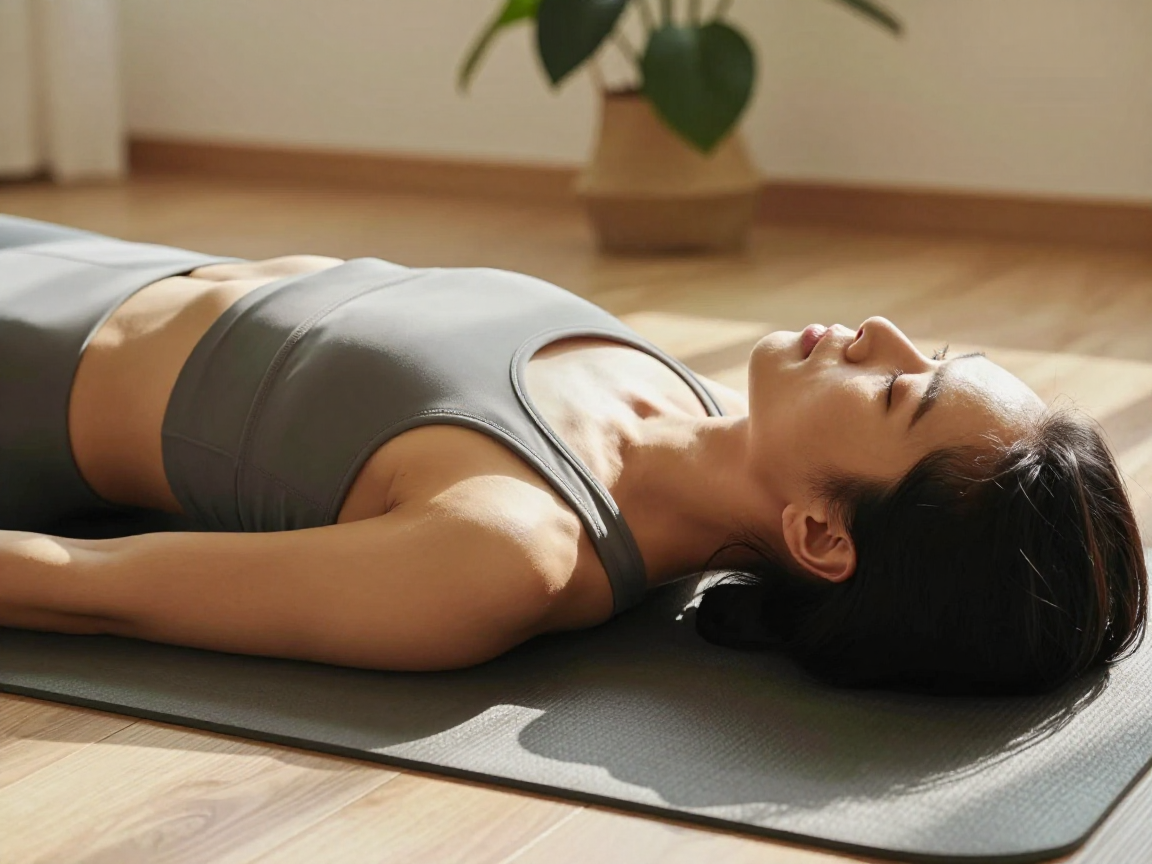
- The Sensory Scan: Lie on your back with your legs extended. Close your eyes and notice how your body meets the floor. Which parts feel heavy? Which parts feel light? Do you notice any gaps between your lower back and the mat? This is your baseline.
- The Gentle Engagement: Pick a specific area of tension, such as your shoulders. Gently shrug them toward your ears, feeling the muscles contract. Only go as far as is comfortable.
- The Conscious Release: Very slowly - count to ten - begin to lower your shoulders back down. Feel the muscle fibers gradually lengthening and letting go. Do not just drop them; control the descent.
- The Integration Pause: Once your shoulders are back at rest, take a full breath. Notice if the area feels different. Does it feel warmer? Heavier? More connected to the floor? This pause is where the brain integrates the new information.
Who Can Benefit from Somatic Yoga?
Because of its gentle and adaptable nature, somatic yoga is accessible to almost everyone. It is particularly beneficial for specific groups who may feel let down by more traditional forms of exercise:
- Individuals with Chronic Pain: Especially those dealing with non-specific back pain, sciatica, or fibromyalgia.
- People Healing from Trauma: Trauma often causes us to disconnect from our physical sensations. Somatic yoga provides a safe way to inhabit the body again at a pace that doesn't overwhelm the system.
- High-Acheivers and "Type A" Personalities: Those who struggle to relax or feel they must always be "productive" find that the slow pace of somatic yoga challenges their habitual patterns of pushing.
- Aging Adults: As we age, our proprioception (the sense of where our body is in space) can decline. This practice helps maintain balance, coordination, and ease of movement without the risk of high-impact strain.
Breaking the Habit of "Trying"
One of the most profound lessons somatic yoga teaches is that we don't always have to "try" so hard to be well. Much of our physical suffering comes from an accumulation of effort - holding ourselves up, holding ourselves together, or holding ourselves back. When we step onto a mat to practice somatic yoga, we are practicing the art of letting go.
This isn't a passive letting go, but an active, conscious choice to stop the unnecessary labor of the body. As you become more proficient in sensing your internal state, you will start to notice when you are clenching your jaw while driving or holding your breath while typing an email. This is the true goal of the practice: to take that heightened awareness off the mat and into your daily life, creating a body that feels like a safe and comfortable place to live.
Final Thoughts on Starting Your Journey
Somatic yoga is a quiet revolution. In a world that constantly asks us to look outward, it is a radical act to turn our attention inward and listen to the wisdom of the soma. It requires patience and a willingness to be bored, as the movements are rarely exciting or performative. However, the rewards are deep and lasting.
By prioritizing the health of your nervous system and the clarity of your internal map, you aren't just improving your flexibility; you are improving your capacity for resilience, presence, and joy. Start small, move slowly, and remember that your body already knows how to heal - it is just waiting for you to get quiet enough to hear the instructions.